
⚙️ The Chain of Problems
Dirt hardens over time, especially when wet. The rollers "ride" on this layer, creating enormous friction. Sliding becomes difficult, noise increases, and rollers wear out faster.
Have you ever felt like you're doing a weight-training workout every time you try to open the living room balcony door? Or perhaps, when you finally manage to slide it, an ear-splitting metallic noise sounds like a train braking, waking up half the house?
This is the harsh reality for thousands of old, simple sliding windows. But before you start thinking about the expensive replacement, you should know this: In 90% of cases, your window is not broken. It's simply "crying out" for the essential maintenance you've denied it all these years.
The problem is located exclusively at the bottom: the track (the rail) and the rollers. Get your tools ready, because this is the ultimate DIY guide!
The bottom track (the metal rail on which the panel's rollers ride) is structurally designed with grooves (channels). Due to their low position (at floor level), these grooves act as "traps" for all kinds of debris: dust, sand, pet hair, small pebbles, and even small objects that fall through during passage.
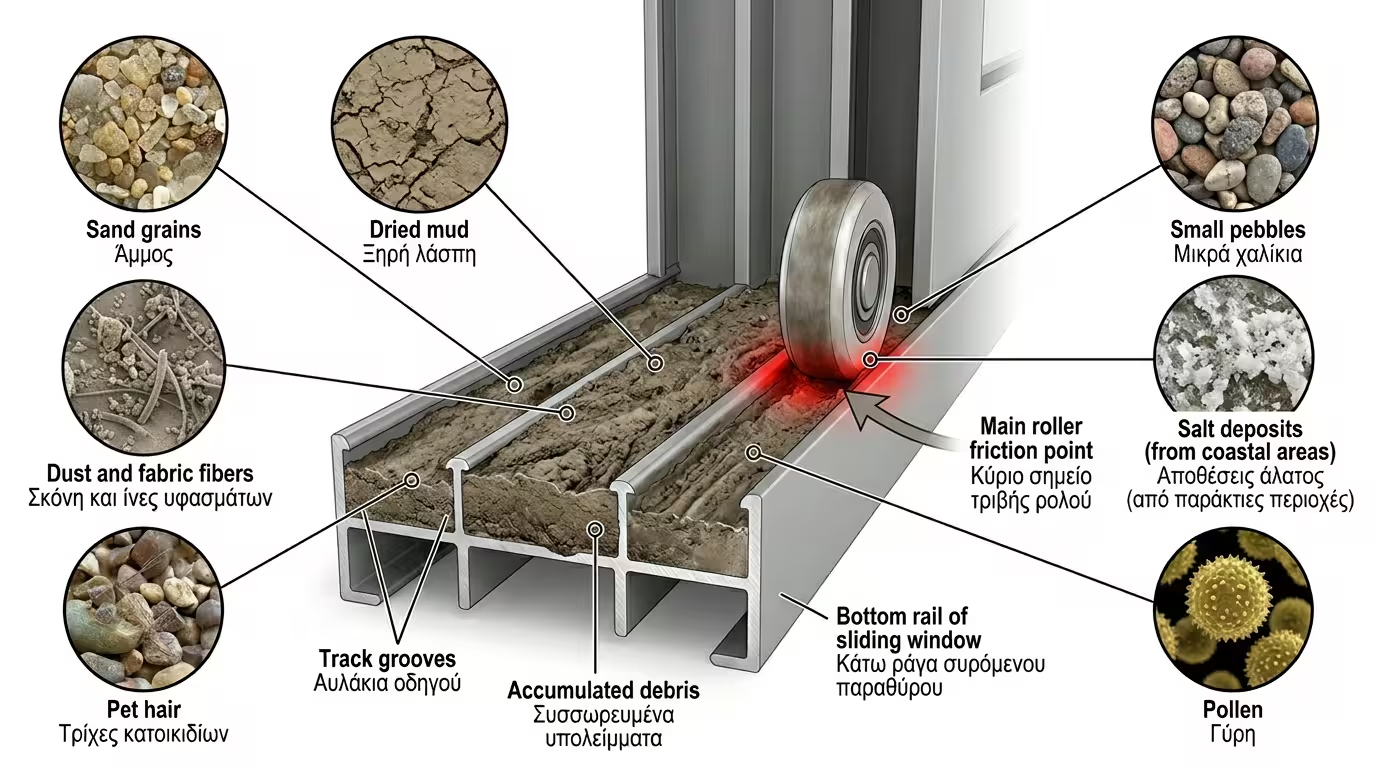
Dirt hardens over time, especially when wet. The rollers "ride" on this layer, creating enormous friction. Sliding becomes difficult, noise increases, and rollers wear out faster.
In homes near the sea or agricultural areas, the problem is exponentially worse. Salt spray, red dust (Saharan) and green dust (pollen) "cement" inside the track.
Before doing anything, don't rush to the store for "special" products. Everything you need is probably already at home.
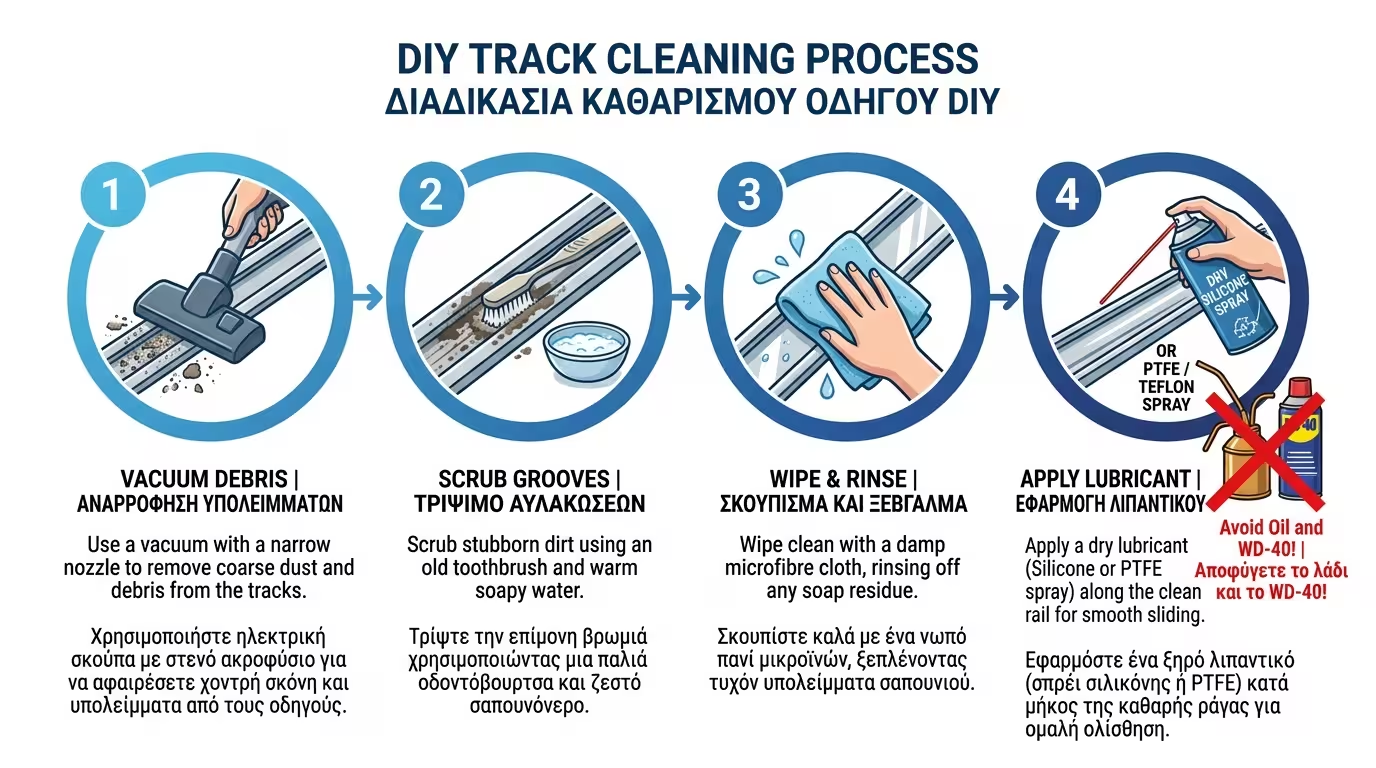
With a vacuum cleaner (use the narrow nozzle), remove the coarse particles (pebbles, hair, dried leaves) from the track. If the nozzle can't reach, use an old screwdriver wrapped in cloth.
Fill a bowl with warm water + a little dish soap. Wet an old toothbrush and scrub inside the track grooves. The warm water softens the hardened dirt.
Wipe the foam with a damp cloth or pour a little water into the track (on balcony doors with drainage).
NEVER oil or WD-40! Oils attract dust, creating a "black sludge" that worsens the problem. Use dry silicone spray or PTFE spray (Teflon). These lubricate without retaining dust.
If the problem persists after cleaning, then the rollers at the bottom of the panel are likely worn or broken. Replacing them is a simple 20-minute job.
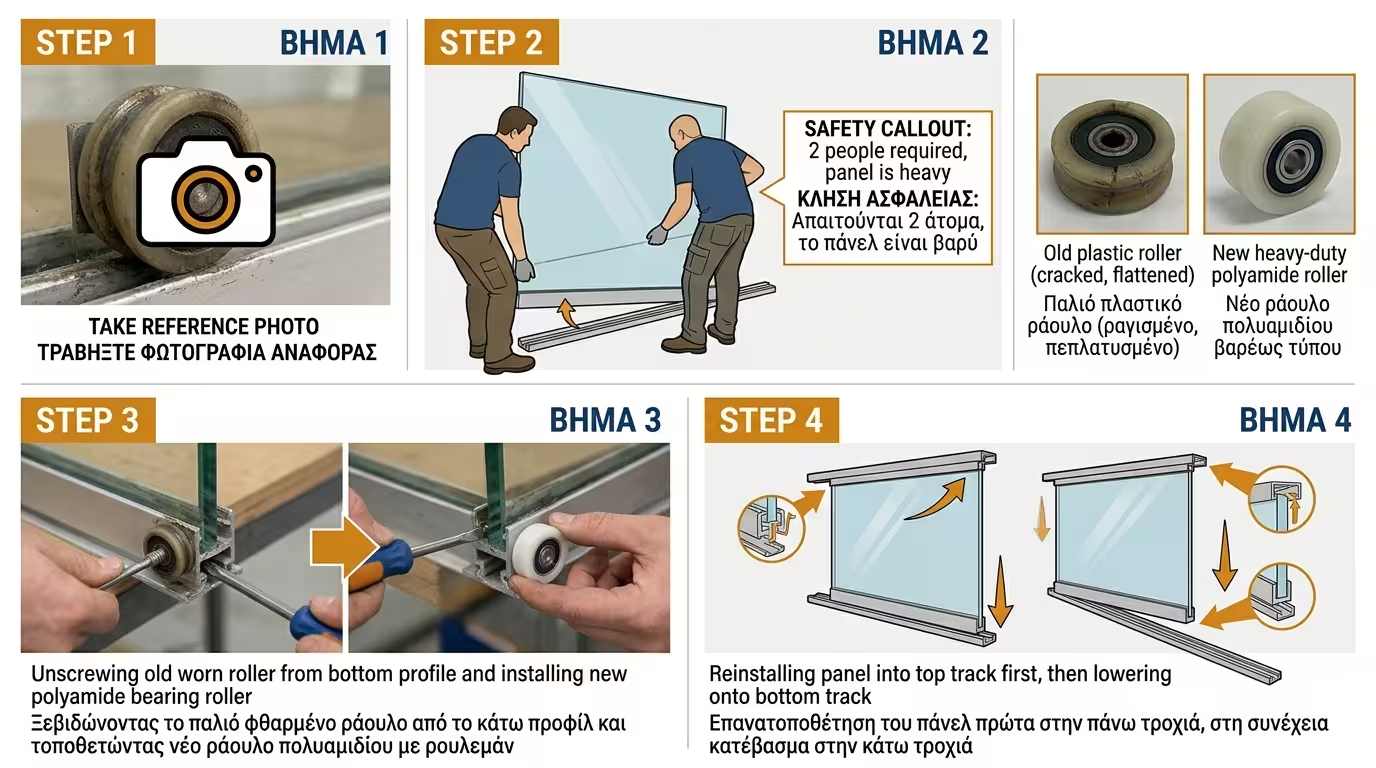
Before doing anything, photograph the existing rollers (close-up, side view). Rollers are not "one size fits all". Each window system uses a specific type (there are dozens of different types depending on the profile series).
This requires 2 people - the glass is heavy! Grip the panel from both ends, lift it firmly upwards (so it comes off the bottom track) and pull the bottom towards you to free it. Rest it carefully on the floor (on a rug or cardboard).
Take the old roller in hand and go to a specialist aluminium parts shop to find the exact replacement. Invest in heavy-duty rollers with polyamide bearings, not cheap plastic ones.
Unscrew the old rollers (usually 1-2 screws per roller). Insert the new ones. Tighten firmly.
Place the panel back into the top track first, then lower it onto the rollers on the bottom track. Test the sliding action.
If your balcony door is a modern lift-and-slide system (Hebe-Schiebe), things are far more complex. The lift mechanism, heavy-duty rollers and perimeter locking require specialised tools, parts and know-how.
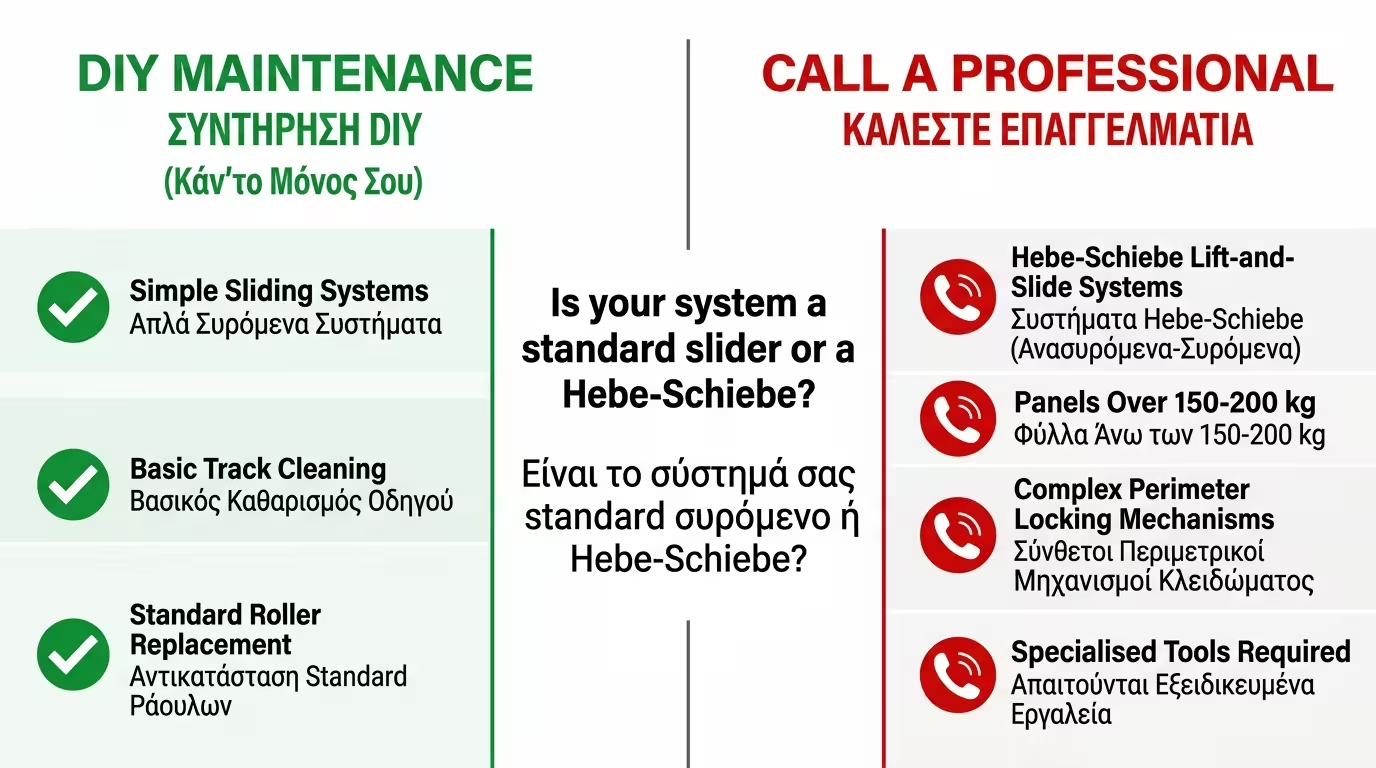
💡 Key Takeaway: In 80% of cases, a slider that "sticks" or makes noise simply needs track cleaning and proper lubrication (dry silicone or PTFE - never oil or WD-40). If that's not enough, roller replacement costs very little. For lift-and-slide (Hebe-Schiebe) systems, always call a specialist.
Return to category.
Go to categoryReturn to the central guide.
Go to guide