🌡️ The Role of Air
The air or gas inside this cavity acts as an "insulation cushion". It serves as a barrier, slowing down heat transfer (conduction & convection) between the warm interior pane and the cold exterior pane.
If you're shopping for new windows, you've surely seen the phrase "Glass pane with Argon fill" on some quote. Some manufacturers go a step further and mention Krypton as an even more premium option.
But what exactly does a gas do inside a double-glazed unit? Why not just leave air in there? And honestly, is the extra expense worth it or is it just another marketing trick? Let's explain everything, from the physics behind it to the actual euros you'll save (or won't save).
A double-glazed unit consists, of course, of two glass panes. These two panes are held at a specific, fixed distance from each other by a metallic or plastic spacer. Between them, a sealed "cavity" (gap) is created, typically 12, 14 or 16 millimetres thick.
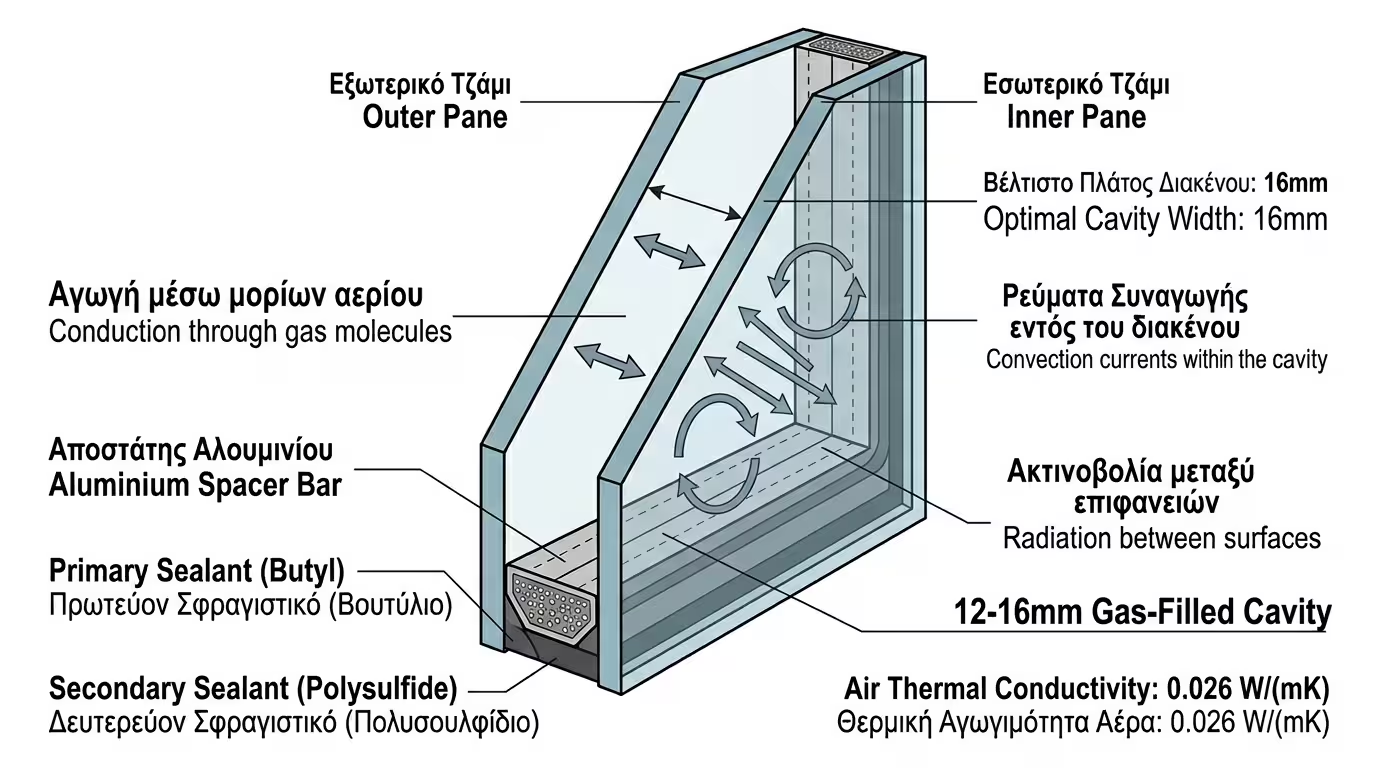
The air or gas inside this cavity acts as an "insulation cushion". It serves as a barrier, slowing down heat transfer (conduction & convection) between the warm interior pane and the cold exterior pane.
If the cavity is left filled with ordinary atmospheric air, it does insulate, but air molecules (Nitrogen, Oxygen) are relatively light and move quickly. This means they transfer heat quite readily from the warm side to the cold side through circular currents (convection).
The solution came from a noble (inert) gas: Argon (chemical symbol Ar). Instead of leaving air in the cavity, we replace it with Argon during the manufacturing process at the factory.
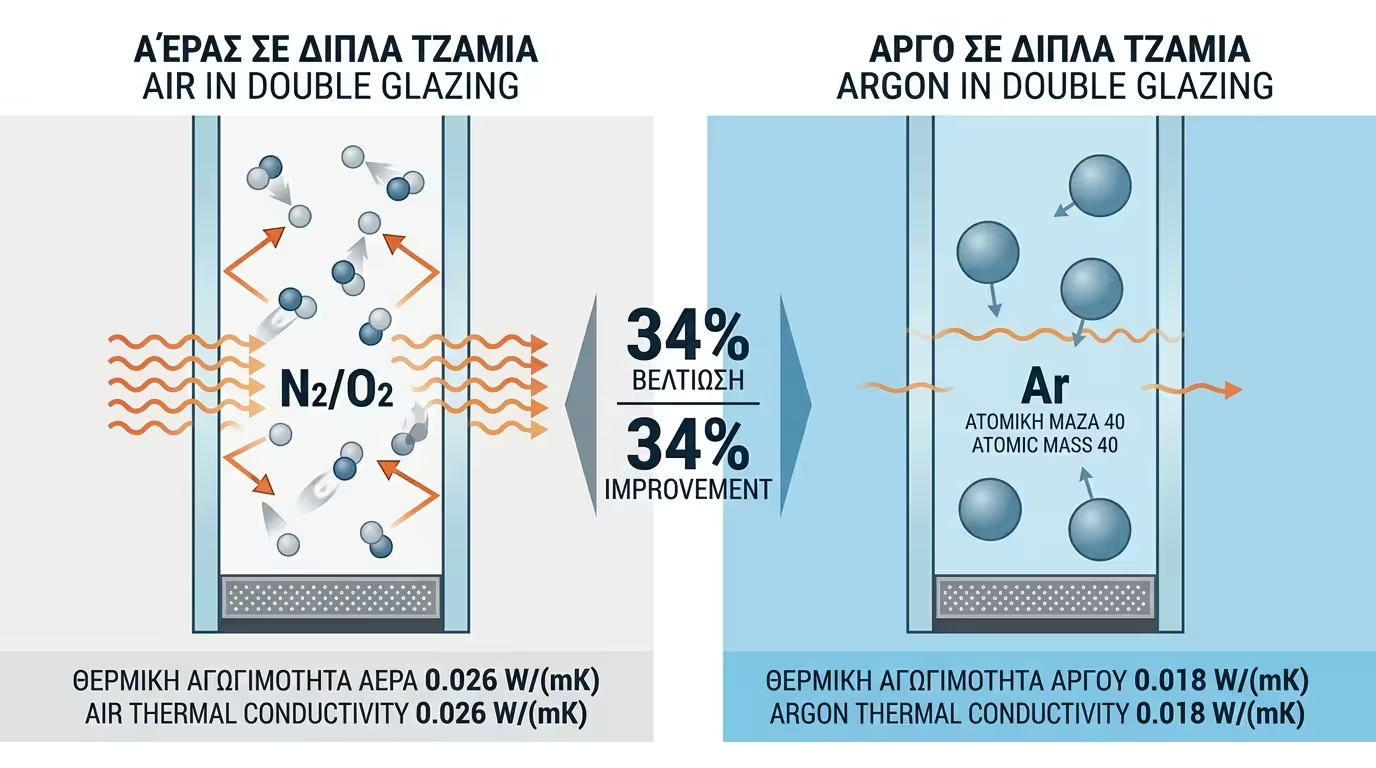
The genius of Argon lies in its molecules. It is 33% denser (heavier) than air. The heavier molecules move much more slowly, which means the circular heat currents inside the cavity are drastically reduced.
Argon's thermal conductivity is ~0.016 W/(m·K), while air's is ~0.024 W/(m·K). That means 30-35% less heat transfer simply by changing the gas in the cavity!
Combined with a Low-E coating, Argon fill can bring the glass pane's thermal transmittance (U-value) from ~2.7 W/(m²K) (plain double, no coatings) down to 1.0 – 1.1 W/(m²K). An improvement of almost 60%!
And perhaps most importantly: Argon makes up about 1% of the atmosphere, so it is very inexpensive. Argon fill in a typical double-glazed unit costs just a few euros per square metre. That's why today virtually every quality energy glass unit comes with Argon as standard.
What if we want even better insulation? Krypton gas (Kr) is an even rarer noble gas.
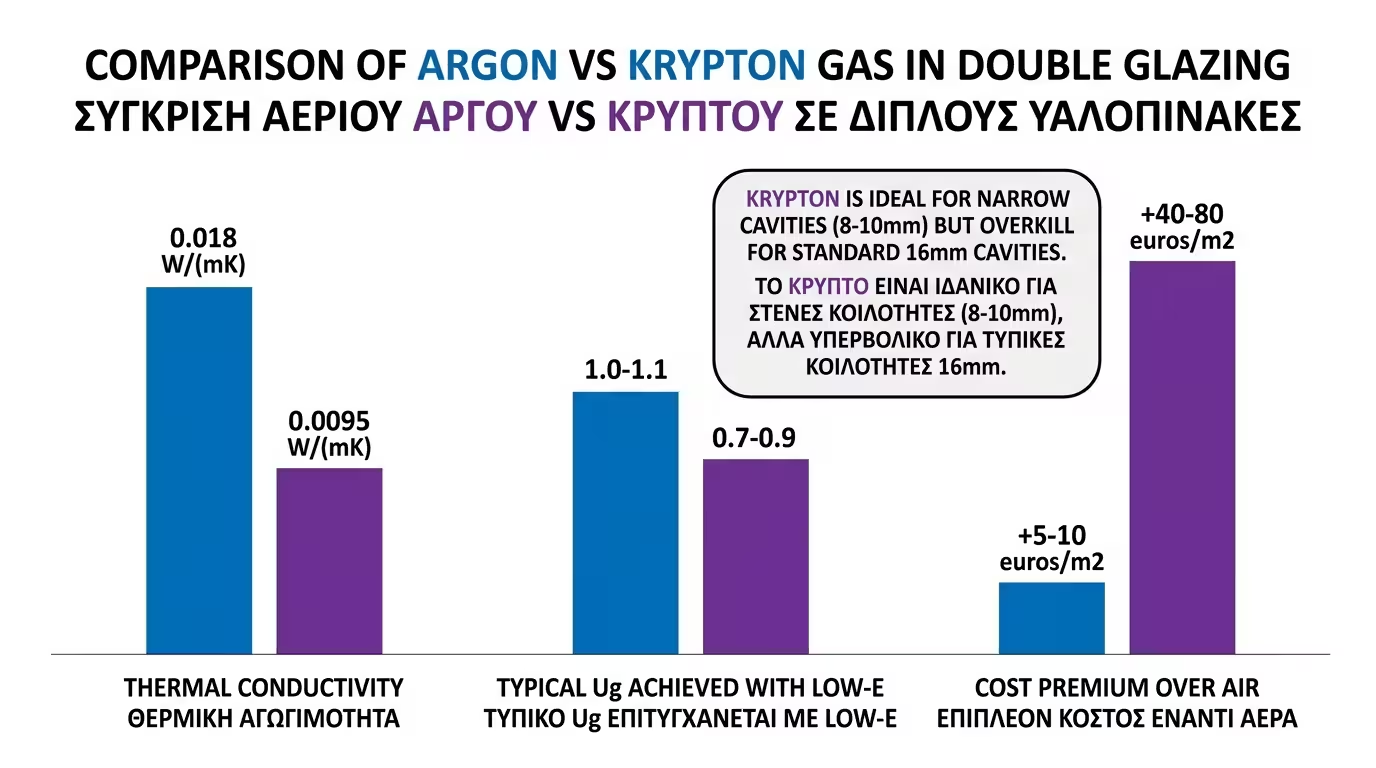
Krypton molecules are nearly 3 times heavier than Argon molecules! This means the circular convection currents inside the cavity are virtually eliminated.
Due to its enormous density, Krypton works effectively even in very small cavities (8-10mm). This is critical for triple glazing, where using Argon would make the overall thickness excessively large. With Krypton we can build a triple glazed unit just 28-30mm thick instead of 44-48mm.
Krypton is extremely expensive. It costs many times more per litre than Argon (potentially 5-10 times as much). And the quantity required is not negligible.
Primarily in Passive Houses requiring extremely low U-values (below 0.6 - 0.5), in triple glazed units for oversized minimal frameless windows where every millimetre of thickness counts, and in luxury residences with no strict budget constraints.
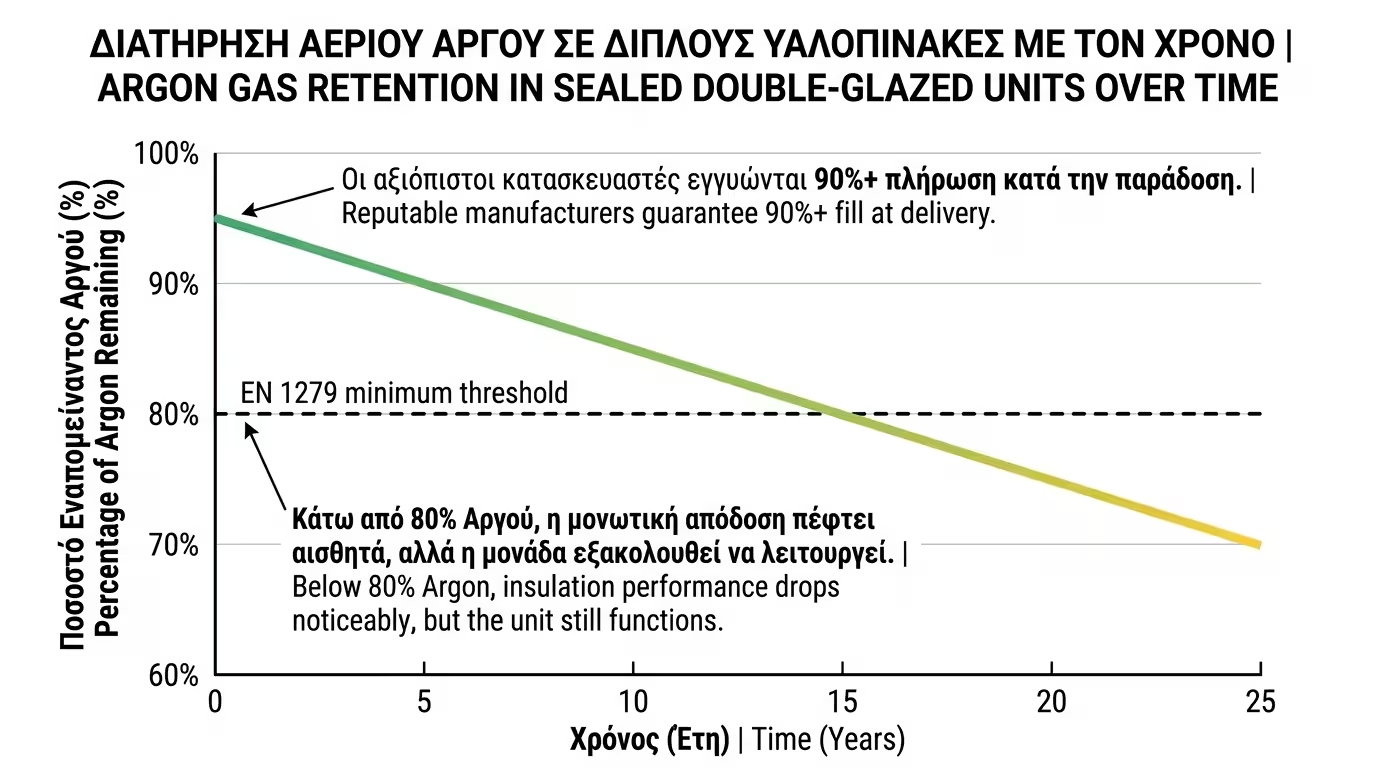
This is the most common (and perfectly valid) question. The answer: yes, over the long term a tiny percentage of gas will leak. But this is not a problem.
Certified glazing units (to EN 1279) are manufactured with double sealing (primary butyl seal + secondary polysulphide or silicone seal) ensuring a leak rate of less than 1% per year.
After 20 years, a properly manufactured glazing unit will still retain >80% of the original gas. Considering that the typical initial fill is ~90% (remainder air), insulation performance will still be excellent.
If you buy cheap, uncertified glass without proper BS/EN certification, the seal may fail much sooner, causing the gas to escape within 5-7 years. Always ask for CE + EN 1279 marking!
For 99% of homes in Greece, Argon fill combined with Low-E (or Four-Season) energy glass offers the ideal performance-to-price ratio. It is inexpensive, effective and now standard with every reputable manufacturer.
Krypton is worth it only in very specific cases: Passive Houses, triple glazing for minimal systems, or in residences where budget is not a criterion and every unit of W/(m²K) counts.
Return to category.
Go to categoryReturn to the central guide.
Go to guide