Ballistic & Blast-Resistant Glass: Categories, Weight and Where They Are
Used
When we hear "bulletproof glass", the first image that comes to mind is
the grimy bank teller windows or the luxury limousines of presidents. In
reality, ballistic and blast-resistant glass is far closer to our
everyday life than you might imagine.
Petrol stations, jewellery shops, pharmacies, embassies, homes of public
figures - all of these may require some form of ballistic or
blast-resistant protection. In these high-security projects, a standard
anti-burglary pane (P4A) is completely inadequate. A bullet would
penetrate it as if it were paper.
Let's see how these "shield panes" work, how they are categorised, how
much they weigh (because this plays an enormous role in installation),
and what you need to watch out for.
1. How Does Ballistic Glass Work?
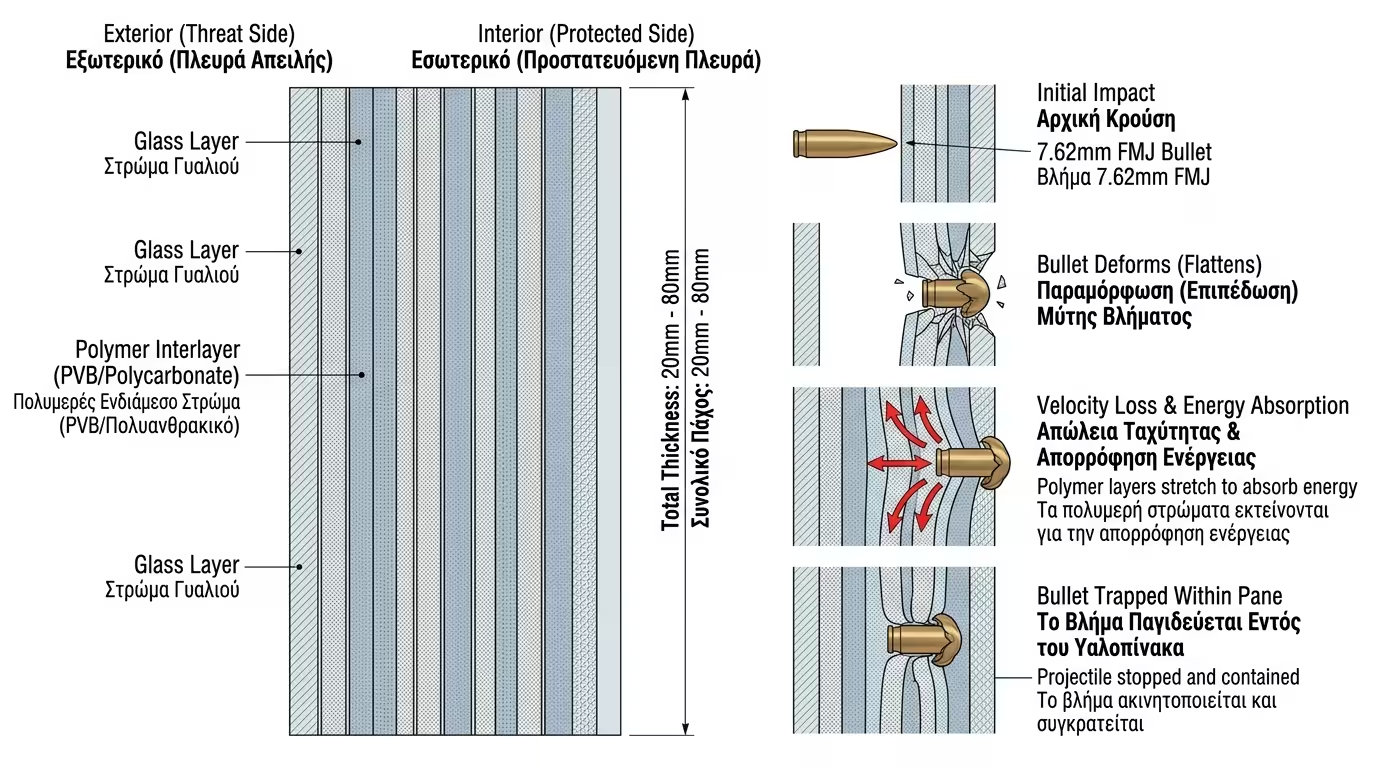
At its core, ballistic glass is the evolution of the entire Triplex
(Laminated) technology we have analysed. Instead of 2 glass sheets
with one PVB membrane, here we're talking about a massive sandwich:
🥪 Multi-Layer Structure
Multiple layers of special glass (5-15 sheets),
alternating with extremely thick PVB membranes or
polycarbonate/polyurethane sheets. When the bullet strikes the
outer, hard glass, its tip deforms (flattens) and loses a large
portion of its velocity. As it penetrates deeper layers, the elastic
polymers (like a net) absorb the enormous kinetic energy until the
bullet stops entirely, trapped within the thickness of the pane.
2. Ballistic Glass Categories (EN 1063): From BR1 to BR7
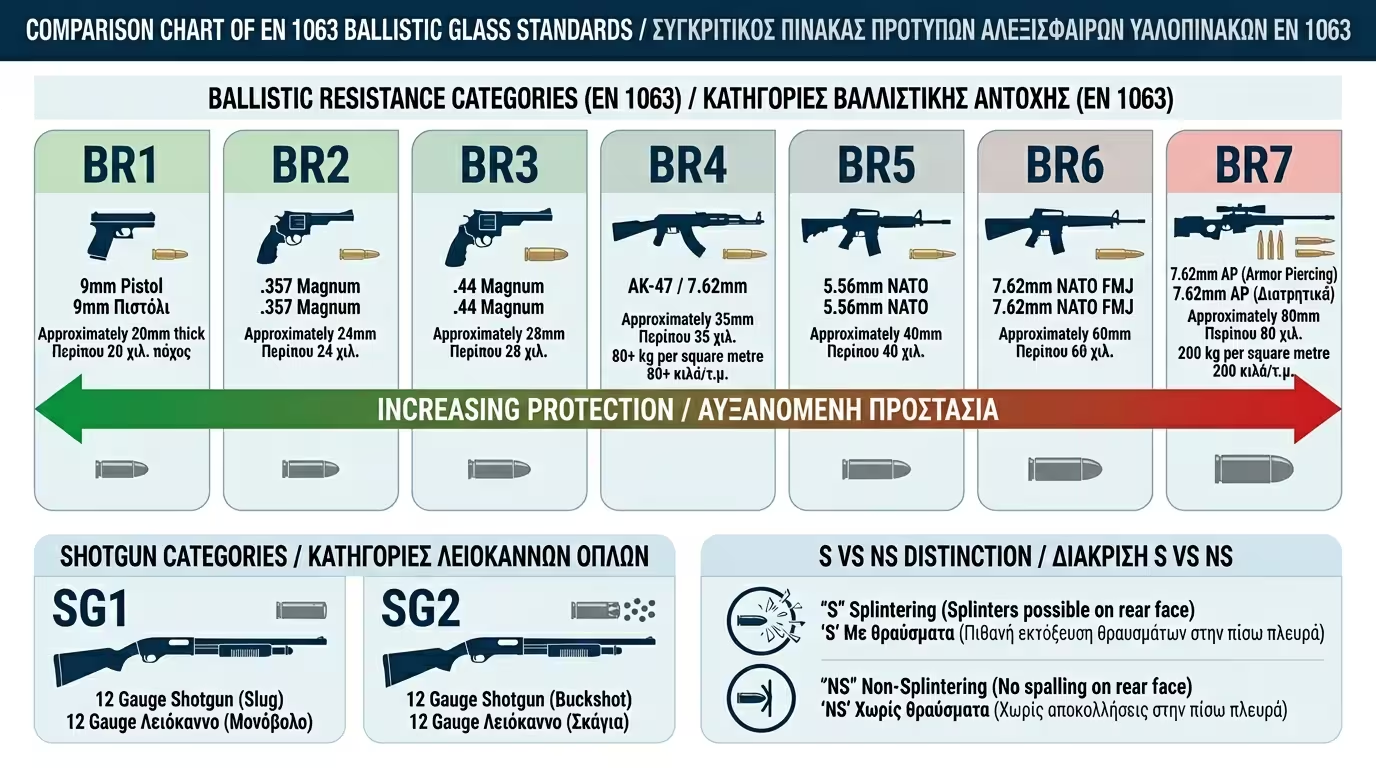
The European Standard EN 1063 defines 7 categories of ballistic
protection based on the weapon and ammunition the glass can withstand.
🔫 BR1 – BR3: Handguns
BR1: Resists 9mm Luger (pistol). Thickness ~20mm.
BR2: .357 Magnum (revolver). Thickness ~24mm.
BR3: .44 Magnum. Thickness ~28-30mm. Applications: Bank
teller windows, petrol stations, pharmacies.
BR6: 7.62mm NATO FMJ (military round).
BR7: 7.62mm AP (armour-piercing). Thickness ~60-80mm,
weight 150-200+ kg/m². Applications: Military
headquarters, armoured vehicles.
🛡️ S vs NS
Each category (e.g. BR4) is also tested for spalling:
S (Splintering): The bullet is stopped, but glass fragments
fly off the safe side.
NS (Non-Splintering): The bullet is stopped with zero
fragments on the inner side. This is achieved with a special polycarbonate
membrane as the final layer.
🔫 SG1 & SG2: Shotguns
Special categories that protect against shotgun slug rounds. Used
mainly in rural areas and isolated buildings.
3. Blast-Resistant Glass: The "Invisible Fortresses"
Beyond ballistic glass, there is a separate category of panes designed
to withstand blast waves from explosions.
💨 How They Work
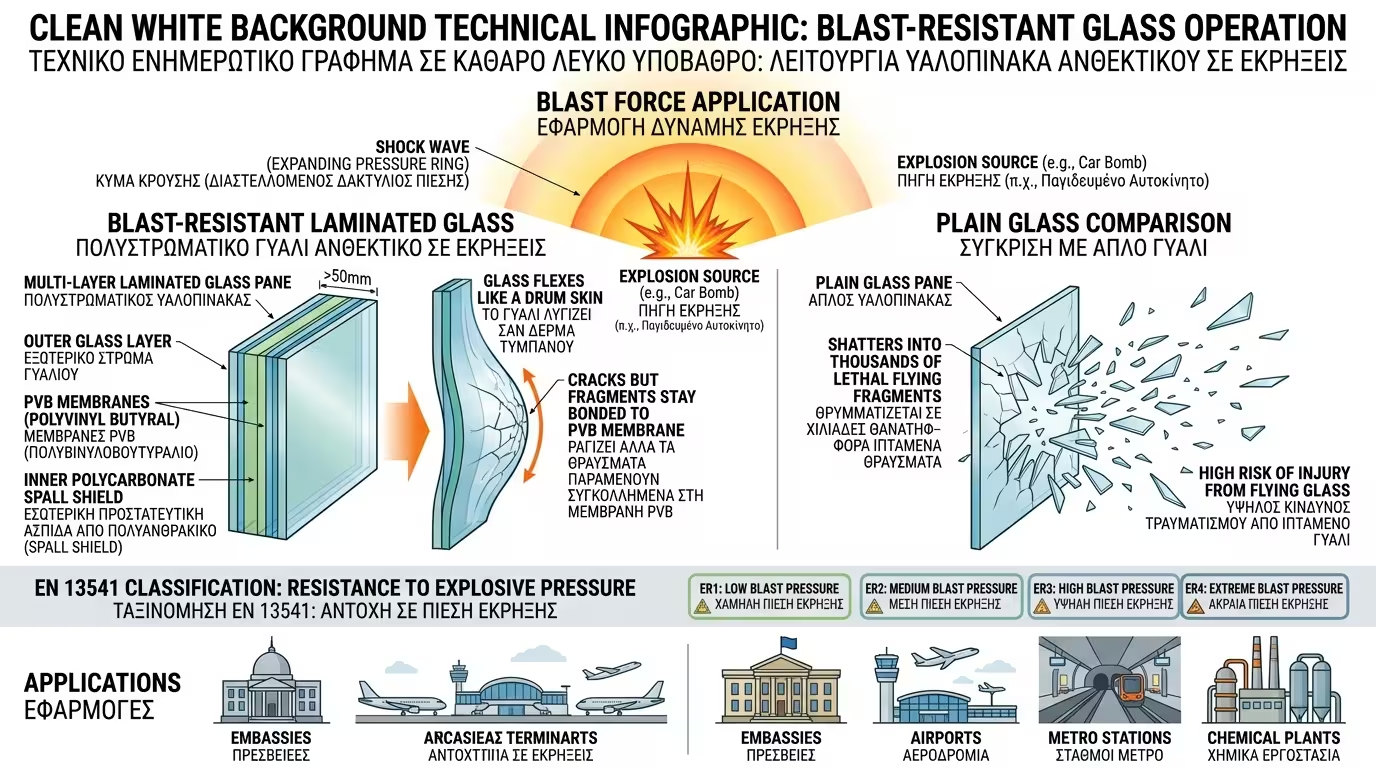
An explosion's blast wave exerts enormous pressure across the entire
glass surface simultaneously. Blast-resistant glass is a multi-layer
Laminated pane, specially designed (thickness can exceed
50mm) to "flex" without shattering. Even if it
breaks, the fragments stay bonded to the membrane, preventing the
flying glass "missiles" that are the primary cause of injuries.
📋 Applications
Embassies, airports, mines, chemical plants, ammunition depots,
metro stations and data centres.
📋 Categories ER1-ER4 (EN 13541)
Blast-resistant glass is categorised into ER1 to ER4 (EN 13541). They are designed to behave like a drum skin: they flex
incredibly far to absorb the pressure of the shock wave, crack, but remain
bonded to their frame.
4. The Weight: The Real "Enemy" of Installation
Here lies the biggest challenge. A ballistic pane is nothing like a
standard window. Forget regular aluminium.
⚖️ Indicative Weights (per m²)
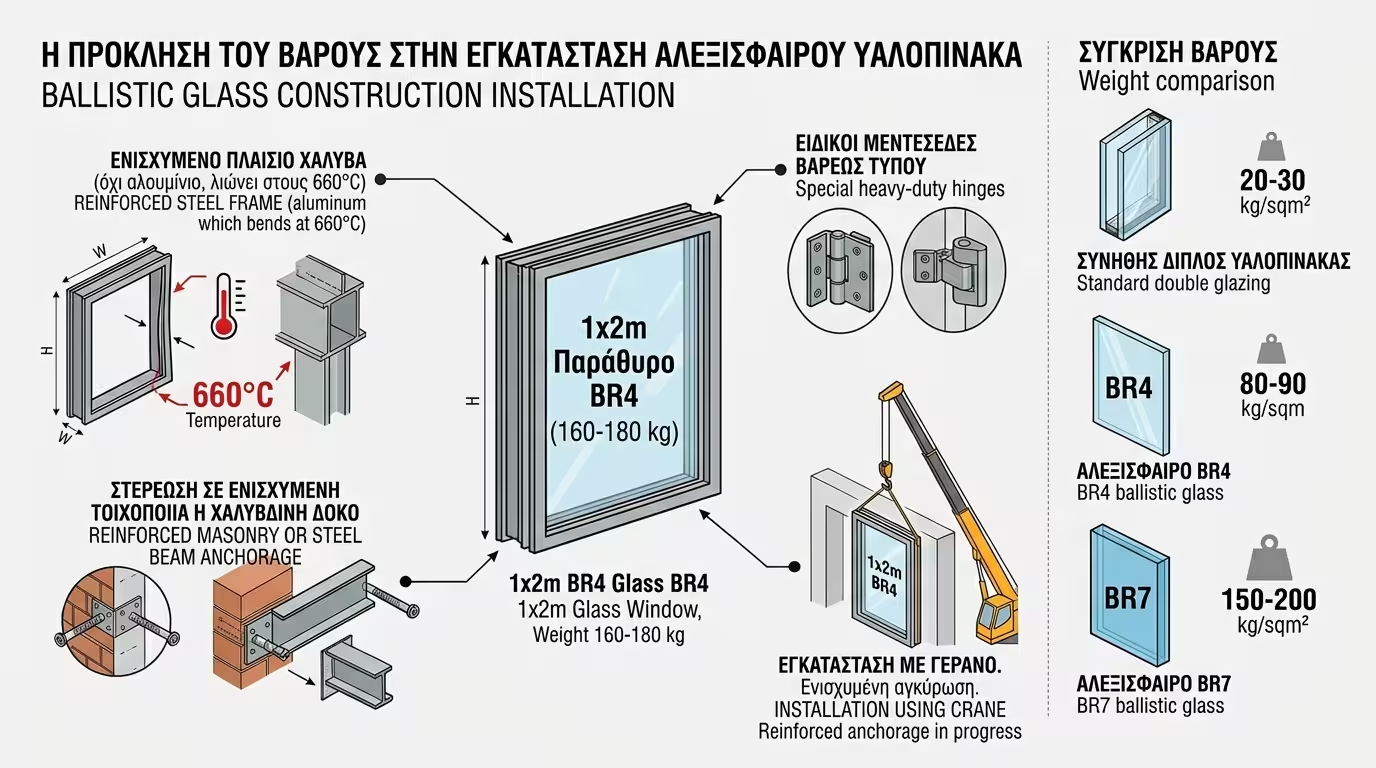
BR1 NS: ~50 kg/m² (thickness ~20mm).
BR4 NS: ~80-90 kg/m² (thickness ~30-35mm).
BR7 NS: 150-200+ kg/m² (thickness ~70-80mm). A 1×2 metre
window in BR4 weighs
160-180 kilograms. Three soldiers carrying it!
🏗️ Special Construction
A reinforced steel frame is required (not aluminium,
which bends), special hinges, a reinforced wall or steel beam for mounting,
and often a
crane for installation. If the aluminium frame is not
equally armoured, the bullet will simply pierce the aluminium beside the
glass. For such projects, specially certified heavy-duty systems are needed,
along with a dedicated structural analysis for anchoring the frame to
the masonry (so that a blast doesn't tear the entire window out of the
wall).
5. Summary
✅ The Value of Proper Engineering
Ballistic and blast-resistant glass are highly specialised
constructions. Proper installation is not just about buying a pane
but about a complete "security system" (glass + frame + wall +
mechanisms). If the installer fits a BR6 pane in an aluminium frame,
the bullet will pass through the side (
through the melted frame). Entrust the engineering exclusively to certified companies
that provide the firing test report together with the certificates.