Rw Sound Reduction Index for Glazing: The Engineer's Guide
In previous articles, we discussed Acoustic PVB (sound insulating)
glass, the importance of asymmetric thicknesses, and other sound
insulation technologies. In this article, we take a step further and
enter the world of technical sound insulation ratings - the
numbers an engineer (or an informed homeowner)
needs to know in order to correctly select the glazing unit
that matches their street, neighbourhood, and the noise source that bothers
them.
Simply saying "I want sound insulation" is not enough. You need to learn
to read the technical datasheets of glazing manufacturers so you can
objectively compare your options. Let's see how.
1. The "10 dB" Rule: A Critical Reminder
Before diving into the ratings, let's remember the fundamental rule we
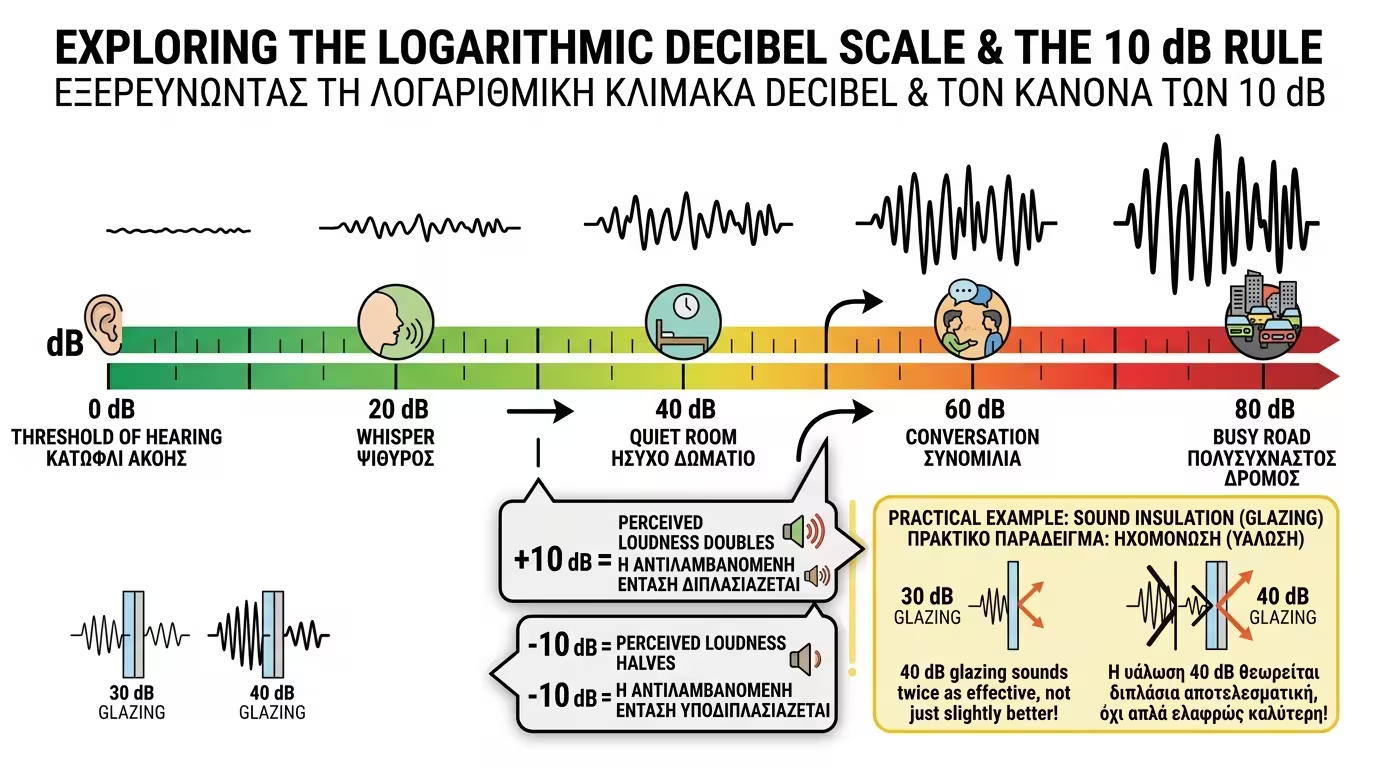
saw earlier: Decibels (dB) are NOT a linear scale (like kilograms or
metres). Instead, they are a
logarithmic scale.
📉 The Practical Meaning
In practical terms, this means that an increase of
+10 dB = Doubling of perceived loudness.
Conversely, a 10 dB reduction = Halving of perceived loudness. A glazing unit that reduces noise by 40 dB doesn't seem "slightly
better" than one that reduces by 30 dB - it sounds almost twice as effective to your ears!
2. What the Rw Index Means (Weighted Sound Reduction Index)
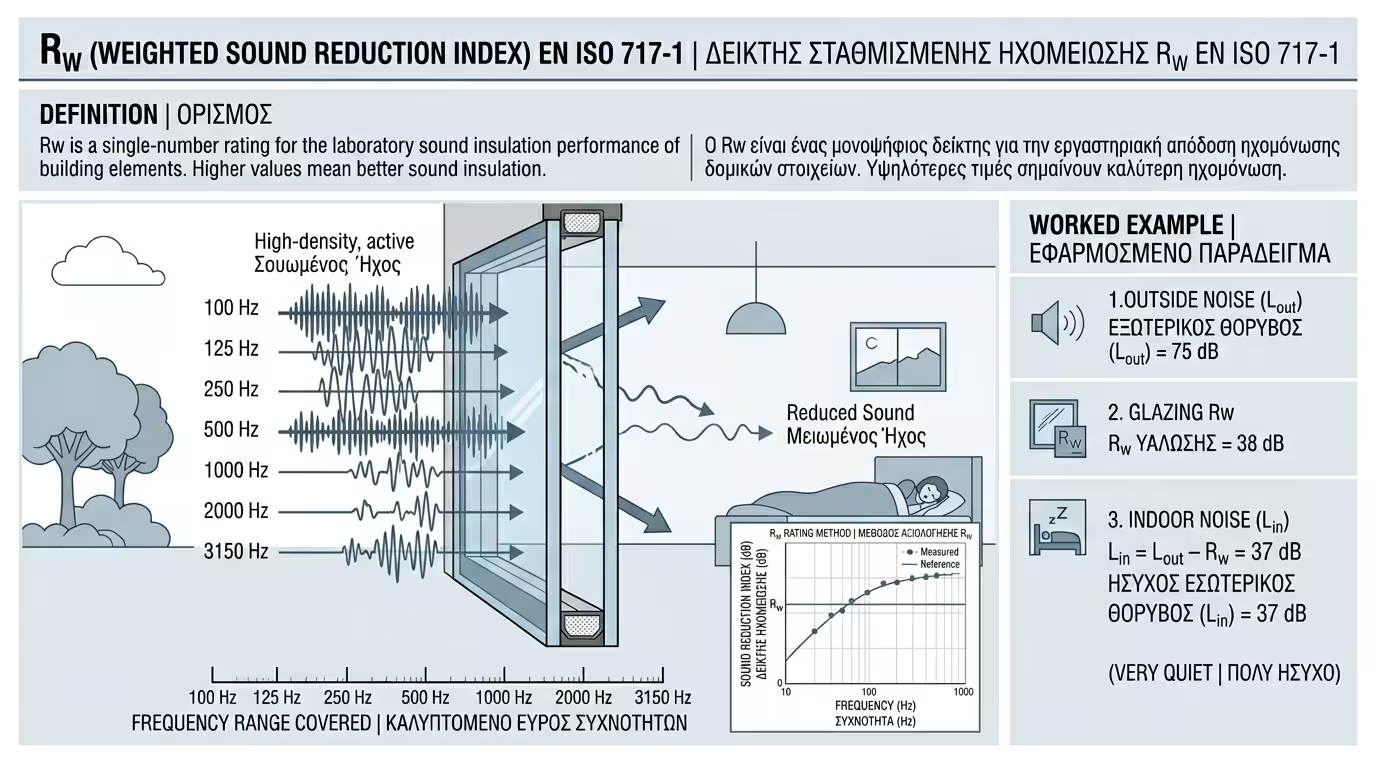
Rw (pronounced "R-W") is the primary, internationally established
sound insulation rating printed on every glazing datasheet (according
to standard EN ISO 717-1).
📊 What It Measures
Rw expresses the weighted (average) ability of a glazing unit to
block sound across a broad frequency range (100 Hz – 3150 Hz), i.e.
in an "average acoustic environment". It is a
single number, in dB, giving you a quick, general picture.
📏 Example
A glazing unit with Rw = 38 dB means that if road noise
is measured at 75 dB, theoretically only about
75 − 38 = 37 dB reaches the interior of the room (a very
quiet space!).
3. The Critical Correction Factors: C and Ctr
On its own, Rw does NOT tell the full story. Next to the Rw value on
serious technical datasheets, you will always see 2 additional numbers
in brackets: C and Ctr.
📢 C Factor (Pink Noise)
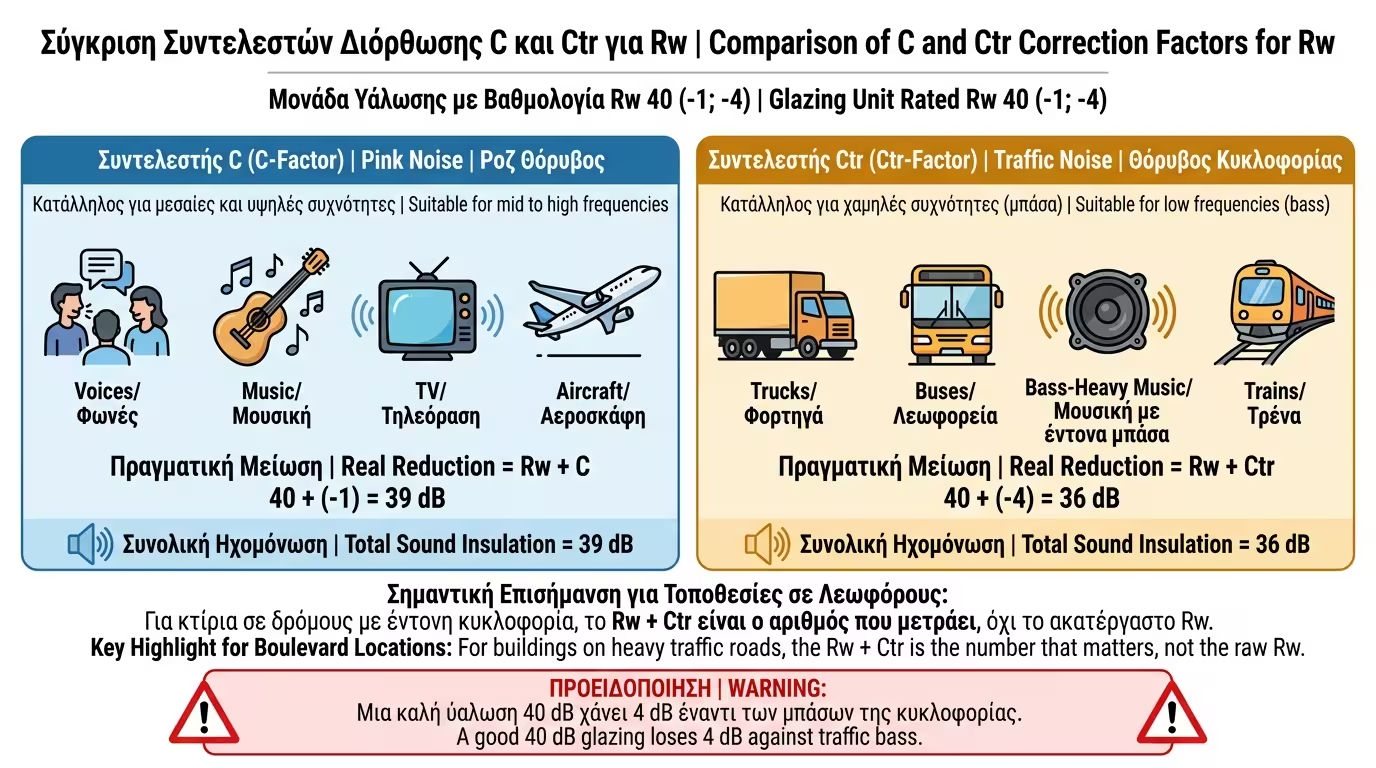
The C value (always a negative number, e.g. -1) is used as a
correction for medium-high frequency sounds: human
voices, music, television, phone calls, nearby playgrounds,
close-range aircraft noise, and high-speed trains. If your problem
is a neighbouring playground, the real sound reduction of a glazing
unit with Rw 40 (-1; -4) is:
Rw + C = 40 + (-1) = 39 dB.
🚗 Ctr Factor (Traffic Noise)
The "tr" comes from the word Traffic. The Ctr value (usually a
larger negative number, e.g. -4 or -6) is used as a correction for low-frequency sounds - i.e. the DEEP, bass-heavy rumble: urban road traffic (cars, buses,
trucks), bass-heavy music from clubs and bars, trains, and distant aircraft.
If the building is on a boulevard, the real sound reduction is: Rw + Ctr = 40 + (-4) = 36 dB. Notice how a "good" 40 dB glazing suddenly loses 4 dB of
performance at low frequencies!
💡 Example: A glazing unit rated Rw = 38 (-1; -4) has:
Sound reduction for voices/aircraft = 38 + (-1) = 37 dB. Sound reduction for road traffic = 38 + (-4) = 34 dB. If you live on a boulevard, the number that matters is NOT Rw (38),
but
Rw + Ctr = 34 dB!
4. How to Choose the Right Glazing by Rw
🏘️ Quiet Neighbourhood
Rw 30–32 dB - a typical energy-efficient double glazed unit (e.g.
4-16-4) will suffice.
🚗 Moderate Traffic Noise
Rw 35–38 dB - asymmetric thicknesses (e.g. 4-16-6) or acoustic
laminated glass.
Rw 45+ dB - Triple glazing or specialised heavy-duty acoustic
systems.
5. For Engineers: How to Improve the Ctr
📐 Mass Asymmetry
Use panes of different thickness (e.g. 6 mm outer, 4 mm inner) to
"break" the resonance and improve performance at low frequencies.
🧪 Acoustic PVB
Specify acoustic damping interlayers (Acoustic Laminated Glass)
designed to dramatically improve bass-frequency behaviour,
minimising the Ctr "penalty".
📏 Wider Cavity
Increase the gap between panes (above 16 mm if the profile allows)
and fill with Argon gas. The wider the cavity, the better low
frequencies are blocked.
6. Summary
✅ Measure Right, Choose Right
The Rw rating (and the C, Ctr corrections) is your "compass" in the
sound-insulating glazing market. When specifying windows for a
demanding urban project, simply requesting "glass with Rw = 40 dB"
leaves dangerous legal and technical gaps. You must identify the
dominant noise source and demand
certified sound reduction test results with the Rw (C;
Ctr) values. Only on the basis of these numbers can you make a rational
decision, rather than a guess.