Acoustic PVB Glass: How to Keep Road and Aircraft Noise Out of Your Home
If you live in downtown Athens, Thessaloniki, or near a major boulevard,
you know all too well that noise pollution is a daily, exhausting
nightmare. The sound of motorbikes, bus exhausts, car horns and the
rumble of aeroplanes don't just disrupt your sleep.
In the long run, they raise your stress levels and dramatically
degrade your quality of life.
Many homeowners replace their old windows with new ones fitted with
modern double glazing, expecting to find total silence. The result?
There is certainly an improvement, but the deep, bass rumble of the
garbage truck at dawn can still be heard clearly inside the bedroom.
Why does this happen? Because noise is not air - it's vibration. And to stop a powerful vibration, a simple double glazed unit is not
enough. You need the technology of
Acoustic PVB Sound-Insulating Glass. Let's see how it
manages to "brake" sound.
1. Why Standard Double Glazing "Leaks" Noise
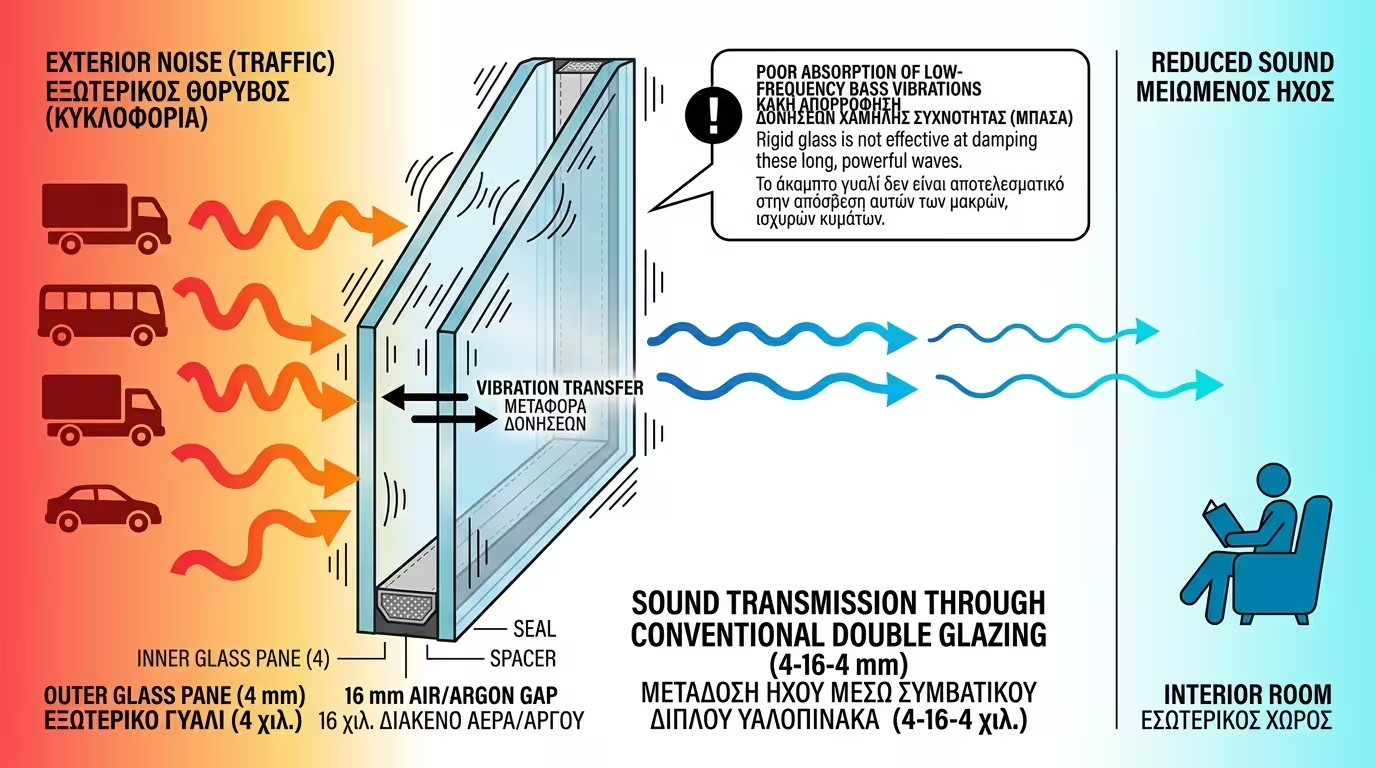
Sound travels in the form of acoustic waves. When a truck passes
outside your home, the sound waves (especially low-frequency ones) hit
your exterior pane and make it vibrate (tremble).
🔊 How Vibration Transfers
If you have a conventional double glazed unit, this vibration is
transferred through the air (or gas) in the intermediate cavity,
passes to the interior pane, and from there...
straight to your ears. The hard glass, on its own,
is a very poor absorber of low frequencies.
2. The Solution: Acoustic PVB Membrane
To solve this problem, scientists borrowed the technology of Triplex
(Laminated) glass that we saw in the previous category.
🧪 What Is Acoustic Glass
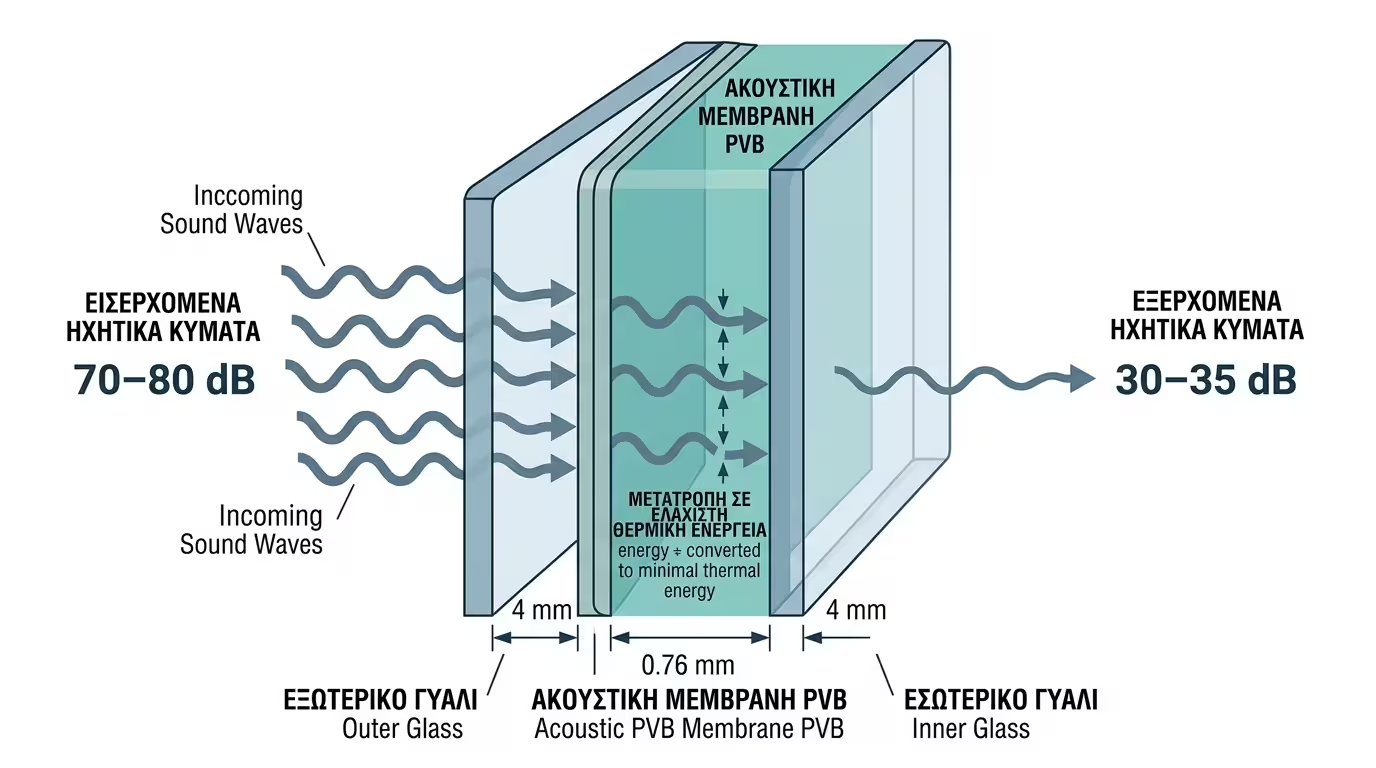
In an acoustic glazing unit, one (or both) panes of the window is
not a simple, single sheet of glass. It is a laminated pane
(Triplex), but instead of a standard safety interlayer it contains a special, thick acoustic membrane (Acoustic PVB - Polyvinyl
Butyral).
🛞 How It Acts as a Sound "Shock Absorber"
Think of the acoustic membrane as a microscopic, transparent
"sponge" or shock absorber sandwiched between two hard glass sheets.
When sound waves from the street hit the glass, it tries to vibrate.
However, the elastic acoustic interlayer in the middle
absorbs the vibration and dampens it. It converts
the mechanical energy of the sound into negligible thermal energy,
preventing the noise from penetrating the window.
3. What Difference Does It Make? The Decibel Scale (dB)
Sound intensity is measured in Decibels (dB). To understand the power
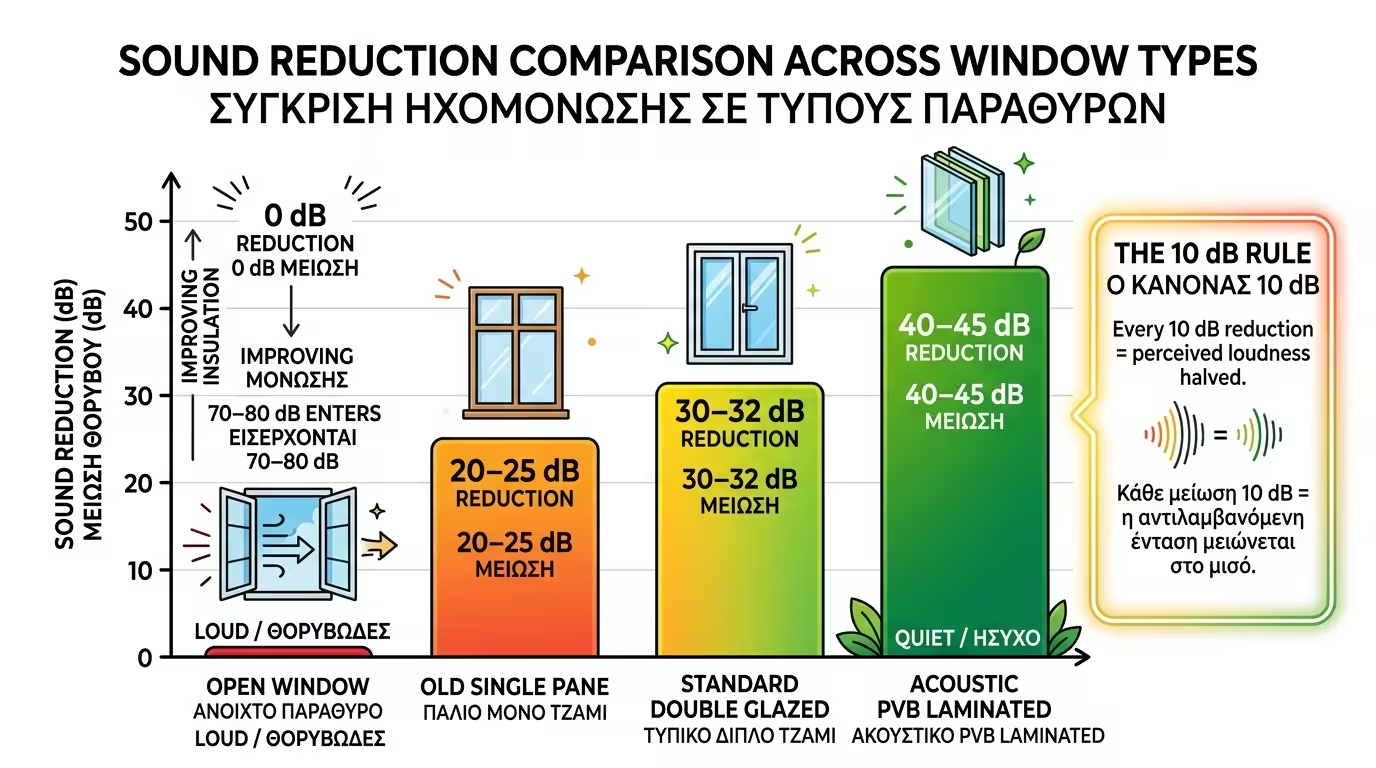
of Acoustic PVB, you need to know a fundamental rule of acoustics: A noise reduction of 10 dB is perceived by the human ear as HALVING
THE VOLUME!
🪟 Open Window
An open window lets through approximately
70–80 dB (the noise of a busy road).
1️⃣ Old Single Glazing
An old single pane reduces noise by approximately
20–25 dB.
2️⃣ Standard Double Glazing
A standard double glazed energy-efficient unit reduces noise by
30–32 dB.
🔇 Acoustic PVB Glazing
An Acoustic PVB double glazed unit can reduce noise by
40 to 45 dB!
💡 This 10+ dB difference between standard and acoustic glazing means
in practice that
the noise you perceive inside the room is cut in half (or more). The deafening roar of traffic turns into a faint, barely noticeable
whisper.
4. 2-in-1: Sound Insulation AND Ultimate Security
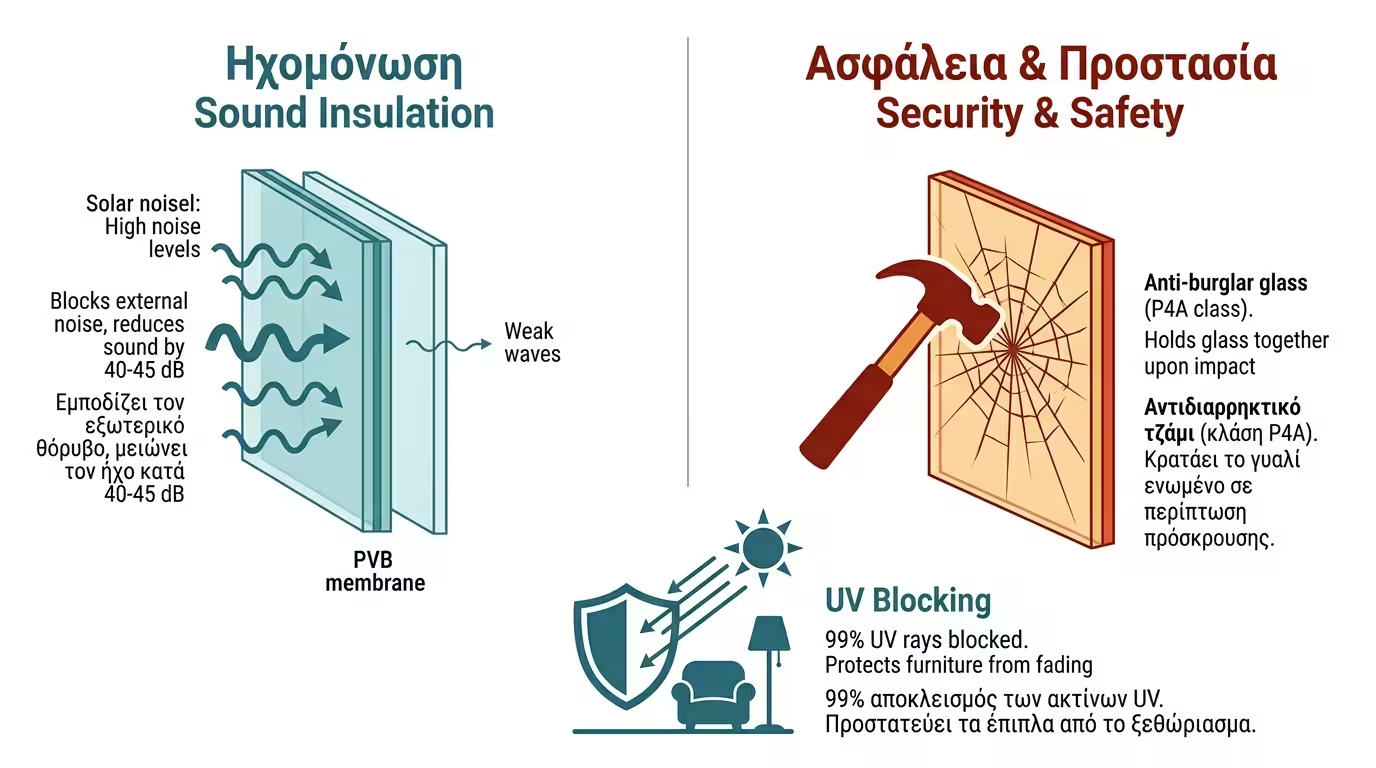
The most impressive feature of Acoustic PVB glazing is that it
delivers multiple benefits at once.
🛡️ Top-Tier Burglar Resistance
Because their construction is essentially a reinforced Triplex
(Laminated), you automatically gain top-tier burglar resistance (or accident
protection), exactly as we saw in the previous articles.
☀️ UV Radiation Protection
At the same time, the PVB membrane blocks
99% of ultraviolet (UV) radiation, preventing
fading of furniture and carpets.
5. Summary
✅ A Life-Changing Upgrade
There is no reason to wake up with headaches or use earplugs in your
own home. If your building is in a high noise-pollution zone, upgrading to Acoustic PVB glazing is not a luxury - it is a
fundamental prerequisite for your physical and mental well-being.