How to Tell If Your Windows Are Energy Glass: The Lighter Test in 1
Minute
You've just moved into a new house. Or you recently replaced your
windows. Or perhaps you're buying a second-hand apartment. In any case,
one question is on your mind:
"Are the glass panes I have really energy-rated (Low-E) - or did they
install plain glass?"
The truth is that, looking at a pane of glass, you can't see
anything. The Low-E coating is invisible to the naked eye. However, there's
a clever, simple trick - all you need is a lighter or even your phone's flashlight
- to learn the truth in 60 seconds. Let's see how.
1. The Physics Behind the Test: The 4 Reflections
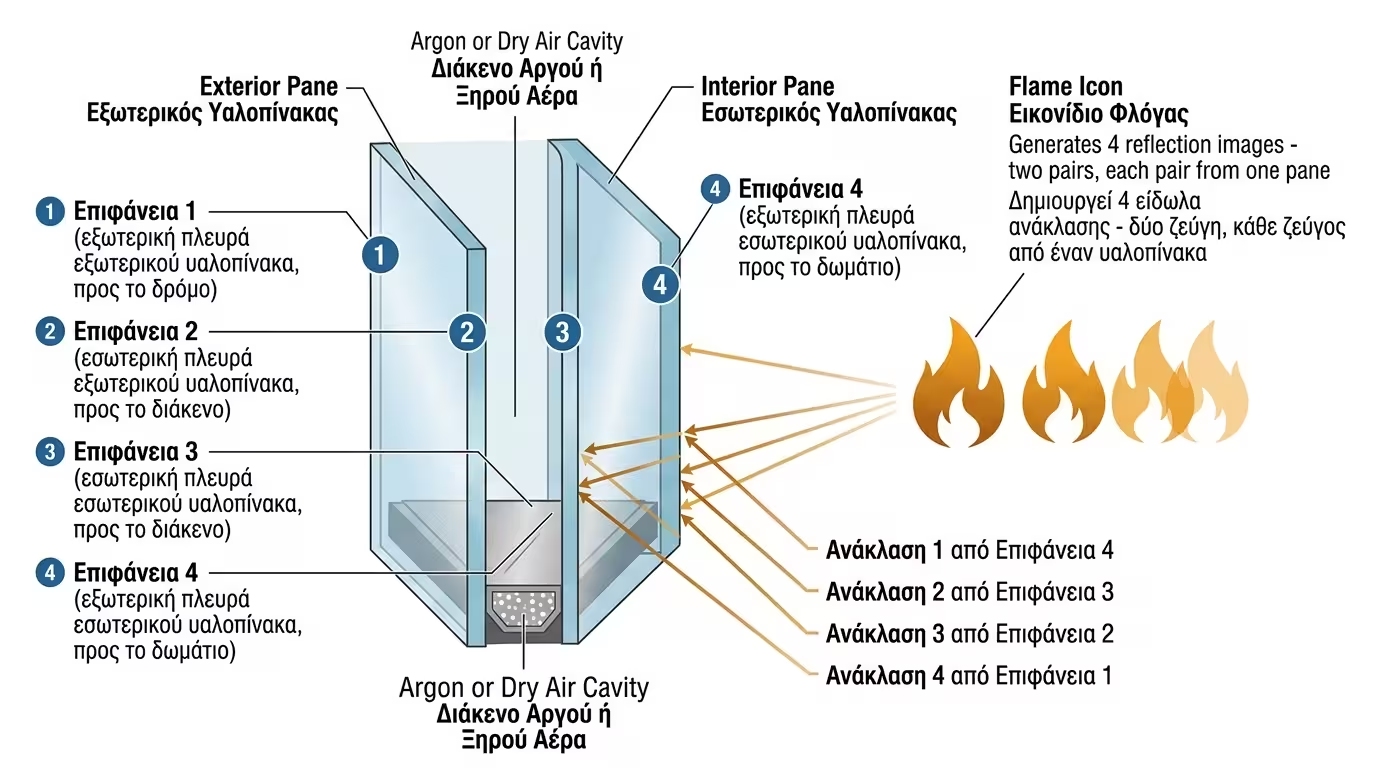
A double-glazed unit consists of two glass panes. Each pane has
two surfaces: one outer and one inner. In total, a
double-glazed unit has 4 surfaces. They are usually
numbered from outside to inside:
📐 Surface Numbering
Surface #1: Outer side of the exterior pane (facing the
street). Surface #2: Inner side of the exterior pane (facing the
cavity). Surface #3: Inner side of the interior pane (facing the
cavity). Surface #4: Outer side of the interior pane (facing your
room).
🪞 Each Surface = One Reflection
When you hold a light source (flame, LED, candle) close to the
glass, each of these 4 surfaces creates its own reflection.
You'll see 4 "little images" (reflections) of the flame: two closer together (from the pane nearest to you) and two
further apart (from the pane facing the street).
2. Step-by-Step: How to Perform the Test
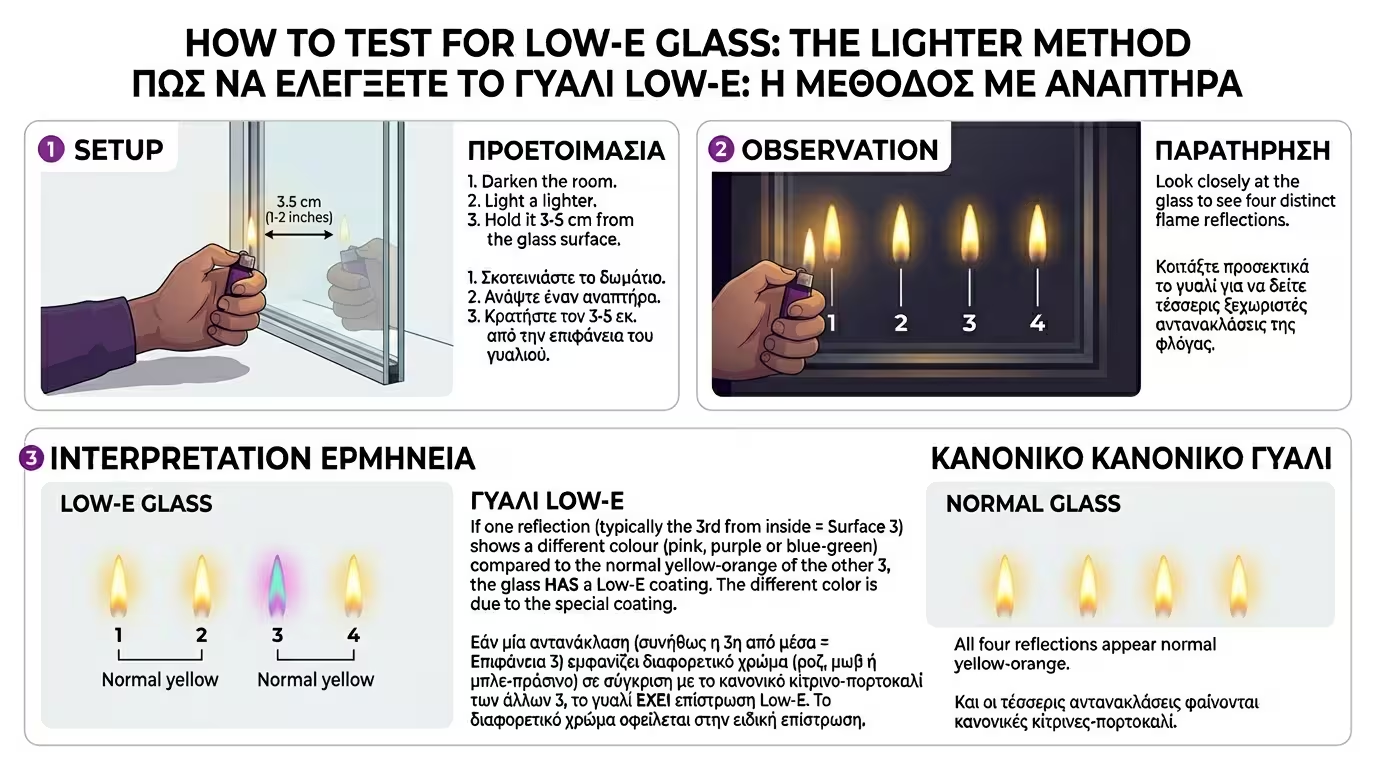
You'll need a room that is relatively dark. Turn off
the lights or wait until nightfall. Light the lighter (or a candle)
and hold it close to the glass, at a distance of
3-5 centimetres.
👀 What to Look For
Look at the 4 reflections. If
one (or two) of the 4 reflections has a different colour from the rest, your glass has an energy coating!
🟣 What Colour?
Typically, the reflection with a Low-E coating appears in
pink, purple, green-bluish or lavender, while the
other reflections (without coating) show the normal yellow-orange
colour.
📍 Which Surface Has the Coating?
On most European energy glass, the Low-E coating is placed on
Surface #3 (inner side of the interior pane, "facing"
the cavity). This means the 3rd reflection (counting from inside) should
be the "coloured" one.
❌ If There's No Colour?
If all 4 reflections are the same colour
(yellow/orange, like a normal flame), unfortunately there is no Low-E
coating. It is plain, non-energy double glazing.
3. Alternative Verification Methods (Without a Lighter)
If you can't or don't want to use a flame, there are alternative
methods:
🔍 The Spacer Stamp
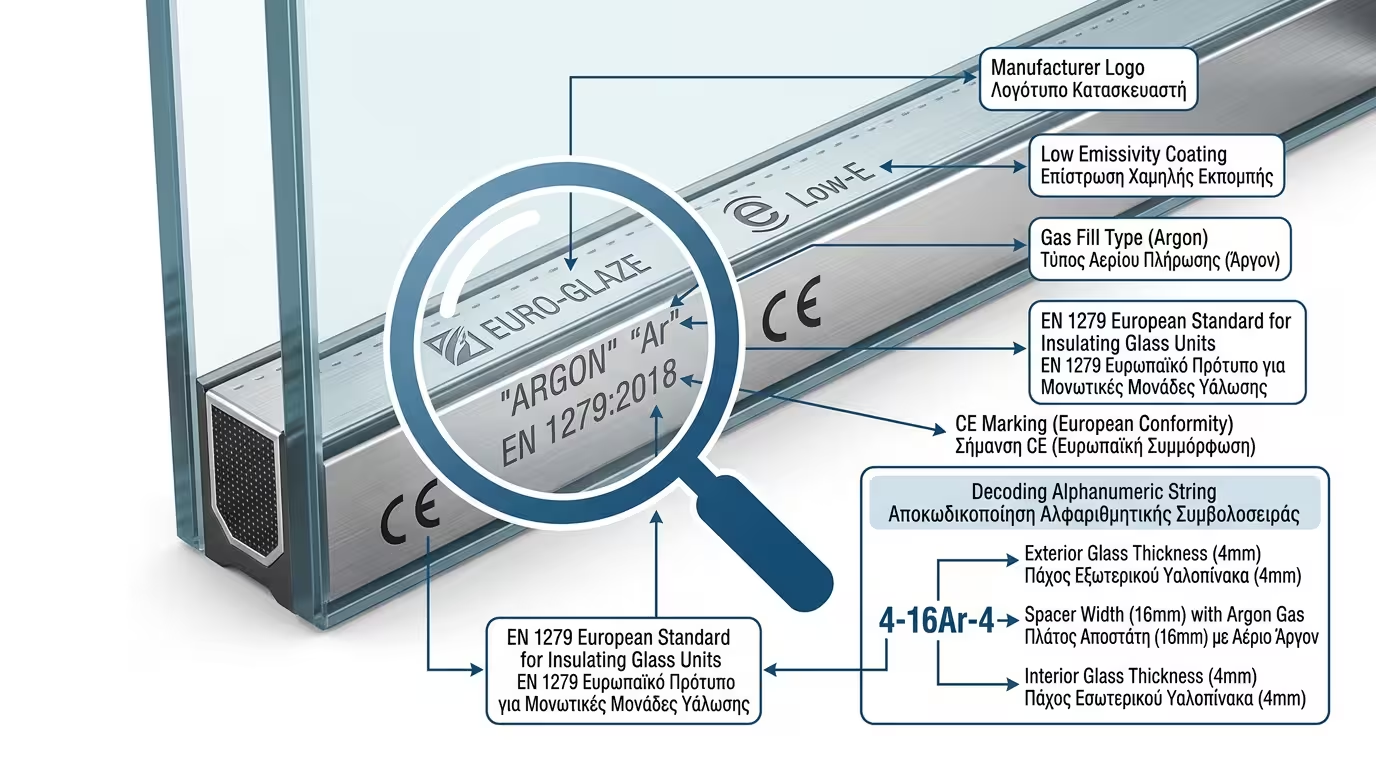
Look at the metallic strip (spacer bar) separating the two panes. On
this, a reputable manufacturer engraves or prints
codes and technical information. Look for markings
such as "Low-E", "LE", "4S", "SN", "Solar", or alphanumeric codes.
🖐️ The "Touch Test" (In Winter)
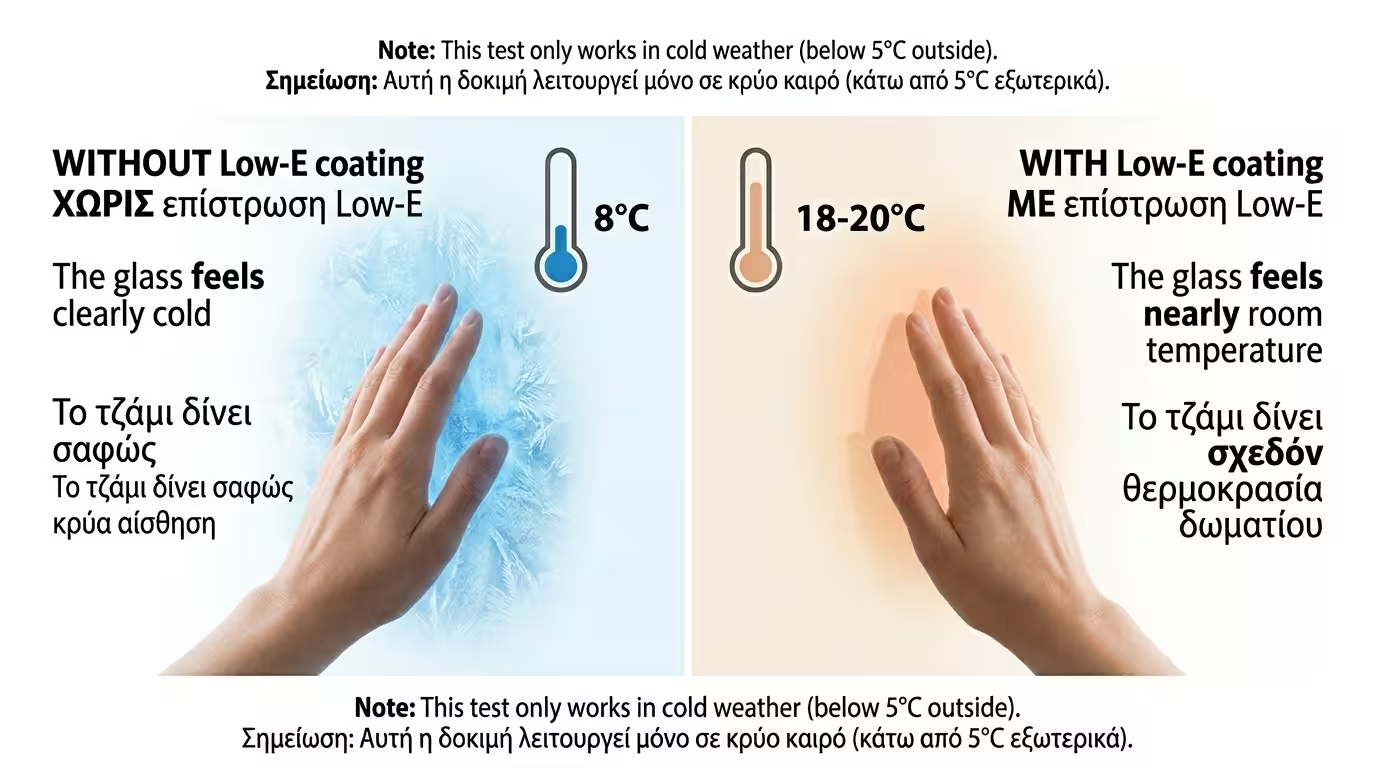
If it's cold outside (below 5°C), touch the inside surface of the
glass. If you feel the glass is
almost at room temperature (lukewarm), it most
likely has a Low-E coating. If you feel it's
clearly cold like metal, it probably doesn't.
📱 Electronic Low-E Detectors
There are handheld Low-E detection devices
that attach to the glass and instantly identify whether each surface has
a coating. They are mainly used by professionals (energy auditors).
4. Can I Tell If It's Four-Season Glass?
This is more difficult.
🔬 With a Lighter?
Four-Season glass will also show a coloured reflection (it is also
Low-E, but advanced). However, some Solar Control glass may also
show a reflection on Surface #2
(exterior pane, facing the cavity), indicating an additional solar coating.
💡 The Certain Way
Check the spacer bar for details. Alternatively, ask
the manufacturer or previous owner for the
EN 1279 certificate of the glazing unit, which will list
in detail the composition, U-values and g-values.
5. Conclusion: Don't Rely on Promises
🔎 Check It Yourself
Before paying the final invoice to the manufacturer, spend 60
seconds doing the lighter test.
Don't rely on verbal promises - the flame doesn't lie.
📋 Always Ask for Certification
Demand a written guarantee with an EN 1279 certification code and CE marking. A reputable manufacturer will provide these without hesitation.