Fire-Rated Glass (E, EW, EI): How a Pane Can Withstand a 1,000°C Fire
In a fire, time is not measured in hours, but in minutes. The internal
temperature can rocket to 1,000°C within 10 minutes.
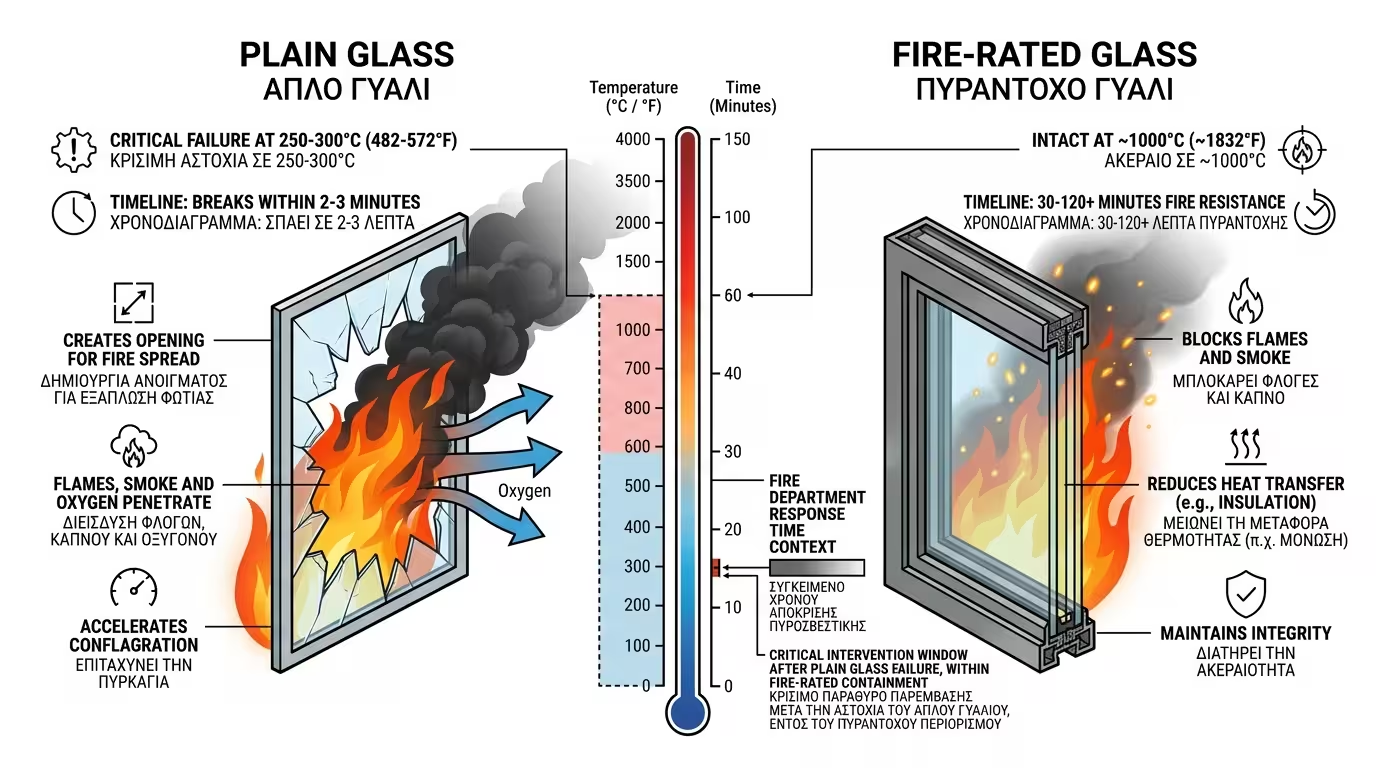
Plain glass breaks in the first 2-3 minutes, leaving a huge opening
through which flames, hot gases and lethal smoke invade. In this
scenario, seconds save lives.
Fire-Rated Glass panes are specially designed to withstand
fire (without collapsing) for a defined period - long enough for occupants
to evacuate and the fire brigade to intervene. They are critical in every
building, from apartment blocks and hotels to hospitals.
1. Why Does Ordinary Glass Fail in a Fire?
Ordinary glass (even a double-glazed energy unit) cannot withstand the
thermal stress of a fire. The rapid, near-instantaneous temperature
rise creates thermal shock many times worse than what we analysed in
the relevant article.
💥 Rapid Destruction
At 250°C – 300°C, plain glass cracks extensively.
At 400°C – 500°C, fragments begin to fall, creating
openings through which the fire advances into adjacent spaces. The
fire is now fed with fresh oxygen, spreading the nightmare. Even
Securit or Triplex glass, as analysed in previous articles, is
entirely powerless against fire due to the extreme thermal shock.
2. The Three Fire Protection Categories: E, EW, EI
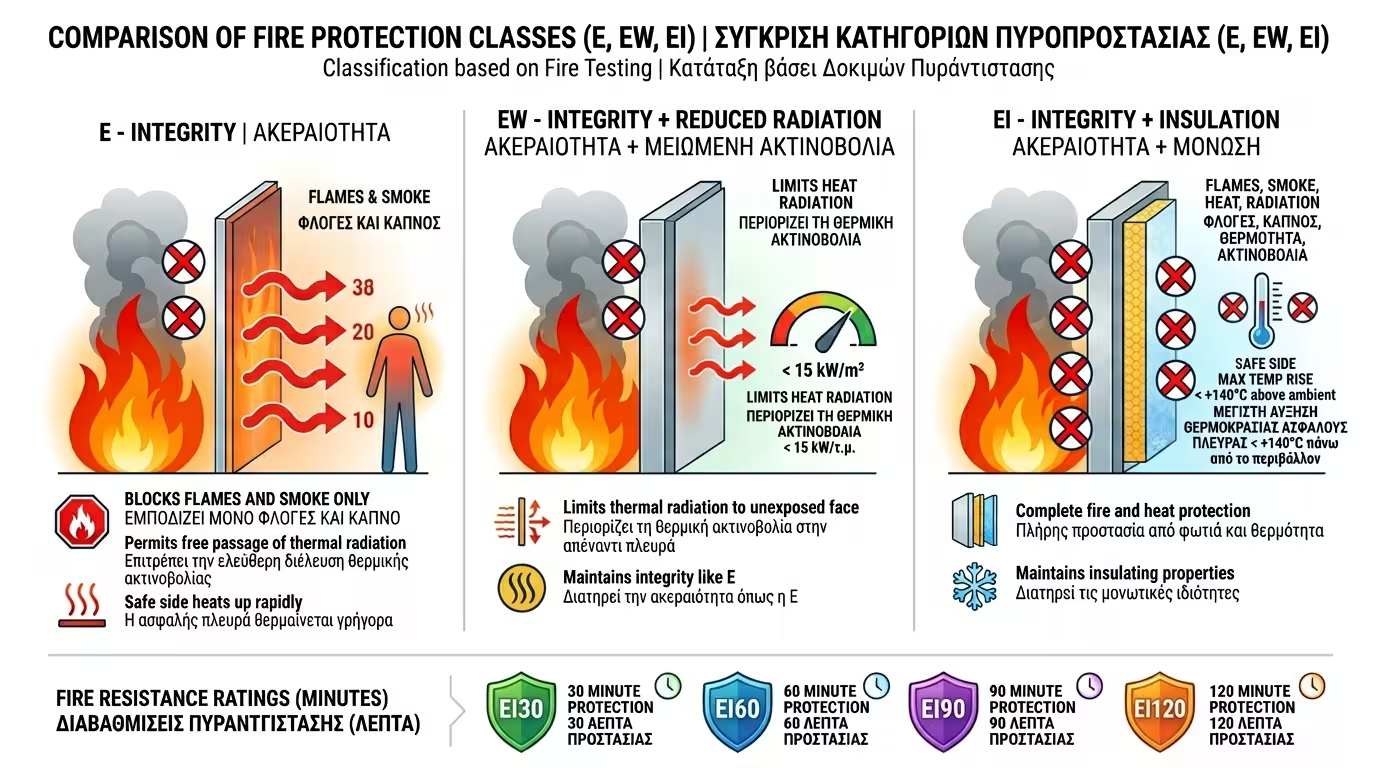
Fire-rated glass is classified into three categories according to
what exactly it blocks.
🔥 E (Integrity Only)
The most basic level. The glass withstands flames and smoke, does
not break and does not create openings. However,
heat passes through. If you stand opposite, the
radiated heat is so intense it can cause burns or ignite flammable
materials (e.g. papers, curtains) on the "safe" side. Used mainly in
fire-rated stairwell doors, in areas where nobody is expected to
stand very close.
🌡️ EW (Integrity + Reduced Radiation)
Intermediate level. Offers everything E does, but additionally
features a special metallic coating that reflects part of the heat
back into the fire. It limits transmission of radiated heat on the
safe side to below 15 kW/m². The temperature on the
safe side drops significantly, allowing safe evacuation provided
people do not linger close to the pane for too long.
❄️ EI (Integrity + Insulation)
The top category. The glass lets nothing through - neither flames,
nor smoke, nor heat. The "safe" side must not exceed
+140°C above room temperature. Critical in hospitals,
care homes, schools, and
any space where people cannot move quickly.
3. The Technology Behind EI: The "Magic" Gel
How does a transparent pane manage to keep heat out? The answer lies
in a remarkable material:
intumescent gel.
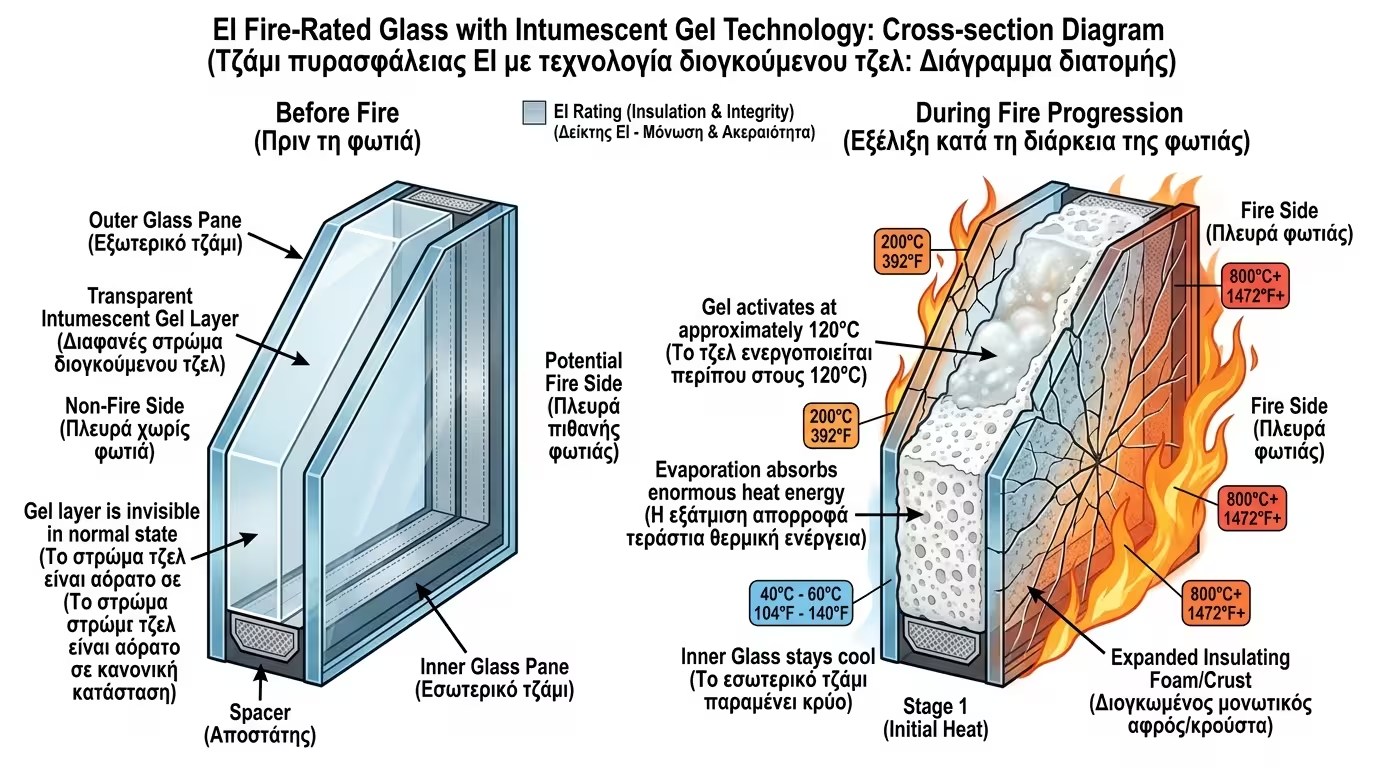
💧 Under Normal Conditions
The gel is a clear, watery substance, trapped between the glass
layers. It is completely invisible - the glass looks normal. In
simpler applications (where only integrity is required, not
insulation), borosilicate glass or glass-ceramic crystals are used
instead. These do not contain gel but inherently possess enormous
resistance to thermal shock.
🔥 During a Fire
As the temperature rises, the gel reacts: it evaporates the water
inside, expands, hardens and becomes
a dense, opaque shield (effectively "blinding" the glass).
This shield acts as a thermal wall, keeping lethal heat on the fire side.
The evaporation process absorbs enormous amounts of heat, buying precious
minutes.
⏱️ Endurance Times
The number after the category indicates minutes of endurance:
EI30 = 30 minutes, EI60 = 60 minutes,
EI90 = 90 minutes,
EI120 = 120 minutes. The most common in Greece are
EI30 and EI60.
4. The Fire-Rated Window "System"
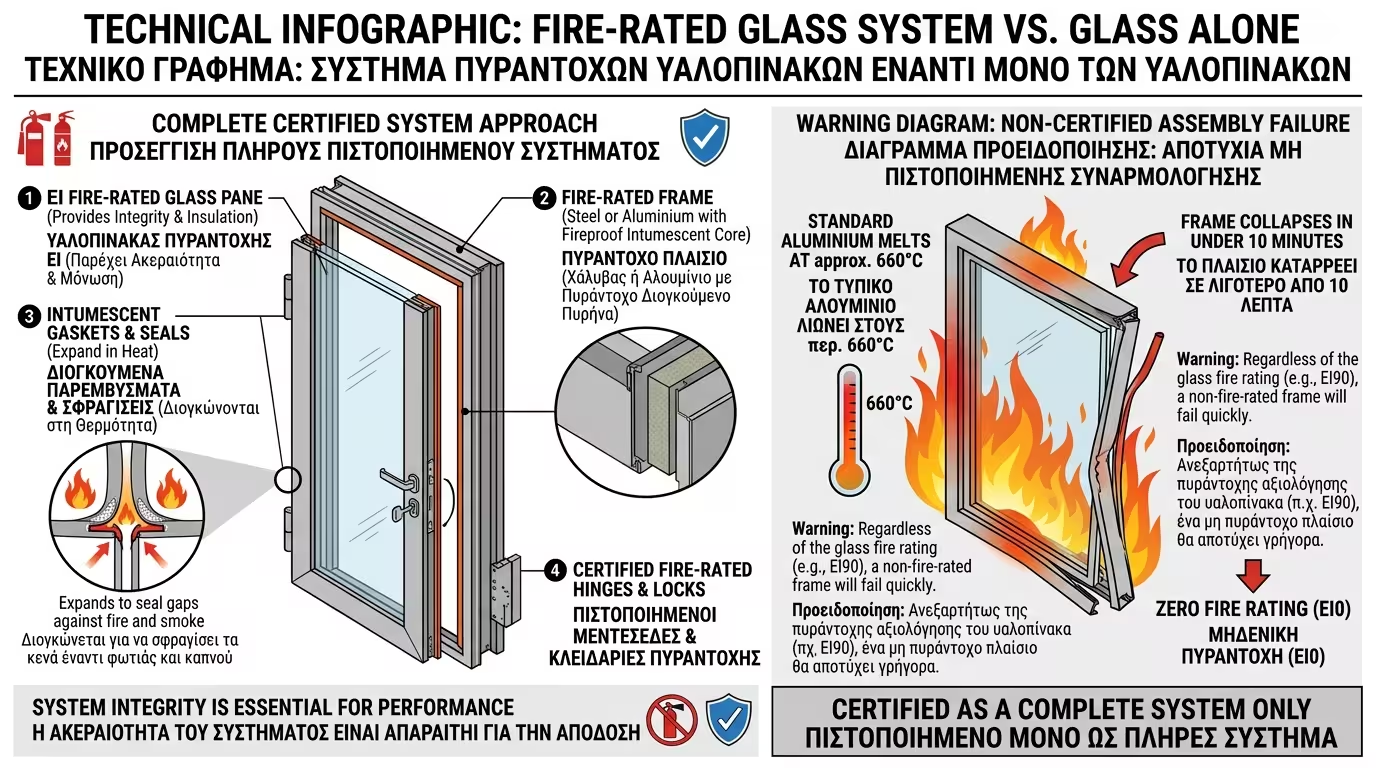
Don't make the same mistake we mentioned with ballistic glass: a
fire-rated pane is not certified on its own. It is certified as a
system together with an equally fire-rated frame.
🚫 Why Not Standard Aluminium?
Aluminium melts at 660°C. In a fire at 1,000°C, the
frame will dissolve long before the glass's protection time expires.
The hinges will melt, the door will fall and the fire will find a
clear path.
✅ Certified Frames
Steel fire-rated frames or aluminium with a special fireproof
core (intumescent material inside) are used. The gaskets are fire-rated
and expand in heat, sealing every gap.
5. Summary
✅ The Invisible Firefighter
Fire-rated glass is a building's "invisible firefighter". It does
not extinguish the fire, but buys the precious minutes that occupants need to reach the exit and the fire brigade to intervene.
It is worth remembering that fire protection is not a luxury - it is a
legal obligation in every multi-storey building, hotel, school and public
building.