☀️ Uniform Heating
When your entire window is bathed in sunlight, it heats and expands uniformly. No problem.
It's one of the biggest mysteries a homeowner can face. You wake up on a sunny morning, head to the living room with your coffee, and see a huge, strange crack running across the balcony door glass.
Your first thought is that someone tried to break in. You check the area, but there's no impact mark. No piece is missing, no stone lying around, and the house was locked. You start wondering if your house has "ghosts" or if the building has settled.
The truth is far more mundane and hides in the laws of physics. Your window fell victim to Thermal Shock (Thermal Stress). Let's see in plain language why a seemingly healthy pane "self-destructs" and how you can ensure it never happens again.
Like almost all solid materials, glass expands (grows) when heated and contracts (shrinks) when cooled.
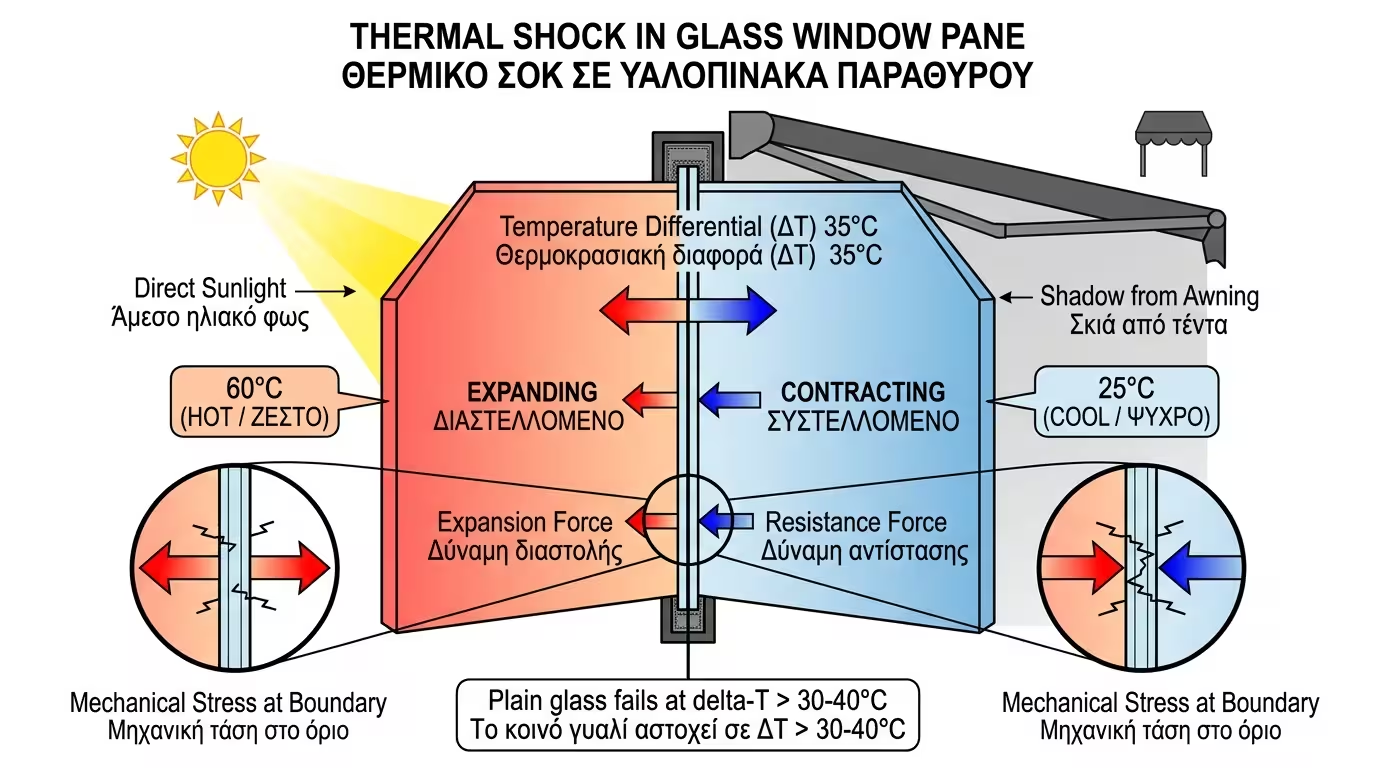
When your entire window is bathed in sunlight, it heats and expands uniformly. No problem.
The problem starts when the glass heats unevenly. Imagine that half your window is hit by the burning midday sun while the other half sits in shade (e.g. from an awning, a tree or the building opposite). The sunny section tries to expand; the shaded section resists. This "tug of war" creates enormous mechanical stress. When the temperature difference exceeds 30°C – 40°C (for plain glass), the pane tears.
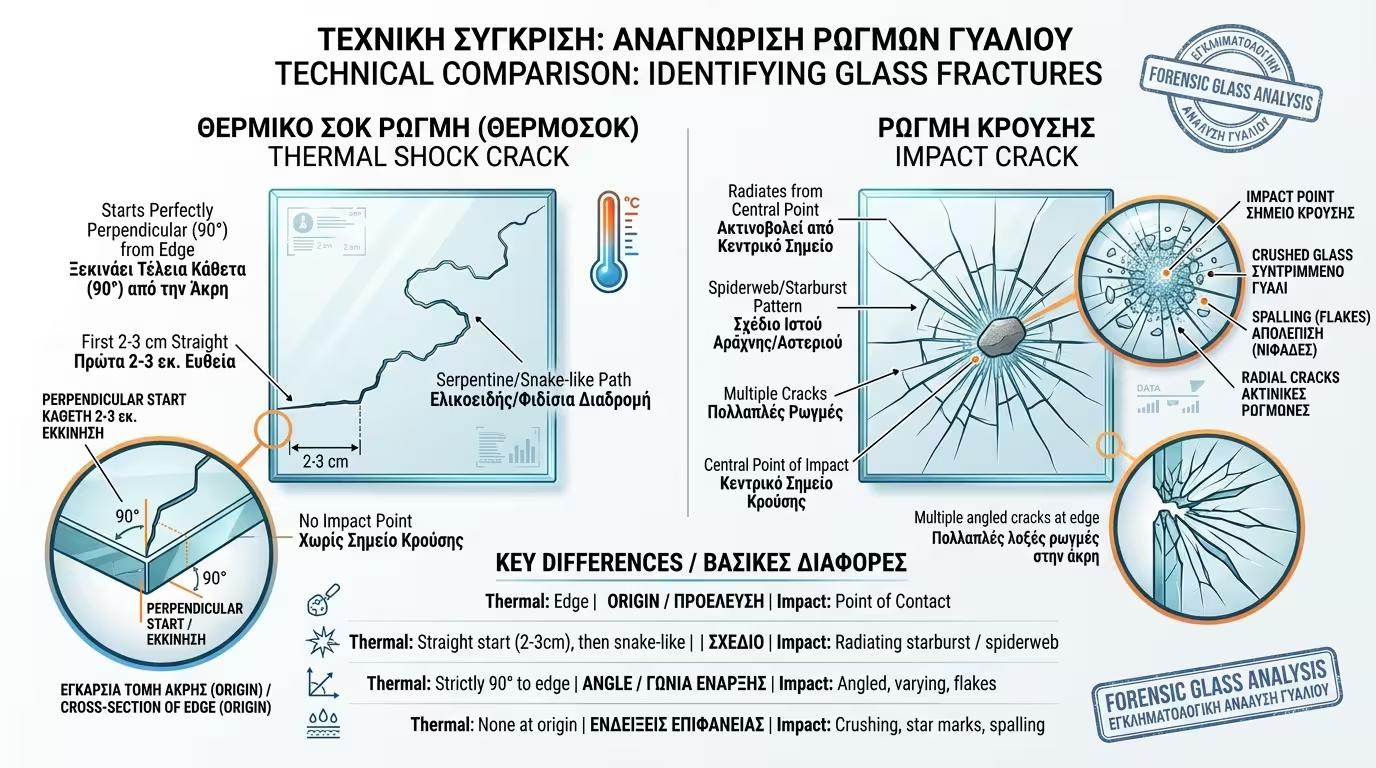
How can you tell the crack came from thermal shock rather than, say, a tennis ball?
A thermal crack has a very distinctive "signature": It ALWAYS starts from the pane edge (where it's hidden inside the aluminium), forming a perfectly perpendicular angle (90 degrees) with the frame for the first 2-3 centimetres. It then begins to wander irregularly (like a snake) towards the centre. There is no "impact point" (the spider-web pattern you see when something strikes glass).
If it happened to you, one of the following is most likely to blame:
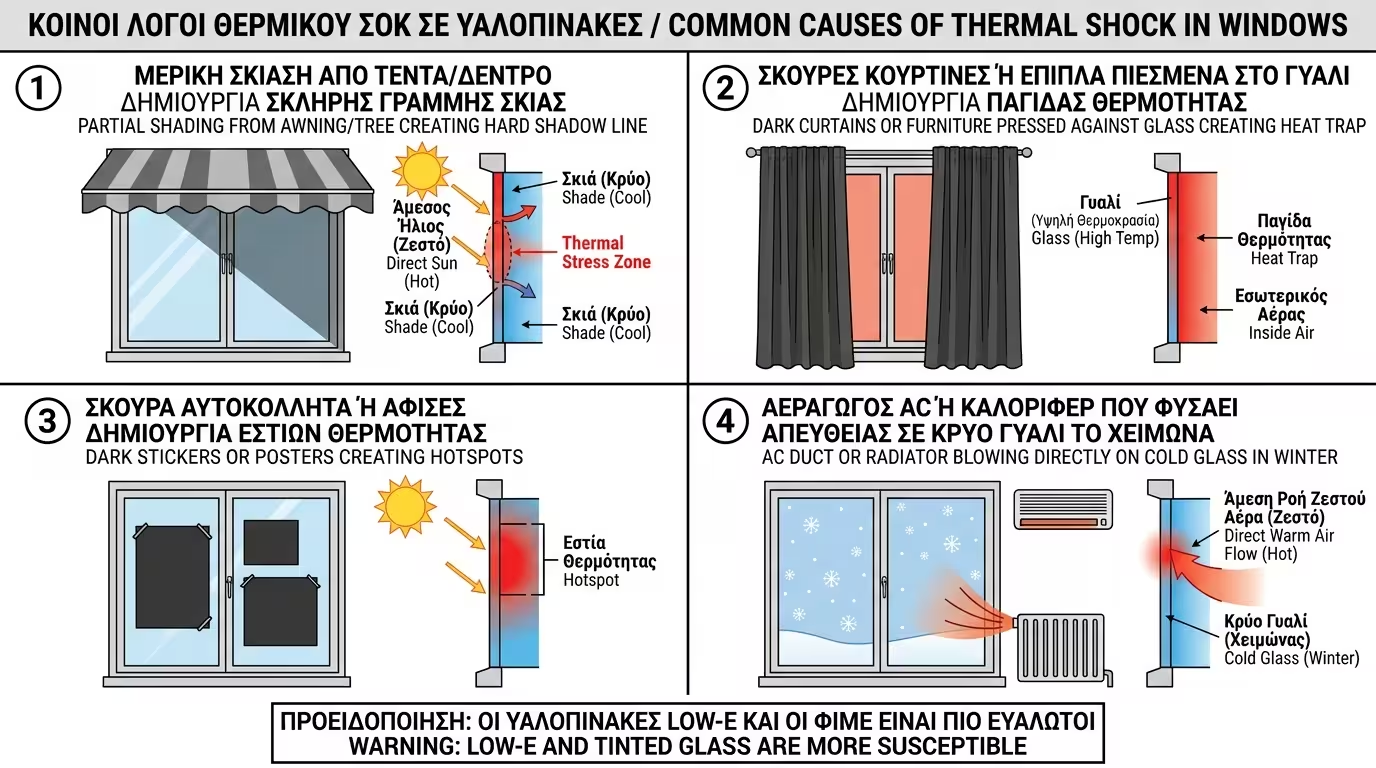
The most classic cause. An awning lowered to the middle of the window, a tree, or even the deep recess of the wall itself casting a "hard" shadow diagonally across the pane.
Have you pushed a sofa, a large cushion or a heavy, dark curtain right against the glass? These objects trap the sun's heat between the fabric and the glass, locally overheating the area (Heat Trap).
Any dark-coloured sticker (even large alarm stickers) absorbs solar radiation, creating a localised "hot" spot (hotspot).
If hot air from the air conditioner or heat from a radiator blows directly onto the ice-cold (in winter) interior pane, thermal shock is just a matter of time.
Modern Low-E and tinted panes are more susceptible to thermal shock if not manufactured correctly, because by nature they absorb/reflect more thermal energy.
The biggest mistake you can make when a pane breaks from thermal shock is to call a technician and ask for "exactly the same one". If the conditions (shade, sun) remain the same, the new pane will crack again with mathematical certainty!
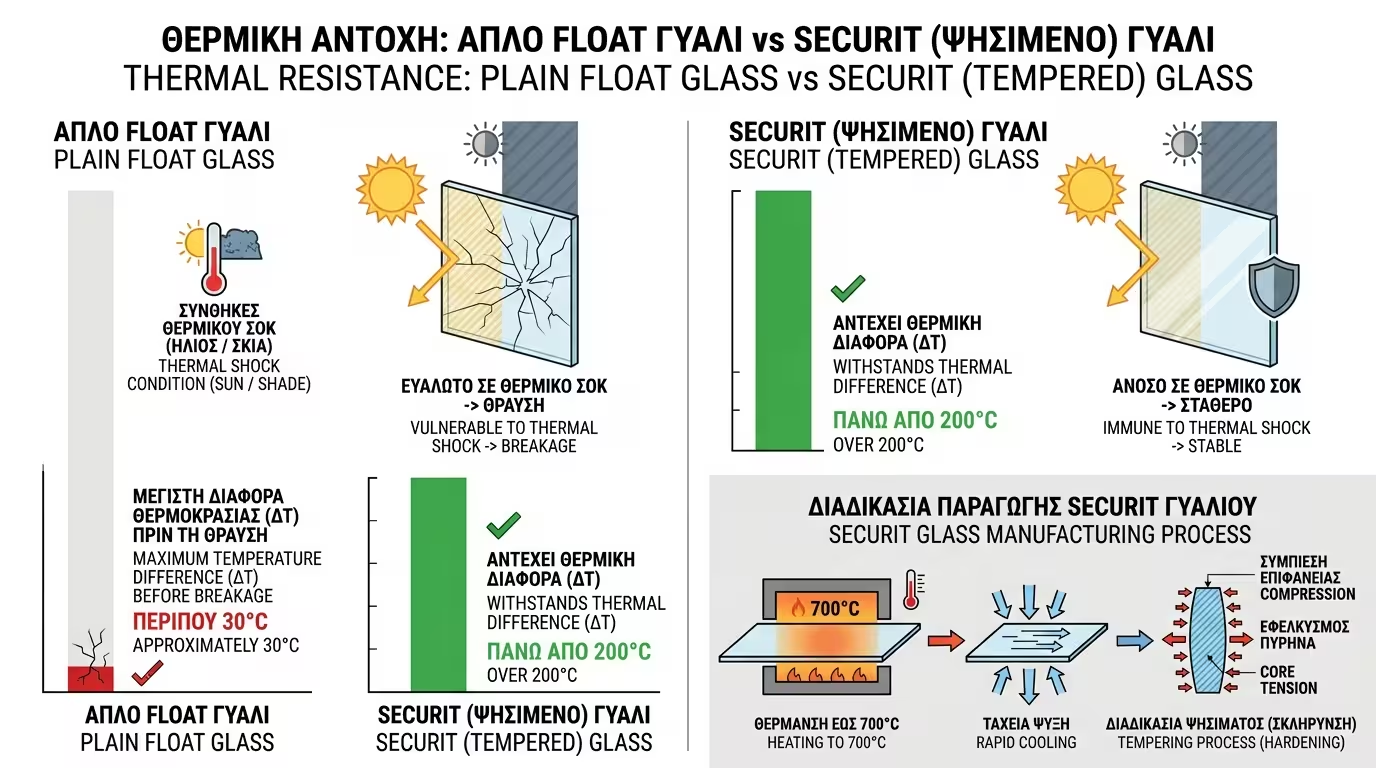
The only definitive solution is to replace the plain glass with Securit (Tempered Glass). As we saw in the previous article, Securit is baked at 700°C. This process doesn't just make it resistant to mechanical impacts - it also gives it staggering resistance to temperature differences. While plain glass breaks at a ~30°C differential, Securit glass can withstand temperature differences exceeding 200°C! For all practical purposes, it is "immune" to thermal shock.
A spontaneous window crack is not cause for panic, but a warning sign that plain (float) glass cannot handle the local sun-and-shade conditions around your home. Avoid pressing furniture and dark curtains against the glass and, when it's time for replacement, invest in the right technology.
Return to category.
Go to categoryReturn to the central guide.
Go to guide