Sealant Mastics (Thiokol, Silicone, Polyurethane) in Double Glazing
Manufacture - The Industry Guide
In a previous article we explained the "nightmare" of a fogged glazing
unit: when a double glazed unit takes on moisture internally, it is
because "its seal has failed". But what exactly is this seal? How does a
factory manage to join two panes of glass and a metal or plastic spacer
bar, creating a chamber that will keep air and moisture out (and the
Argon gas in) for
20 or 30 years?
If you are a window fabricator, an engineer or a well-informed
homeowner, you know that the answer is not a simple adhesive. It lies in
a strict, CE-certified
Dual Seal System that uses specialised industrial sealants.
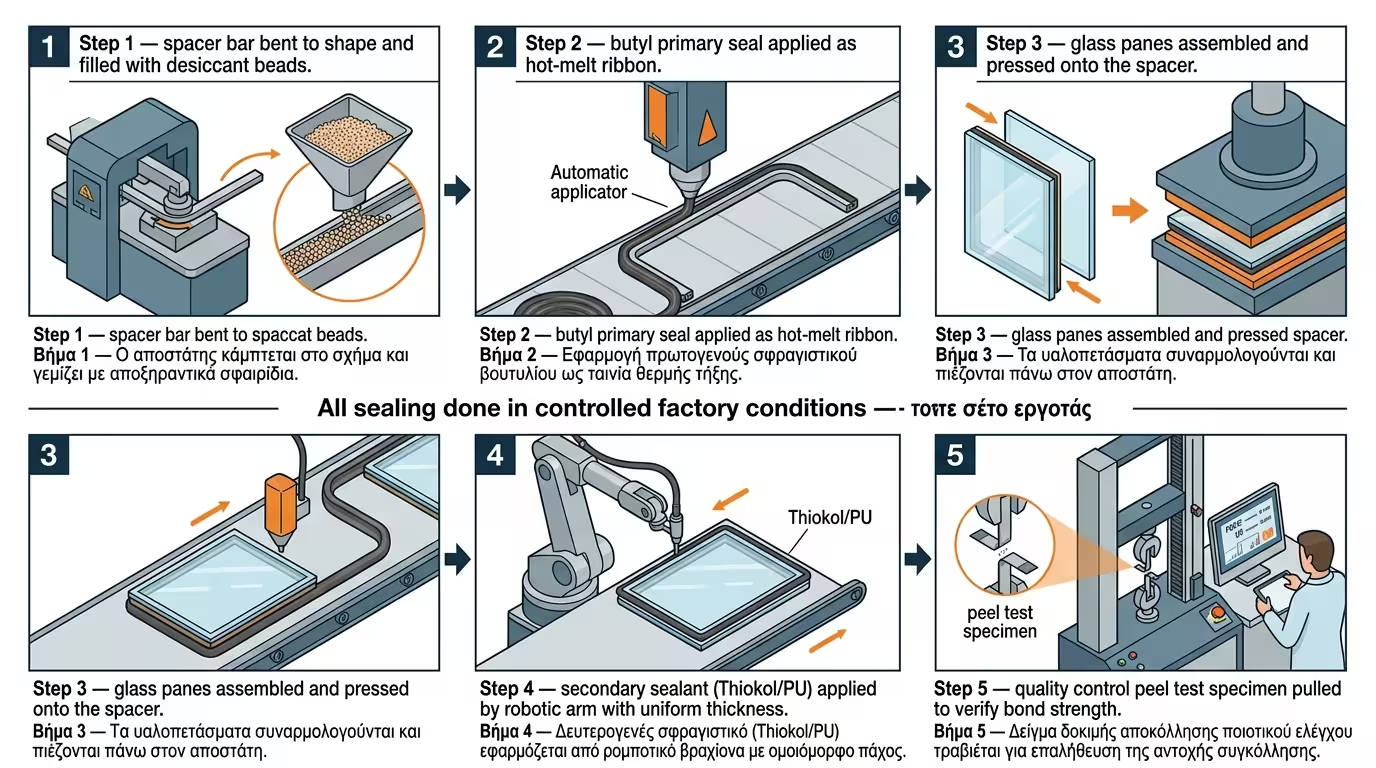
Let us step inside the production line of a modern glazing factory and
analyse the chemistry that keeps double glazing alive.
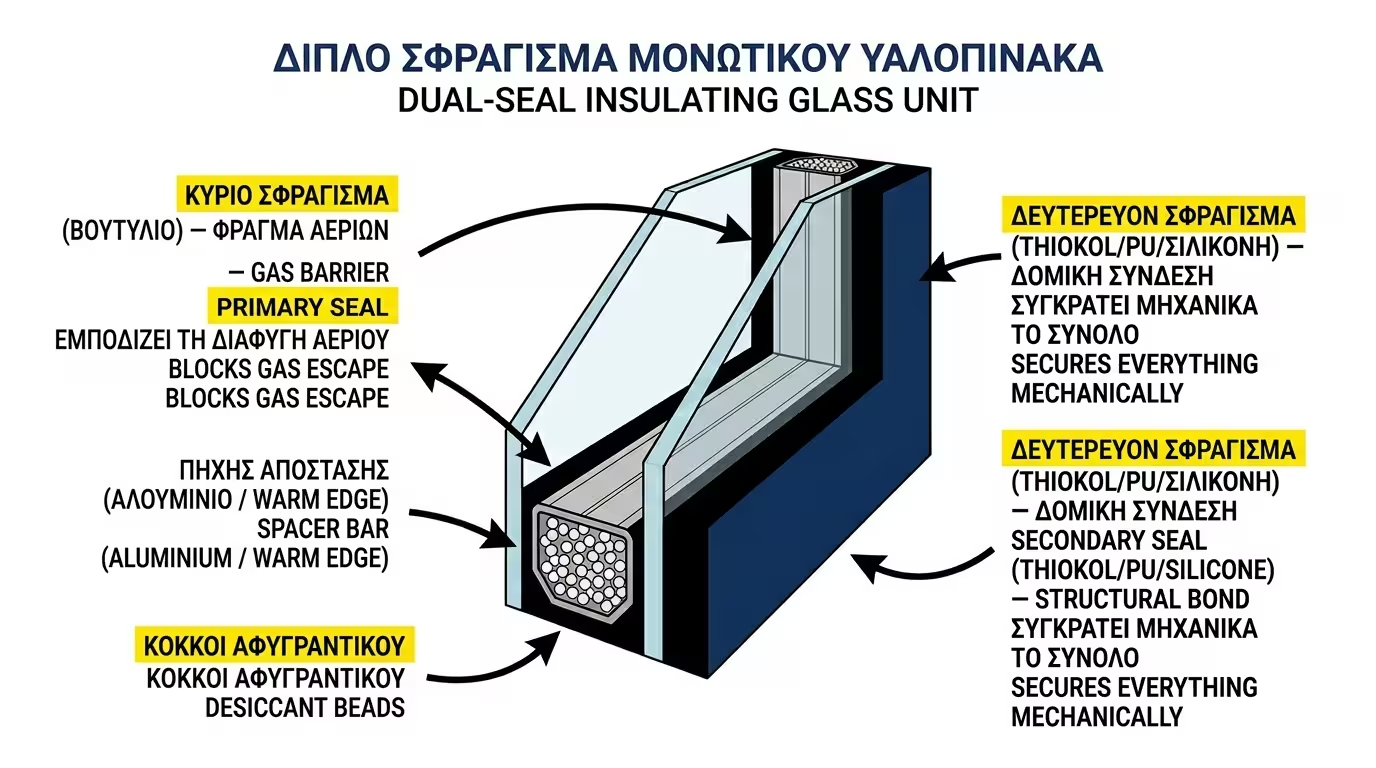
1. The Dual Seal System: The Rules of the Game
A CE-certified, modern energy double glazed unit is never sealed with
a single material. The process requires two lines of defence, each with an entirely different role.
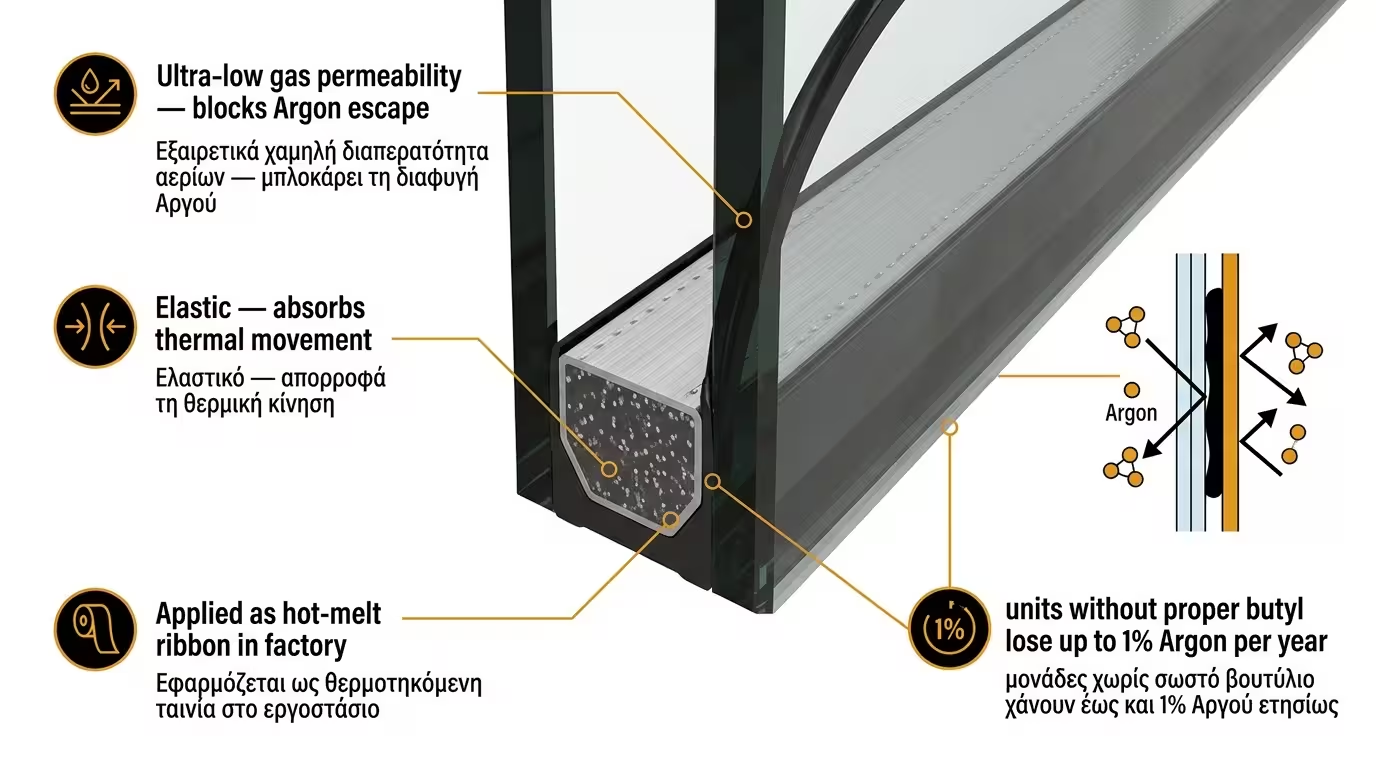
1️⃣ 1st Line: Butyl (PIB)
Before the panes are joined, a thin, continuous ribbon of Polyisobutylene (PIB)
- widely known as Butyl - is hot-applied to the sides
of the spacer. Butyl does not dry, and does not bond through chemical
reaction - it remains elastic and "sticky" like chewing gum for decades.
It has no mechanical strength - its sole purpose is to act as the ultimate
"vapour barrier". It has the lowest permeability to gases and water vapour of any known sealing material. Practically, this thin ribbon is the
sole reason Argon does not escape and moisture does not enter. If the
butyl is applied carelessly (e.g. with gaps or discontinuities), no secondary
material will save the unit's longevity.
2️⃣ 2nd Line: The "Glue" (Secondary Sealant)
After the panes are joined with the spacer and the butyl is applied,
a perimeter gap (the "channel") is completely filled - usually by a
robotic arm - with the secondary sealant. This provides enormous mechanical strength: it holds the heavy panes (which can weigh 25–40 kg per square
metre) together as a single body. It withstands the tremendous
forces of wind pressure, thermal expansion and contraction (the
glass can expand by millimetres every day) and protects the delicate
butyl from mechanical damage.
2. Polysulfide (Thiokol): The Industry Standard
Polysulfide (known in the market by the trade name of the first
company to produce it,
Thiokol) is the most widely used secondary sealant
worldwide for conventional double glazing. It is used in over 70% of
glazing factories.
✅ Advantages
It is a black, two-component mastic that cures quickly, ensuring a
rigid-elastic bond within 24 hours. It offers excellent mechanical strength, very good gas retention and is the most economical option on the market. Its chemical nature guarantees reliable bonding
even in extreme temperature variations.
❌ The Major Limitation: UV
It cannot withstand ultraviolet (UV) radiation from the sun! If Thiokol is exposed directly to sunlight, it "burns", dries out and
cracks - the glazing unit will fail within months. That is why it is used
exclusively in units that will be "buried" inside a traditional
frame (aluminium, timber or PVC) that will hide and protect the seal from
the sun.
3. Polyurethane (PU): The Argon "Champion"
In recent years, polyurethane has been gaining enormous ground,
especially in units with high energy requirements (triple glazing,
Krypton fills, Ug values below 0.6 W/m²K).
✅ Advantages
It offers even greater elasticity than Thiokol and has
an even
lower gas permeability rate - up to 50% lower. This means
a double glazed unit sealed with polyurethane will retain its Argon gas
for far more years compared to one sealed with Thiokol. The greater elasticity
also means less stress on the bond, especially in extreme temperature
differences.
❌ Limitation
Like Thiokol, polyurethane is sensitive to UV radiation and requires protection from the window frame. It must never be exposed
to sunlight without full frame coverage. In Hot-Melt Reactive applications,
it is applied on an automated production line at temperatures of 120–140°C.
4. Structural Silicone: The Solution for Glass Façades
Here we change category entirely. There are cases where the edge of
the double glazed unit
is not hidden inside aluminium, but is fully exposed
to the sun: glass skyscrapers, curtain walls, or minimal frames where
the panes are bonded flush. If Thiokol were used there, it would be
destroyed within a month. The only solution is
Structural Silicone.
✅ Advantages
It is completely impervious to UV radiation and extreme
weather conditions (operating reliably across a range of -50°C to +150°C). It never dries out, never yellows, and never loses its
elasticity. Its mechanical strength is astonishing: it can hold the
weight of a glazed panel in the air, even at a height of 200 metres
facing winds of 200+ km/h, without any frame support!
❌ Limitation
Silicone is very "porous" to gases. A unit sealed with silicone loses its Argon gas much faster than one sealed with polyurethane or Thiokol. This means its energy
performance degrades more quickly over the years. It is also significantly more expensive, but non-negotiable in structural glazing applications where the
joint is exposed to the environment.
💡 There is no "one sealant fits all". The right sealant goes in the
right application:
Thiokol or PU in concealed joints (inside frames),
Structural Silicone in exposed joints (curtain walls, minimal
frames, structural glazing).
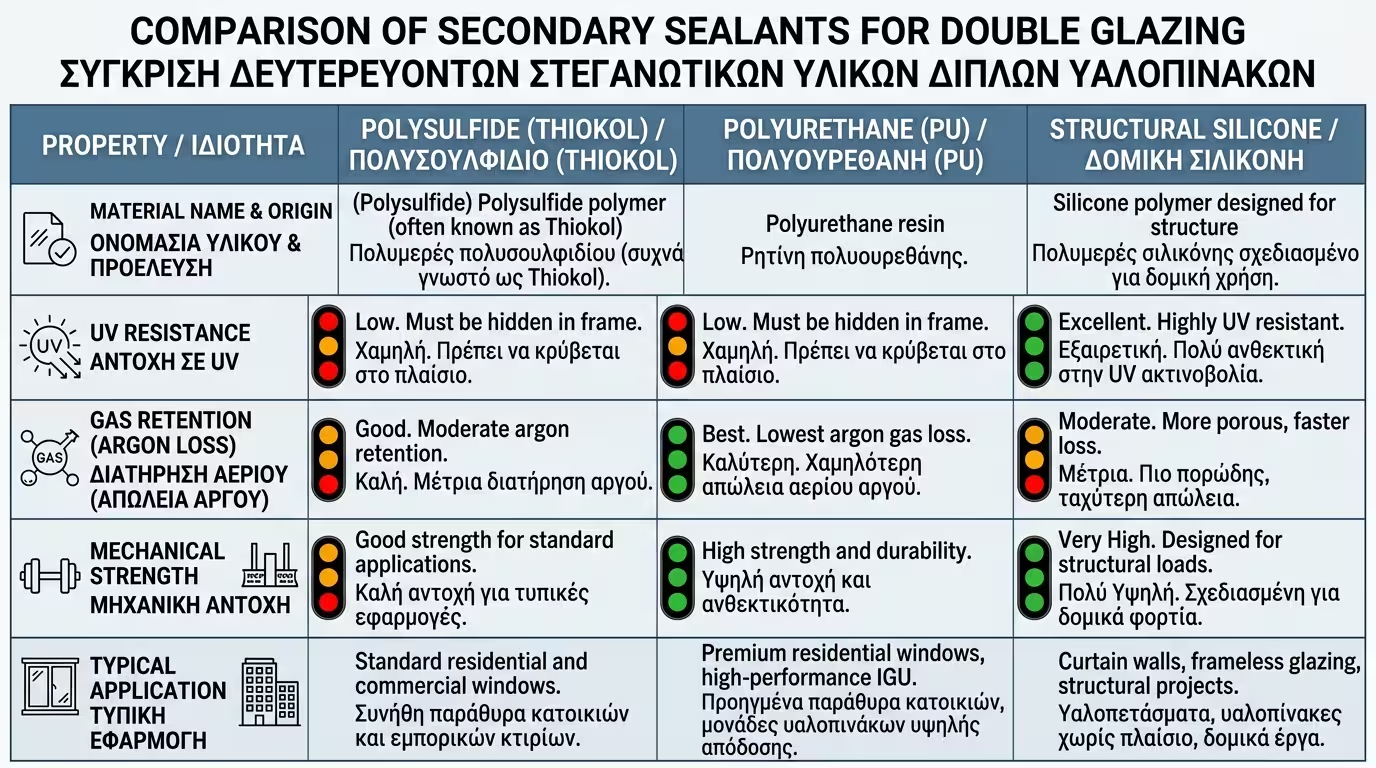
5. Comparison Table: Thiokol vs PU vs Silicone
Property
Polysulfide (Thiokol)
Polyurethane (PU)
Structural Silicone
Mechanical strength
Excellent
Excellent
Astonishing
Argon retention
Good
Excellent (50% better)
Moderate
UV resistance
None
None
Absolute
Cost
Low
Medium
High
Ideal application
Concealed joints in frames
High-performance glazing in frames
Exposed joints, structural glazing
6. Why Cheap Glazing Units Fail: The Seal Makes the Difference
⚠️ Missing or Defective Butyl
Some low-cost factories apply butyl on only 3 of the 4 sides, or
leave gaps at the corners. Result: within 2–5 years, the unit starts to fog, the Argon escapes, and the Low-E coating
is destroyed by oxidation. The unit effectively becomes a plain
double glazed unit with none of its specialised properties - money
down the drain.
⚠️ Wrong Sealant for the Application
If Thiokol or PU is used in an exposed joint (e.g. a minimal frame
without a bead), within a single summer the UV will eat away the
sealant. Conversely, if structural silicone is used in a concealed
joint instead of Thiokol or PU, it will lose Argon far faster -
sacrificing energy performance for no reason.
⚠️ Manual Application Instead of Robotic
In a modern, certified factory, the secondary sealant is applied by
a robotic arm with a perfectly uniform layer. The price
of a glazed unit can vary enormously - and the first saving unscrupulous
manufacturers make is to cut costs on sealing materials and the method
of application.
⚠️ The right sealant goes in the right application - there is no "one
sealant fits all". Do not hesitate to ask your manufacturer exactly
which material they use.
7. Summary: The Chemistry That Keeps Glazing Alive
✅ The Guarantee of Certification
The longevity of a double or triple glazed unit depends not on how
expensive the glass is, but on
the quality of its chemical seal. The use of
certified sealants (Thiokol, PU or Silicone) combined with robotic
application in the factory guarantees that your investment will never fog up.
📋 What to Ask Your Manufacturer
Always ask for a CE certificate and inquire which sealant
your manufacturer uses before deciding. If your glazing will sit in a
concealed joint (traditional frame), ask for Thiokol or PU. If it is a
minimal application with an exposed joint, make sure structural silicone
is used. This small question can save you from costly replacement in just
a few years.