📏 Typical Values
Single pane 6mm: Ug ≈ 5.7.
Double (air, no coating): Ug ≈ 2.7.
Double Low-E + Argon (16mm): Ug ≈ 1.0 – 1.1.
Triple Low-E + Argon: Ug ≈ 0.5 – 0.6.
VIG (Vacuum): Ug ≈ 0.4 – 0.7.
If you're an engineer (civil, architect or mechanical), the way you select glazing is not based on commercial names ("Low-E", "Four-Season", "Triplex") but on numerical coefficients defined by European Standards EN 673, EN 410 and the KENAK requirements.
Two of the most critical are Ug (glass thermal transmittance) and g (solar factor / SHGC – Solar Heat Gain Coefficient). Understanding them is not merely academic - it is a legal obligation when preparing an Energy Performance Study (EPS). Let's see what each one measures, how they interact, and how they translate into correct choices.
Ug (U-glass) measures how much heat is lost through the glass pane per square metre, for every 1°C temperature difference between inside and outside. Unit: W/(m²·K).
Single pane 6mm: Ug ≈ 5.7.
Double (air, no coating): Ug ≈ 2.7.
Double Low-E + Argon (16mm): Ug ≈ 1.0 – 1.1.
Triple Low-E + Argon: Ug ≈ 0.5 – 0.6.
VIG (Vacuum): Ug ≈ 0.4 – 0.7.
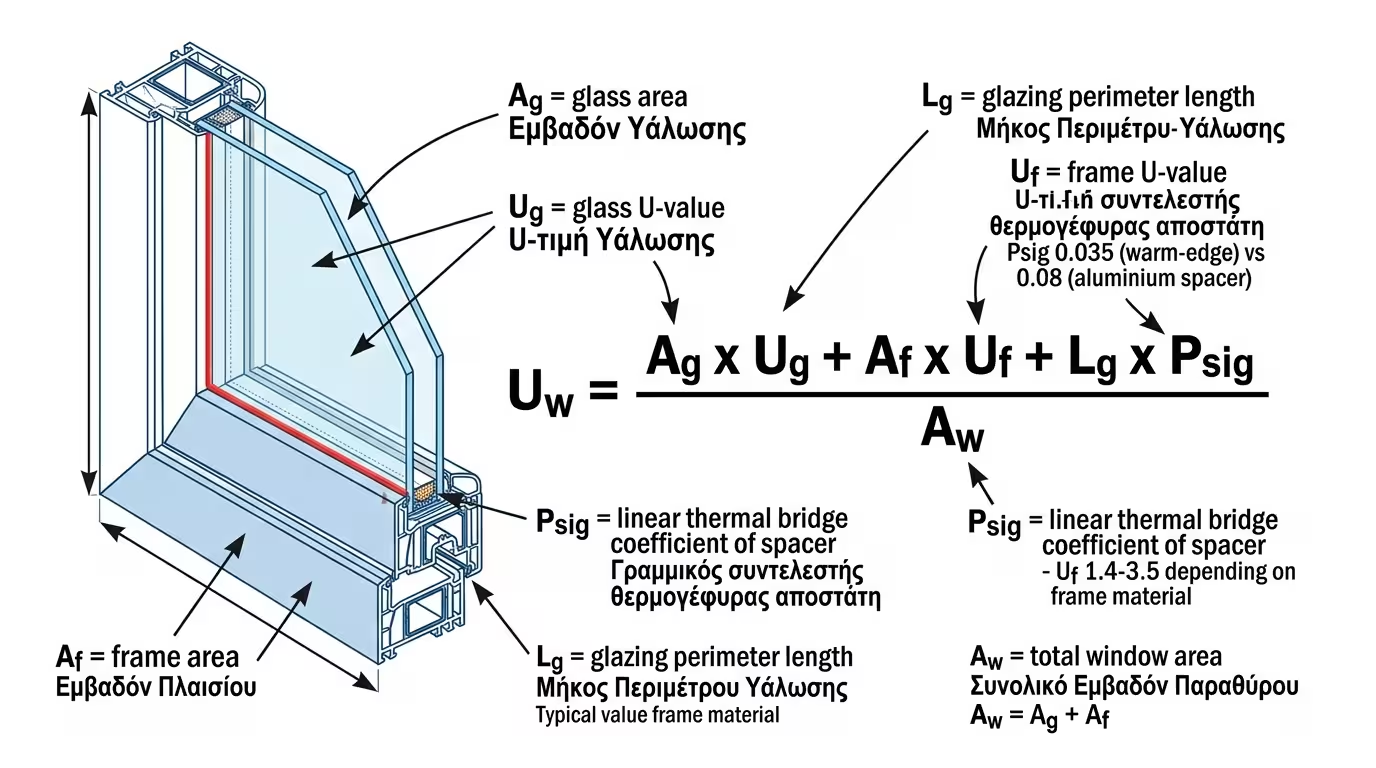
Ug refers only to the glass pane. The overall window coefficient (Uw) also includes the frame (Uf) and the linear coefficient Ψg (spacer/frame thermal bridge): Uw = Ag·Ug + Af·Uf + Lg·Ψg (divided by total area Aw). KENAK checks Uw, not Ug alone.
A large window (e.g. 3×3 m) with Ug = 1.0 instead of 1.3, in a home in Climate Zone B (Athens), saves approximately 50-80 kWh of heating per year per window - multiply by 10 windows and the difference becomes substantial.
The g (or g-value, or Solar Factor, or SHGC – Solar Heat Gain Coefficient) expresses the percentage of solar energy that enters the building through the glass pane. It ranges from 0 (nothing passes) to 1 (everything passes).
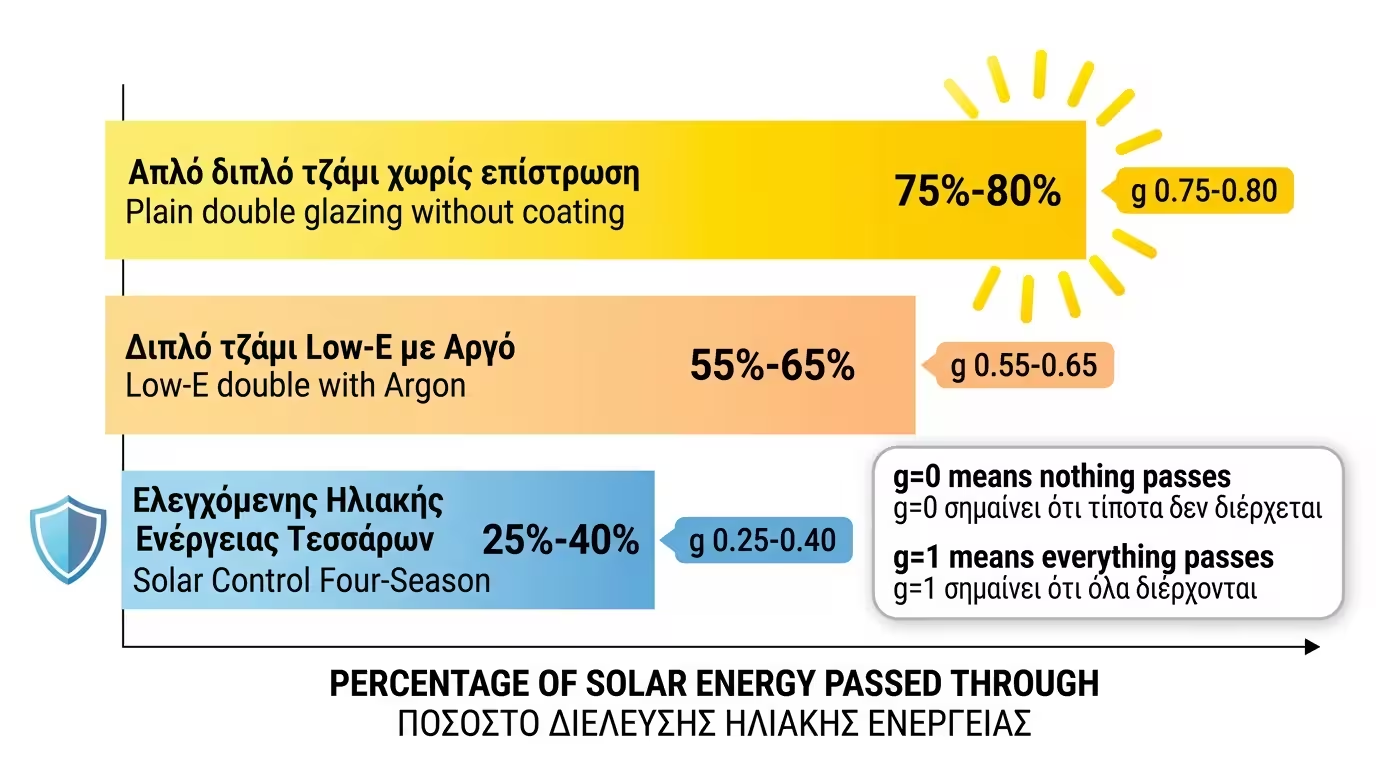
Plain double (no coating): g ≈ 0.75 – 0.80
→ ~80% of solar radiation passes through.
Double Low-E + Argon: g ≈ 0.55 – 0.65 → adequate solar
heating, suitable for north facades.
Double Solar Control (Four-Season): g ≈ 0.25 – 0.40 →
blocks 60-75% of solar energy, ideal for south/west.
In Greece (especially Climate Zones A & B), cooling loads often exceed heating loads. An engineer who ignores the g-value and installs high-solar-gain glass (g > 0.55) on south-west facades will see the owner paying enormous air-conditioning bills.
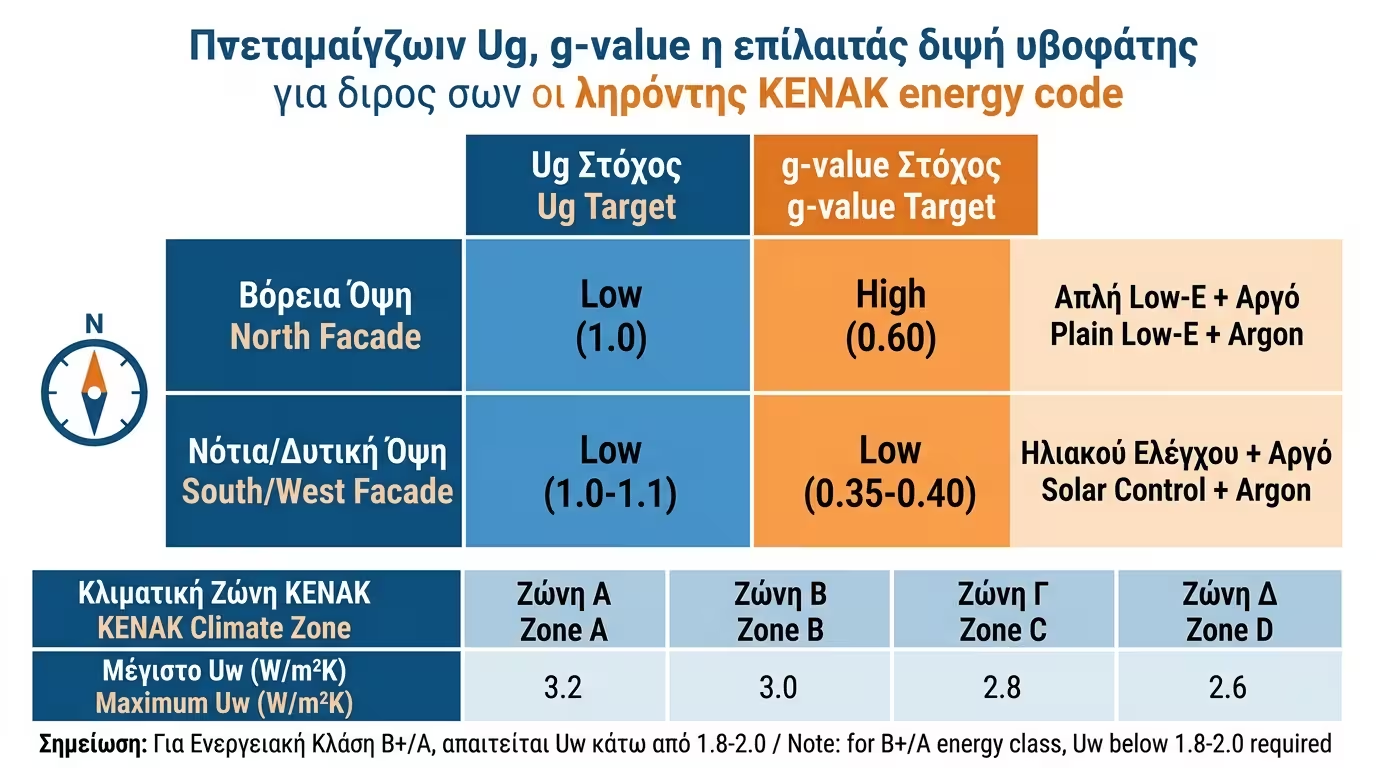
This is where engineering "art" hides. The two coefficients don't work independently - they interact.
We want low Ug (maximum insulation) and relatively high g-value (utilise what little sun there is): Plain Low-E + Argon, Ug ~1.0, g ~0.60.
We want low Ug (insulation) AND low g-value (filter solar heat): Solar Control (Four-Season) + Argon, Ug ~1.0-1.1, g ~0.35-0.40.
KENAK sets maximum permissible Uw per climate zone (e.g. Zone A: Uw ≤ 3.2, Zone B: Uw ≤ 3.0, Zone C: Uw ≤ 2.8, Zone D: Uw ≤ 2.6). However, to achieve energy class B+ or A, you need values well below that (Uw < 1.8-2.0).
Here is a practical decision-making framework:
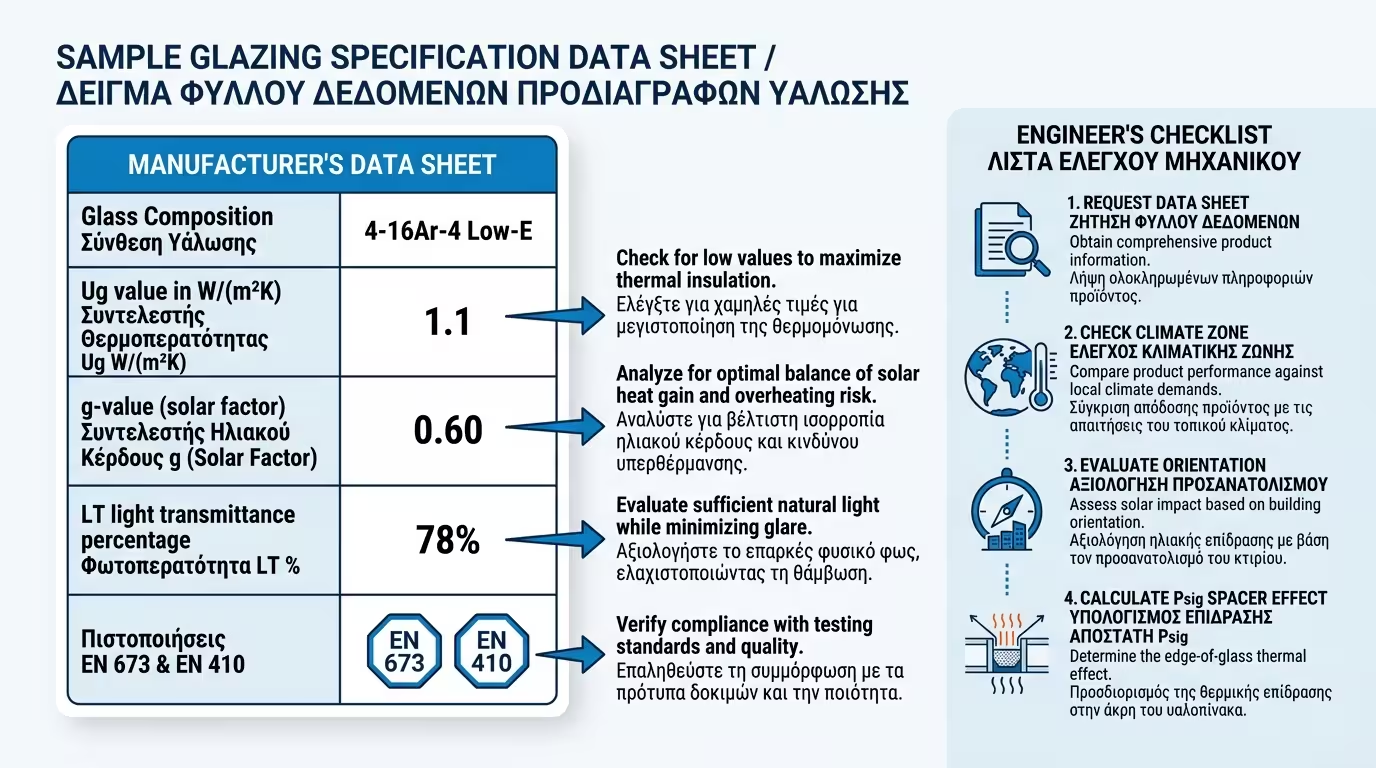
From the glazing manufacturer, always request the Data Sheet with Ug, g and LT (light transmittance) certified to EN 673 & EN 410.
Start from your project's climate zone (KENAK). This determines the maximum Uw, which in turn dictates the maximum Ug.
For each facade, select the ideal Ug + g combination. Don't specify the same glazing everywhere per study - that's either wasteful or insufficient.
Factor in the spacer. Plastic/warm-edge spacer (Ψg ≈ 0.035) vs aluminium (Ψg ≈ 0.08): it can reduce Uw by 0.1-0.3 W/(m²K), which is critical in Zone C or D.
Don't ask for "Low-E glass" or "Four-Season glass" without knowing the numbers. Request specific Ug ≤ X, g ≤ Y, LT ≥ Z%, per facade, per use. This is the language that the KENAK study, the energy certification, and ultimately the owner's electricity bill speaks.
Return to category.
Go to categoryReturn to the central guide.
Go to guide