Vacuum Insulated Glass (VIG): The Glass That Insulates Like a Wall at Just 8mm Thick

Imagine a pane of glass as thin as a smartphone, that installs into an existing frame without any modifications, without Argon gas, without bulky spacers, yet insulates 10 times better than a single pane and equally well as triple glazing!

This is not science fiction. It already exists on the market (though still at premium prices) and it's called Vacuum Insulated Glass (VIG). It is based on the same principle that keeps your coffee hot inside a thermos flask: Eliminating the air. Let's see how this becomes possible in a window, why it's so impressive, and where it finds practical application.

1. The Vacuum Principle: Why "Nothing" Insulates Everything

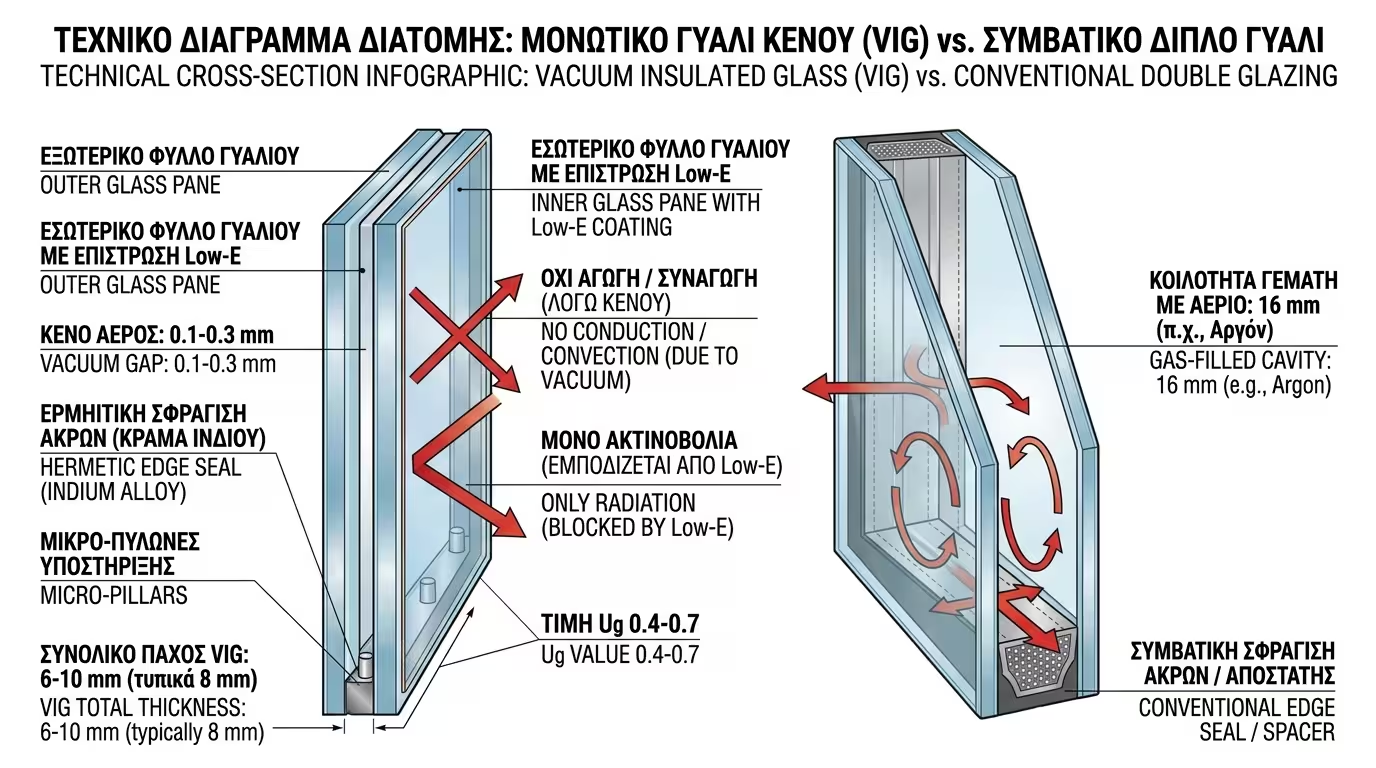
In classic double glazing, we place air or Argon between two glass panes. This gas acts as an insulating cushion, but even the heavy Argon molecules still transfer some heat.

VIG cross-section - two glass panes with 0.1-0.3mm vacuum gap

🔬 The Radical Idea

What if we remove ALL the air molecules? What if we create an absolute vacuum between two panes? Without molecules, there is no conduction or convection of heat. The only remaining heat transfer mechanism is radiation - which we already address exceptionally well with a Low-E coating!
📏 Vacuum Thickness

Unlike the 12-16mm cavity of a classic double-glazed unit, the vacuum in a VIG is just 0.1 – 0.3 millimetres thick! This allows the total VIG thickness to remain impressively small: just 6-10mm (typically ~8mm).

2. Micro-Pillars (Micro-Spacers): How the Glass Panes Hold Up

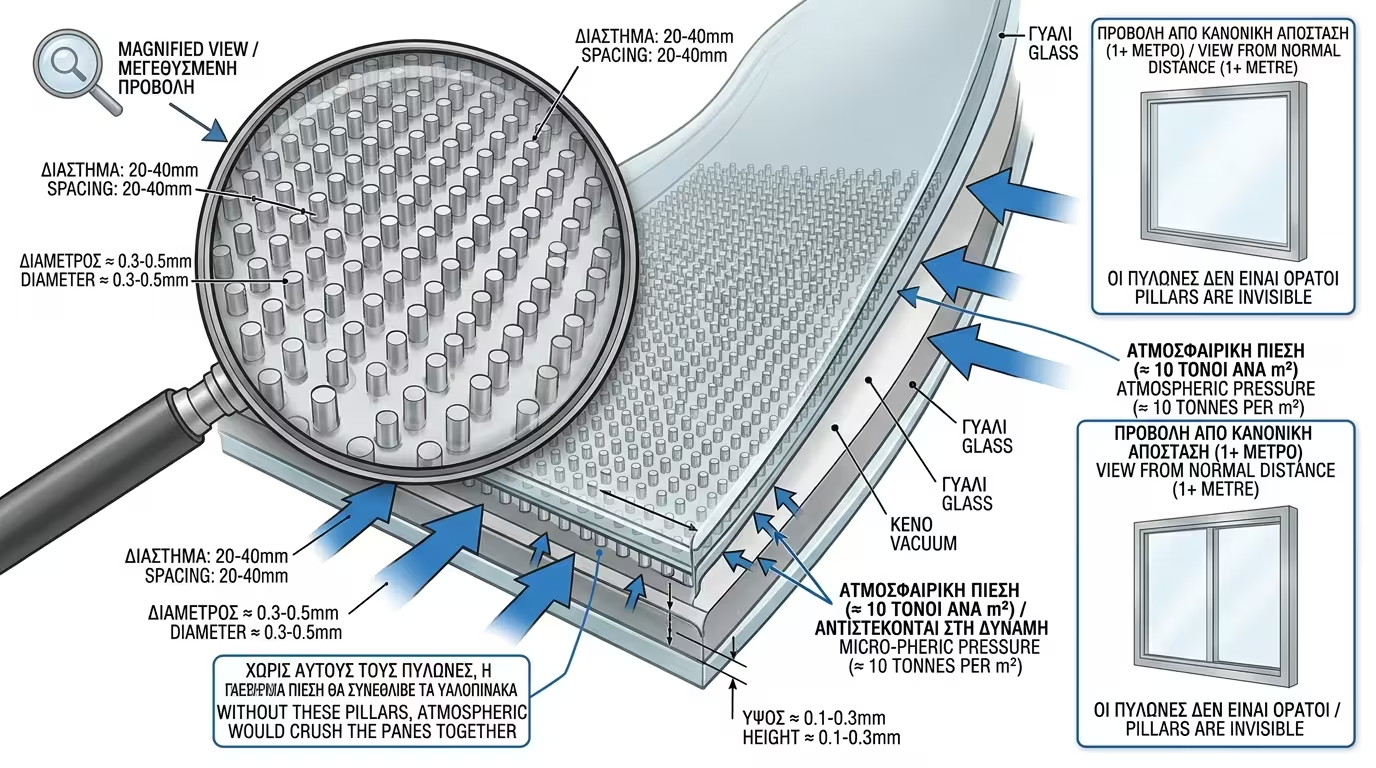
This is where the greatest engineering challenge lies. In classic double glazing, the air/gas balances atmospheric pressure. In vacuum glass, the atmosphere exerts enormous pressure (~10 tonnes per square metre!) trying to "crush" the two panes together.

VIG micro-pillars - thousands of microscopic pillars supporting the panes

📌 The Solution

Between the two panes, thousands of microscopic metallic or ceramic pillars (micro-pillars / micro-spacers) are placed in a regular grid, typically every 20-40mm.

📐 Dimensions

Each micro-pillar has a diameter of ~0.3-0.5mm and a height of ~0.1-0.3mm. Up close (with very careful observation) they may appear as tiny dots, but at normal viewing distance (1+ metres) they are impossible to see.

🔒 Perimeter Sealing

The perimeter of the VIG is hermetically sealed, usually with metallic (indium alloy) or glass (solder glass) bonding, which guarantees the vacuum for decades.

3. Where VIG Shines: Applications

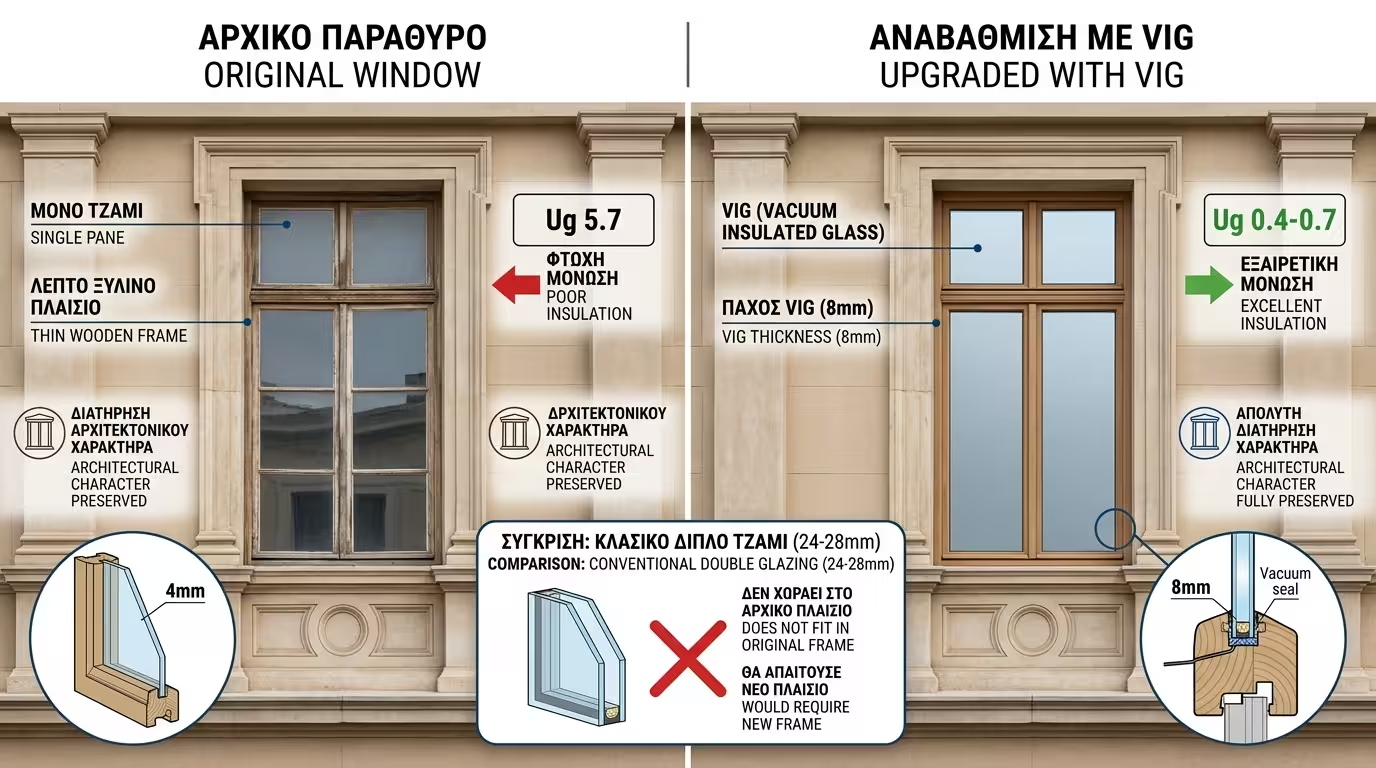
VIG in heritage building - energy upgrade without altering character

VIG is not (yet) the ideal choice for every home. But in specific applications it is irreplaceable:

🏛️ Heritage & Neoclassical Buildings

Entire historic centres of Europe (including Athens) have buildings with single-pane windows, small dimensions and very thin wooden frames. Replacing with classic double glazing (24-28mm) won't fit the existing frame. VIG (8mm) fits perfectly, delivering wall-level insulation without altering the architectural character.

🏗️ Minimal Frameless Windows

In oversized minimal fixed glass panes, the reduction in thickness means less weight (important for rollers/mechanisms) and slimmer profiles.

🏠 Passive Houses

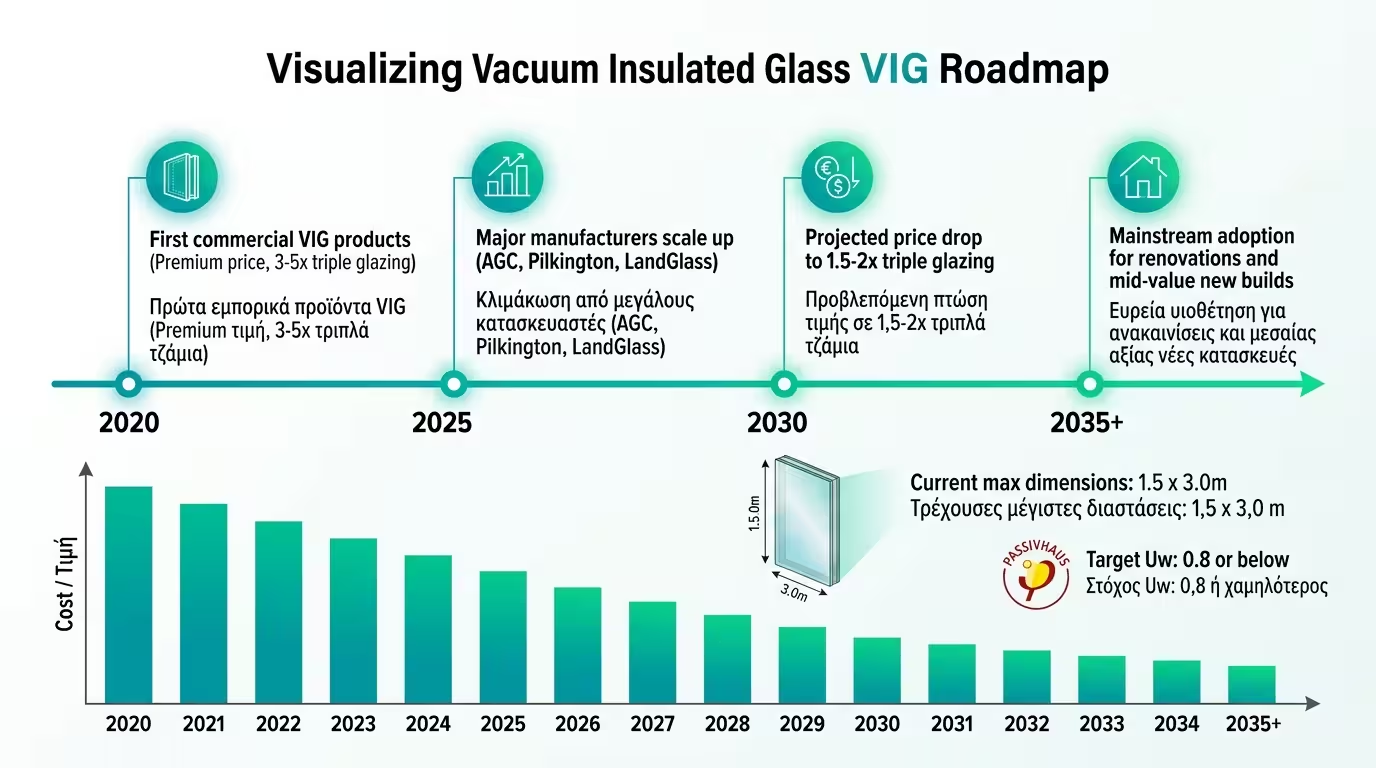
Passive Houses (Passivhaus) require Uw ≤ 0.8 W/(m²K). A VIG with Ug ~0.4-0.5, in a modern frame, can achieve this target without triple glazing.

🔇 Sound Insulation

The vacuum blocks noise equally impressively. A VIG can achieve noise reduction of 35-40 dB, ideal for main roads or airports.

4. Current Limitations & The Future

Despite the impressive technology, VIG is still in its maturation phase:

Future of VIG technology - mass production and cost reduction

💸 Price

A VIG still costs 3-5 times more than an equivalent-insulation triple-glazed unit. Production is more complex (requiring high-temperature ovens and vacuum equipment).

📐 Maximum Dimensions

Current VIG units are available in maximum dimensions of approximately 1.5 × 3.0 m (varies by manufacturer). For oversized applications, they don't yet reach jumbo sizes.

🔮 What's Changing

Major manufacturers (AGC, NSG/Pilkington, LandGlass) are investing billions in automation and production scale. The industry forecast is that within the next 5-10 years the price will drop dramatically, making VIG a mainstream choice for renovations and mid-to-high-value new builds.

5. Conclusion: The Perfect Balance

🏆 Conclusion

Vacuum Insulated Glass (VIG) is the ideal balance of thickness, weight and insulation. For heritage buildings and renovations, it is already the only solution that sacrifices nothing. For new builds, it's a matter of time (and price reduction) before it becomes the new norm.

Related Articles

Glass Panes & Glazing Units: 80% of the Window

Return to category.

Go to category

Preview