
🌡️ PVC: Natural Insulator
It achieves exceptionally low thermal transmittance coefficients (Uf) at very low cost. The mass of the material also absorbs sound frequencies excellently.
You're ready to replace your old windows and find yourself at the ultimate renovation crossroads. On one side, your friend insists: "Go with aluminium - it lasts a lifetime and nothing damages it." On the other, your contractor recommends: "Go with PVC - you'll get perfect insulation at half the price."
Who's right? The truth is both materials are excellent, but they serve different needs. There is no universally "better" material - but there is the best material for your home and your budget.
To end the confusion, we put modern thermal-break aluminium and uPVC windows under the microscope. Let's see how they compare head-to-head in the 5 most critical areas.
Plastic (uPVC) is a naturally poor conductor of heat. When combined with internal air chambers inside the profile, it creates an excellent thermal shield.
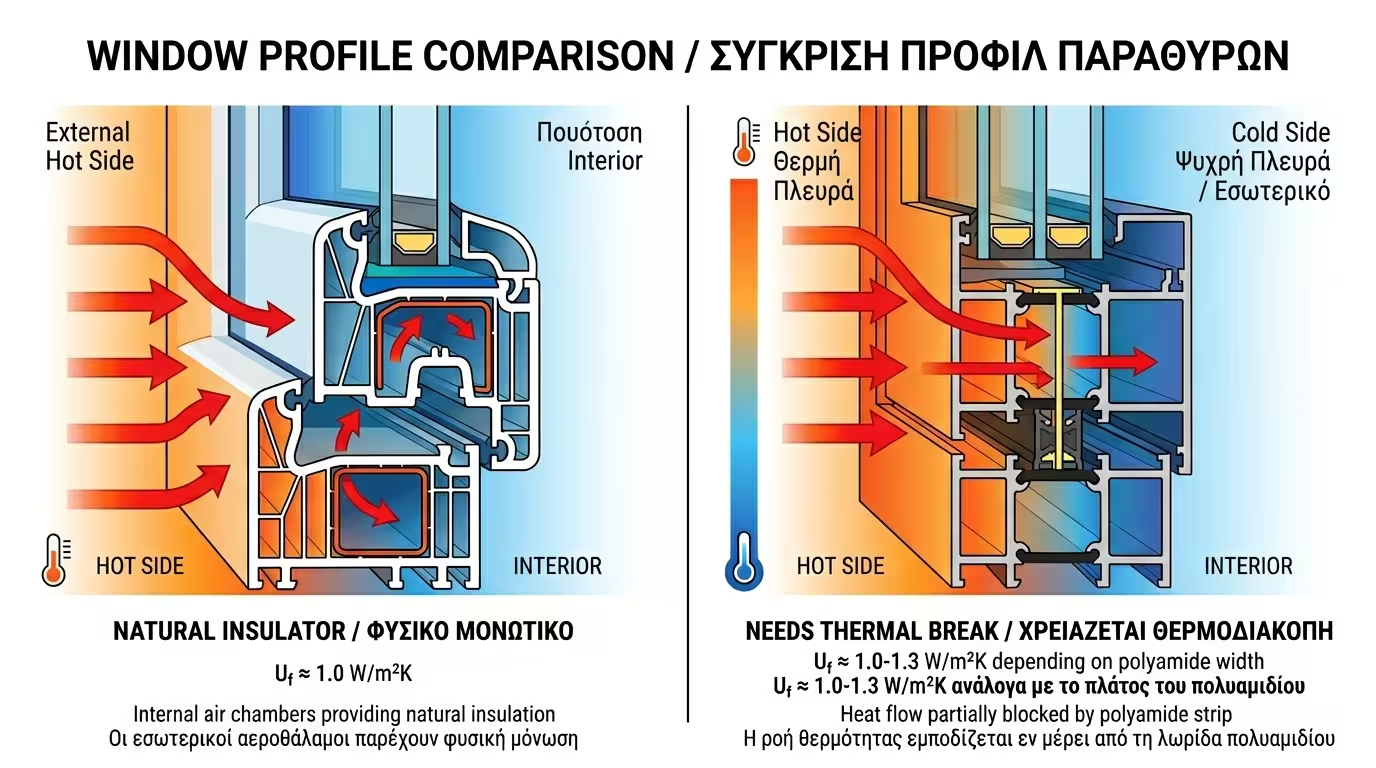
It achieves exceptionally low thermal transmittance coefficients (Uf) at very low cost. The mass of the material also absorbs sound frequencies excellently.
Aluminium, being a metal, is an excellent conductor. To insulate properly, it needs polyamide (thermal break). Modern thermal-break aluminium offers stunning insulation comparable to PVC, but to match the same Uf values you must pay for a premium (more expensive) system with a very wide polyamide.
This is where metal shows its muscle. Aluminium is the undisputed king of rigidity. It doesn't deform, doesn't "sag", and withstands extreme wind pressures.
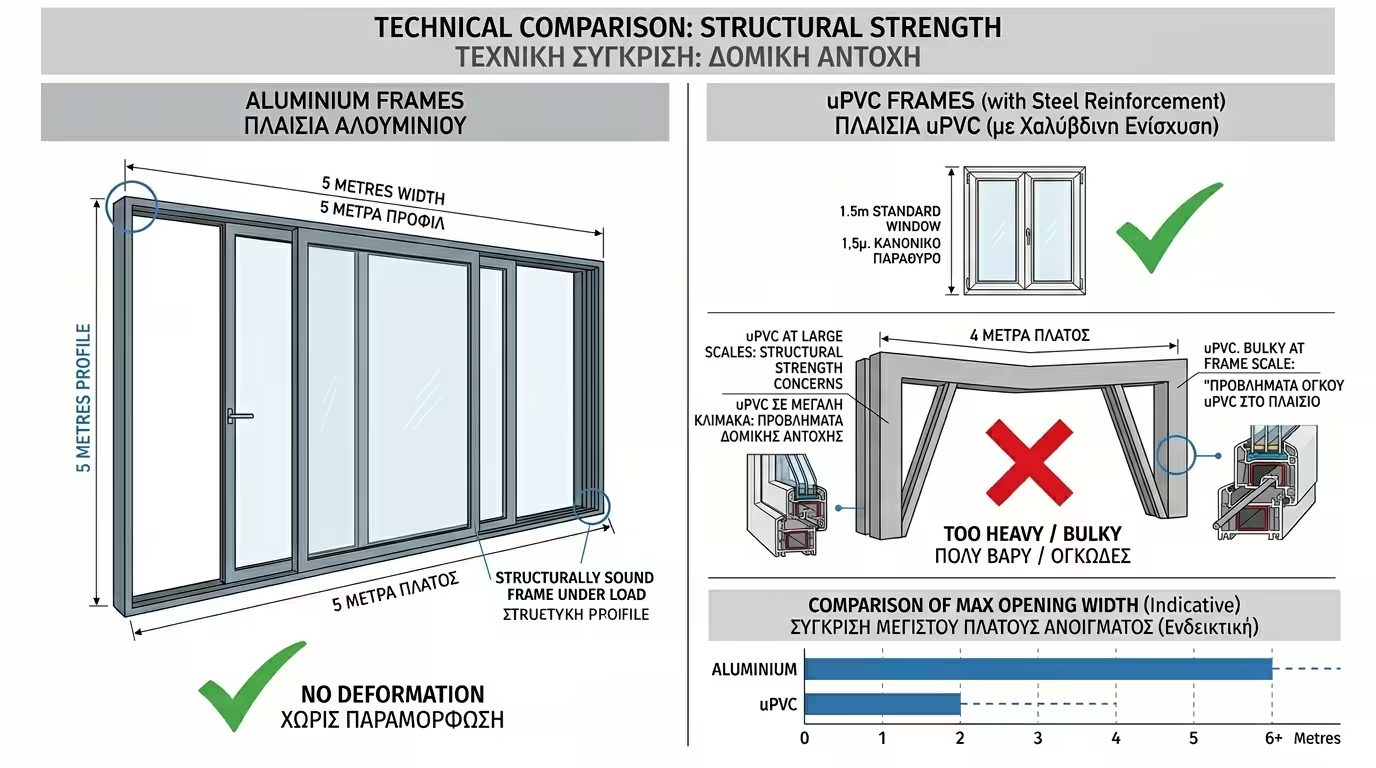
Need huge openings? If your architect has designed a 4- or 5-metre sliding patio door, aluminium is practically your only safe choice.
uPVC on its own is flexible. To make it strong, manufacturers insert a galvanised steel skeleton inside. While this makes it perfectly safe for standard windows and doors, it practically cannot support oversized constructions without becoming excessively heavy and bulky.
In modern architecture, the rule is: "More glass, less frame."
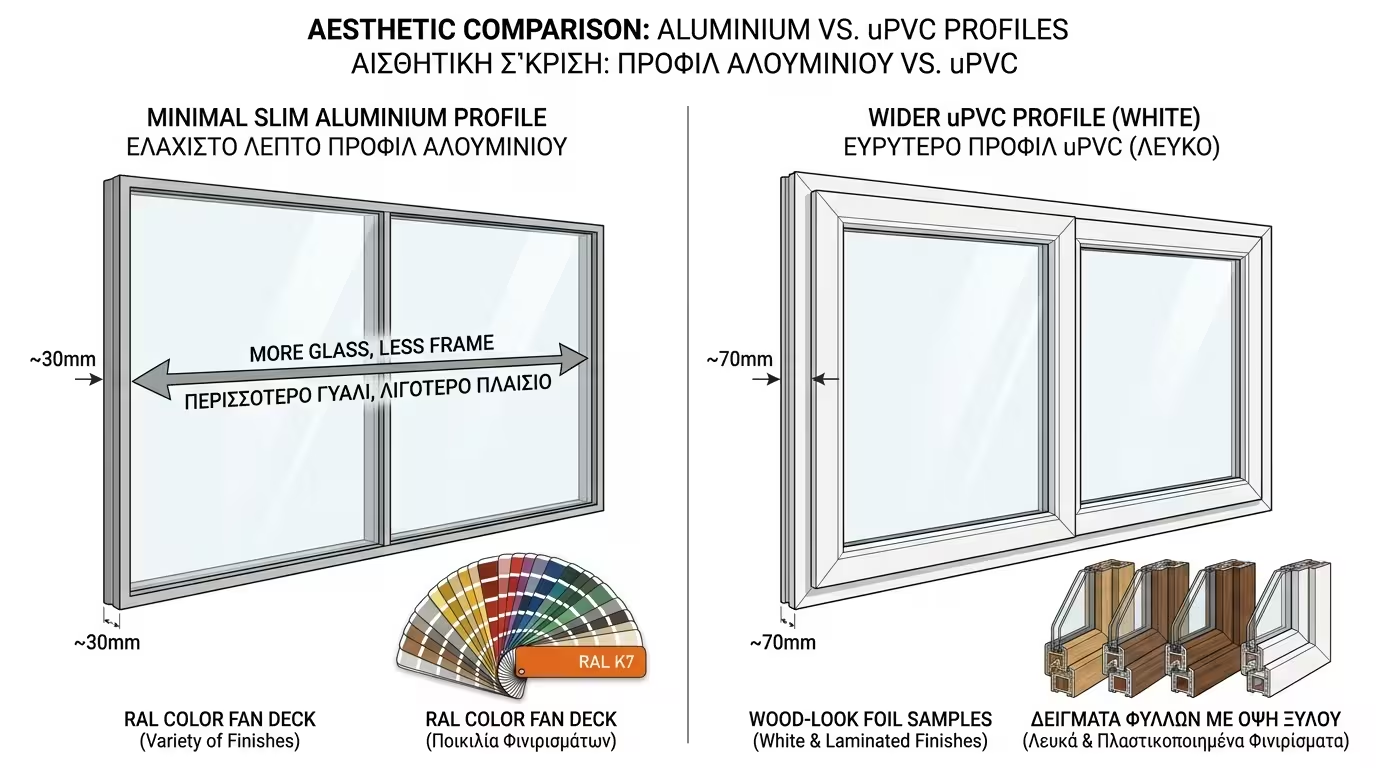
Aluminium allows the construction of extremely slim and minimal profiles, maximising natural light. By contrast, uPVC profiles are necessarily "chunkier" and bulkier to accommodate the steel reinforcement and air chambers.
Aluminium offers unlimited options. From matte and glossy RAL colours to ultra-durable (Sablé) textures and anodising (metallic finish). PVC is mainly limited to white and laminate film (foil) wood imitations or a few basic colours.
The biggest myth in Greece is that "plastic will turn yellow and peel".
The truth is that modern, certified uPVC profiles are rated Tropical Class. They contain special UV filters (titanium dioxide) that guarantee the white colour remains unaltered for decades.
However, if you choose uPVC in a dark colour (e.g. anthracite) for a south-facing wall hit by the sun all day, surface temperature can reach 70°C. If the manufacturer hasn't installed the correct reinforced steel inside, the plastic may show slight warping. Aluminium, on the other hand, is practically immune to temperature fluctuations.
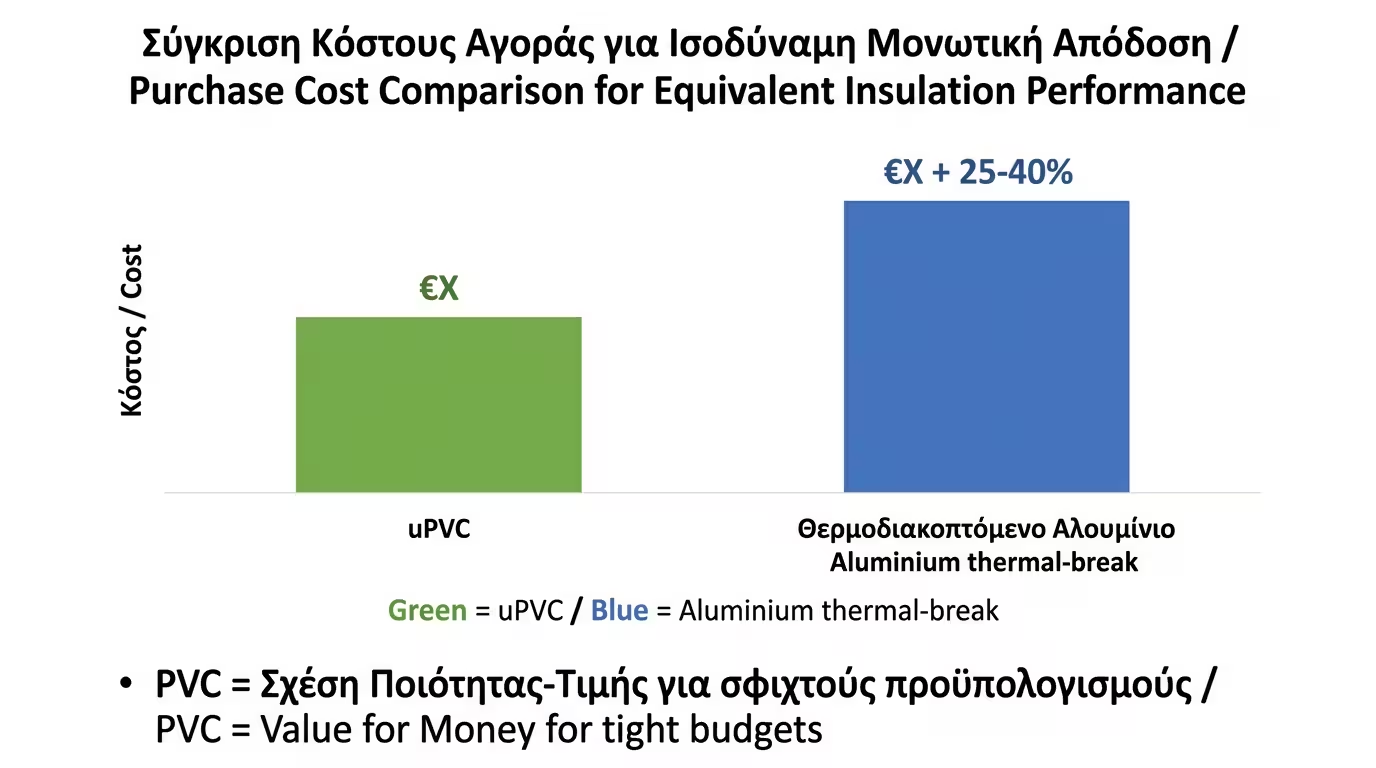
Let's talk numbers. When comparing a uPVC system with an aluminium system that offer exactly the same insulation, PVC is consistently cheaper, with the difference ranging from 25% to 40%.
This is why uPVC is the ultimate Value for Money choice for anyone renovating on a tight budget who wants to maximise savings on electricity and heating fuel.
To make the right decision, answer these questions:
Your home has very large openings, you want minimal architectural design with slim frames, you're looking for specific, special colour finishes, or you simply have the budget for ultimate rigidity and longevity.
Your main goal is top thermal and sound insulation at the lowest possible cost, your openings are standard size (windows and classic patio doors) and you're happy with white or classic wood-look laminations.
💡 Key Takeaway: There is no "better" material. There is only the right material for your situation. Aluminium for design and large openings, PVC for top insulation at the lowest possible cost.
Return to category.
Go to categoryReturn to the central guide.
Go to guide