Ballistic & Blast-Resistant Windows: When Are They Needed and How Do
They Work?
Building security does not end with a burglar-resistant door. In an
increasingly uncertain world, there are cases where threats far exceed a
burglar's crowbar. There are buildings and spaces where the construction
must withstand gunfire or the shock wave of an explosion.
The solutions in this category - bulletproof (ballistic) and blast-resistant windows - constitute an extremely specialised, technically demanding niche market.
Every engineer or architect undertaking such a project must understand the
critical differences from conventional security windows. Let's cover the fundamentals.
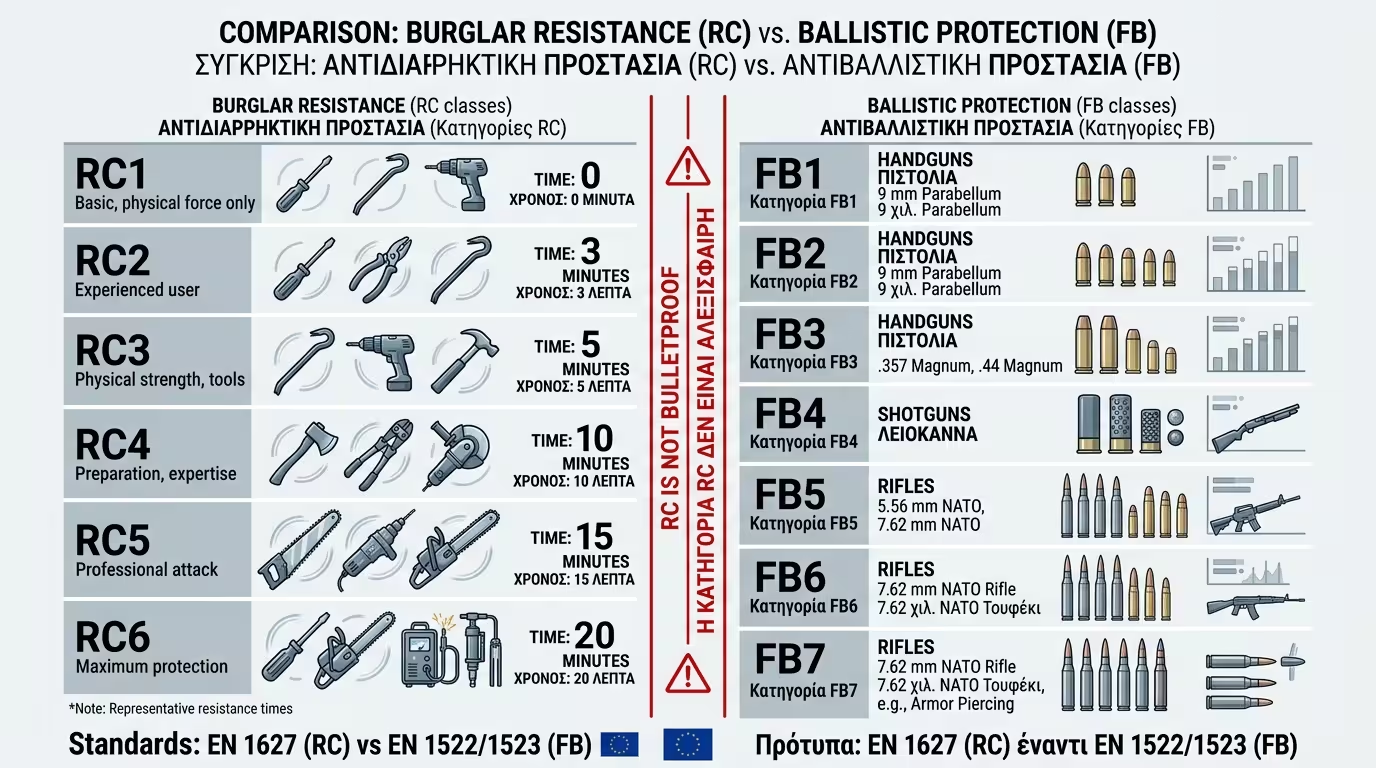
1. The Critical Difference: Burglar-Resistant ≠ Bulletproof
The most common confusion in the market is equating burglar resistance
with ballistic protection. These are entirely different categories,
with entirely different testing standards and practical applications.
🔐 Burglar Resistance (RC)
Classes RC1 through RC6 (per EN 1627) measure how long
the window withstands physical attack with hand tools (screwdriver, crowbar,
drill, etc.). Even an RC6 window, which resists a crowbar and reciprocating
saw for 20 minutes, offers zero protection against a bullet.
🔫 Ballistic Protection (FB)
Ballistic certification is governed by EN 1522 (frame) and EN 1523 (glass). Classes FB1 through FB7 define the type of ammunition
the window must stop: from a 9 mm Parabellum handgun (FB1) up to a 7.62×51
mm NATO assault rifle (FB7).
2. Frame Materials: Steel, Reinforced Aluminium - or Both
A conventional aluminium or PVC frame is incapable of stopping a
bullet, nor can it withstand the enormous pressure of a blast wave.
The materials change:
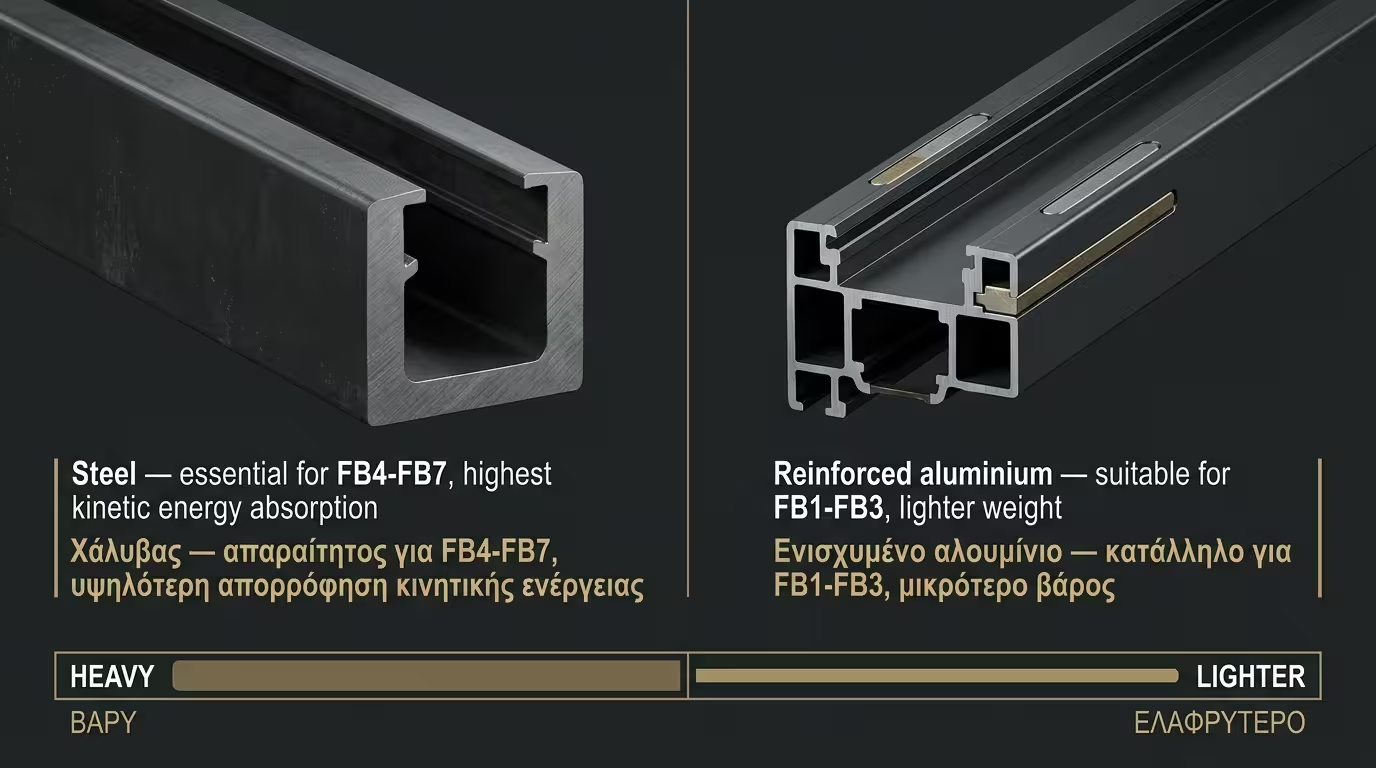
🛡️ Steel
The top choice for maximum ballistic protection. Heavy-duty steel profiles are the most reliable (and heaviest) solution available on the market
today. Steel is absolutely essential for the highest classes and for blast-resistant
windows, since only steel can absorb the enormous kinetic energy of high-velocity
projectiles and fragments.
🔧 Specialised Aluminium Alloys
For the lower classes (FB1–FB3), specially reinforced aluminium alloys with much thicker walls and internal steel inserts are available. They
are lighter, but they cannot match the ballistic capability of pure steel.
3. The Critical Rule: Frame = Glass
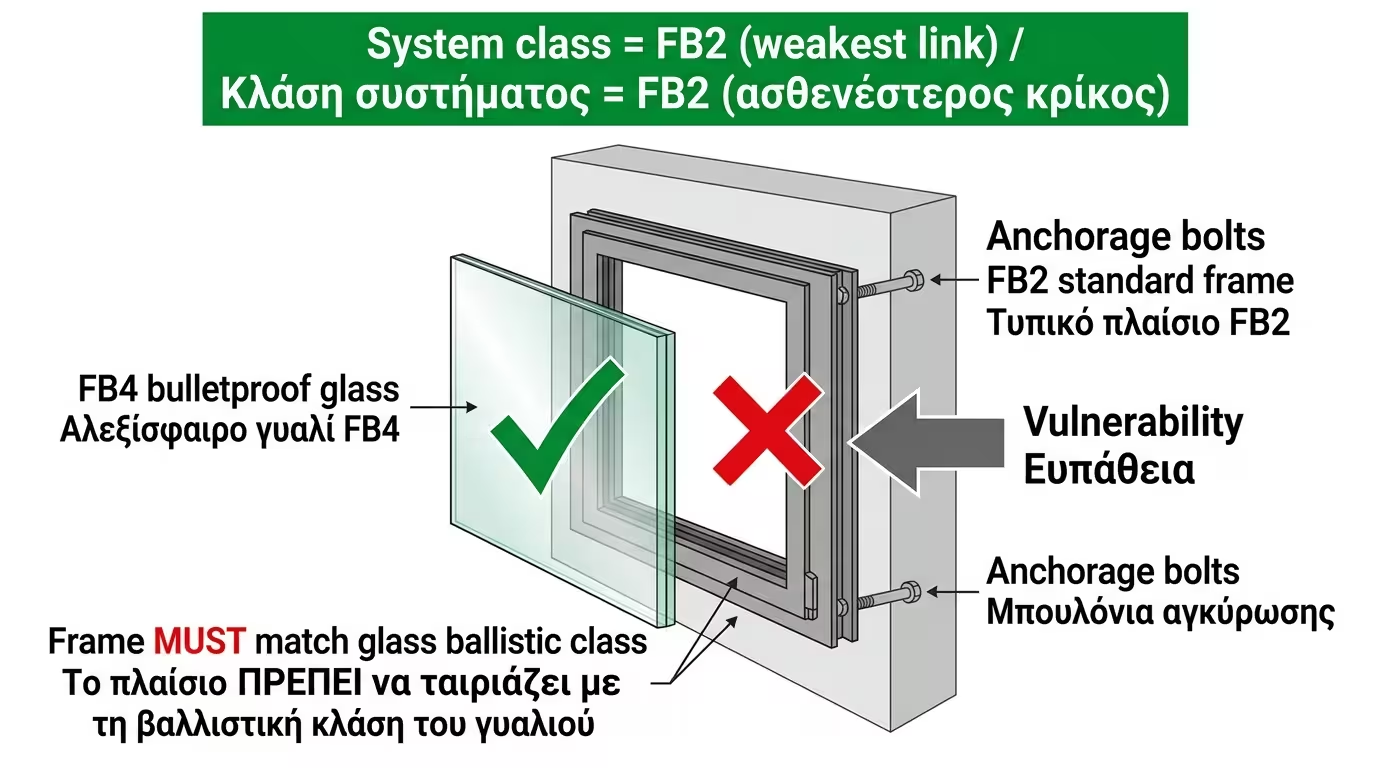
A mistake frequently made by non-specialist engineers is focusing only
on the glass. They pay for expensive bulletproof glass but install a
standard, lightweight frame. This invalidates the entire protection
scheme. An attacker will not shoot through the FB7 glass if they can
pierce the non-ballistic frame next to it.
⚠️ Critical Security Rule: The ballistic class of the complete
window always equals the class of its weakest element.
If the glass is FB4 but the frame only rates as FB2, the overall window
class is FB2. Therefore - the frame must be certified to the same (or higher) class as the
glazing.
4. Blast-Resistant Windows
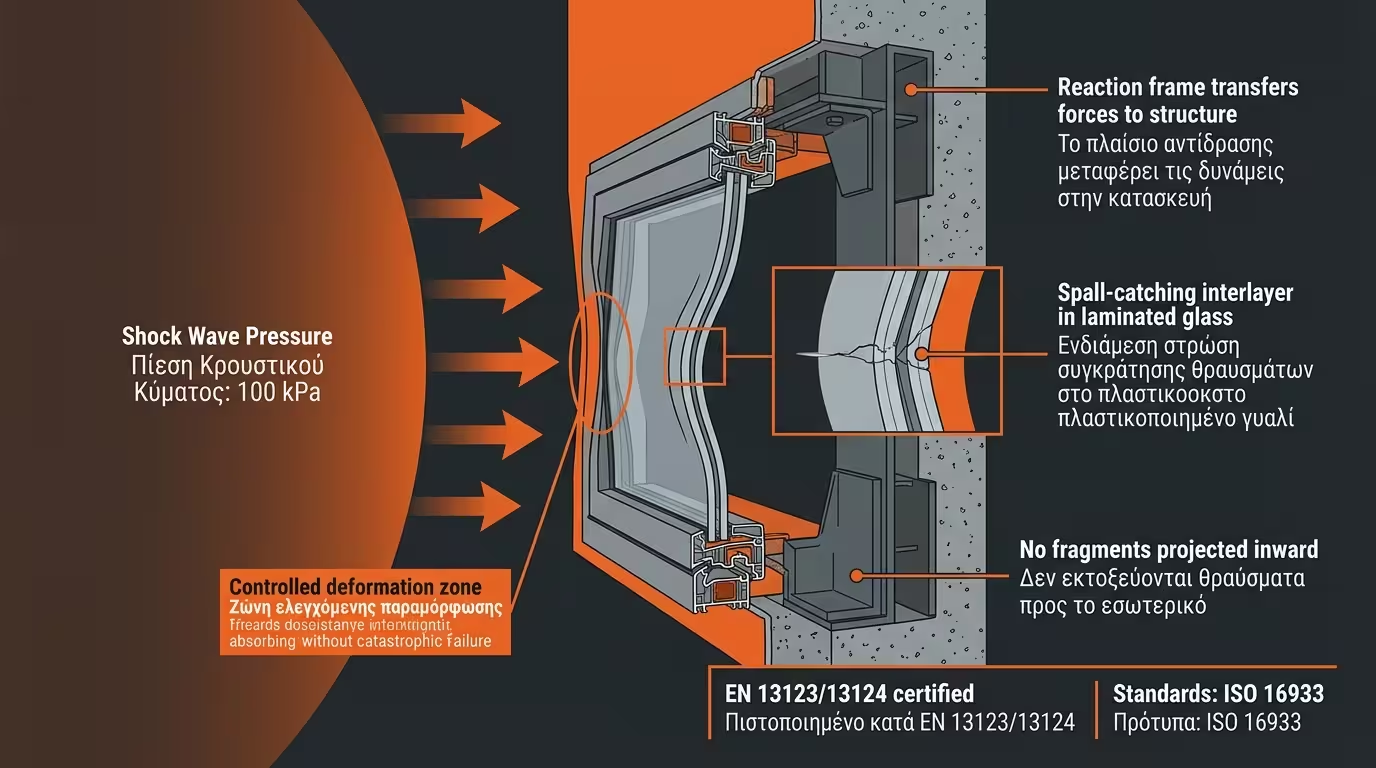
Beyond bullets, there is the category of windows that must withstand
explosion shock waves. These are tested under EN 13123 / EN 13124 or ISO 16933. The challenge here is not stopping a projectile, but withstanding
enormous pressure (measured in kPa) without the window being
"launched" into the room, killing occupants with spall fragments.
🔩 Special Reaction Frames
Blast-resistant windows are anchored to the masonry or concrete via specially calculated reaction frames, designed to transfer the shock-wave forces into the building's
structural system.
⚡ Controlled Deformation
Under certain standards, the window may deform, but it must never
"break" by projecting fragments into the interior. The design relies
on dynamic analysis principles, controlling the maximum rebound
velocity of the element after the blast.
5. In Summary
Ballistic and blast-resistant windows are not a "luxury" - they are an
absolute necessity for embassies, banks, energy stations, military
facilities, police stations, data centres and high-risk VIP residences.
Their correct design always requires certified manufacturers, highly
specialised security engineers and strict end-to-end certification per
EN 1522/1523 or EN 13123/13124.
💡 Key Takeaway: RC ≠ FB. Resistance is measured by the weakest link - frame, glass and anchorage must meet the same ballistic class (EN 1522/1523).