Are uPVC Windows Toxic? The Truth About Lead, VOCs and Recycling
If you've done any basic online research on uPVC windows, you've surely
come across comments like:
"Don't install plastic windows! They contain lead inside, they
release toxic fumes in the heat and if they catch fire they'll poison
the entire building!"
These "urban legends" frighten many people. And, yes, some of them had a
grain of truth… many years ago. Today, however, technology and
regulation have completely changed the landscape.
Your concern is perfectly understandable. In the past, the plastics
industry was associated with the use of heavy metals, creating a
justified fear among consumers. But the modern window industry has
absolutely nothing in common with that era.
Let's calmly look at what was true, what is true today, and exactly
which certification you should demand so your new windows are
100% safe for your health, your children and the environment.
1. The Lead Story: What Was True and What Changed?
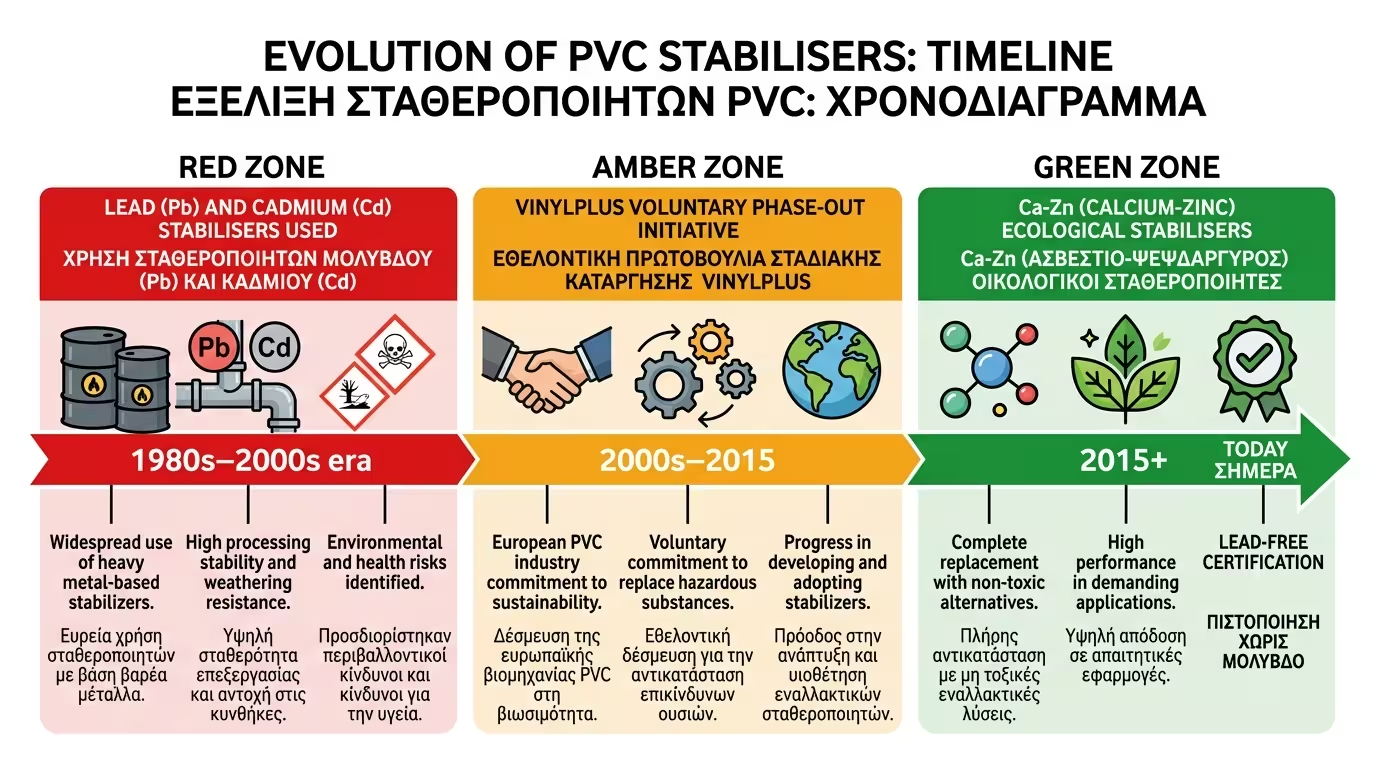
Let's address the "elephant in the room" first. For decades, lead
stabilisers were widely used in the PVC industry.
⚠️ Why Was Lead Used?
During PVC production (when the material melts to take the shape of
a window), enormous temperatures develop. To prevent the material
from degrading from heat, the industries of the 1980s and '90s used
special chemical stabilisers. At the time, the most
effective (and cheapest) stabilisers were based on heavy metals like cadmium and lead. Although the lead was trapped inside
the plastic mass and didn't leak easily, its mere presence in
construction materials (and the recycling problems it caused) raised
alarms in the European community.
✅ The Voluntary Phase-Out (VinylPlus)
The European PVC industry, through the VinylPlus initiative,
voluntarily committed to fully replacing lead. Major European manufacturers
(VEKA, REHAU, Schüco, Kömmerling, Aluplast, etc.) have replaced lead years ago with safe, ecological alternative stabilisers.
2. Calcium-Zinc (Ca-Zn) Stabilisers: The Safe Alternative
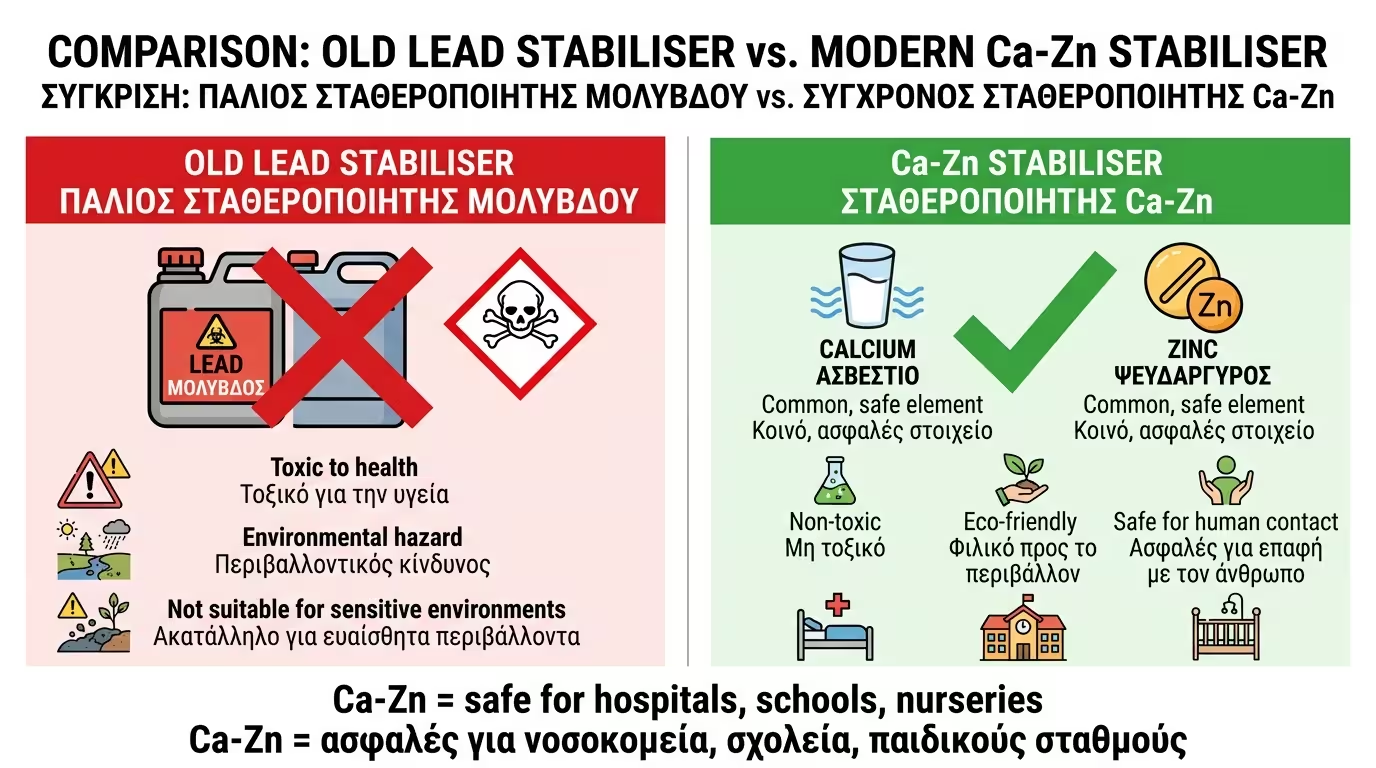
Instead of lead, modern uPVC uses Calcium-Zinc (Ca-Zn) stabilisers.
🛡️ What Is Ca-Zn?
It is a mixture of inorganic calcium and zinc salts. These elements
are absolutely common and safe - calcium and zinc are
so harmless they are even found in our daily vitamins! Their use makes
modern Lead-Free PVC a 100% ecological and non-toxic
material, absolutely safe for human contact, approved even for use in
hospitals, schools and nurseries.
📋 What Should You Ask For?
Ask the manufacturer for confirmation that profiles are "Lead-Free". Certified European profiles display this declaration in their
technical brochures and quality certificates.
3. Do PVC Windows Emit Toxic Gases (VOCs) in the Heat?
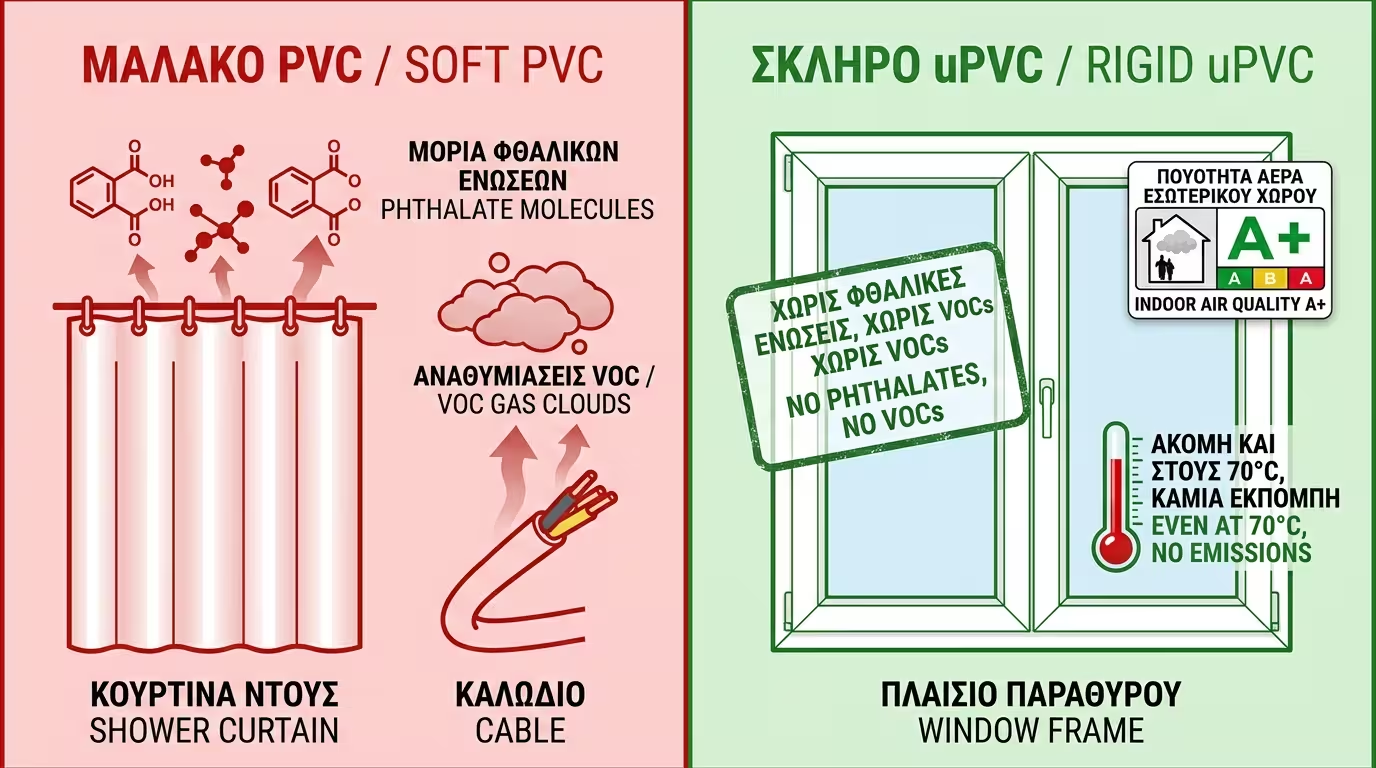
This myth was born from confusion between "soft" PVC (e.g. membranes,
pipes) and "rigid" uPVC (windows).
❌ The Phthalate Confusion
In "soft" PVC (used in shower curtains, children's toys, etc.) plasticizers (phthalate esters) are added to make it flexible. These additives can indeed emit volatile
organic compounds (VOCs) at high temperatures.
✅ uPVC Is Inert
Windows use uPVC (unplasticized) - "rigid" plastic. It
DOES NOT contain phthalates (plasticisers) that make
other plastics soft and flexible. Because it lacks these chemicals, uPVC
is extremely inert. It does not emit Volatile Organic Compounds (VOCs) into the air, even at extreme temperatures, ensuring excellent Indoor
Air Quality (with A+ certifications). This is why it is used even in medical equipment and drinking water pipes.
4. Fire & PVC: What You Need to Know
Concern about fire is legitimate. Let's look at the facts:
🔥 Self-Extinguishing Material
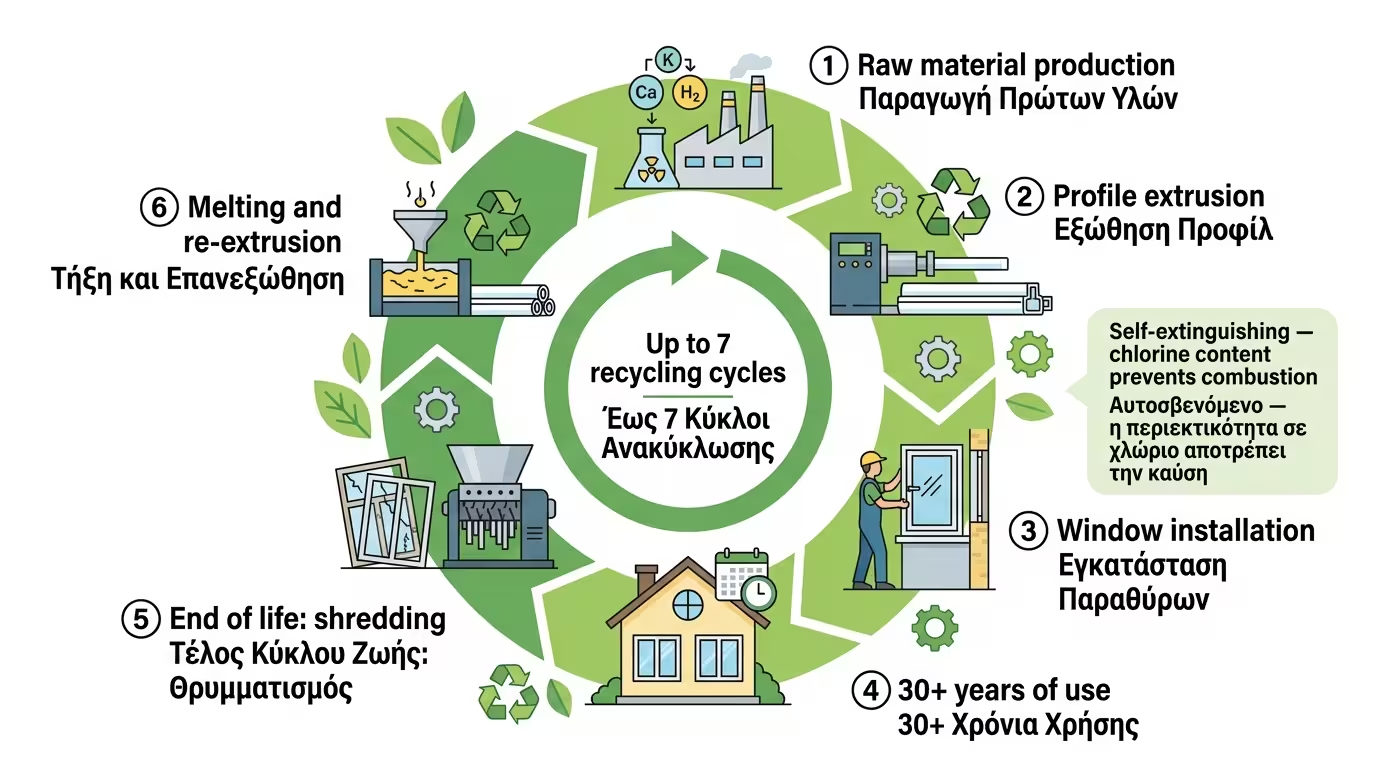
Because PVC contains chlorine in its chemical structure (derived
from common salt), it has a unique property: it is a self-extinguishing material. Unlike wood which feeds the flame, PVC does not ignite easily. If
the main source of fire is removed, the profile stops burning on its own, preventing the fire from spreading.
♻️ Fully Recyclable
Today, an old uPVC window does not end up in landfill. The material
can be fully recycled - shredded, melted, blended into new compound
and used to produce brand-new profiles (up to 7 times without losing mechanical properties), drastically reducing the ecological
footprint of construction.
5. In Summary
Modern, certified uPVC windows are absolutely safe, ecological and free
from heavy metals. However, this applies exclusively to branded, certified profiles of European
origin. If you choose anonymous, dubious-quality imported windows from
countries outside the EU (where regulations are lax) just to save a few
euros, you are taking an enormous risk.
💡 Key Takeaway: Insist on Lead-Free certification
with Ca-Zn stabilisers. Avoid cheap, unbranded profiles
without European certification - that's where lead may still lurk.