Construction Details of Hybrid Windows: How Dissimilar Materials Bond
(Wood & Metal)
Every engineer or builder knows the nightmare of differential expansion
all too well. When you "marry" two entirely different materials in the
same construction, you know that nature will find a way to make them
fight.
In the case of premium hybrid windows (Wood-Alu), the stakes are
enormous. On one side, we have wood, a hygroscopic
organism that reacts primarily to changes in relative humidity. On the
other, aluminium, a metal with a high coefficient of
linear thermal expansion that reacts vigorously to temperature shifts.
If we screwed or glued these two materials rigidly together, in summer
the aluminium would elongate, the wood would stay put, and the window
would simply "tear" its joints apart. So how does the modern industry
manage to keep them united yet independent? Let's explore the technical
ingenuity behind the hybrid system connectors.
1. The Danger of a Rigid Connection
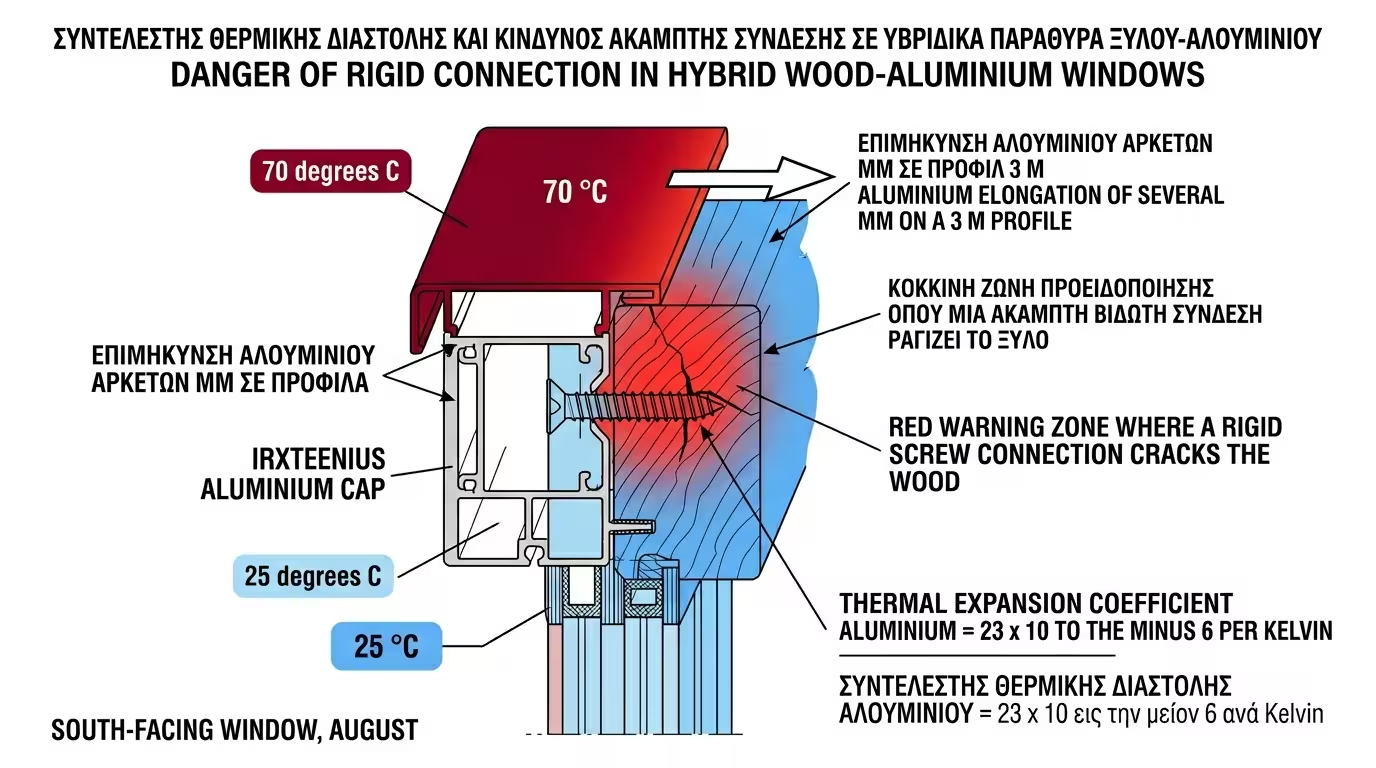
Picture the south-facing elevation of a villa in August in Greece. The
external aluminium cap (especially if painted in a dark colour) can
develop surface temperatures exceeding 70 °C.
Meanwhile, the internal wooden profile, protected by the home's air
conditioning, stays at 25 °C.
📐 Aluminium Thermal Expansion
The thermal expansion of aluminium is approximately 23 × 10⁻⁶ K⁻¹. On a 3-metre-tall profile, this temperature difference causes an
elongation of several millimetres. If the joint with the wood were
rigid (e.g. dual-action screws or industrial adhesive), the
mechanical shear stress would transfer to the wood, causing cracks,
frame distortion and ultimately, total loss of airtightness.
2. The Solution: Plastic / Elastic Clips
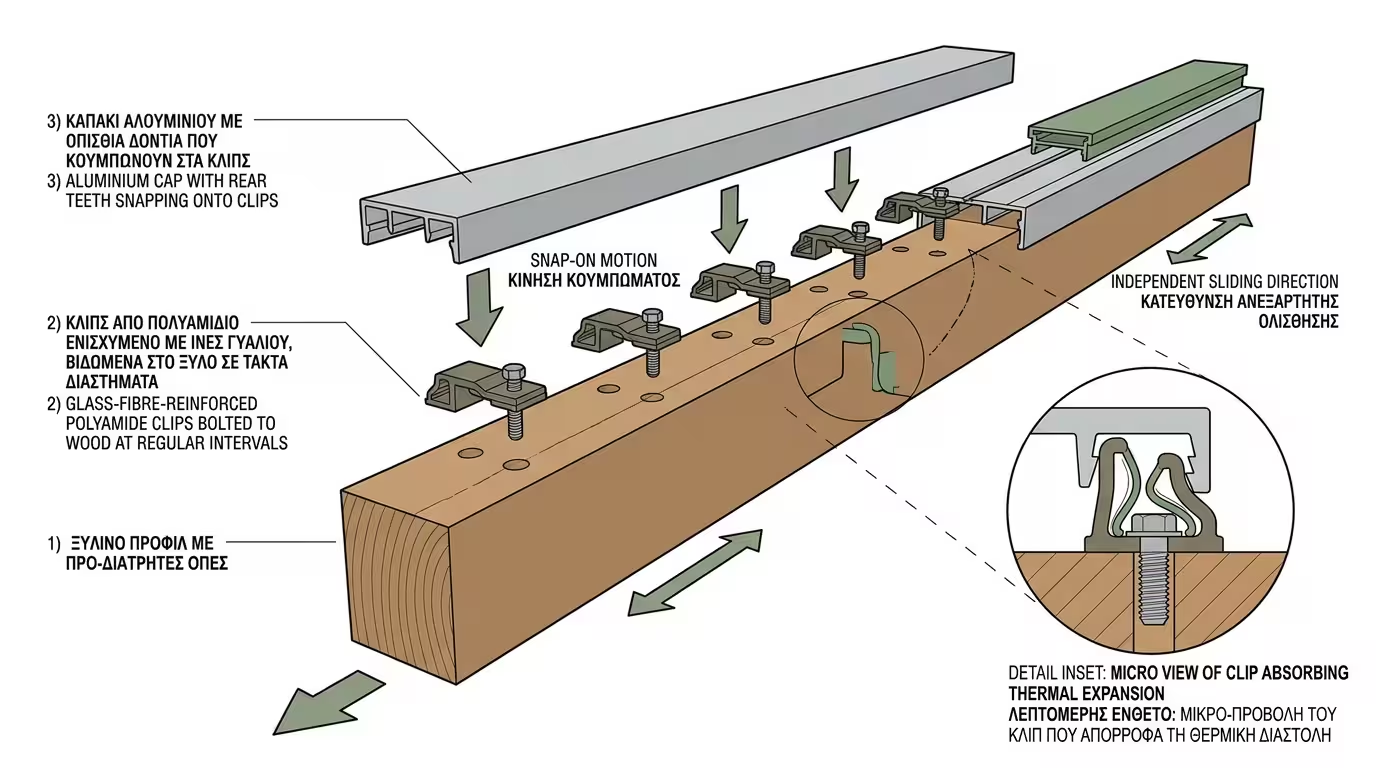
To dissipate this kinetic energy, engineers designed a sliding system. The external aluminium profile never touches the wood directly. It
connects via a series of special plastic clips,
usually manufactured from glass-fibre-reinforced polyamide or nylon.
🔧 Snap-On Connection
The clips are bolted firmly onto the wooden profile at specific
intervals. The aluminium profile, which has special "teeth" on its
rear face, is simply pressed and "snapped" onto these clips.
💨 Free Sliding
The aluminium is not locked in place. When it expands in the sun,
the clips allow it to slide imperceptibly up and down.
All thermal expansion is absorbed by the elasticity of the connectors,
without transmitting the slightest stress to the stable wooden frame.
3. The Critical "Ventilated Gap"
The elastic connectors solve the structural problem, but they also
serve an equally critical function: they keep the two materials apart.
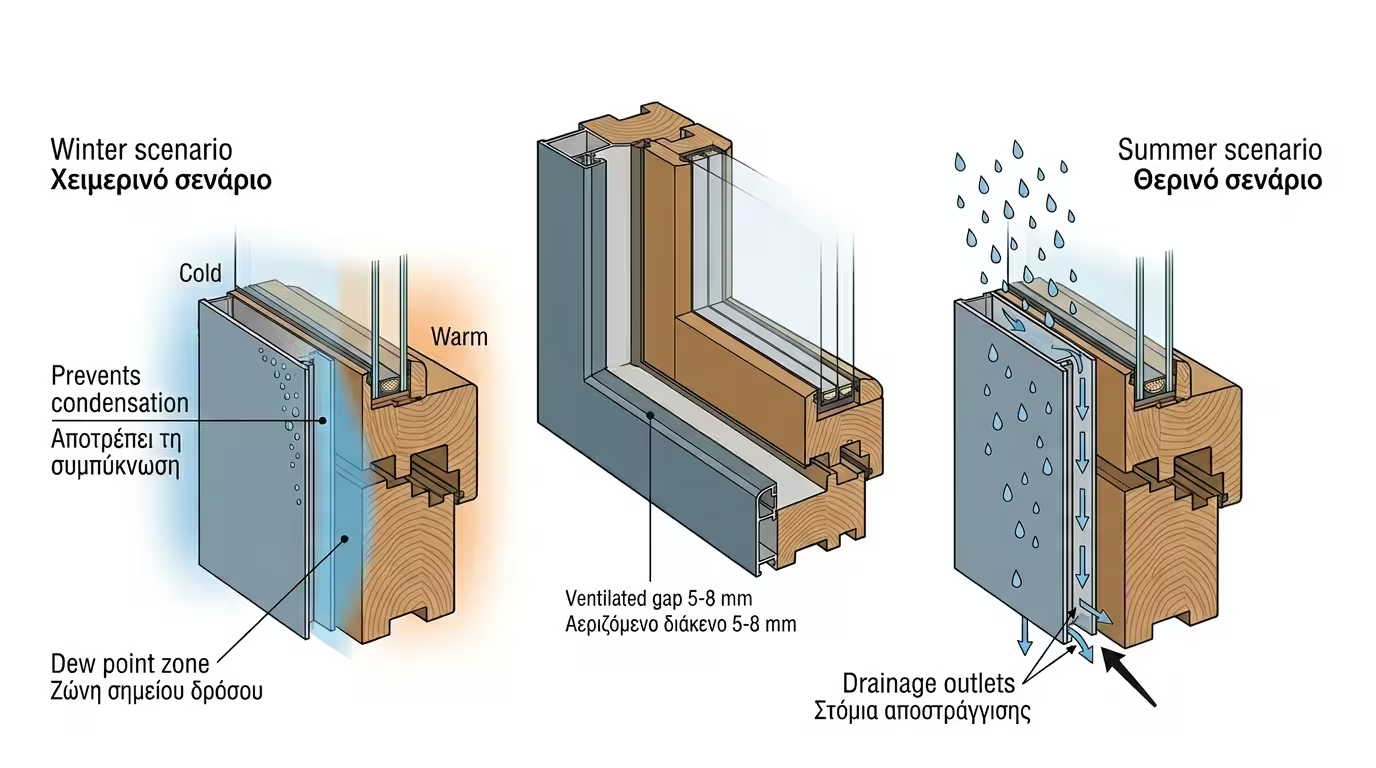
They create a gap of 5 to 8 millimetres between the aluminium
and the wood. This gap is no accident. It operates as a ventilated façade (ventilation gap).
💧 Preventing Condensation
In winter, when the home's warm air meets the freezing external
aluminium, there's a risk of moisture condensation (Dew Point). If
this water reached the wood, within a few years it would cause rot
(mould) inside the window.
🌬️ Air Circulation
Thanks to the ventilated gap, air circulates freely, evacuates water
vapour and keeps the wood permanently dry and healthy. Furthermore, any raindrop that bypasses the external casing is
safely channelled to drainage weep-holes.
4. EPDM Sealing Gaskets at the Junction
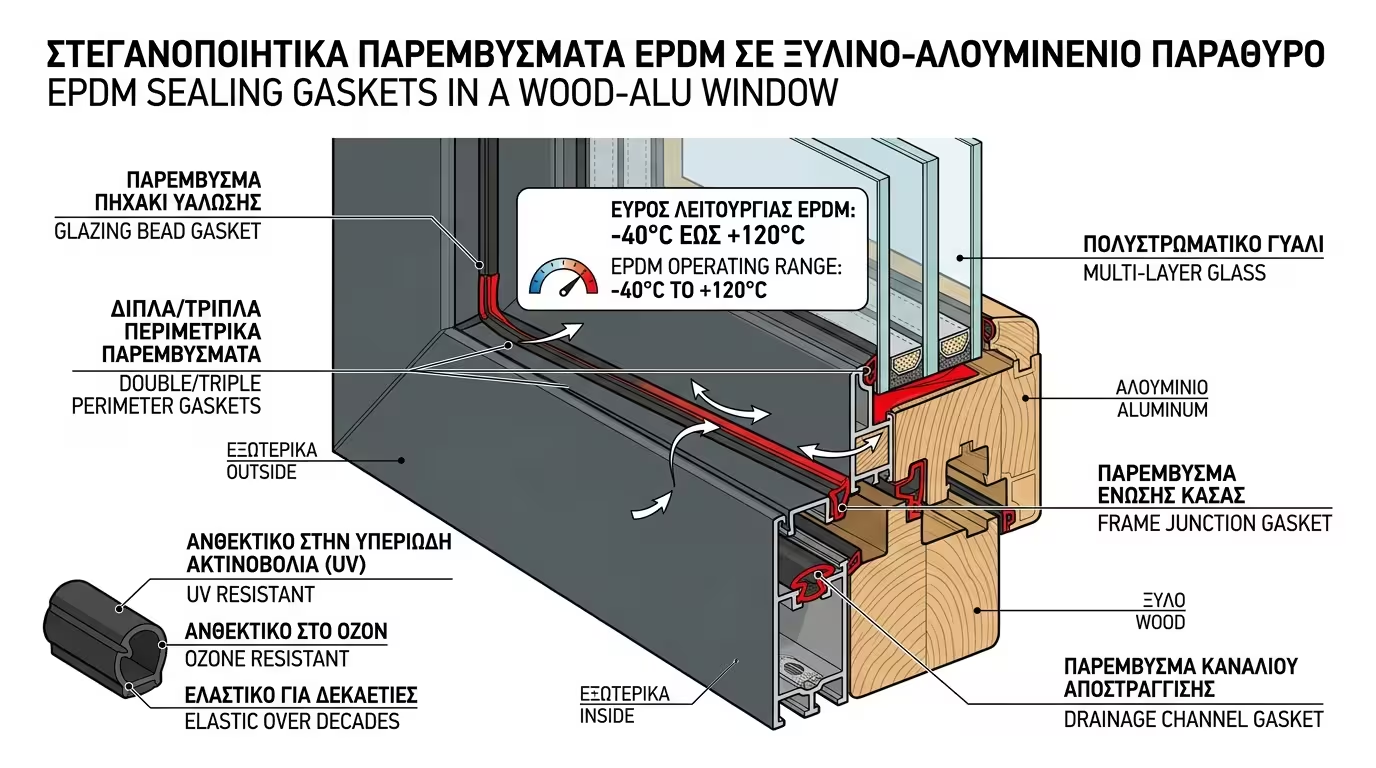
To close the system harmoniously without letting water or air through
at the corners and glazing junctions, perimeter EPDM (ethylene-propylene-diene-monomer)
sealing gaskets are used. EPDM has exceptional resistance to ozone and UV
radiation, maintaining its elasticity from -40 °C to +120 °C, sealing the construction and absorbing vibrations.
5. In Summary
Hybrid windows are not simply two materials glued together. They are the
pinnacle of fenestration engineering. The use of elastic clips and the
creation of the ventilated gap constitute a masterclass in construction
ingenuity, ensuring that wood and metal cooperate flawlessly, performing
at their best without ever self-destructing.
💡 Key Takeaway: Elastic clips + 5-8 mm ventilated gap +
EPDM = wood and metal in perfect harmony, no cracks, no
mould, no warping.