
🔬 6060 / 6063
The most popular alloys. They offer excellent extrudability (they can produce complex profile shapes), good strength and outstanding corrosion resistance. The 6063-T6 temper delivers a tensile strength of approximately 215 MPa.
In the window market, the conversation almost always revolves around thermal breaks and glazing. Yet there is an "invisible" quality criterion that very few know about but can determine whether your windows will work flawlessly for 40 years-or start sticking and failing after just 10.
This hidden factor is profile robustness-namely the aluminium alloy used, the wall thickness of the profile and the geometry of its cross-section.
There is no "pure" aluminium in windows. Aluminium alloys are used-aluminium mixed with small quantities of other metals (mainly magnesium and silicon) to achieve the necessary mechanical properties. The most common alloys in windows belong to the so-called 6000 series.
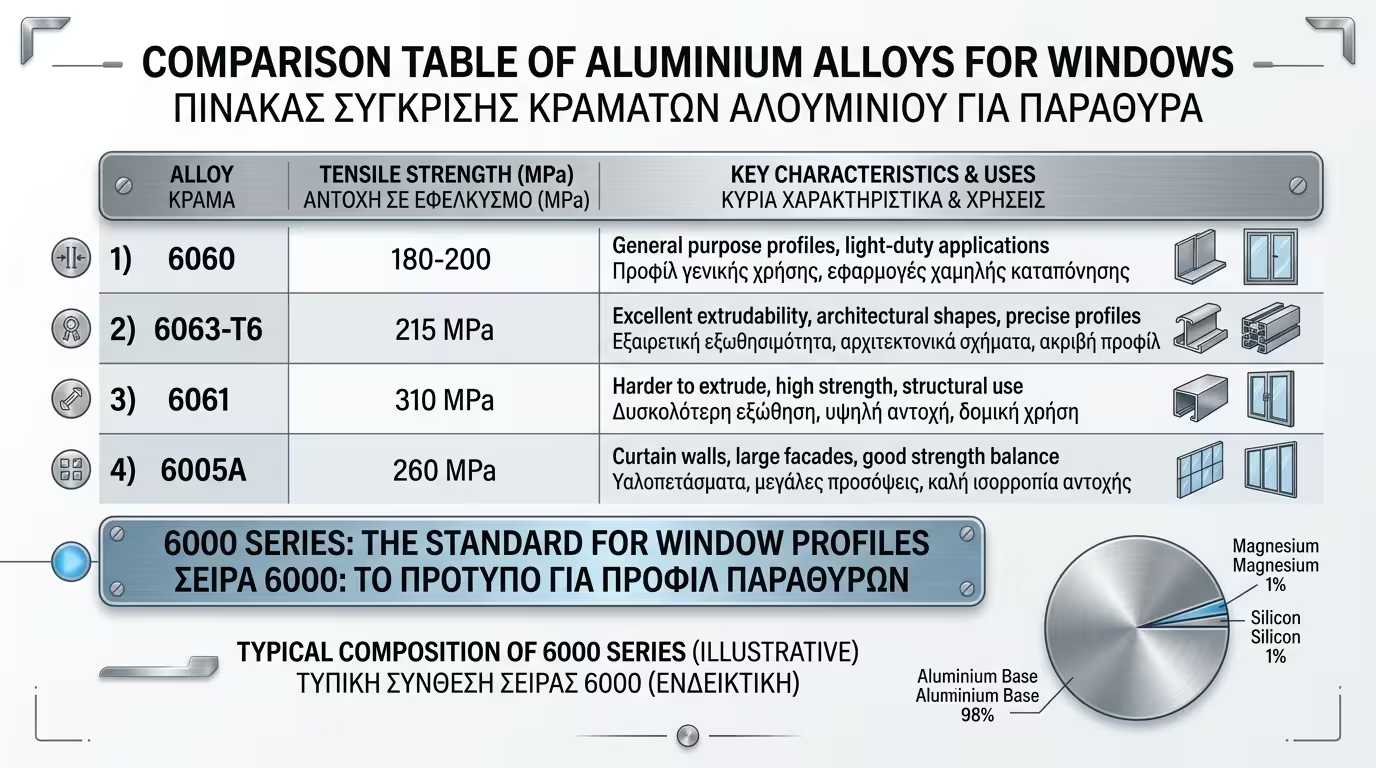
The most popular alloys. They offer excellent extrudability (they can produce complex profile shapes), good strength and outstanding corrosion resistance. The 6063-T6 temper delivers a tensile strength of approximately 215 MPa.
These possess higher mechanical strength (260–310 MPa) but are harder to extrude. They are used mainly for specialist applications, e.g. large aluminium curtain walls.
If you cut an aluminium profile in half and look at its cross-section, you will see that it consists of thin "walls". The thicker these walls, the sturdier and safer the window. But how thick is "enough"?
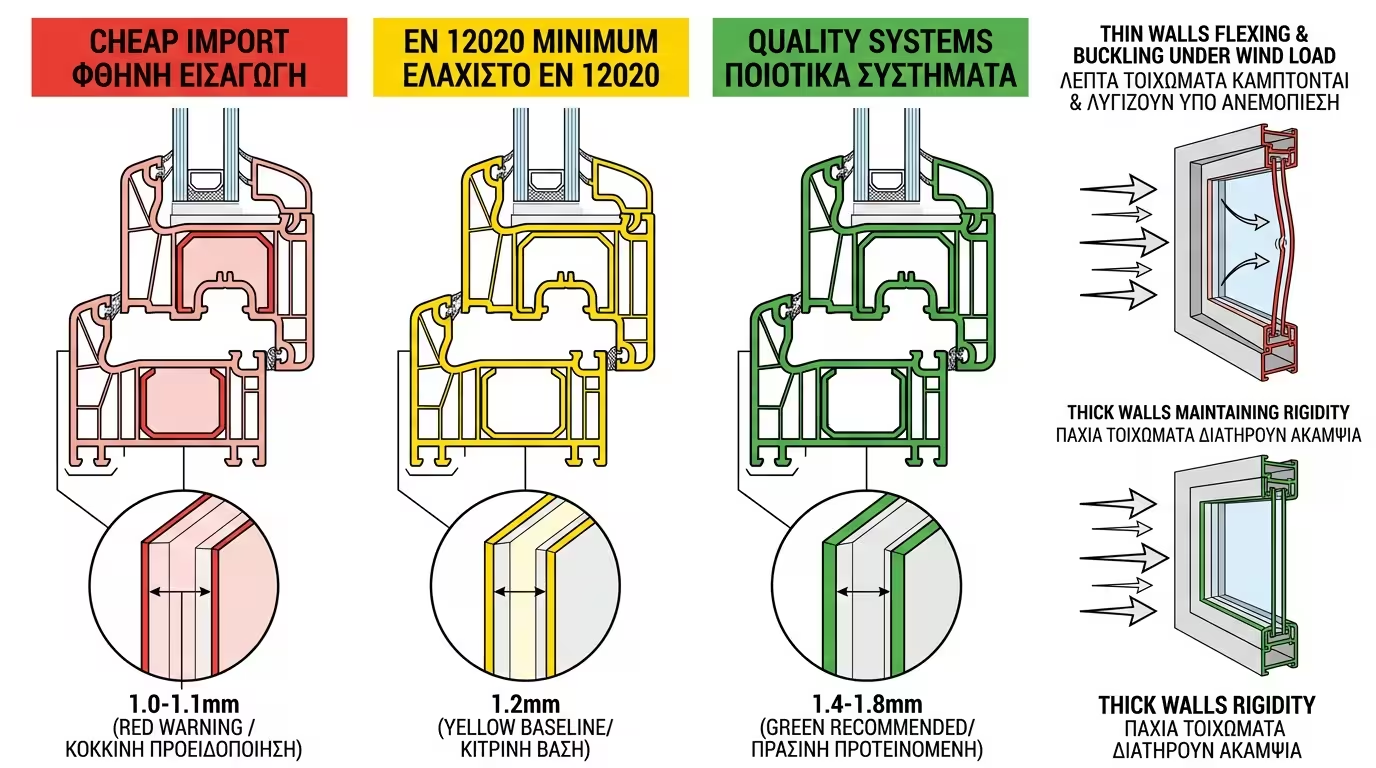
Unfortunately, cheap imported profiles with walls of only 1.0–1.1 mm still circulate on the market. The European standard EN 12020 sets a minimum of 1.2 mm (with a tolerance of −0.12 mm). Quality systems (e.g. Alumil, Profalux, Etem, etc.) manufacture profiles with primary walls of 1.4 mm or even 1.8 mm.
Thinner walls flex (like cardboard) under wind force or even during operation. This causes geometry "buckling", the sashes lose alignment, the windows no longer seal tightly, and the hardware wears out prematurely.
Every profile has a technical parameter called the moment of inertia (I). It measures how difficult it is for the profile to bend under load (e.g. wind pressure). It depends not only on thickness but mainly on the cross-section geometry-that is, how the material is distributed across the chambers of the complex design.
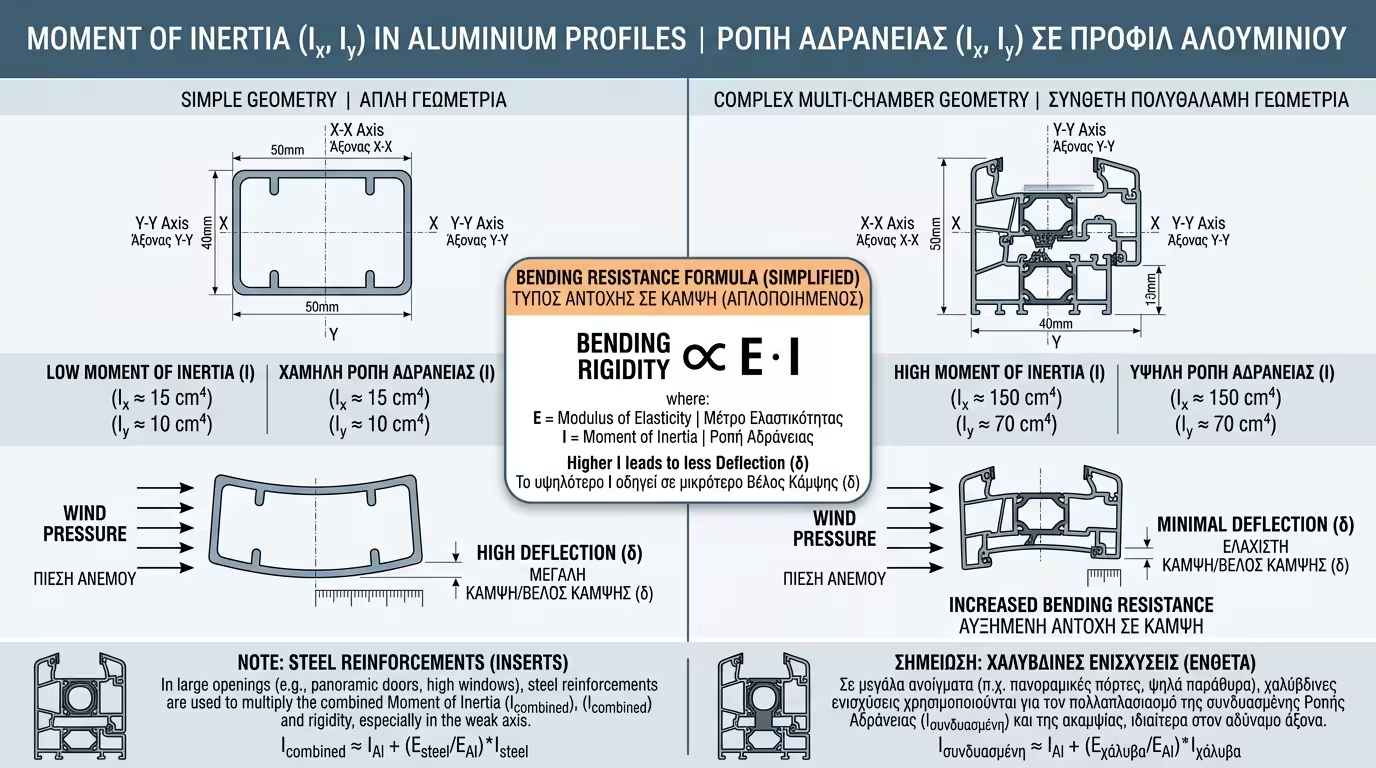
Ask your manufacturer what moment of inertia Ix, Iy the profile he uses has. The larger the I, the smaller the deflection under the same wind load. For upper floors (above the 3rd) or exposed positions (islands, hilltops), a high moment of inertia is not a luxury-it is a safety requirement.
In certain large openings, additional reinforcements (steel or aluminium) are inserted inside the profile channels. This multiplies the moment of inertia without increasing the external width of the frame.
The importance of robustness multiplies in large openings: Lift & Slide doors spanning 4–6 metres, fixed windows on tall floors, large folding doors. In those cases, "economising" on the profile is paid back very dearly:
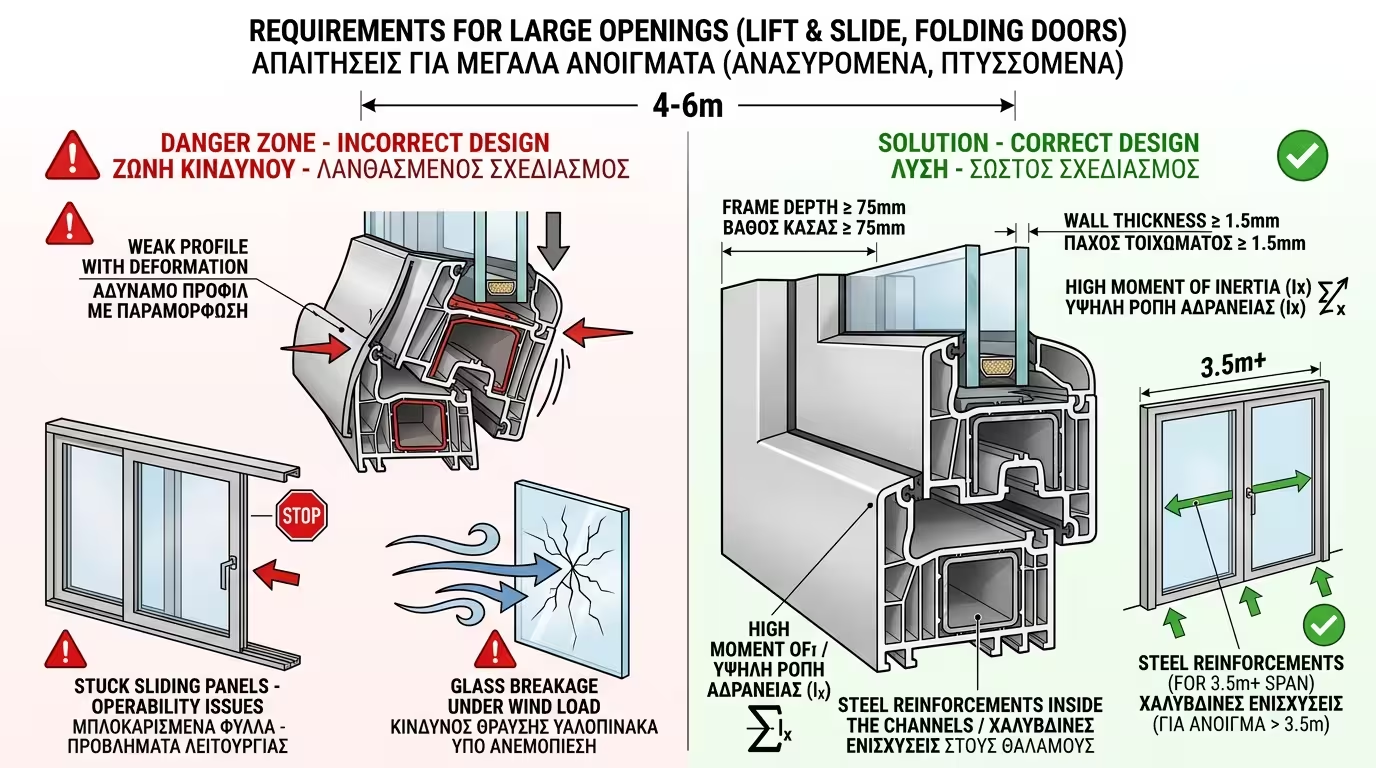
Deformation under wind pressure, inability of panels to slide, glass breakage due to frame distortion. A weak profile on a large Lift & Slide door can literally get "stuck" open during a gust of wind.
Choose a system with a frame depth of ≥ 75 mm, wall thicknesses of ≥ 1.5 mm and a high moment of inertia. For "giant" openings (>3.5 m) use steel or aluminium reinforcements inside the profile sections.
💡 Key Takeaway: Do not judge a window only by its glass and thermal break. Always ask: which alloy, how thick is the wall, what moment of inertia? These numbers determine whether your window will endure over time and stand up to the Greek wind.
Return to category.
Go to categoryReturn to the central guide.
Go to guide