
Glued Laminated Timber (Glulam) in Windows: The Engineering Behind Absolute Stability

It is perhaps the most common question: "Wood is beautiful, but what happens when it gets wet or is hit by the hot Greek sun? Won't it warp?" This fear stems from decades of experience with old, traditional windows that "sagged" and wouldn't close properly.

The modern industry's answer is a true technological marvel: Glued Laminated Timber (Glulam). Let's see why this construction method changed the rules forever, turning wood into a material with the stability of metal.

1. The Problem With Solid Wood

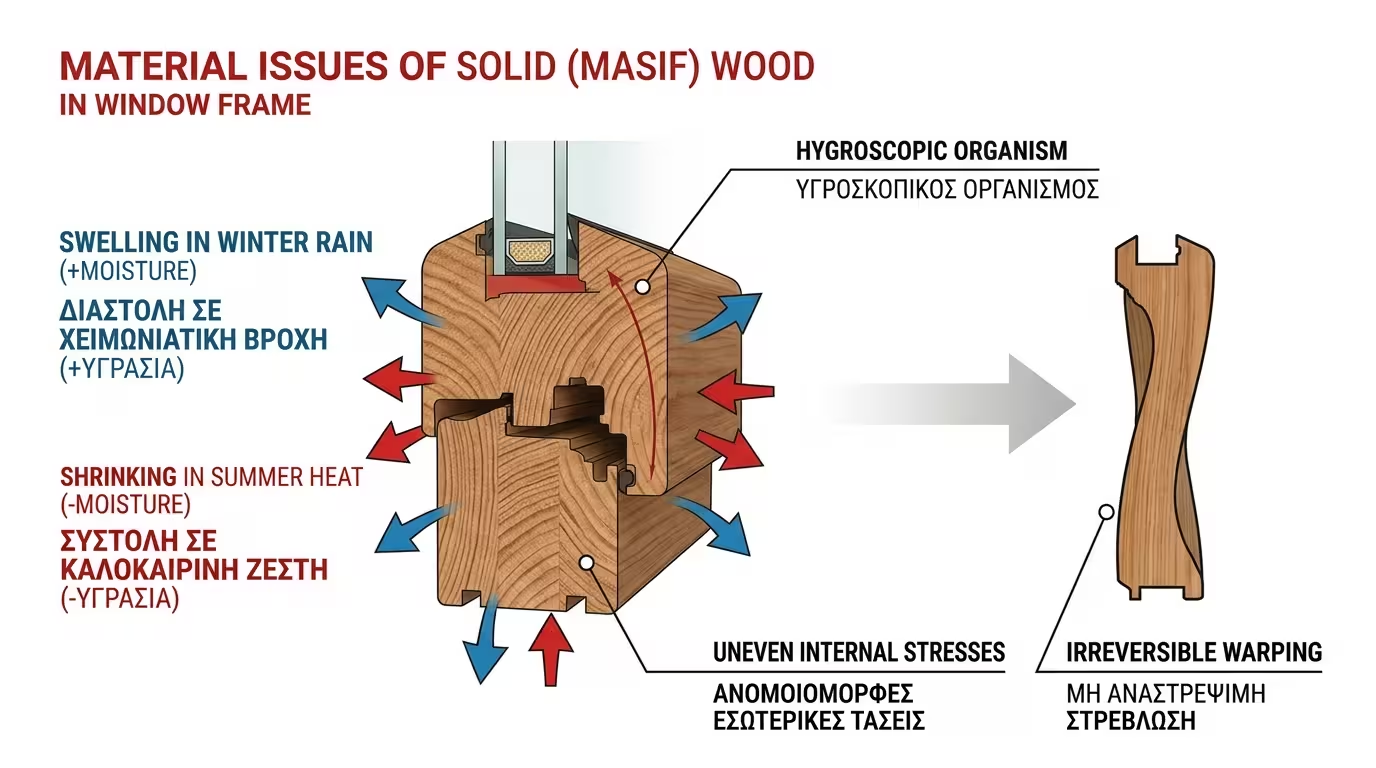
To understand the solution, we must first examine the problem. Wood is a living, hygroscopic organism. This means it behaves like a sponge: it absorbs moisture from the environment in winter (and swells) and releases moisture in summer (and shrinks).

In old windows, the frame was made from a single, solid (massive) piece of wood. When that piece expanded or contracted, the forces followed the direction of its grain. Because solid wood is not homogeneous, these internal stresses inevitably caused it to twist, bend or "warp".

Solid wood problem - hygroscopy and warping

2. What Is Glued Laminated Timber?

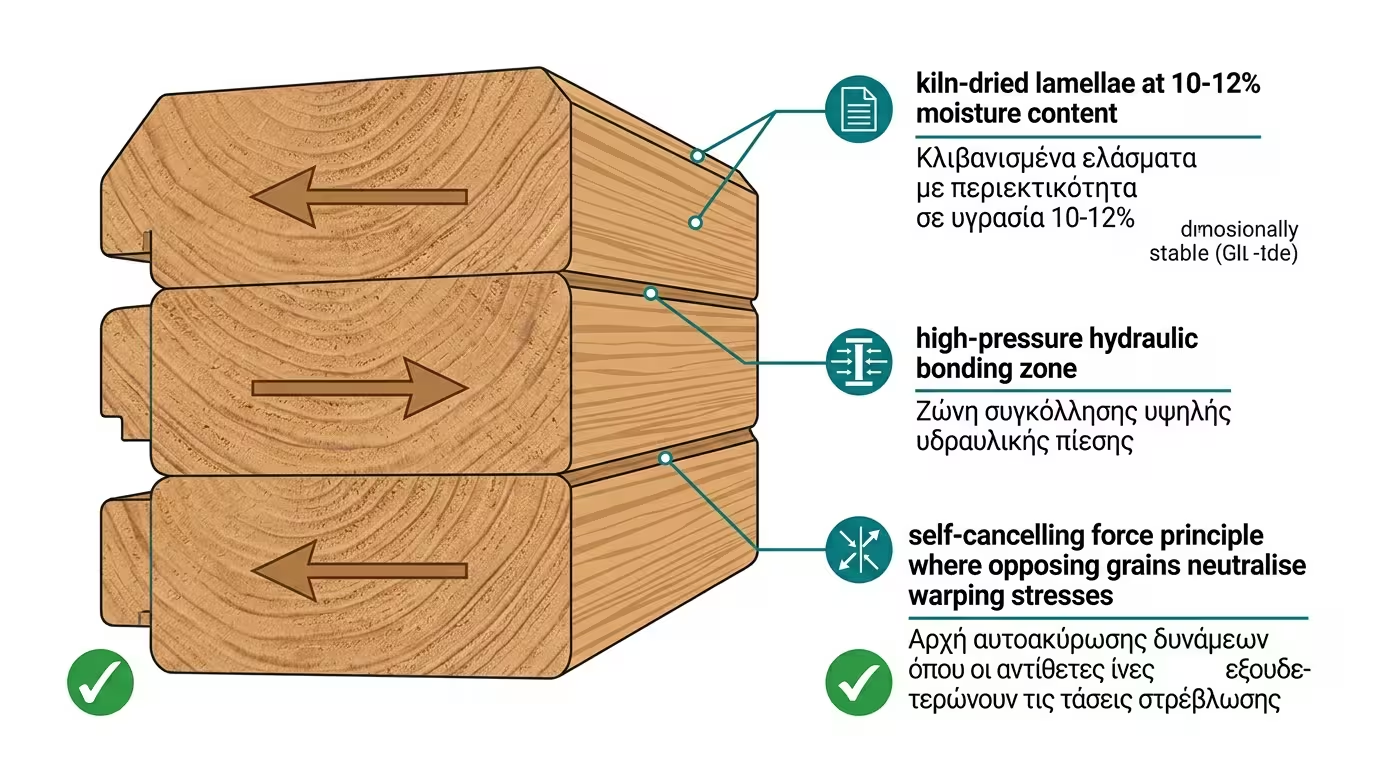
Engineering solved the problem by breaking it apart. Instead of taking a thick, solid beam to create the window profile, the manufacturer takes three or four thinner "slices" of wood (lamellae).

These lamellae, after being carefully kiln-dried in special ovens to reach an ideal moisture content (approximately 10–12%), are coated with extremely powerful adhesives and pressed together under enormous hydraulic force. The resulting piece is known as glued laminated timber.

Glued laminated timber - three or four lamellae

3. The Engineering of Absolute Stability

🔄 The Counter-Force Principle (Cross-graining)

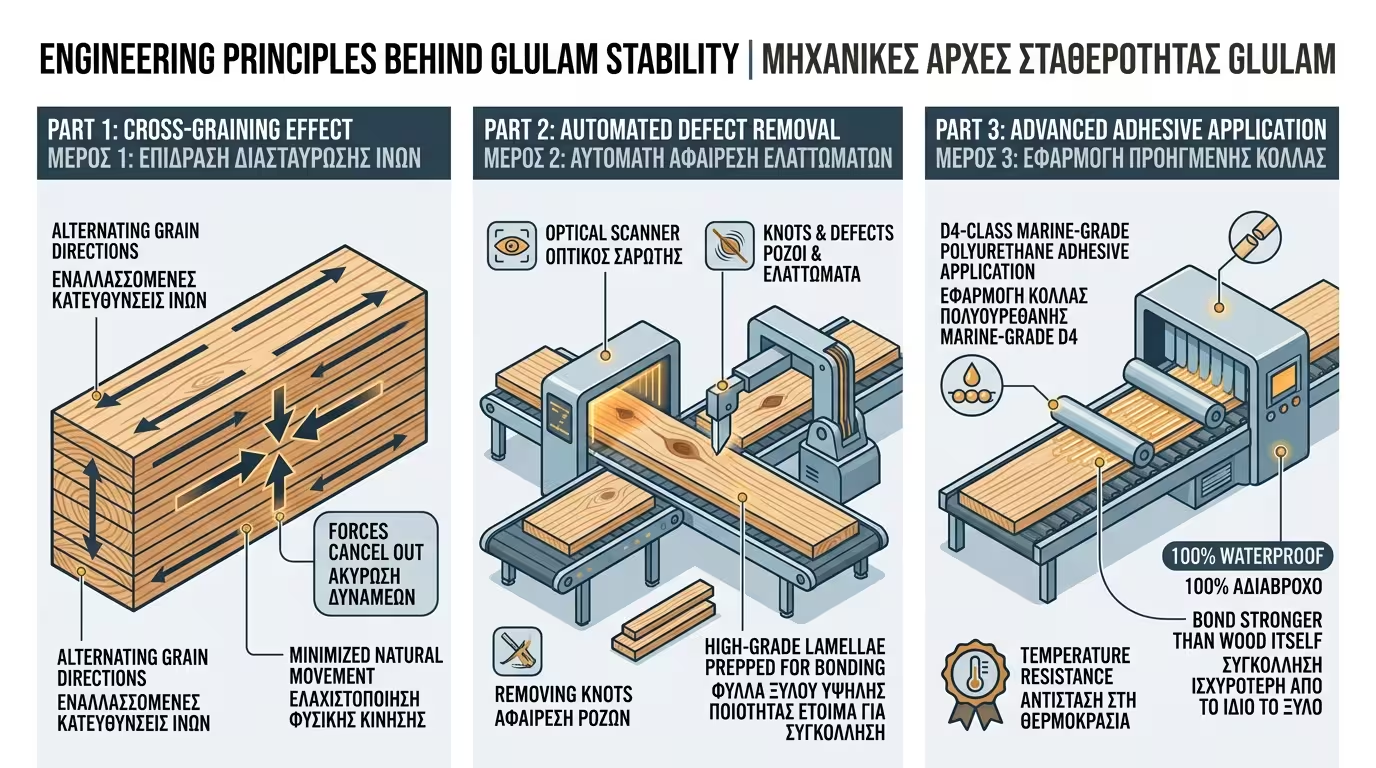
During bonding, the grain of each layer is placed opposite to its neighbour's grain. So when the outer layer absorbs moisture and "tries" to warp to the left, the middle layer (with opposite grain) "pulls" it to the right. The forces cancel each other out. The profile remains perfectly straight and immobile, no matter how many decades pass.
🔍 Defect Removal

Before bonding, the wood passes through digital scanners. Every knot, crack or natural defect that could weaken the construction is detected and cut out automatically. In solid wood, the knot would remain and become the weak point from which cracking started.

💧 D4 Class Adhesives (Waterproof)

The concern that "the glue will come apart" is now unfounded. In modern industry, structural marine-grade polyurethane adhesives (Class D4) are used. They are 100% waterproof, resistant to extreme temperatures (from frost to heatwaves) and never deteriorate. The adhesive bond is often stronger than the wood itself!

4. Three-Layer vs Four-Layer Timber

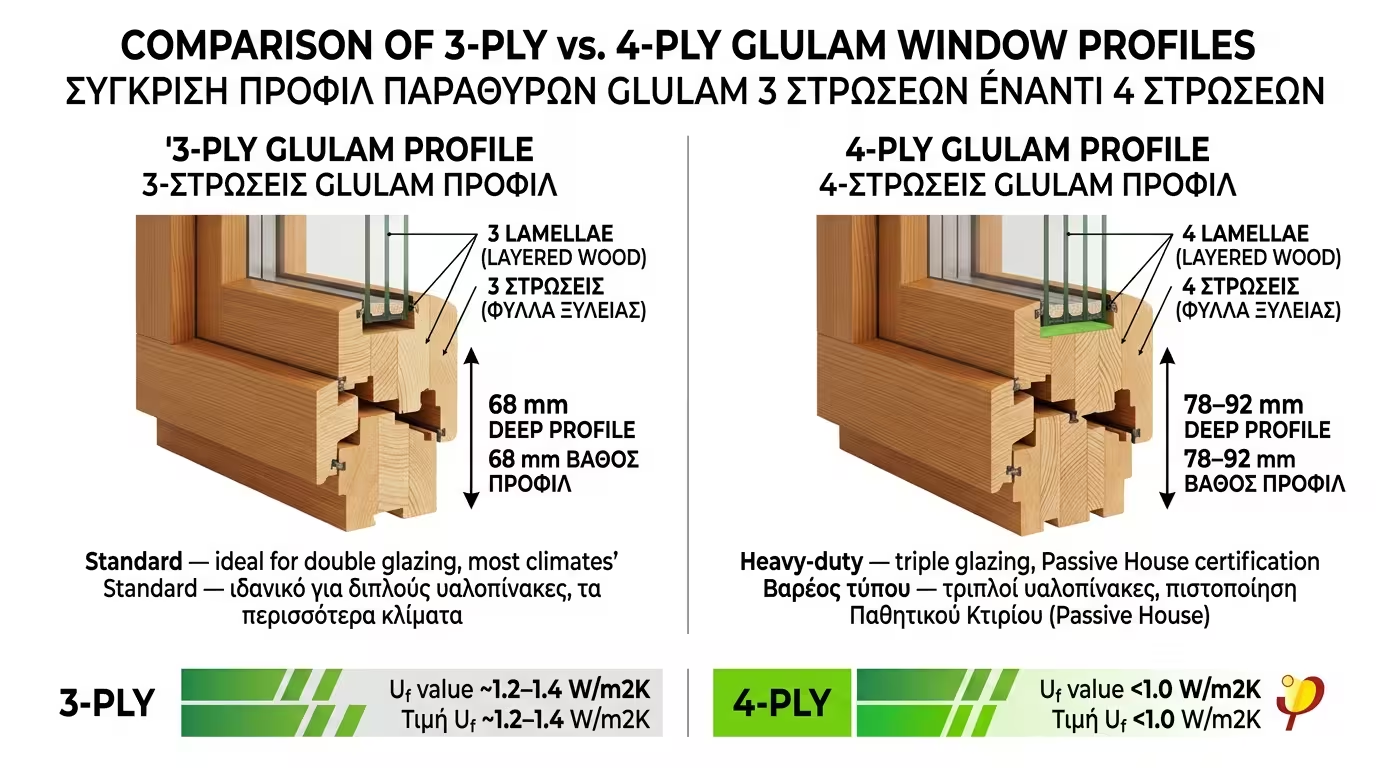
In technical brochures you will often see the distinction between 3-ply (three-layer) and 4-ply (four-layer) timber.

Three-layer timber (3-ply) is used in standard profiles (68 mm depth). It is more than sufficient for most climates, offering excellent stability combined with double energy glazing.

Four-layer timber (4-ply, four layers) is used in heavy-duty profiles (78 mm or 92 mm depth). Here the wood thickness is enormous in order to accommodate heavy triple glazing and deliver the extreme thermal insulation required for Passive Houses.

3-ply vs 4-ply - three-layer vs four-layer timber

5. In Summary

Solid wood has its own wild beauty for furniture, but in window manufacturing glued laminated timber (Glulam) is the undisputed champion. It eliminates natural warping stresses, withstands the harshest weather conditions, and transforms the window into an ultra-modern, stable "machine" that maintains its insulation for a lifetime.

Glued laminated timber - the undisputed champion
💡 Key Takeaway: Glued laminated timber (Glulam) with opposing grain and D4 adhesives turns wood into a material with the stability of metal - warping is a thing of the past.

Related Articles

Frame Materials & Finishes for Windows & Doors

Return to category.

Go to category

Preview