
🌡️ Extremely High Uf Value
The Uf value of a typical cold window frame ranges from 6.0 to 7.0 W/(m²K). In practical terms, it works like a "hole" in the wall as far as insulation is concerned.
As engineers, builders or well-informed homeowners taking on a renovation, you know the fundamental rule: aluminium is an outstanding structural material, but at the same time it is one of the best conductors of heat.
When outside air in winter is at 5 °C and the interior is at 22 °C, a "traditional" window turns into a massive thermal bridge. Although the market has shifted overwhelmingly towards thermal-break technology, cold profiles are still being sold.
What exactly are the technical differences? How does the polyamide width translate into real energy savings, and what does the legislation actually require? Let us put both systems under the microscope.
A conventional, "cold" profile consists of a single piece of extruded aluminium. The thermal conductivity of the aluminium alloy (λ) is approximately 160 W/(mK). This means that heat travels through the mass of the metal at lightning speed.
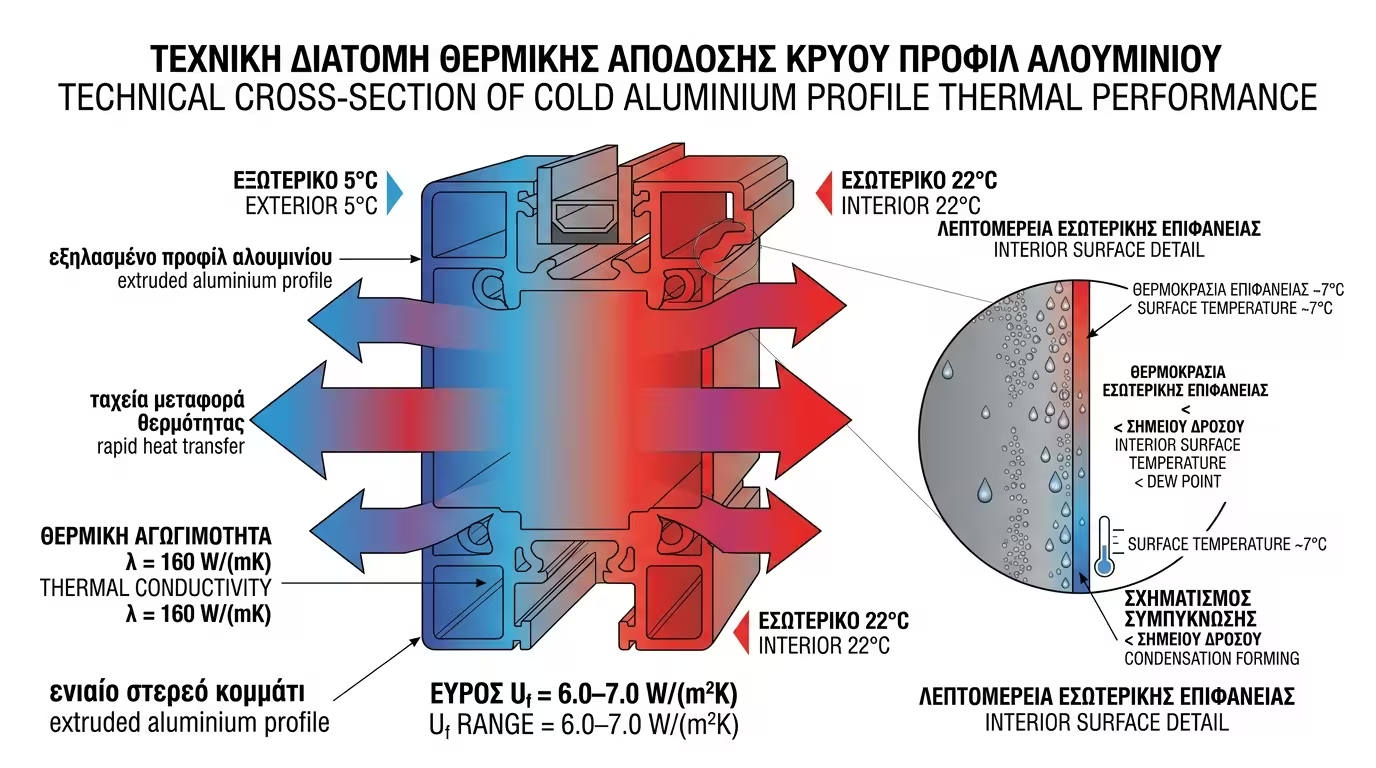
The Uf value of a typical cold window frame ranges from 6.0 to 7.0 W/(m²K). In practical terms, it works like a "hole" in the wall as far as insulation is concerned.
Due to the high thermal transmittance, the interior surface of the aluminium freezes. When the room's relative humidity (e.g. 60%) comes into contact with the ice-cold metal, it condenses immediately. This causes heavy condensation (water on the floor) and, inevitably, mould growth.
To "brake" heat transfer, the profile is split into two independent halves (interior and exterior). These two halves are mechanically joined via bars of glass-fibre-reinforced polyamide (typically PA66 GF25). The thermal conductivity of polyamide is just 0.3 W/(mK)-more than 500 times lower than aluminium!
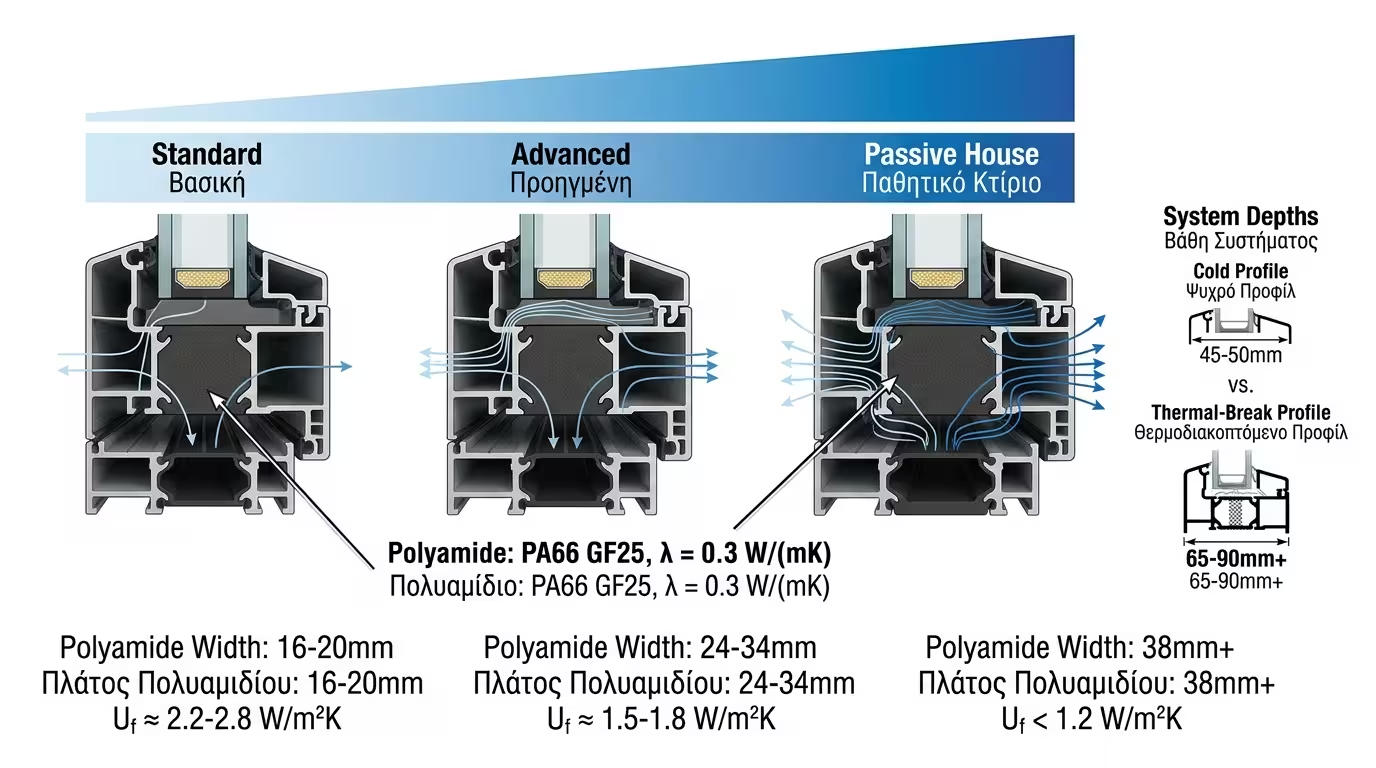
The polyamide is the "barrier". The wider it is, the harder it is for temperature to cross. Standard thermal break (16–20 mm): Uf ≈ 2.2–2.8 W/(m²K), adequate for southern regions of Greece. Advanced (24–34 mm): Uf ≈ 1.5–1.8 W/(m²K), the standard for modern buildings. Passive-house systems (38 mm+): Uf drops below 1.2 W/(m²K).
You cannot fit a wide polyamide or a thick triple-glazed unit in a "narrow" profile. A cold profile typically has a frame depth of 45–50 mm. A modern thermal-break system starts at 65 mm and can exceed 90 mm. Greater depth accommodates wider polyamide strips, increases structural adequacy (moment of inertia) and provides the glazing depth required for thick triple-pane units with inert gas (Argon).
Under the Building Energy Performance Regulation (KENAK), there are strict limits on the total thermal transmittance of the window (Uw) depending on the climate zone (from 2.6 W/(m²K) in Zone A down to 1.8 W/(m²K) in Zone D).
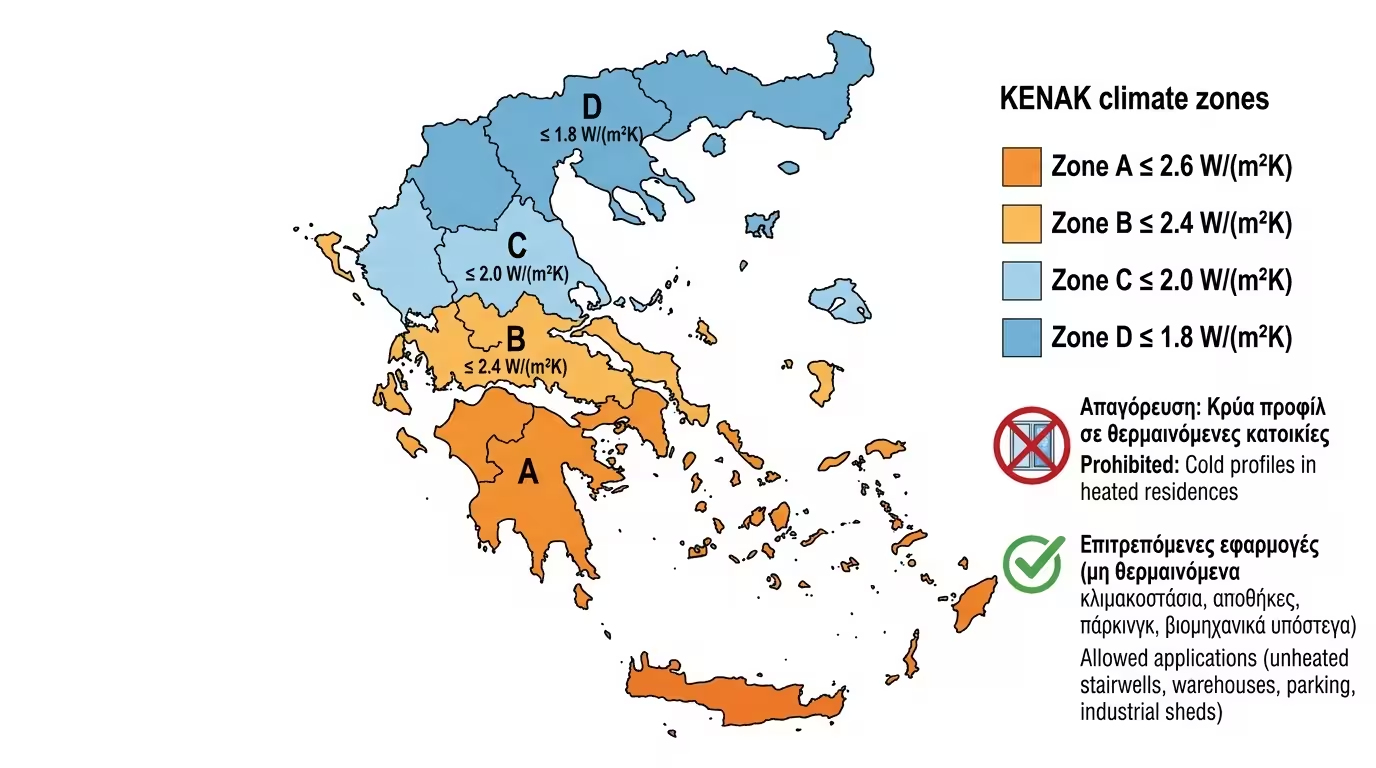
It is illegal to install cold windows in heated residential or commercial spaces. No energy inspector will approve the EPC (Energy Performance Certificate) of such a construction.
Only in unheated spaces: stairwells of apartment buildings (if not heated), warehouses, enclosed car parks, industrial sheds, internal office partitions, pergolas and atria that do not form part of the thermal envelope of the building.
A thermal-break system typically costs 25 % to 40 % more than an equivalent cold one. However, the comparison is practically moot for occupied spaces. The heat losses of a cold profile are so large that the initial cost difference is literally "burnt" in heating oil and electricity within the first 3 to 4 years of operation, not to mention the moisture problems you will need to repair.
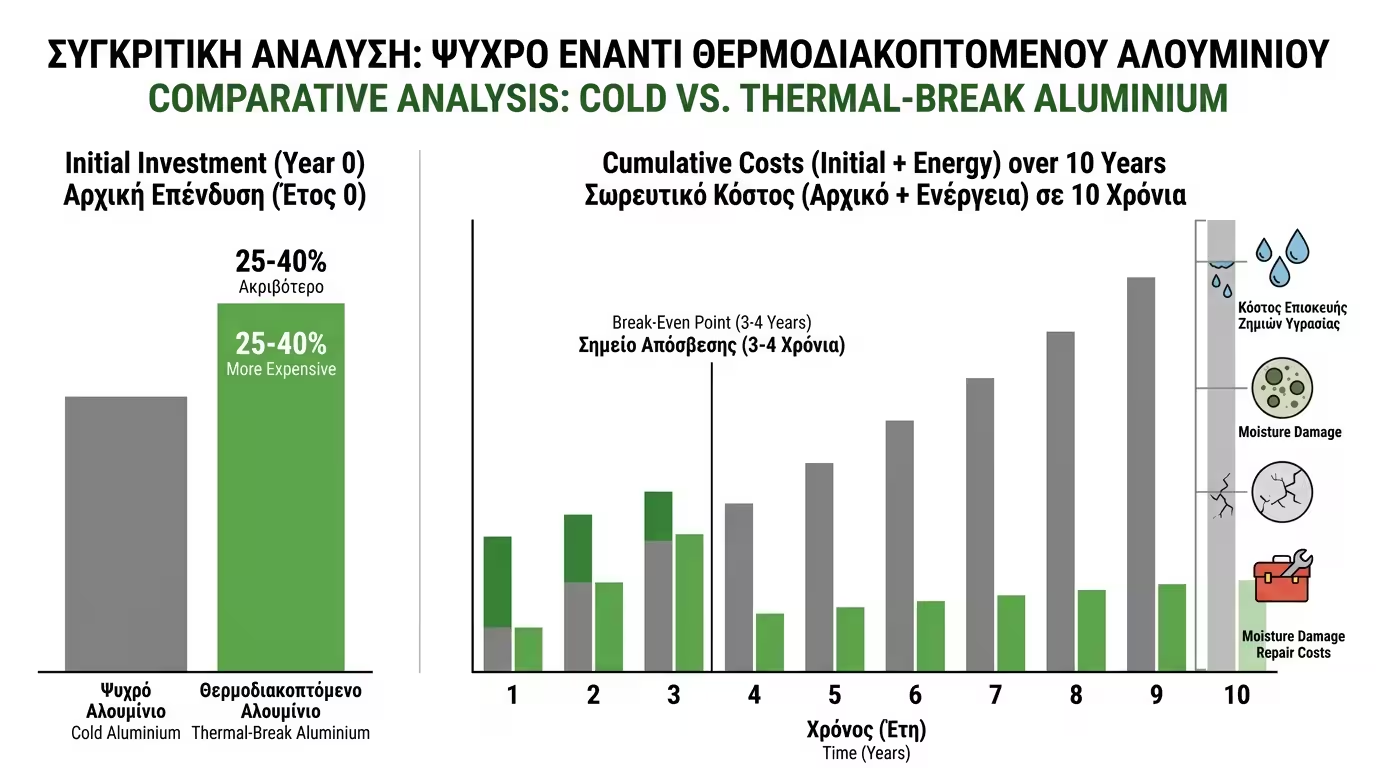
💡 Key Takeaway: For habitable spaces, a thermal break is not an "optional upgrade"-it is a legal requirement, an energy necessity and an investment that pays for itself in fewer than 4 years.
Return to category.
Go to categoryReturn to the central guide.
Go to guide