If you've ever visited a window exhibition and held a "piece" of a
synthetic window (a cross-section of the profile), you surely noticed
something peculiar. The interior isn't solid but resembles a honeycomb,
full of small, separate holes.
At the same time, the salesperson probably highlighted with pride:
"This profile is 5-chamber" or
"Here we have the top 7-chamber system."
But what exactly are these "chambers"? Why is their number the primary
comparison criterion in company brochures, and ultimately, how many
chambers do you really need for perfect insulation in your home? Let's
decode PVC technology.
1. What Are Chambers and How Do They Work?
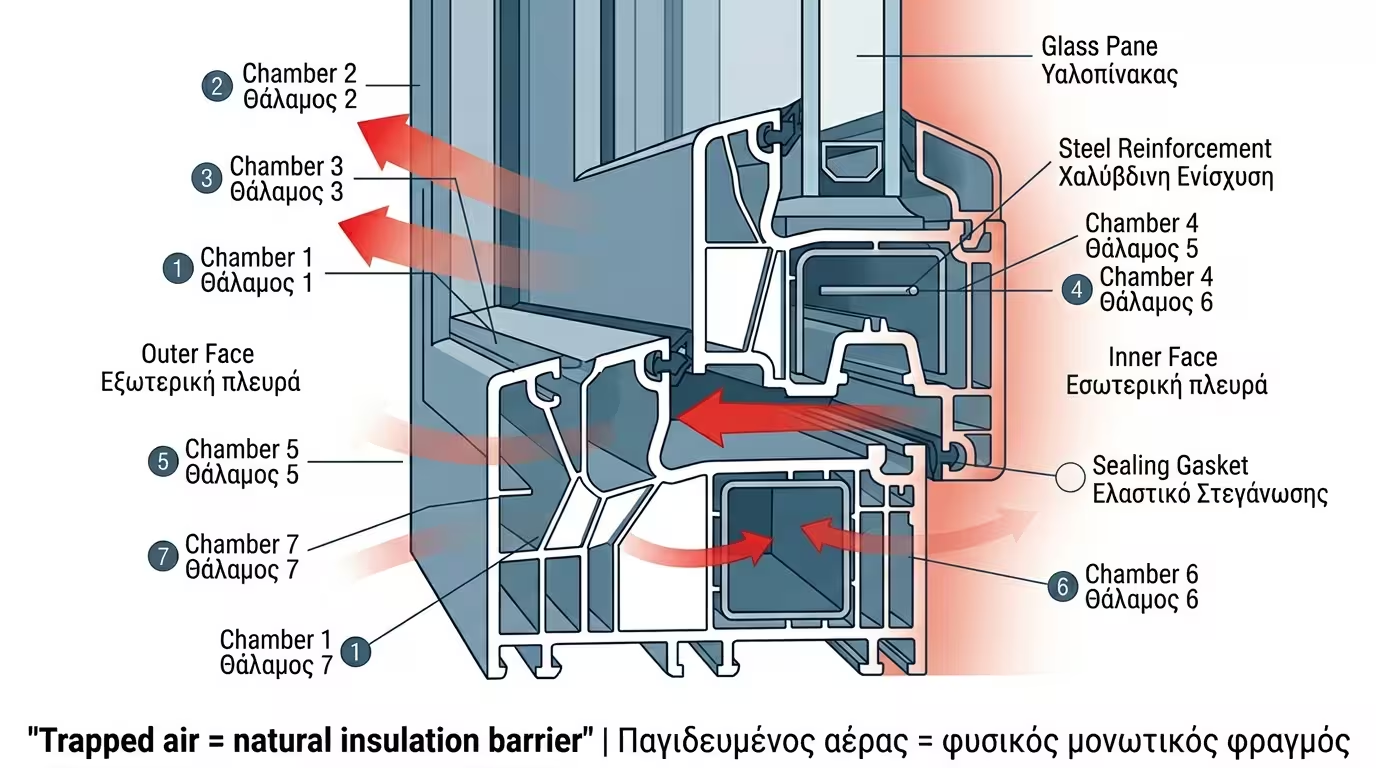
The physics behind insulation is very simple:
Still, trapped air is one of the best natural insulators. In synthetic windows, the outer plastic shell encloses air pockets separated
by thin plastic walls. These pockets are called chambers.
🌡️ The General Rule
When winter cold (or summer heat) tries to pass through the window,
it must cross these chambers one by one. Each time the cold passes
from one chamber to the next, it loses a large portion of its
strength. Therefore, the more chambers a profile has in its horizontal arrangement,
the better the thermal and sound insulation it offers (lower Uf
coefficient).
2. The Central Chamber: The Steel "Heart"
Before counting chambers, we need to make an important stop. If you
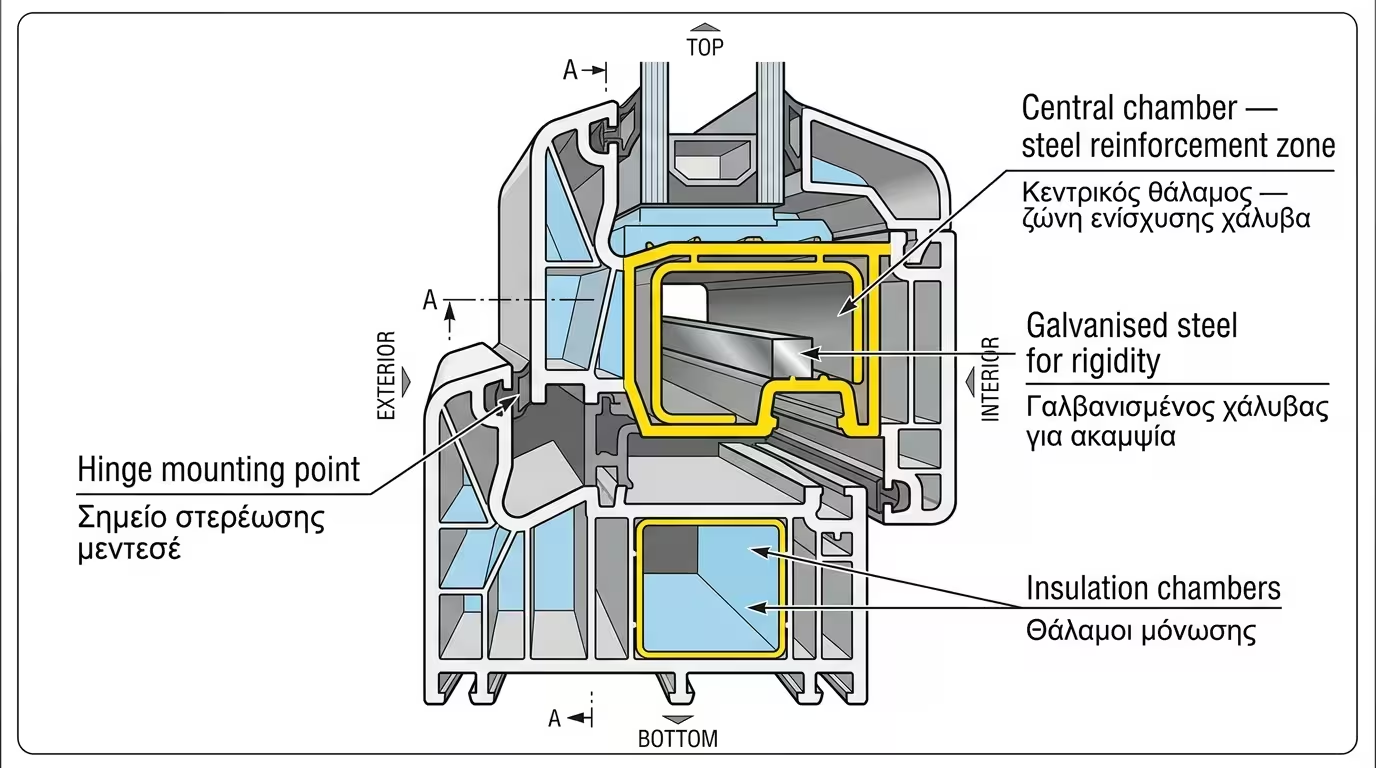
look at a PVC cross-section, you'll see that right in the middle there
is one chamber much larger than the others.
⚙️ The Steel Reinforcement
This central chamber isn't just for air. Inside it,
galvanised steel reinforcement (steel core)
clicks into place. Since plastic on its own is flexible, this steel is
what gives the window the necessary rigidity, structural strength against
winds, and anti-burglary resistance for hinges to be screwed into.
3. Selection Guide: 3, 5, 6 or 7+ Chambers?
How many chambers does your home actually need? Let's see what the
numbers mean in practice:
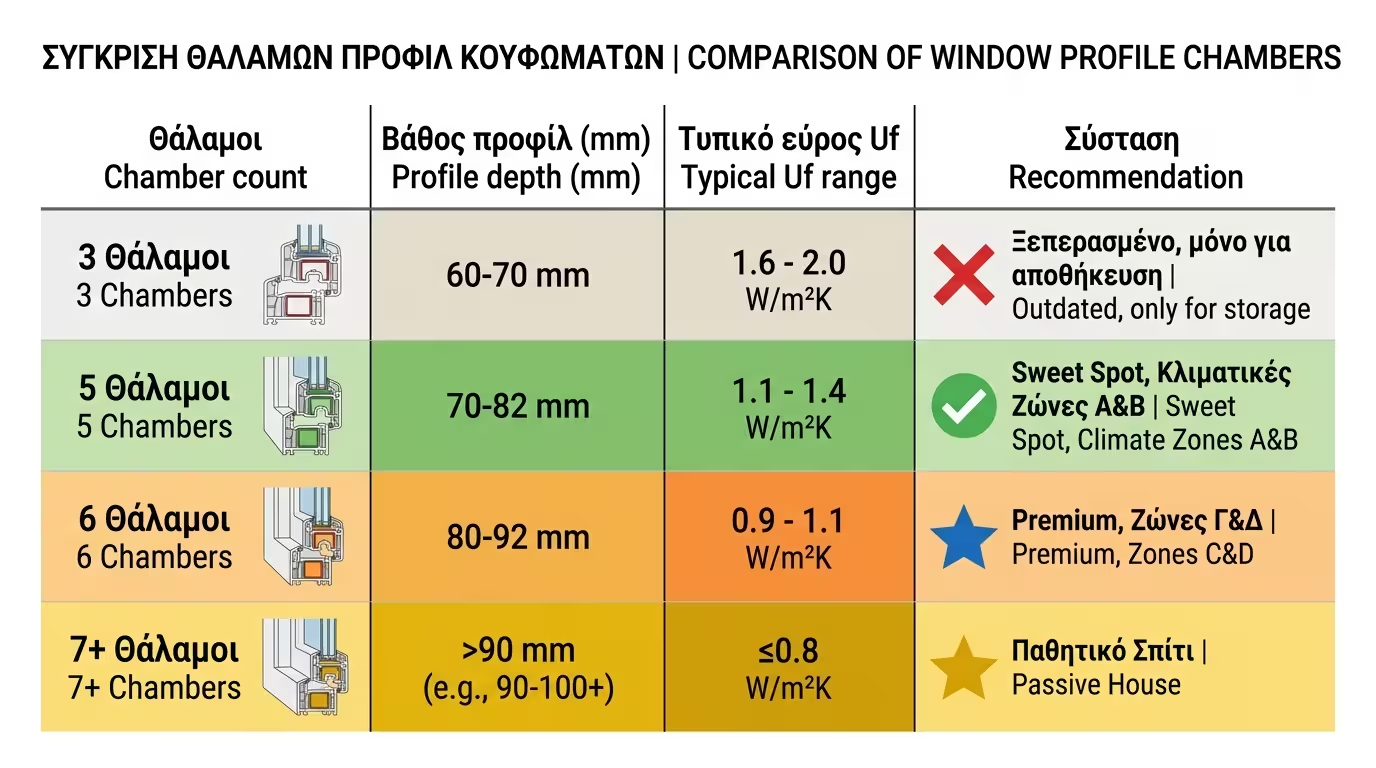
❌ 3 Chambers (Old Technology)
These were once the market standard. Today they are considered
outdated for main living spaces. They offer moderate insulation and
are recommended only for auxiliary, unheated areas (e.g. storage
rooms, basements).
✅ 5 Chambers (The "Sweet Spot")
The most popular and Value for Money choice in the Greek
market. A quality 5-chamber profile exceeds KENAK requirements and is
ideal for Athens, the islands and southern Greece (Climate Zones A & B),
offering an excellent cost-to-performance ratio.
🎯 6 & 7+ Chambers (The Premium Category)
These systems are designed for extreme weather conditions,
mountainous areas, Northern Greece (Zones C & D) or certified
Passive Houses. Here insulation reaches absolute
excellence, but cost rises significantly.
4. The "Trap": Chambers vs Profile Depth
Beware of the biggest marketing trick! Many consumers think it's
enough to ask for "7 chambers" to get the best window. This is wrong
unless combined with the correct
System Depth (window thickness).
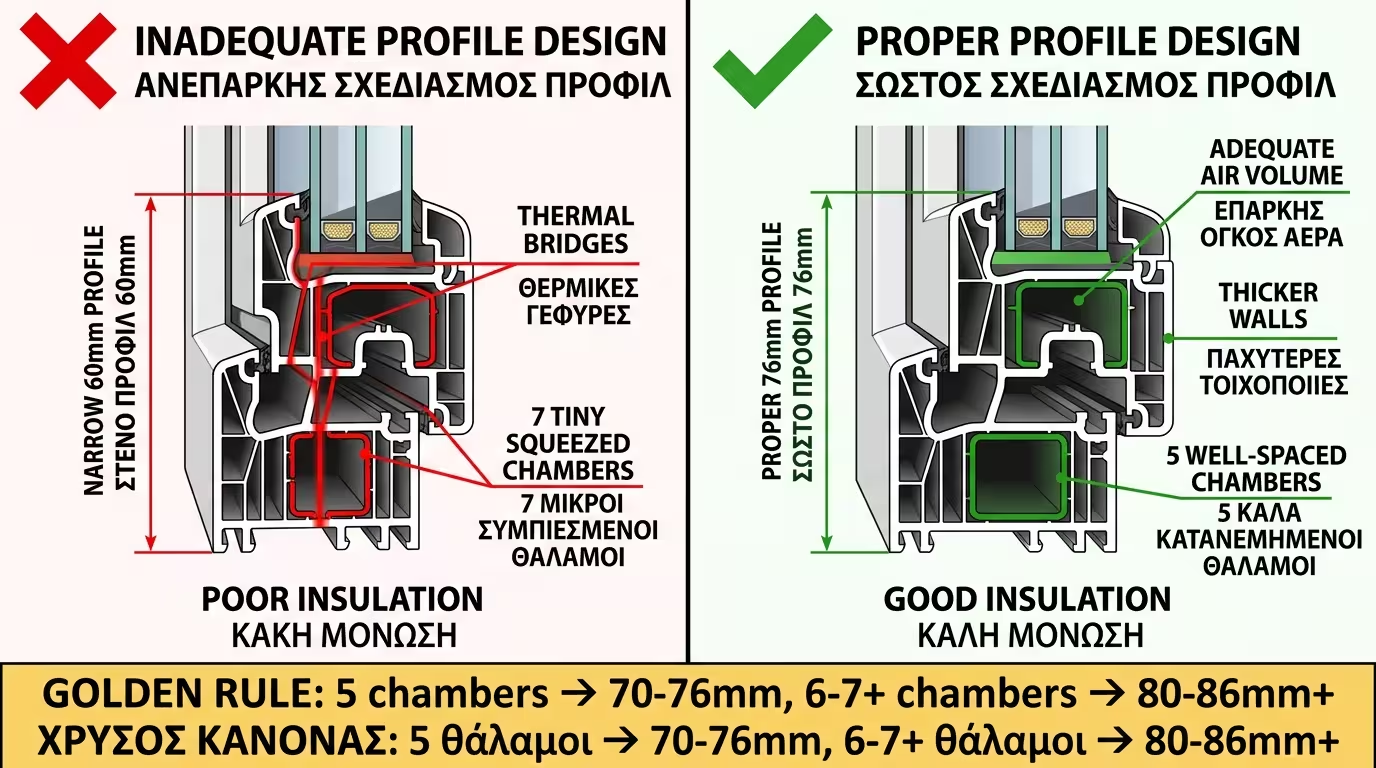
⚠️ The Problem
If we "squeeze" 7 chambers into a narrow 60mm or 70mm profile, the
chambers become excessively small. The air inside is insufficient
for insulation, and the many vertical plastic walls end up
transferring temperature themselves (acting as thermal bridges).
📐 The Engineers' Golden Rule
For the increase in chambers to be meaningful, the overall profile
depth must increase too: For 5 chambers, the ideal
depth is 70mm – 76mm. For 6 or 7+ chambers, the profile MUST have a depth of
80mm, 82mm or 86mm+.
5. In Summary
Chambers are the "secret weapon" of PVC windows for keeping your home
warm in winter and cool in summer. A 5-chamber system (with ~76mm depth)
is the ideal, efficient choice for most Greek homes.
💡 Key Takeaway: Don't just look at chamber numbers; always
check the overall frame thermal transmittance coefficient (Uf) and make sure the profile depth matches the number of chambers.