
Frame Materials & Finishes for Windows & Doors
Return to category.
Go to categoryTry a simple experiment on a cold morning: place your hand on an old metal window, then immediately on a wooden piece of furniture. The metal will feel freezing, while the wood will give you a sensation of warmth.
This feeling is not an illusion. It's pure physics in action. No matter how much material science advances, when it comes to natural thermal insulation, wood remains the undisputed "king".
But why does this happen? How does this feeling translate into real savings on your heating bill? As specialists in building energy performance, we will explain in plain terms the science (and the coefficients) behind the insulation of modern wooden windows.
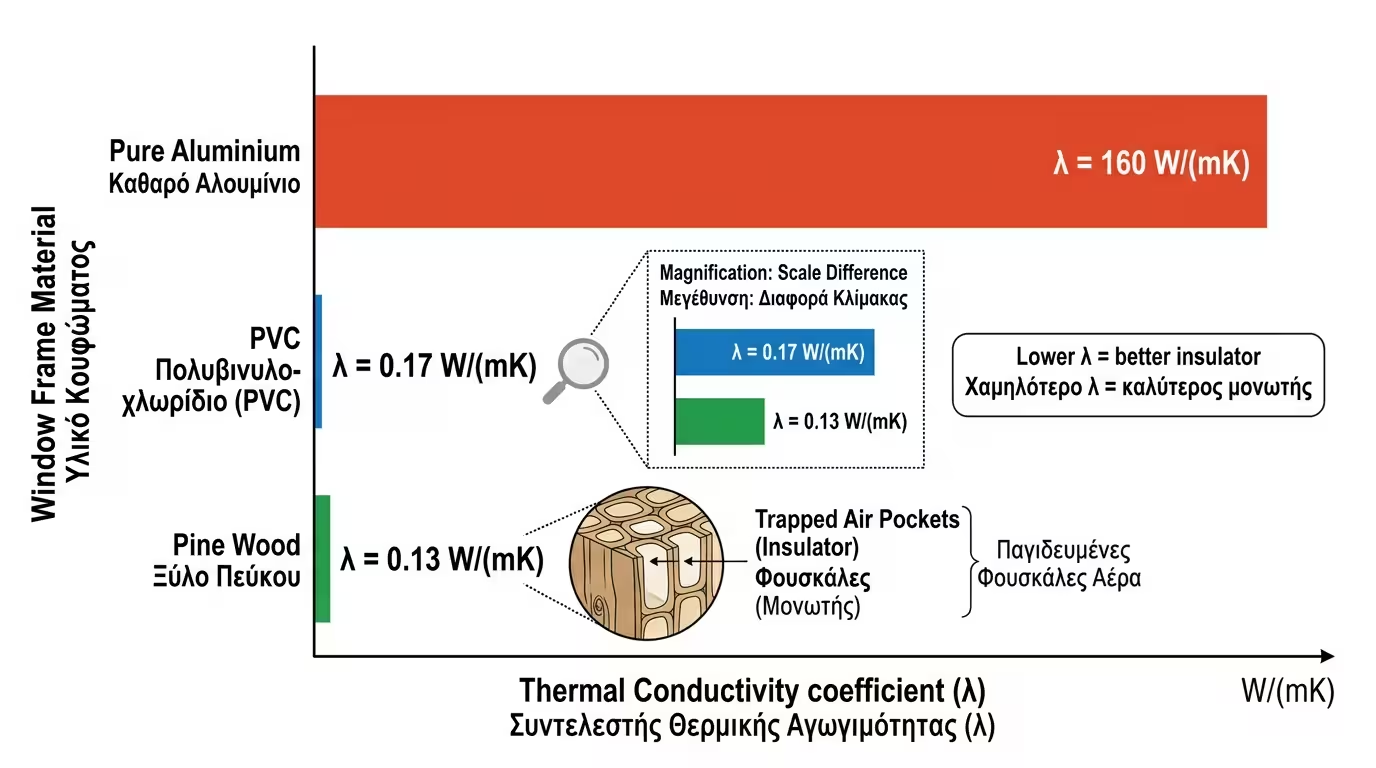
To understand how well a material insulates, engineers use the thermal conductivity coefficient (λ). This number tells us how easily a material allows heat to pass through it. The rule is simple: the lower the λ, the better the insulator.
Let’s make the comparison:
Pure aluminium (as a metal) has λ of approximately 160 W/(mK). (It is an excellent conductor, which is why we need the polyamide thermal break to "slow it down".)
Synthetic PVC has λ of approximately 0.17 W/(mK). (It is a very good insulator.)
Wood (depending on the species, e.g. pine or spruce) has λ ranging from 0.13 to 0.18 W/(mK)!
By its very nature, wood is made of millions of microscopic cells that trap air. And still air, as we know, is the best insulator. Wood therefore naturally blocks heat transfer.
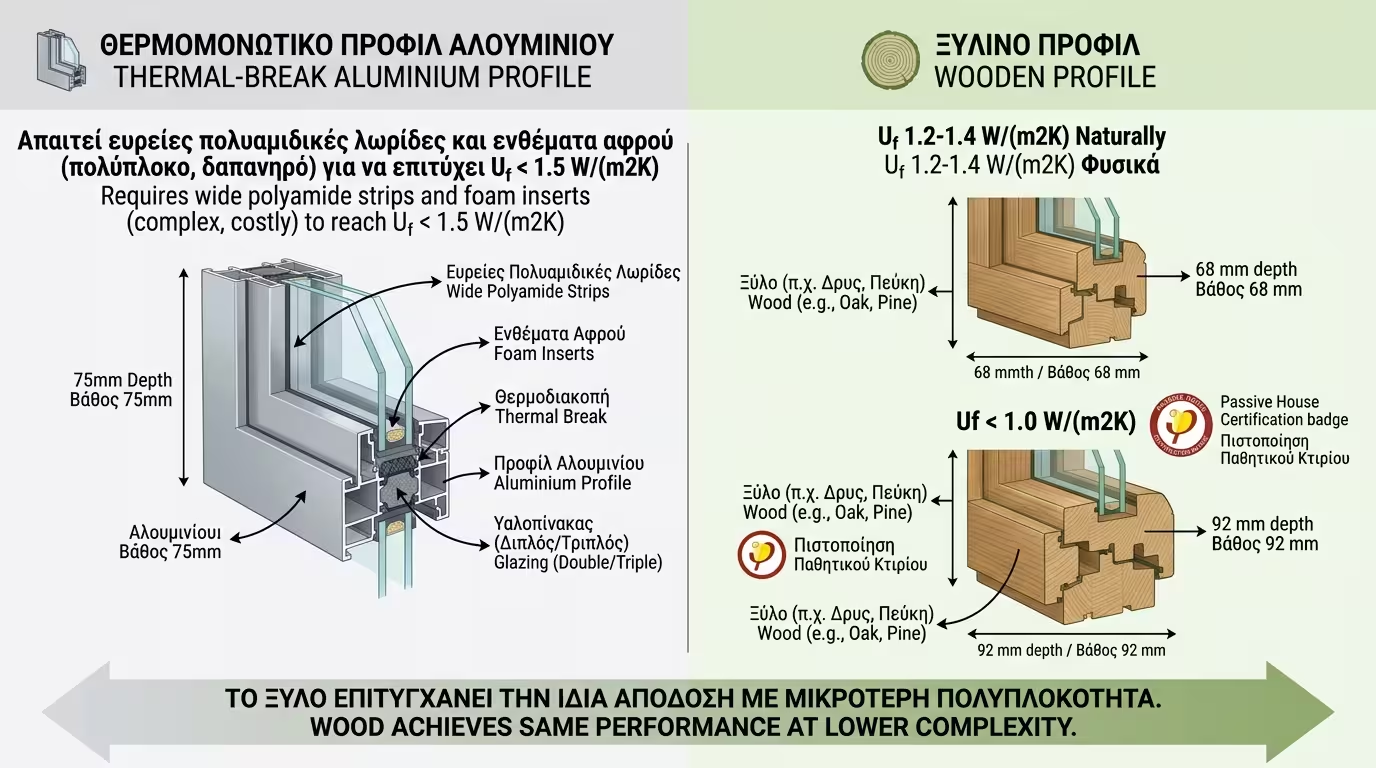
When we manufacture a window, we are interested in the overall thermal transmittance of the frame, which is measured by the Uf coefficient (U-value frame). And here, the rule is the same: the lower the number, the greater the energy savings.
In a modern thermal-break aluminium window, to achieve Uf below 1.5 W/(m²K), the manufacturer must add very wide polyamide strips and special insulating foams inside the metal (something that dramatically increases the cost).
In a wooden window, a standard profile of 68 mm thickness achieves Uf of around 1.2 to 1.4 W/(m²K) on its own, without any chemical or artificial intervention whatsoever! If we go to a profile of 92 mm thickness, the Uf drops below 1.0, reaching Passive House territory.
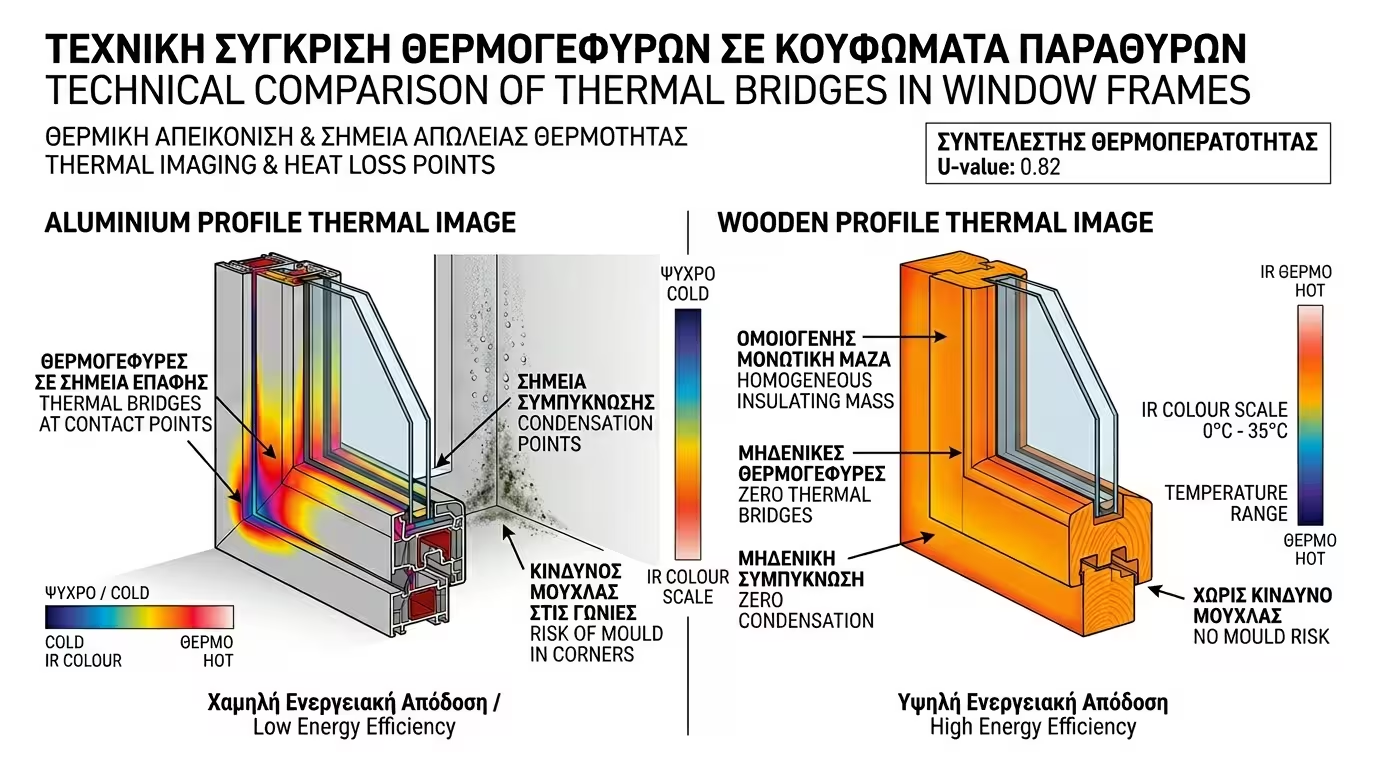
One of the biggest problems in construction is thermal bridges - the "pathways" through which heat escapes.
In wooden windows, the entire frame mass is insulating. There are no metal-to-plastic joints, no gaps that need filling. Wood is a homogeneous material that cuts the cold current sharply (the cold wall phenomenon), keeping the inner surface of the window at room temperature. This means in practice zero condensation (sweating) and no mould formation on window sills and wall corners.
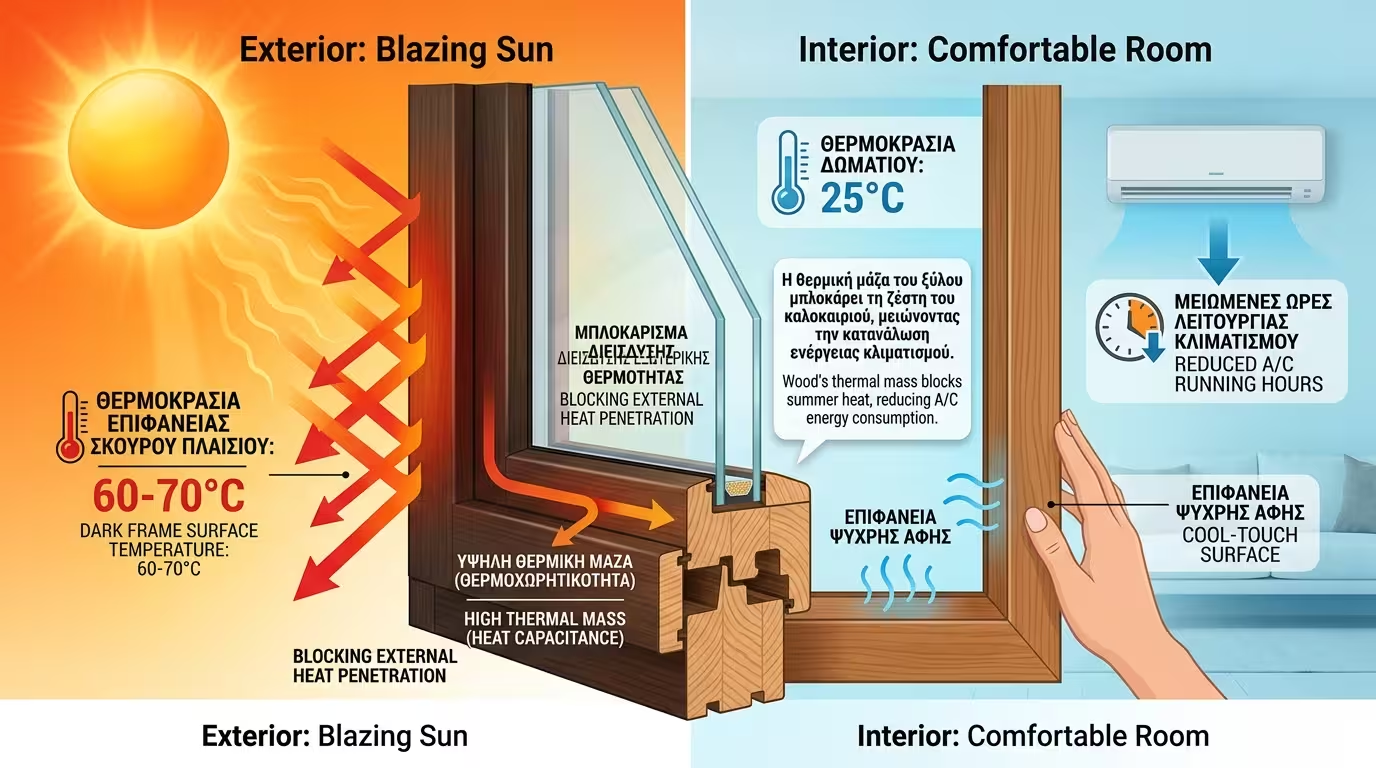
We often focus on winter, but what about summer? In Greece, the sun can raise the external surface temperature of a dark-coloured window to 60°C or 70°C.
Thanks to wood's enormous thermal mass, this scorching heat is unable to penetrate the frame. The wooden window will stay pleasantly cool on the inside of your living room, drastically reducing the hours your air conditioning needs to run.
No matter how much material science advances, nature already provided the answer thousands of years ago. A modern wooden window (combined with an excellent energy glass unit) is not merely an aesthetic luxury. It is the most efficient, bioclimatic and "green" investment you can make to thermally shield your home, permanently reducing heating and cooling costs.
💡 Key Takeaway: Wood = the top natural insulator. λ 0.13-0.18, zero thermal bridges, Uf < 1.0 in 92mm profiles, ideal for Passive Houses - in winter and summer.
Return to category.
Go to categoryReturn to the central guide.
Go to guide