Steel Reinforcement in PVC Windows: The Secret to Durability and the
Truth Behind "Warping"
If you asked what the number one fear of every Greek homeowner is
regarding uPVC windows, the answer would always sound something like:
"But won't they warp in a few years? After all, they're plastic…"
The truth is that cheap, generic uPVC windows
really can warp. But the reason isn't "because they're
plastic". The plastic is merely the "coat". What determines whether a
window will last 30+ years or start deforming after 3 is hidden inside,
invisible: the steel reinforcement.
Let's look at what this "metal nerve" is exactly, why it determines
everything, and how to check if your windows have it.
1. Why Does a "Plastic" Window Need Steel Inside?
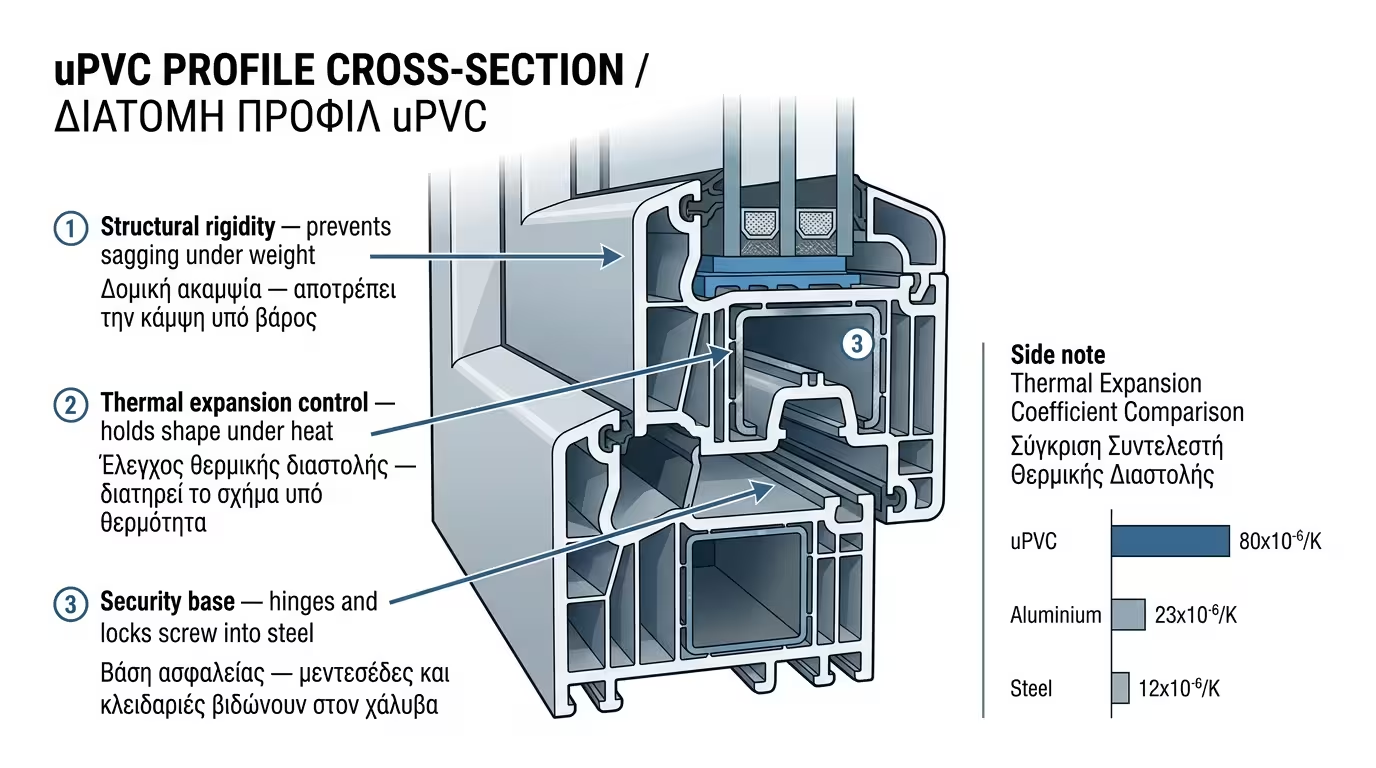
uPVC (rigid polyvinyl chloride) is an excellent insulation material,
but it remains a polymer. It has a much greater thermal expansion
coefficient compared to aluminium or wood. To solve this, at the
centre of the profile cross-section there is always a large central
chamber. Inside it, the manufacturer must insert and screw a galvanised steel bar. This steel provides the structural rigidity (moment
of inertia) the window needs.
🏗️ Structural Strength - The Spine
Without the internal skeleton, a large window sash (or the much
heavier patio door sash) would sag under its own weight. The galvanised steel acts as the "spine" of the window,
withstanding both static loads (weight) and wind pressures. Hinges,
locking mechanisms and opening hardware are all screwed into it.
🌡️ Thermal Expansion Resistance
uPVC expands relatively more than metal when heated.
This means a long 2.5-metre profile can "stretch" under the July sun.
The internal steel contains these expansions, forcing the frame to hold
its shape.
🛡️ Anti-Burglary Resistance (Security)
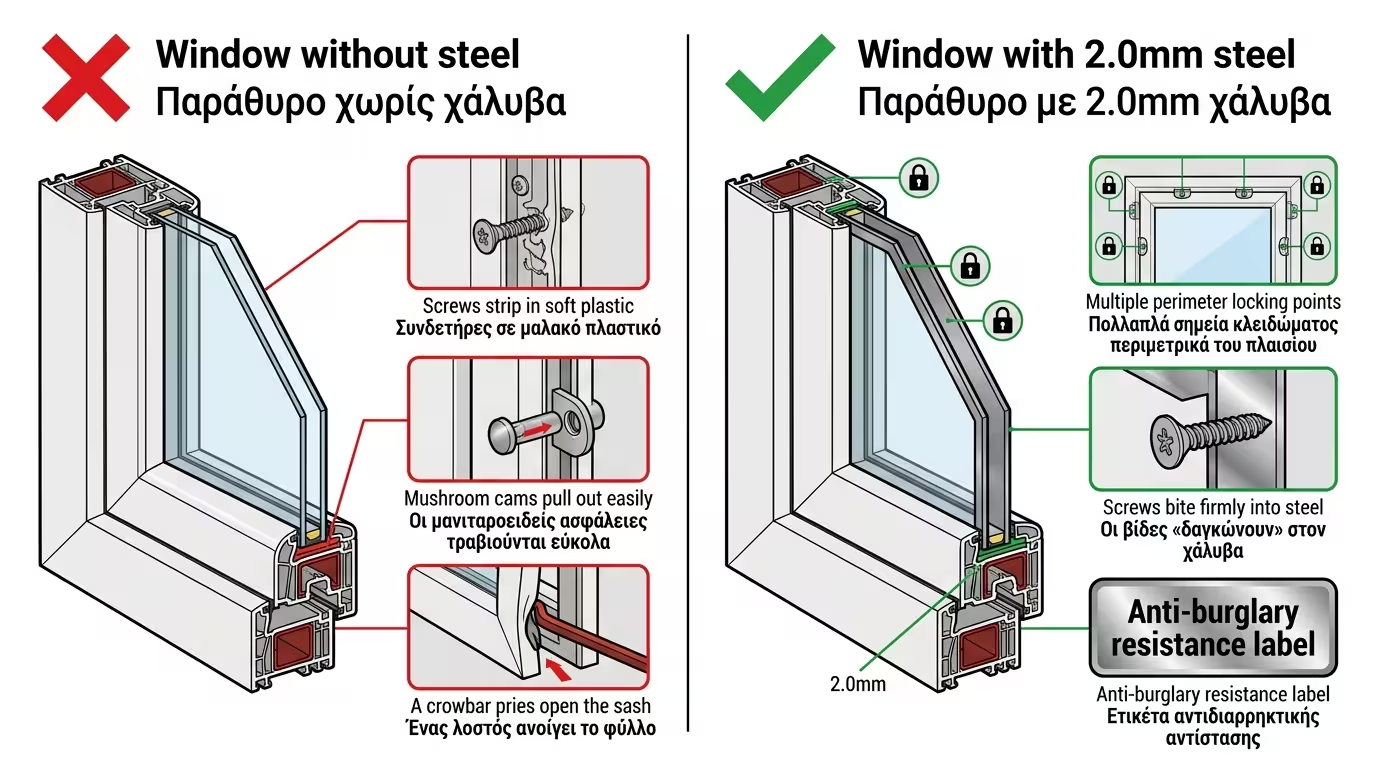
A window without steel can be breached relatively easily. By
contrast, a window with proper steel and multiple locking points
constitutes a real obstacle even for the most determined intruder.
2. How Much Steel Is Needed? Thickness & Galvanisation
Having "a little" steel inside is not enough. The quantity, quality
and treatment make a huge difference:
📐 Steel Thickness (The Biggest Secret)
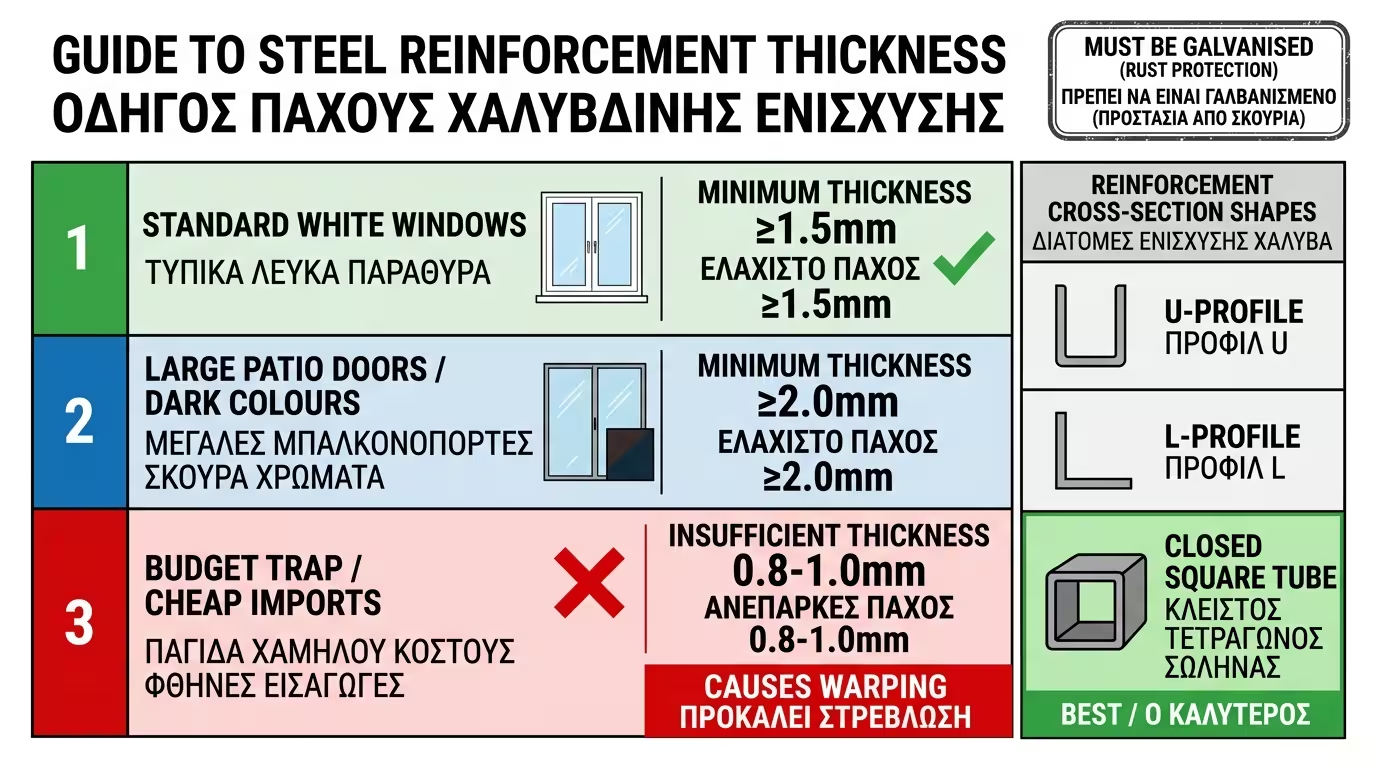
The rule of serious manufacturing plants is clear: For standard
white windows of small/medium dimensions, the minimum thickness must
be 1.5mm. For large patio doors, entrance doors, or for coloured profiles (like anthracite or wood-look that attract heat), the thickness MUST
rise to 2.0mm or even 2.5mm. The market trap: Many manufacturers use steel of 1.0mm or even 0.8mm thickness to cut
costs! This "paper" will never contain the warping of the window.
🧪 Anti-Corrosion Protection (Galvanisation)
The steel inside the profile must be strictly galvanised. Rainwater enters the drainage chambers or moisture vapour forms.
If plain, unpainted iron is used, it will rust. The rust will run
from the drainage holes, staining the white uPVC and your marble sills with unsightly brown marks.
📐 The Cross-Section Shape
The shape of the metal matters as much as its thickness. Depending
on the system, the reinforcement can be "U"-shaped, "L"-shaped, or a closed square section (tube). The closed section (especially in the window frame) offers
dramatically greater torsional rigidity, absolutely preventing
warping.
3. The Anti-Burglary Dimension: Multi-Point Locking
Beyond structural strength and temperatures, steel plays the most
critical role in the anti-burglary protection of your home.
🔒 Perimeter Locking
In a modern uPVC window, the lock isn't at just one point. All
perimeter locking mechanisms (security mushroom cams) and heavy-duty
hinges, to withstand the pressures of a crowbar, must be screwed directly INTO the steel. If the steel is missing or very thin (0.8mm), the screws grip
only soft plastic. Thus, a burglar can easily "rip out" the entire
hinge with a simple pull!
4. How to Check If Your Windows Have Steel
The contractor may say many things. But you can verify with a very
simple "test":
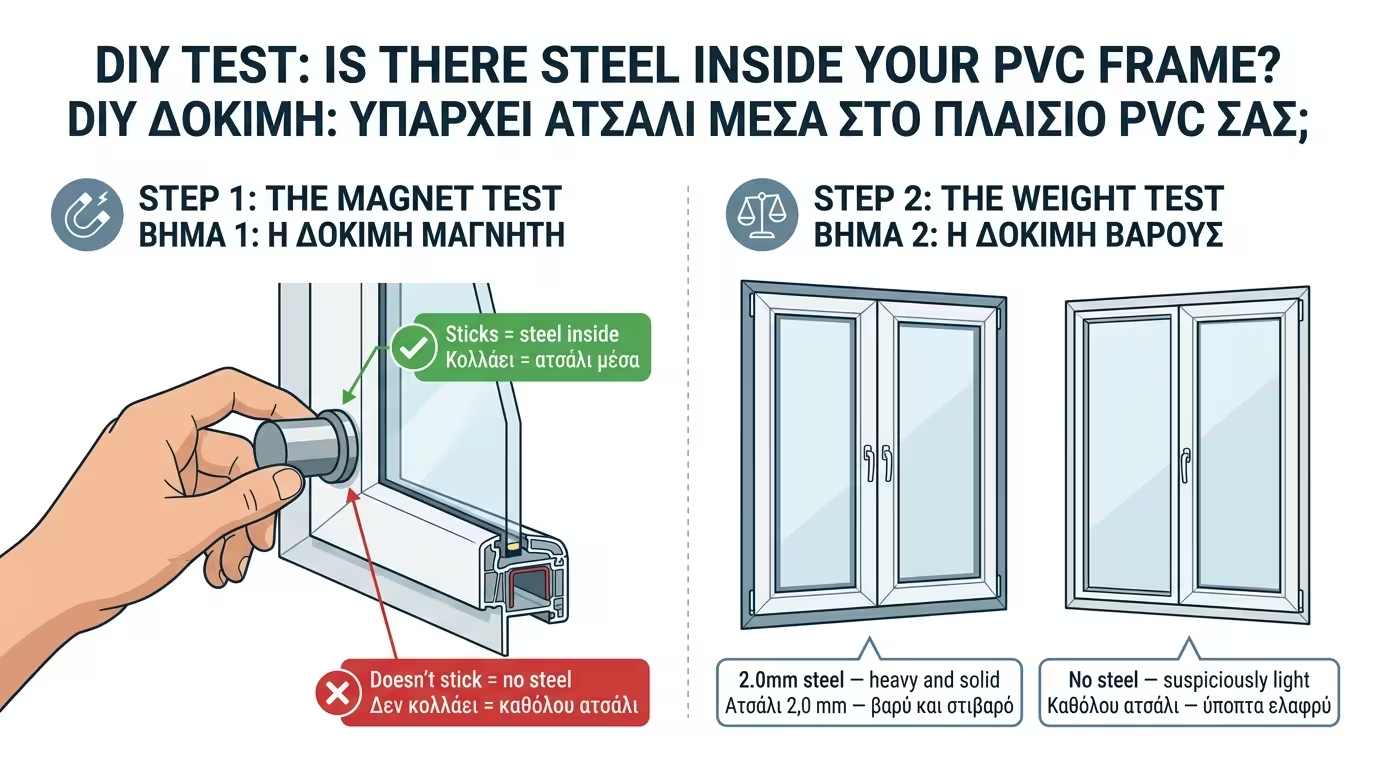
🧲 The Magnet Test
Take a strong magnet (even from your fridge) and run it along the
frame and sash (at the centre of the profile). If the magnet isn't
attracted anywhere, the manufacturer didn't install any steel at
all!
⚖️ The Weight Test
A proper uPVC window with 2.0mm steel is incredibly heavy and solid. If you can lift it very easily, the steel is missing or minimal.
📋 Ask for Certificates
A reliable manufacturer can provide proof: galvanisation certificate, wall thickness in mm, installation instruction with a drawing showing where and how the reinforcement is placed inside
the profile.
5. In Summary
The answer to the initial question "Why do plastic windows warp?" is not
"because they're plastic". It is: "Because someone cut corners on the steel." uPVC without proper steel is like a building without foundations.
When you receive quotes for uPVC windows with large price differences,
don't just look at the plastic brand. Ask the manufacturer openly: "What thickness of galvanised steel do you use in the sashes and
frames?" A PVC window with a strong steel "nerve" will remain aligned, airtight and
secure for decades, defying the harshest conditions of the Greek summer.
💡 Key Takeaway: Always insist on galvanised steel ≥1.5mm (ideally 2.0mm) in a closed cross-section. Do the magnet test before accepting delivery. Without proper steel, there is NO quality PVC
window.