
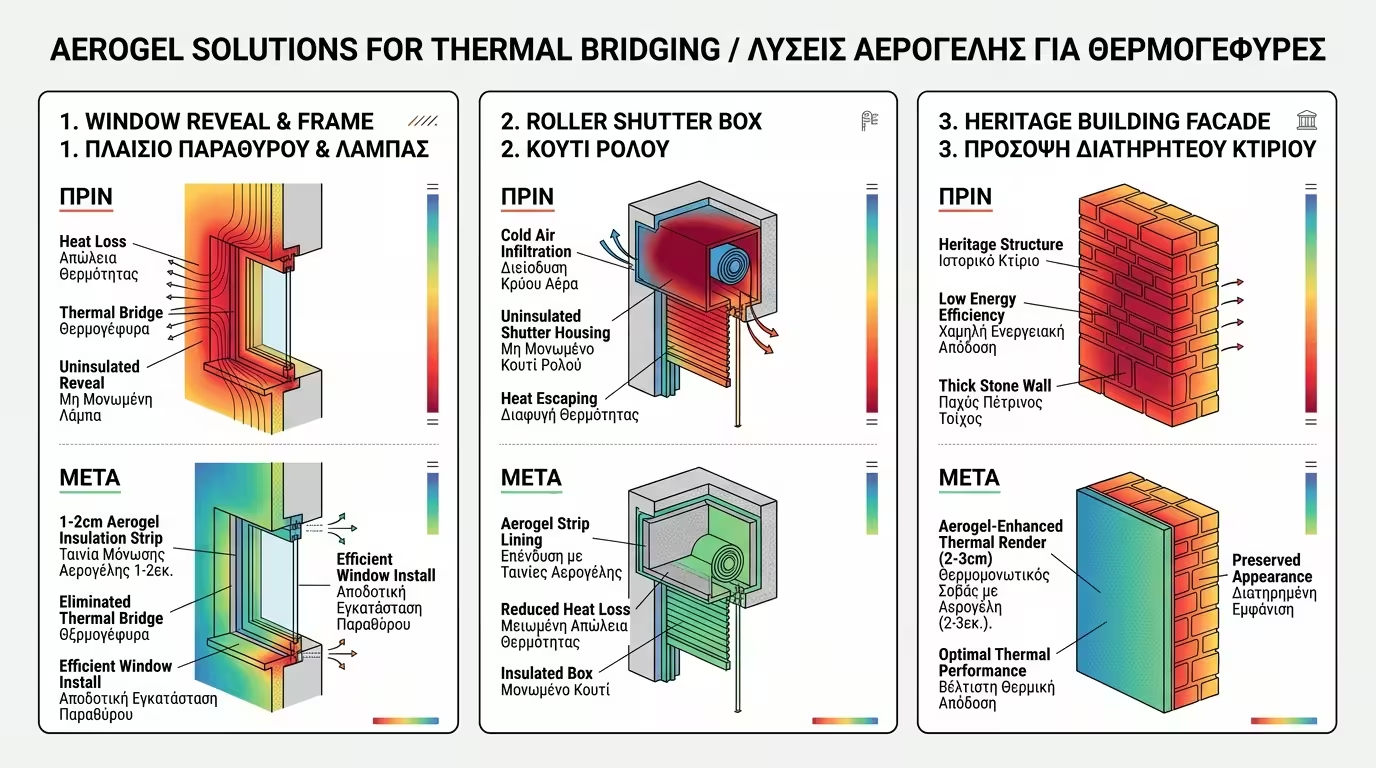
🪟 Window Reveals
That narrow strip of wall around the window frame, where a conventional 5-centimetre polystyrene board would hide the glass. Apply 1-2 centimetres of aerogel and the thermal bridge disappears.
If you hold a piece of Aerogel in your hand, you would think you are holding a hologram. It is semi-transparent, has a faint blue tint and is so light that it is often called "solid smoke" or "frozen smoke".
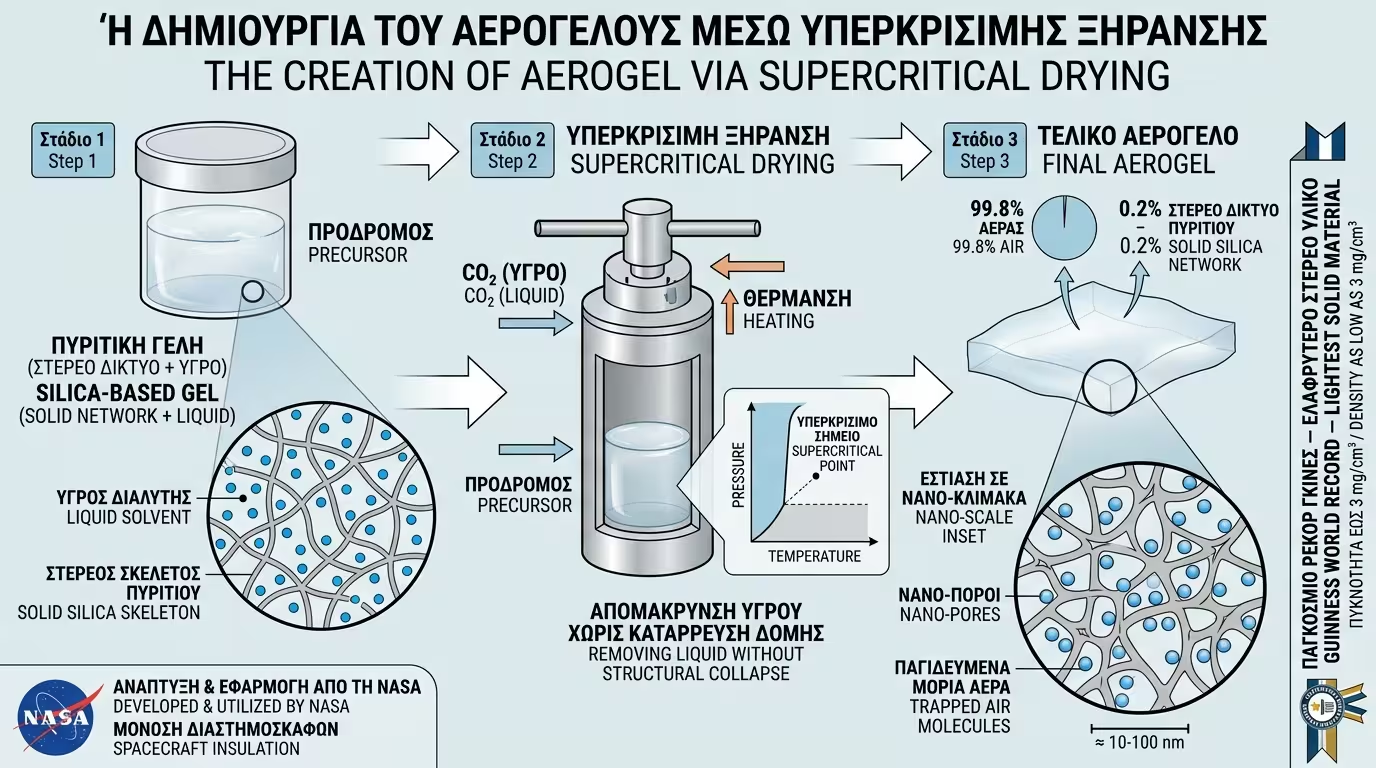
In reality, Aerogel holds the Guinness World Record as the lightest solid material in the world. It was originally developed for NASA space applications (for insulating astronaut suits and Mars Rover vehicles). In recent years, however, this exotic technology has made the leap to commercial construction, offering solutions to problems once considered unsolvable.
To create aerogel, scientists take a gel (usually silica-based) and through a complex process of supercritical drying, remove all the liquid component without collapsing its solid structure. The liquid is replaced by gas.
The result? A material that is 99.8% air and just 0.2% solid silica network! Because this network is made of incredibly tiny pores (nano-scale), air molecules are trapped to such a degree that they cannot even move to transfer heat.
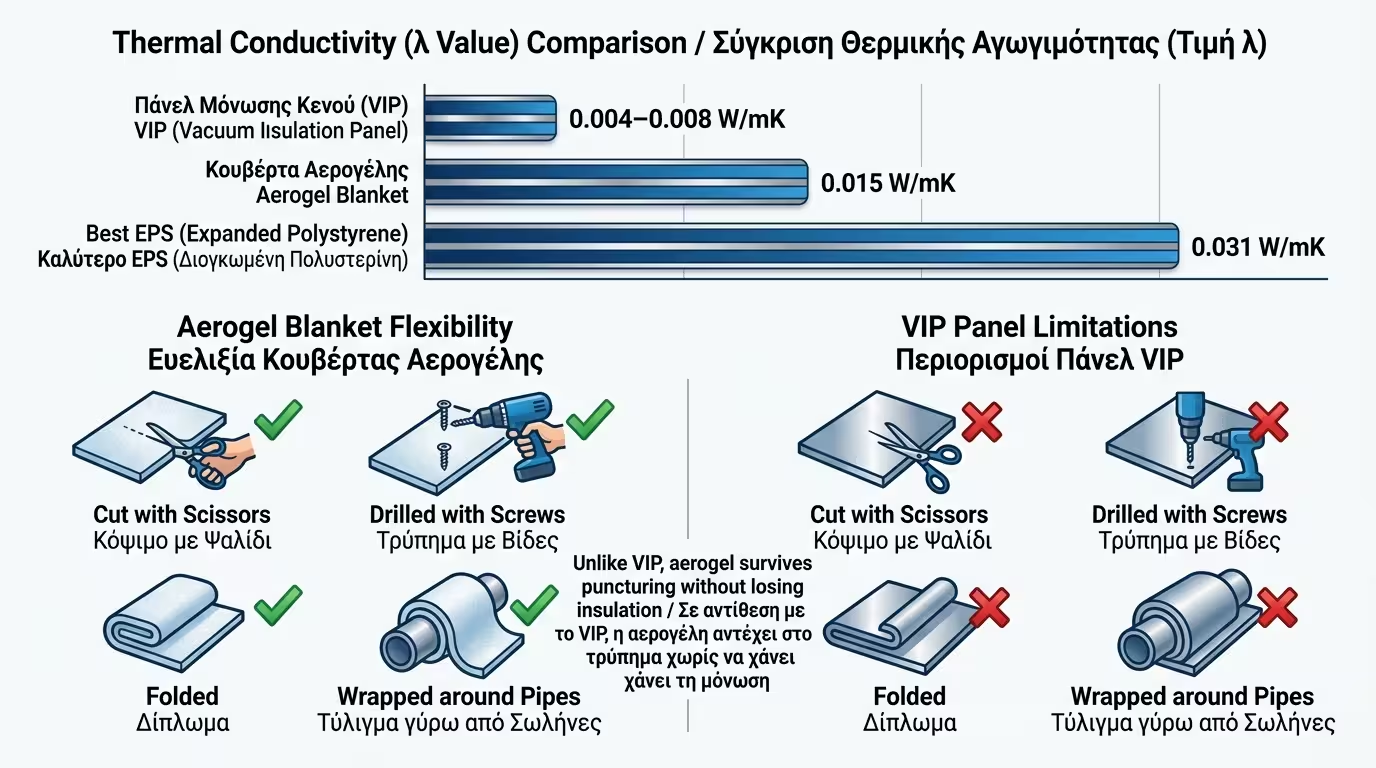
The thermal conductivity coefficient of aerogel is extraordinary: λ = 0.015 W/mK. It insulates 2.5 times better than the best polystyrene on the market. Just 1 centimetre of aerogel equals nearly 3 centimetres of conventional insulation.
You might say: "Yes, but the Vacuum Insulation Panels (VIP) we saw in the previous article have an even lower λ." Correct, but Aerogel has the ultimate advantage: It is not a vacuum! There is no risk of it "bursting" if you puncture it. In construction, aerogel is usually sold embedded in flexible fibre blankets (Aerogel blankets). You can cut it with scissors, drill it with screws, fold it, nail it or wrap it around pipes, without losing even 1% of its insulating capacity.
Due to its cost, you will never clad an entire house with aerogel. It is the material for "Special Missions" (Problem Solver). It is used surgically at points where space is literally non-existent.
That narrow strip of wall around the window frame, where a conventional 5-centimetre polystyrene board would hide the glass. Apply 1-2 centimetres of aerogel and the thermal bridge disappears.
To prevent cold draughts through the shutter housing. The minimal available dimension is perfectly covered by strips of aerogel blanket.
Where any alteration to the external appearance is prohibited, even by a few centimetres, aerogel-enhanced thermal renders are applied, achieving the performance of a modern wall with just 2-3cm thickness.
We replaced the old window frames of our digital house. However, around the window perimeter (at the "reveals"), the hinges leave a clearance of just 1.5 centimetres before the casement hits the wall when opening. If we leave the concrete bare, mould will appear around the new window in winter (thermal bridge).
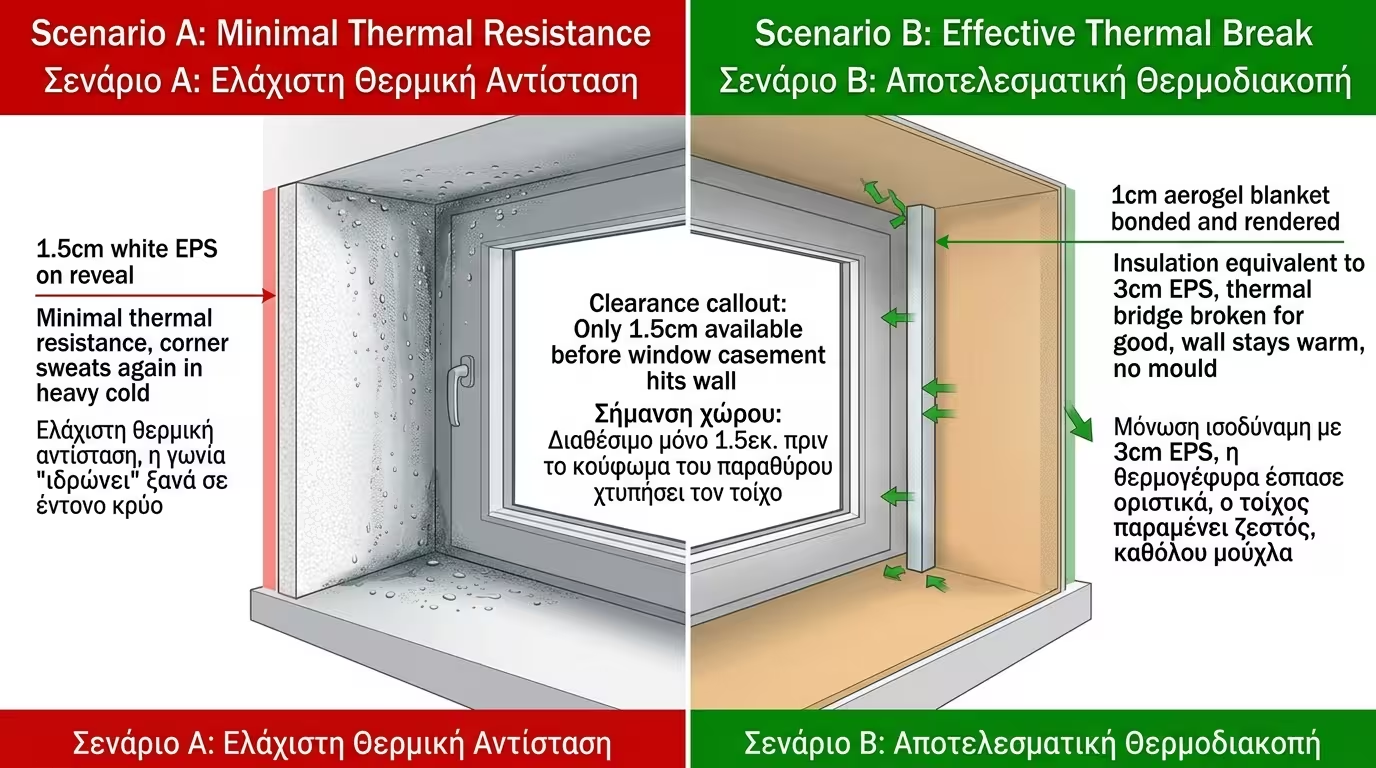
We apply a very thin skin of EPS. The thermal resistance is minimal. In heavy cold, the corner sweats again.
We cut a strip of 1-centimetre aerogel, bond it to the wall and render over it. The window opens perfectly. The corner is now insulated with the force equivalent to 3 centimetres of EPS. The thermal bridge is "broken" for good, the wall stays warm and mould is a thing of the past.
💡 Conclusion: Aerogel is very expensive (often exceeding €60-€80 per square metre for just 1 centimetre of thickness). However, it is a technological masterpiece. For the "tricky" architectural details where every millimetre counts, NASA's material is the ultimate deus ex machina.
Return to category.
Go to categoryReturn to the central guide.
Go to guide