🧱 Wall Loss
100 m² × 2.10 × 15 degrees = 3,150 Watts (3.15 kW).
We all know insulation saves money, but how much exactly? To stop talking in vague percentages like "up to 50%", it is time to get the calculators out.
In this article, we will take the standard virtual "10x10 House" (100 m²) and put it through the test of a typical Greek winter. We will calculate the energy leak (in kWh) and convert it into hard euros.
To find how much heat a wall loses, physics uses a very simple multiplication: Energy Loss = Area (m²) × U-Value × Temperature Difference (ΔT).
Our Scenario: It is January. Outside it is a steady 5°C. We want the thermostat in the living room fixed at 20°C. So the "Temperature Difference" (ΔT) our wall must fight is 15 degrees.
For simplicity, we will focus on the two largest surfaces of the house: the external walls (100 m² net) and the roof (100 m²).
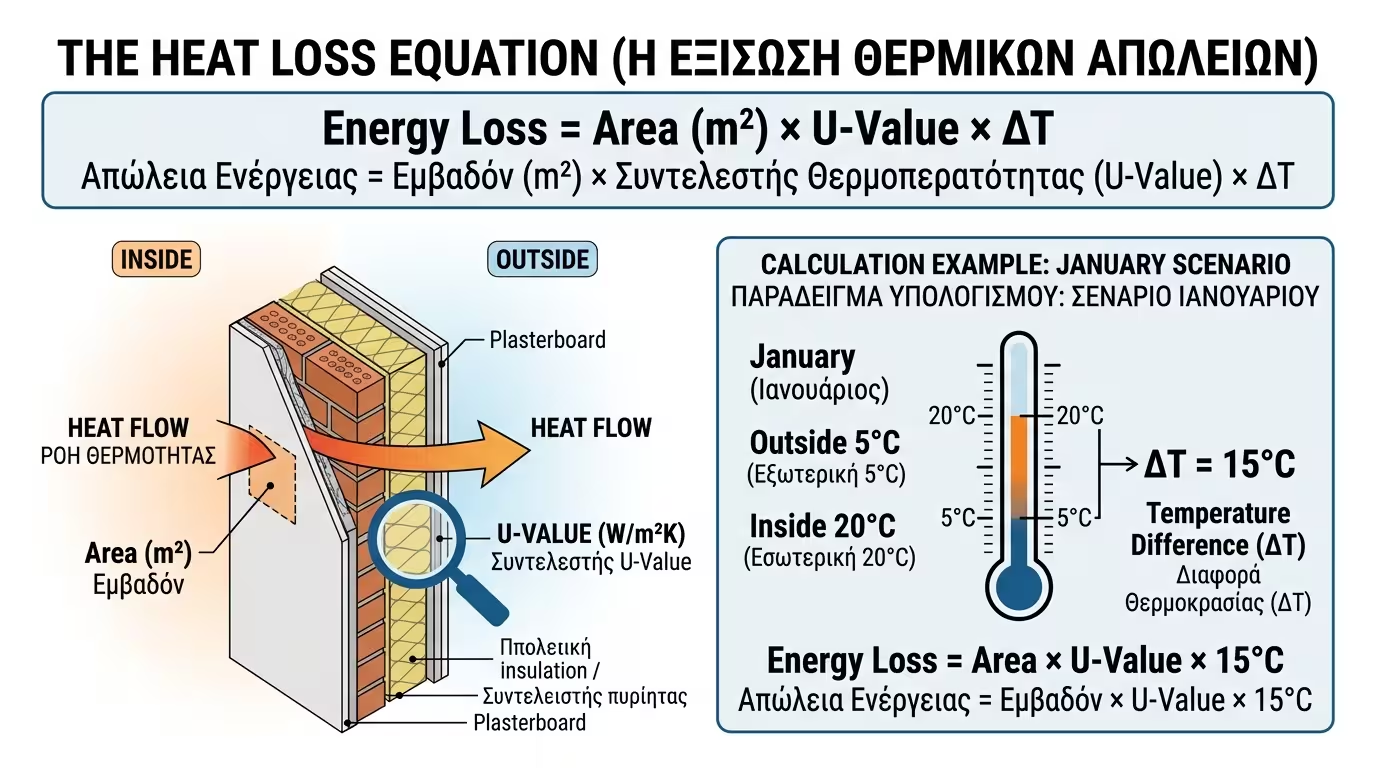
Our house was built in 1980. The walls are double brick without insulation (U-Value: 2.10 W/m²K) and the roof is bare concrete (U-Value: 2.50 W/m²K).
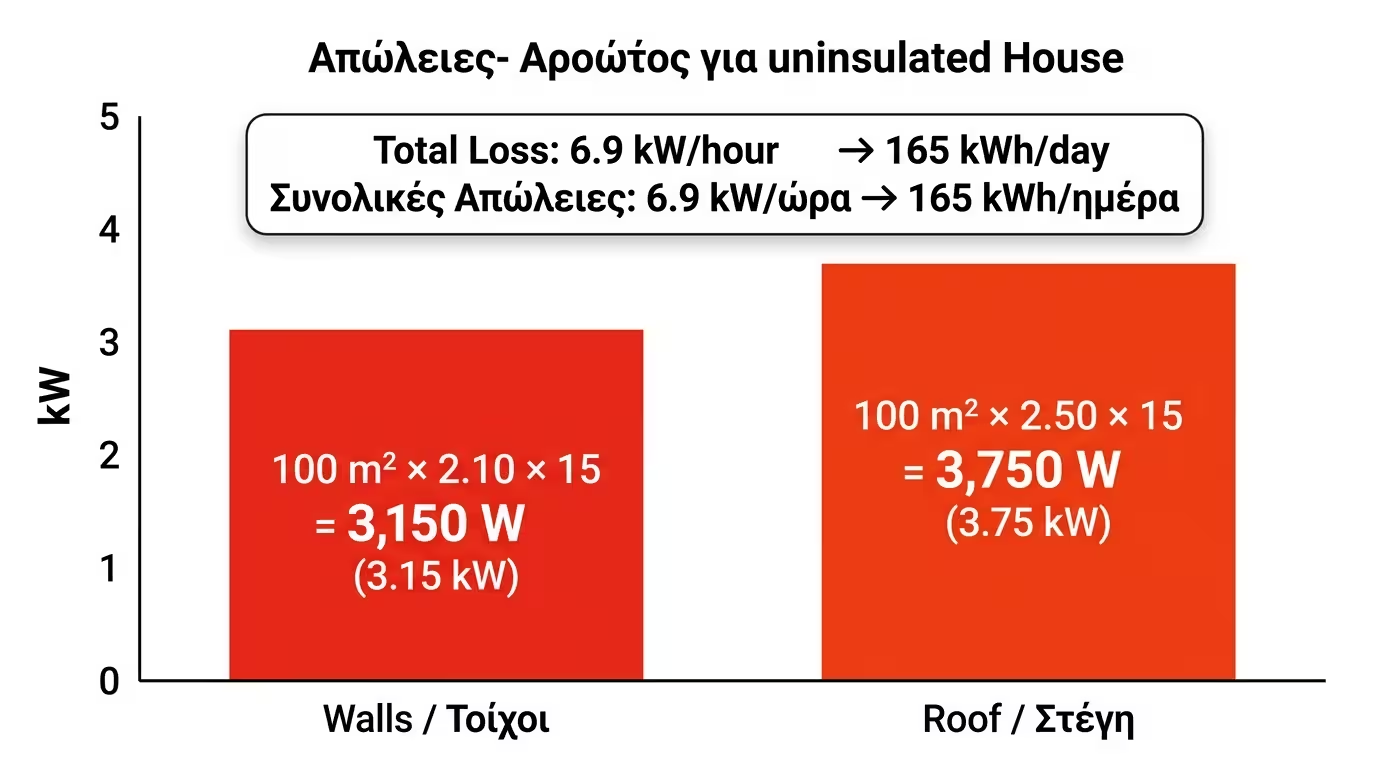
Let us see what we lose in just one hour:
100 m² × 2.10 × 15 degrees = 3,150 Watts (3.15 kW).
100 m² × 2.50 × 15 degrees = 3,750 Watts (3.75 kW).
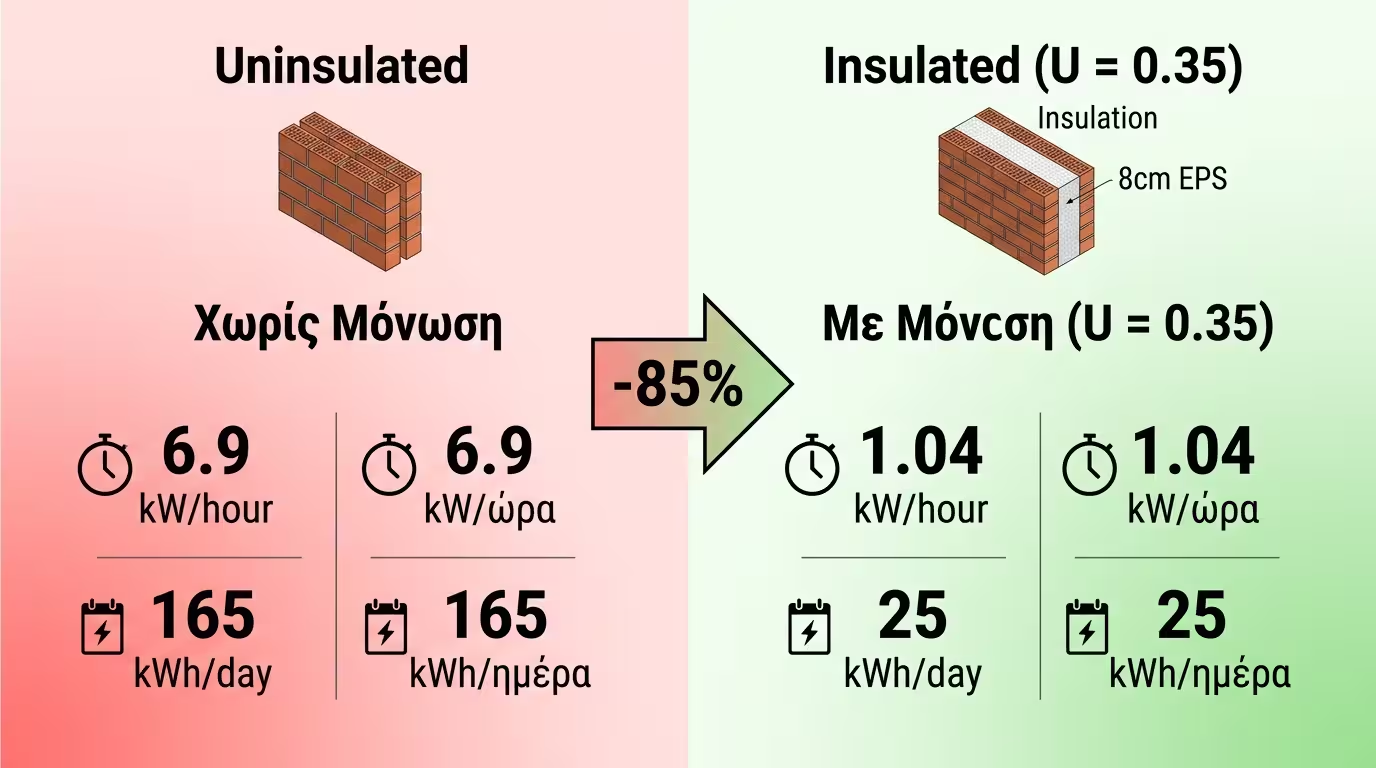
The house steadily loses 6.9 kW every hour.
🔢 To maintain 20°C for 24 hours, the boiler must replenish this loss by producing 165 kWh of thermal energy (6.9 kW × 24 hours).
We decide to renovate. We install External Insulation (EPS 8cm) on the walls and insulate the roof with extruded polystyrene (XPS 8cm). The U-Value plummets to an impressive 0.35 W/m²K for both.
Let us redo the maths for the same hour, with the same cold:
100 m² × 0.35 × 15 degrees = 525 Watts (0.52 kW).
100 m² × 0.35 × 15 degrees = 525 Watts (0.52 kW).
The house now loses only 1.04 kW per hour!
🔢 Over 24 hours, the boiler needs to produce just 25 kWh (instead of 165 kWh). We just "eliminated" 85% of the losses!
Let us translate this huge gap into real money. We will assume we burn heating oil and that, due to old boiler inefficiencies, each thermal kWh costs about €0.12.
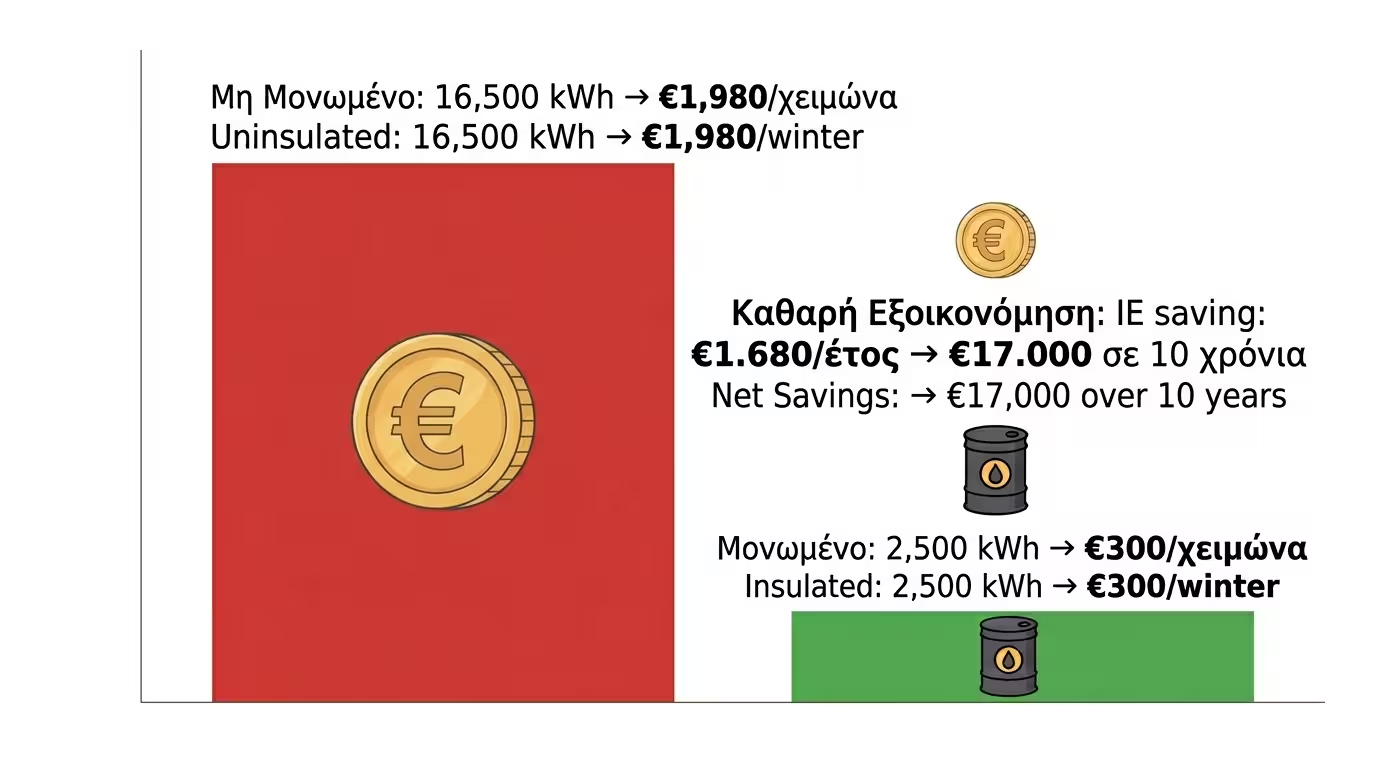
Let us see the bill for a "heavy" 100-day winter (where the average outdoor temperature is 5°C):
Burns 165 kWh/day. For 100 days, we need 16,500 kWh.
Winter Cost: 16,500 × €0.12 = €1,980.
Burns 25 kWh/day. For 100 days, we need 2,500 kWh.
Winter Cost: 2,500 × €0.12 = €300.
💰 Your Net Gain: €1,680 every winter! Over 10 years, you save almost €17,000, a sum that more than covers the cost of the entire external insulation and roof insulation.
💡 Final Conclusion: The maths are relentless and never lie. An uninsulated house is not merely uncomfortable, it is a "black hole" that swallows your salaries. The U-Value is not a theoretical concept for engineers; it is the ultimate multiplier of your bank account!
Return to category.
Go to categoryReturn to the central guide.
Go to guide