
Reflective Insulation (Foil): How It Works Under the Roof

Until now, all the insulation materials we have seen (polystyrene, rock wool, polyurethane) work on the same principle: they slow down heat that is transmitted through contact (conduction). They are like a thick woollen jumper.

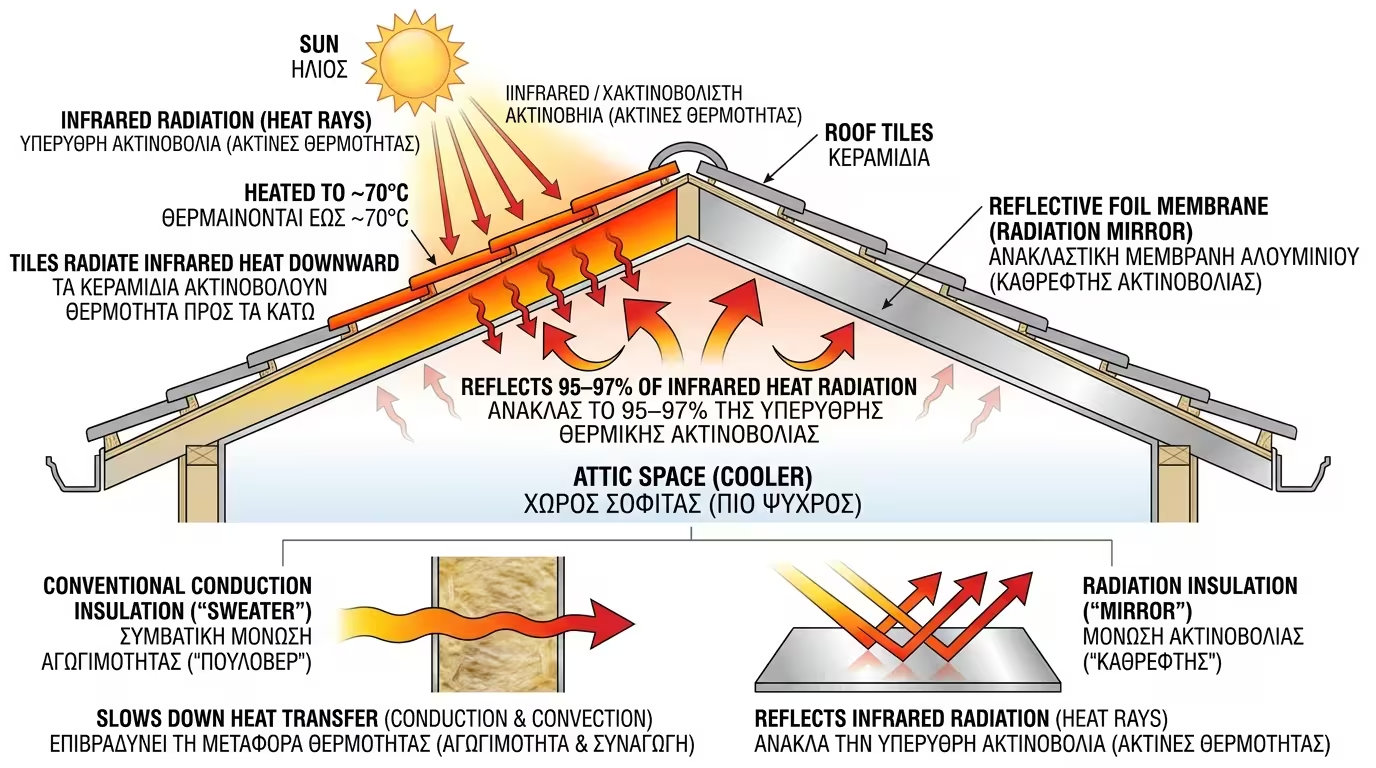
But what about the heat that does not travel through contact, but is "emitted" from afar? The August sun does not touch your roof, but "scorches" it through thermal radiation (infrared rays). When thermal radiation hits the tiles, they heat up and in turn begin radiating heat downwards, into your attic. This is exactly where the traditional "jumpers" struggle. What we need is a shield. We need Reflective Insulation.

1. What Is Reflective Insulation

In its simplest form, it consists of thin membranes (or "blankets" with air bubbles) that are coated with pure, high-reflectivity aluminium (usually on both sides).

Instead of trying to "absorb" or delay heat, the aluminium works literally like a mirror. When infrared radiation from the scorching tiles reaches the membrane, the aluminium reflects back up to 95% to 97% of that radiation! The heat "hits" the mirror and bounces back, before it even manages to enter the house.

Aluminium reflective membrane - acting as a thermal radiation mirror

2. The Golden Rule: The Huge Mistake Many People Make

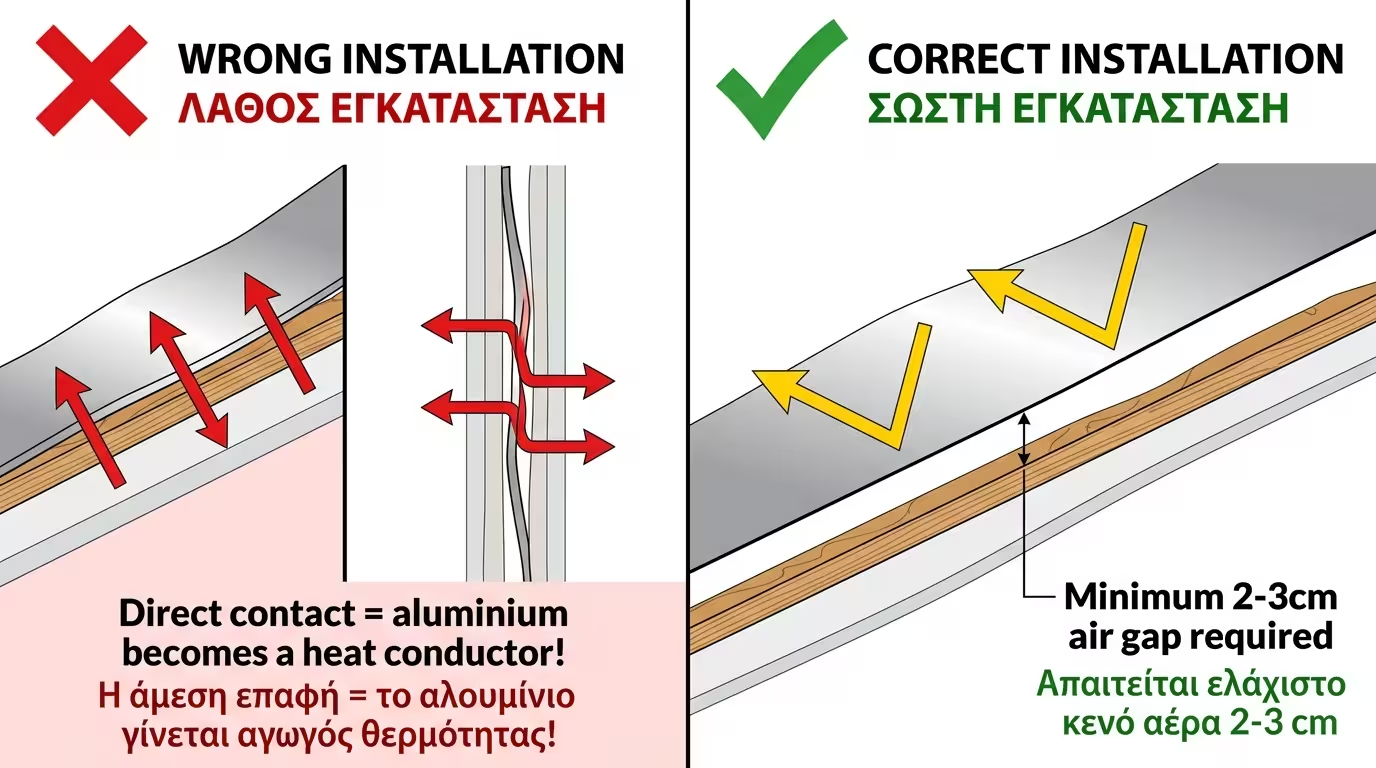
There is one inviolable rule in the physics of this material, which many amateurs (and even some tradespeople) ignore: Reflective insulation DOES NOT work without an air gap!

For the aluminium to function as a radiation "mirror", it must face an open space. If you take the reflective membrane and stick it directly onto the tile, or if you squeeze it tightly between two plasterboards with no air at all, its property is nullified. With direct contact, the aluminium turns into an excellent conductor of heat, and instead of blocking heat, it transfers it straight through!

Correct application: An air gap of at least 2-3 centimetres must always be left between the reflective surface and the material emitting the heat (e.g. the roof decking).

Reflective insulation - essential 2-3cm air gap requirement

3. The 2 Disadvantages You Must Know

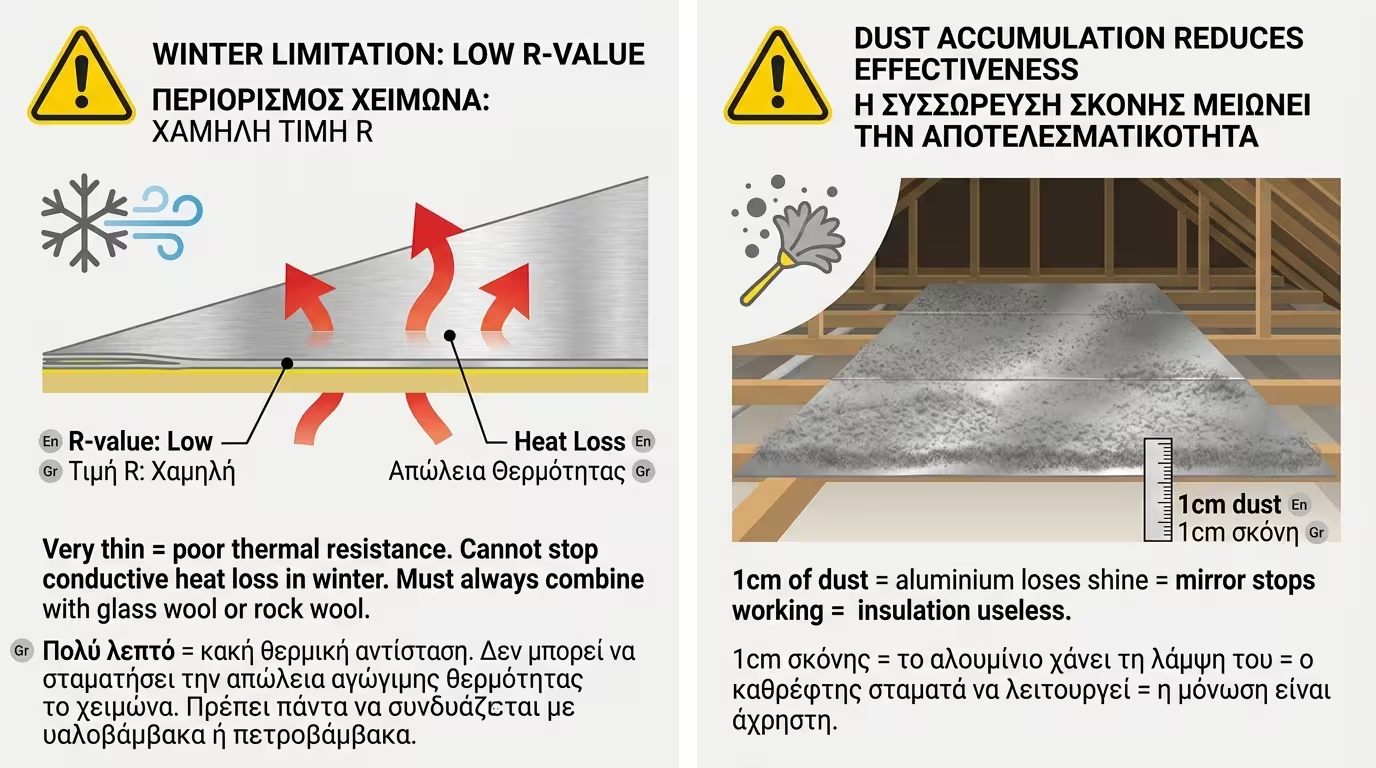
Reflective insulation - limitations: dust and winter performance

Reflective insulation is not a panacea. It has two important limitations.

❄️ Not Enough on Its Own in Winter

Reflective insulation is the "king" of summer. However, because it is very thin, it does not have a good thermal resistance value (the R value we saw in a previous article). In winter, when we are trying to prevent radiator heat from "escaping" through conduction, it makes little difference. That is why it must always be combined with conventional insulation (e.g. glass wool).
🧹 The Enemy Is Dust

If the membrane is installed horizontally in an open, dusty loft and collects a centimetre of dust, the aluminium stops being shiny. If it loses its shine, it stops being a mirror and the insulation is rendered useless.

4. The 10x10 Model Experiment: The Roof in August

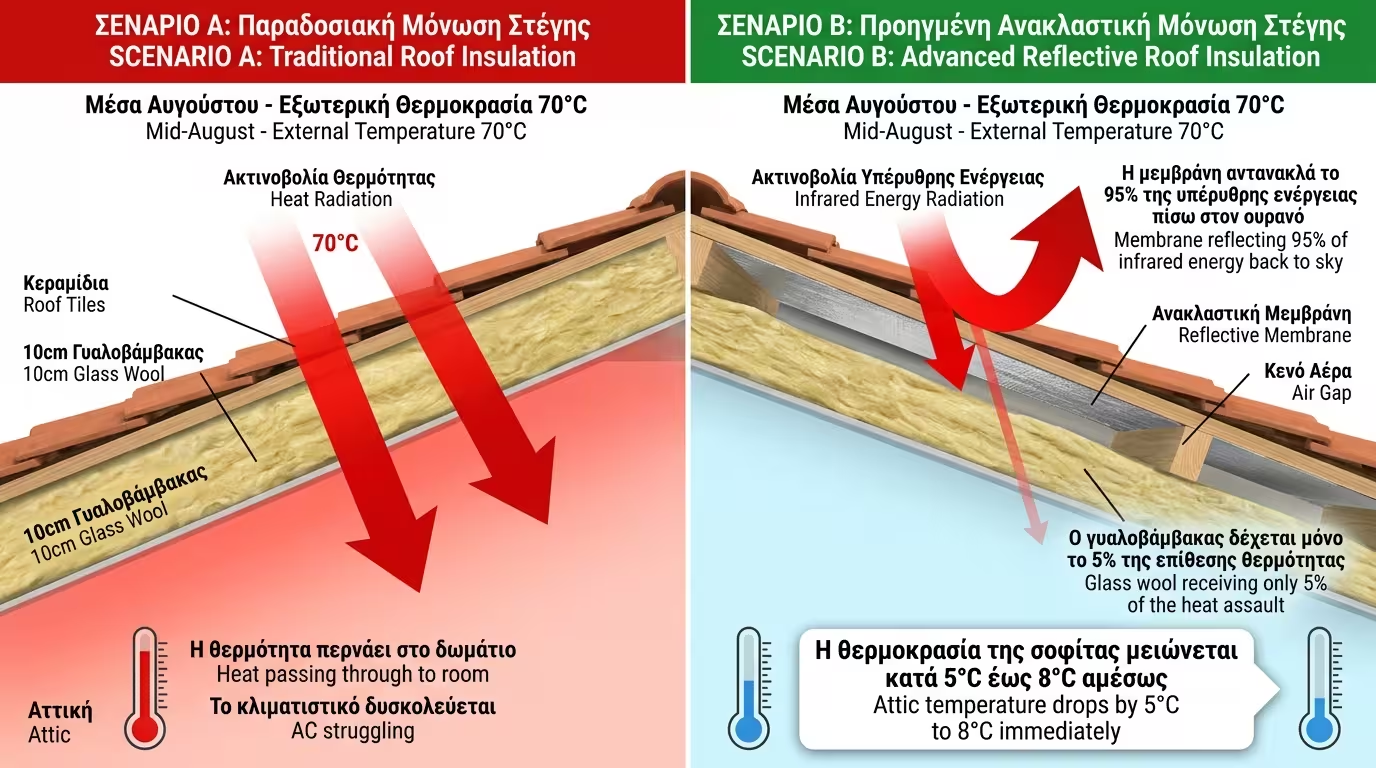
It is mid-August. Our roof has tiles and underneath we have installed 10 centimetres of glass wool for winter.

10x10 Model - roof with and without reflective membrane

❌ Scenario A: Without Reflective Membrane

The tiles are "boiling" at 70°C. They radiate this heat directly onto the glass wool. The glass wool struggles and, after a few hours, the heat passes through into the room. The air conditioning fights hard.

✅ Scenario B: With Reflective Membrane

We fix a reflective membrane under the roof timbers (leaving an air gap), and below sits the glass wool. The tiles "fire" infrared heat downwards, but the membrane's "mirror" reflects 95% of that energy back towards the sky. The glass wool receives only 5% of the assault! The attic temperature drops immediately by 5°C to 8°C.

💡 Final Conclusion: Reflective insulation is the most value-for-money, "smart" addition you can make to a roof in Greece. At very low cost and minimal thickness, you block the worst form of heat: solar radiation. Just make sure the tradesperson leaves the necessary air gap so your "mirror" can breathe!

Related Articles

Insulation Materials: The Complete Selection & Characteristics Guide

Return to category.

Go to category

Preview