Heat Pump vs Natural Gas in an Insulated Home

The most common question after completing a thermal facade is: "And now, what do I heat with?" In Greece, the two absolute rulers of modern heating are the Condensing Natural Gas Boiler and the Heat Pump.

For decades, natural gas was the easy and cheap solution. In recent years, however, the heat pump has swept the market. Which of the two systems fits best in a home that has just been energy-armoured? Let us put them in the ring.

1. How They Work: The Efficiency Battle

Their fundamental difference lies in how they produce heat:

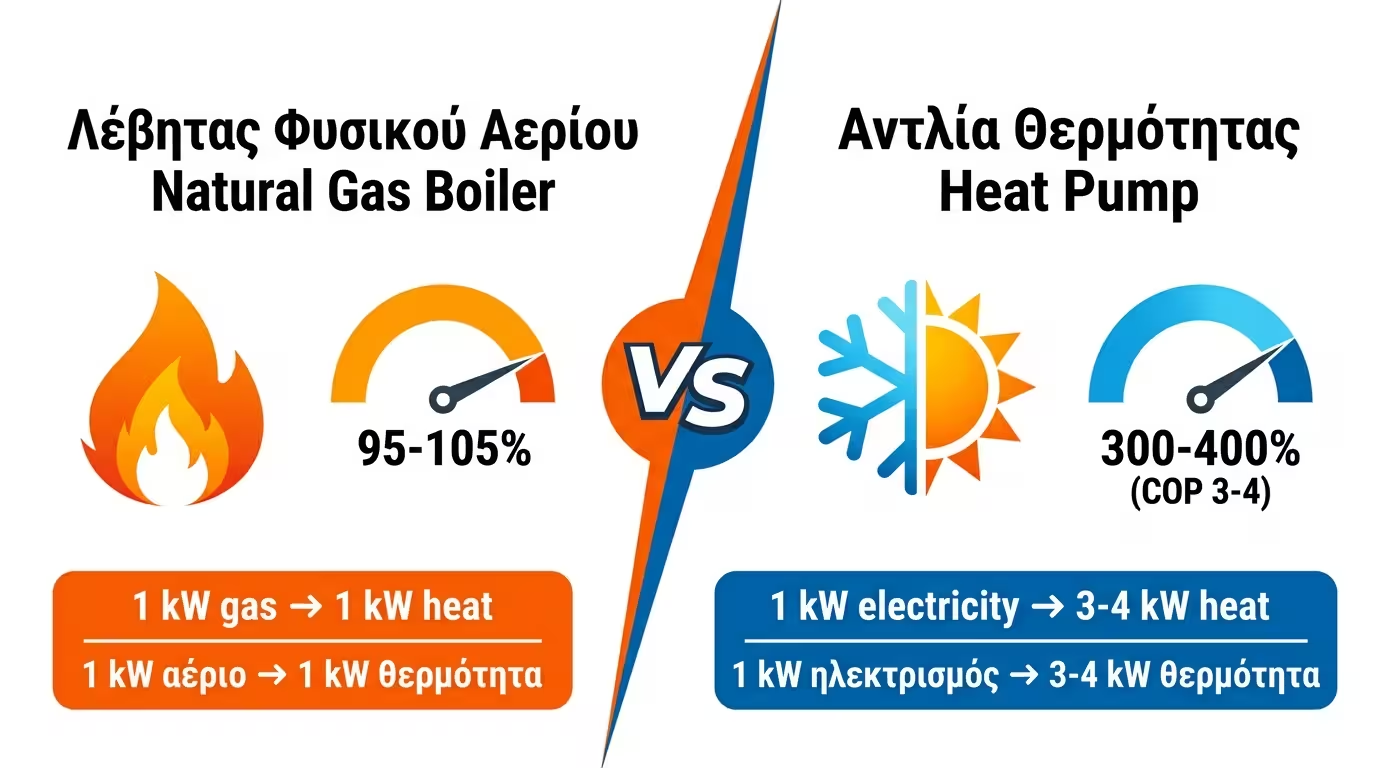
Heat pump vs gas boiler - efficiency battle

🔥 Natural Gas (Combustion)

The boiler burns a fossil fuel to heat water. Modern condensing boilers are excellent. They exploit even the combustion vapour, reaching theoretical efficiencies of around 95% to 105%. That is, for every 1 kW of gas burned, they deliver roughly 1 kW of heat.

❄️ Heat Pump (Transfer)

Here we have... magic. The pump does not "burn" electricity to create heat. It uses a small amount of electricity to steal heat from the outside air (even at 0°C) and pump it inside. That is why its efficiency (COP) is 300% to 400% (3.0 to 4.0). For every 1 kW of electricity you pay for, you get 3 to 4 kW of heat!

2. The Insulated Home Advantage

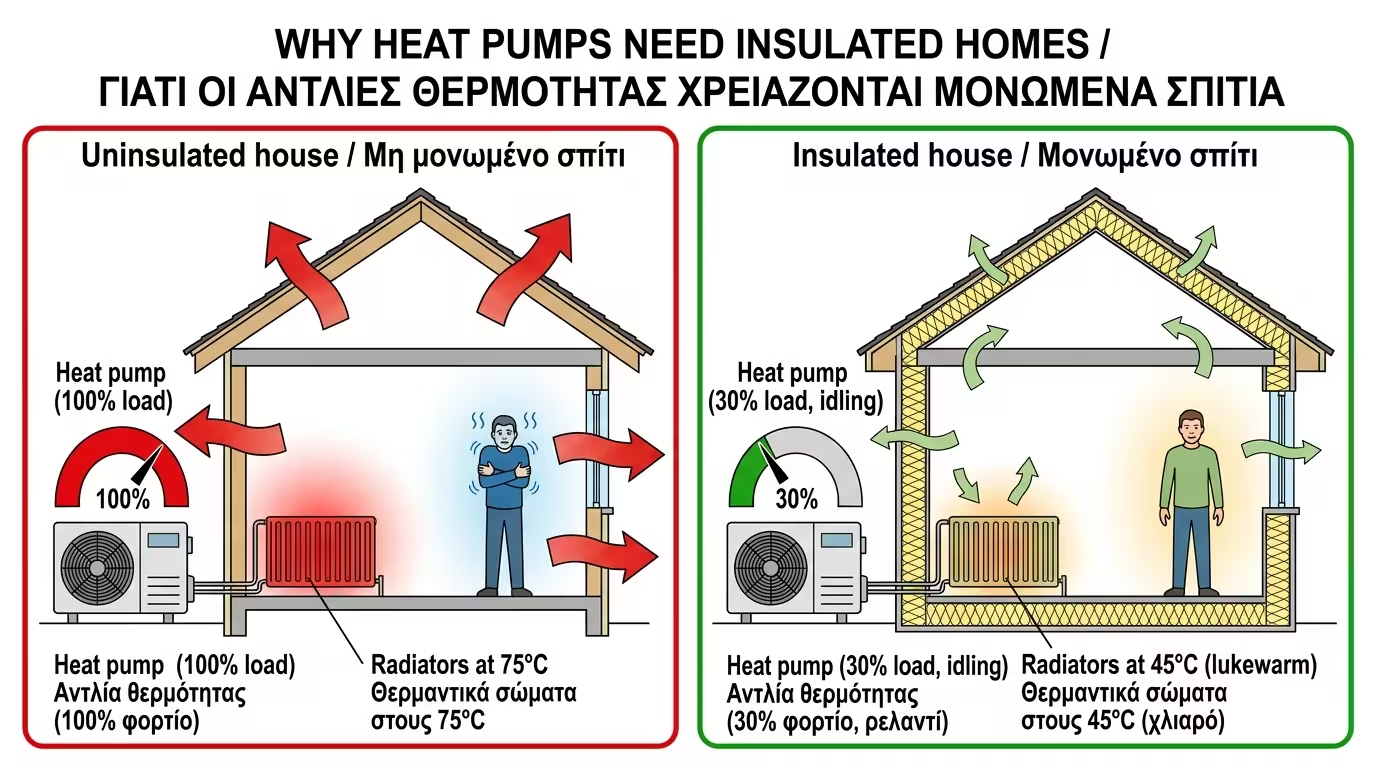
Heat pumps have a "quirk": they perform perfectly and consume minimal electricity only when sending lukewarm water to radiators (e.g. 45°C - 55°C), instead of the 75°C hot water that old oil boilers used to send.

In an old, uninsulated house, if you send 45-degree water to the radiators, you will be cold. The house loses heat faster than the radiator produces it. In an insulated house, however, losses are minimal. Lukewarm water is more than enough to keep the space at a steady 21°C around the clock. This is exactly where the heat pump "flies" and its consumption drops to the minimum.

Heat pump advantage in insulated home

3. The 10x10 Model Experiment

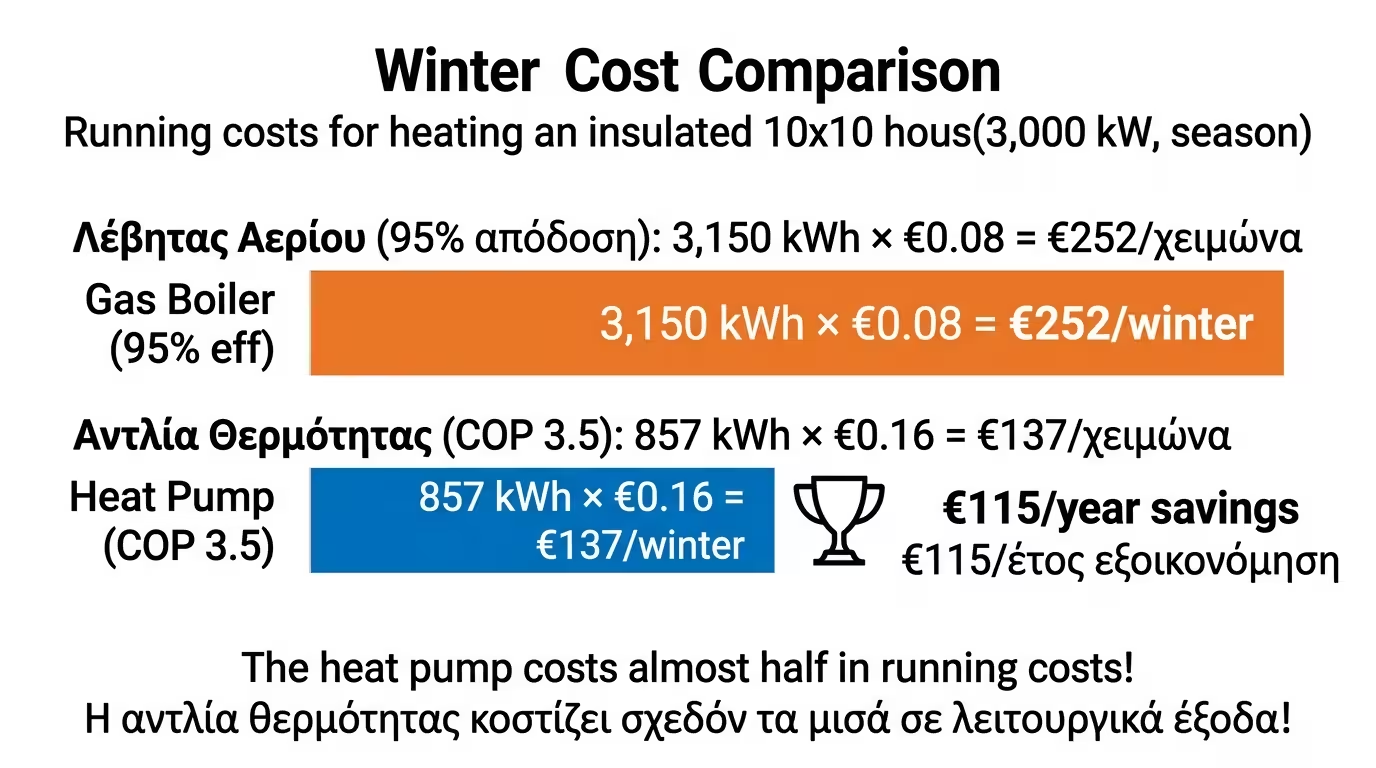
10x10 experiment - heat pump vs gas winter cost

Our 100 m² digital house is now perfectly insulated. To last the entire winter, we calculated it needs a total of 3,000 kWh of thermal energy. Let us see the bills (with hypothetical average prices: Gas at €0.08/kWh and Electricity at €0.16/kWh).

🔥 Scenario A: Gas Boiler

At ~95% efficiency, it needs to burn 3,150 kWh of gas.

Winter Cost: 3,150 × €0.08 = €252

❄️ Scenario B: Heat Pump

At COP 3.5, to deliver 3,000 kWh of heat, it draws only 857 kWh from the grid!

Winter Cost: 857 × €0.16 = €137

🏆 The Consumption Winner: The heat pump wins resoundingly. It costs almost half in running expenses!

4. The Market "Thorn" (Where the Catch Hides)

If the pump costs half to run, why are we even debating? The answer lies in the Purchase and Installation Cost:

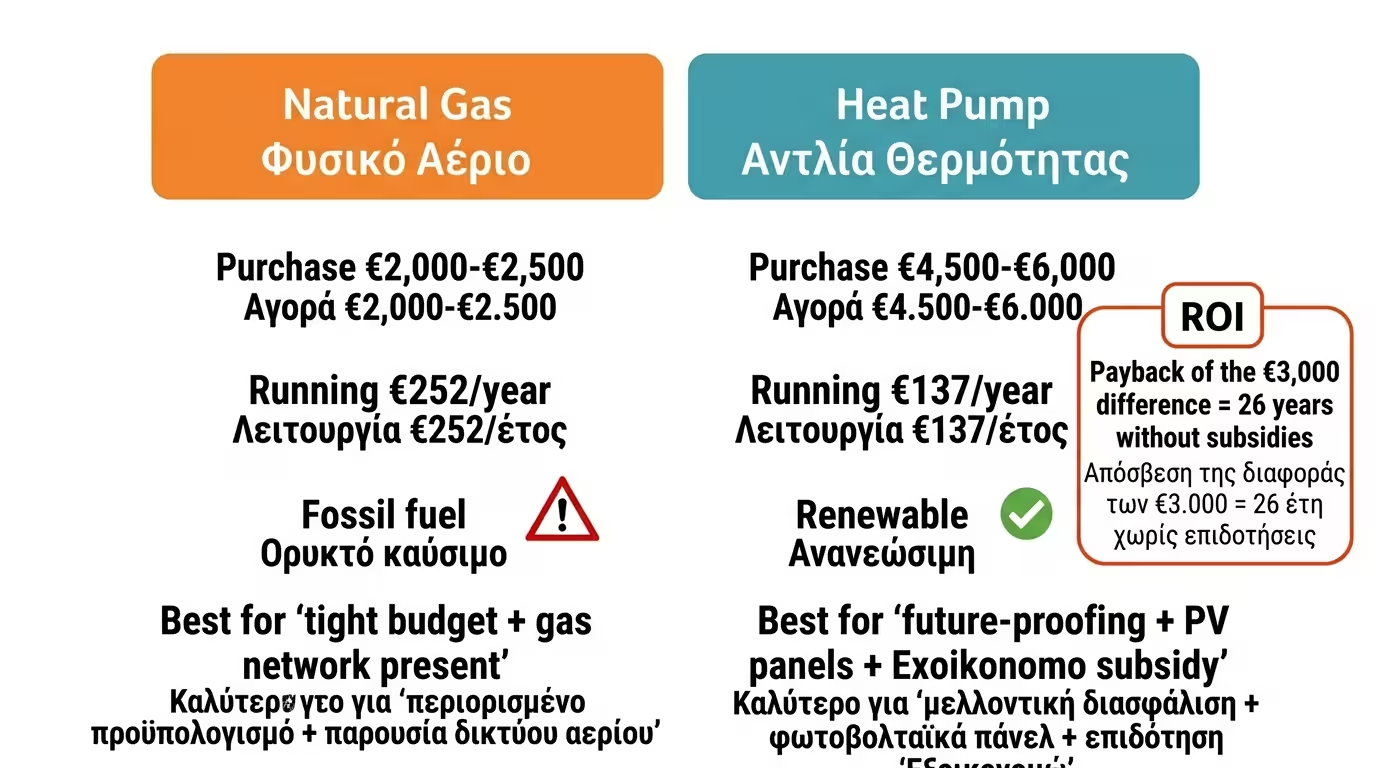
Installation cost heat pump vs gas

🔥 Natural Gas

A full installation (appliance, study, piping) costs around €2,000 - €2,500.

❄️ Heat Pump

A good branded heat pump (5-8 kW) costs with installation from €4,500 to €6,000.

The heat pump is €3,000 more expensive to buy, but saves you roughly €115 per year vs gas. This means the Payback Period of the difference (ROI) reaches 26 years!

The Final Conclusion: If your budget is very tight after insulation and the gas network already passes outside your house, gas is an excellent, honest and economical solution (even though it remains a fossil fuel).

But if you are looking to the future, want complete independence from fossil fuels, are thinking of installing photovoltaics on the roof (which will completely zero out the pump's electricity cost) and are subsidised by the "Exoikonomo" programme, then the Heat Pump is the only way and the ultimate investment for a modern home.

Related Articles

Thermal Physics & Calculations: From Theory to kWh and Euros

Return to category.

Go to category

Preview