📐 100 kPa
The material withstands approximately 10 tonnes per square metre (at 10% deformation).
When choosing insulation for walls, the only weight the material must bear is the render. But what happens when we want to insulate the floor of our house, the roof terrace where we barbecue, or the floor of an underground car park?
In these cases, thermal performance (the λ value) takes a back seat. The ultimate deciding factor becomes Compressive Strength. Choose the wrong material and the insulation will "sit" under the weight, the slab will sink and your tiles will crack.
On insulation labels, next to the λ, you will often see a notation such as CS(10)100 or CS(10)300. This is the compressive stress indicator. In simple terms, it shows how much pressure (in kilopascals - kPa) must be applied to deform the material by 10% of its thickness.
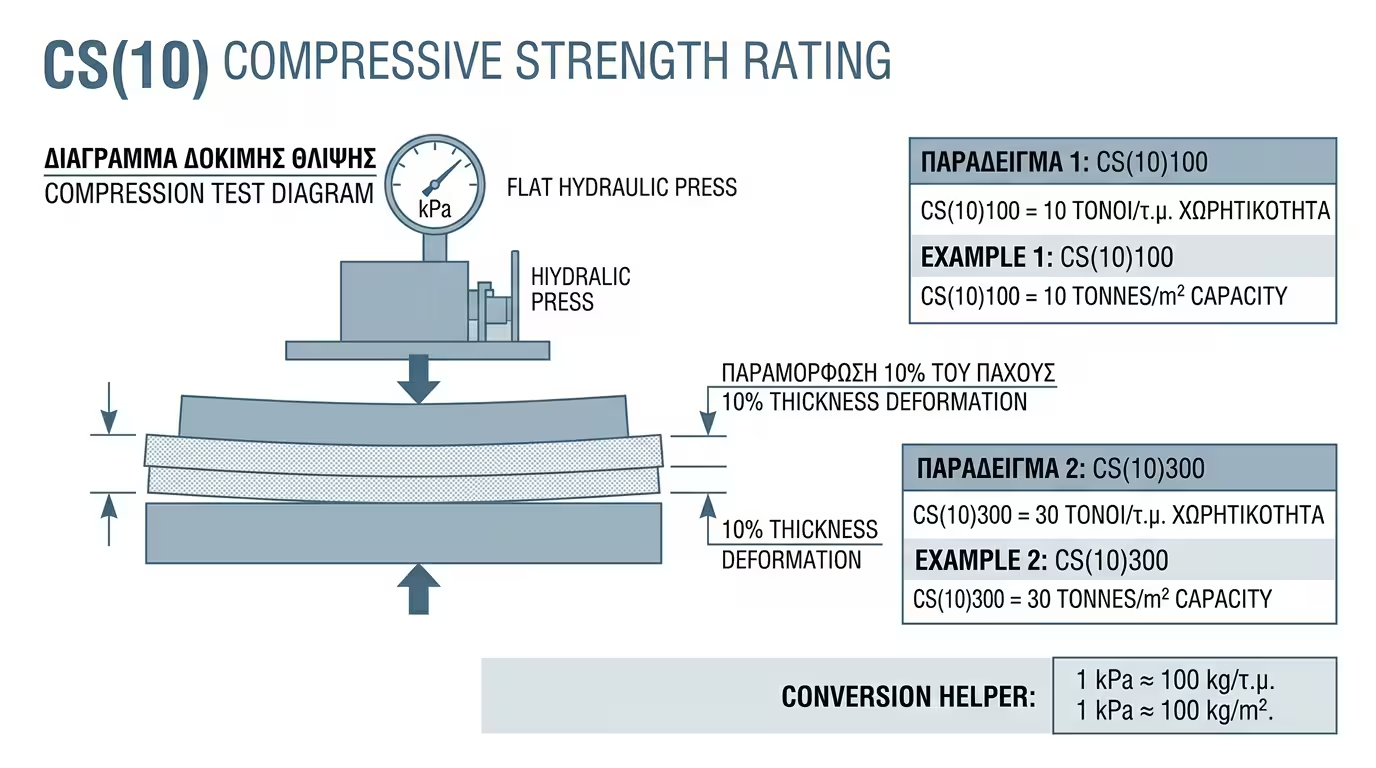
The material withstands approximately 10 tonnes per square metre (at 10% deformation).
Resistance of approximately 30 tonnes per square metre.
Let us see how synthetic polymers rank in the battle of load-bearing capacity.
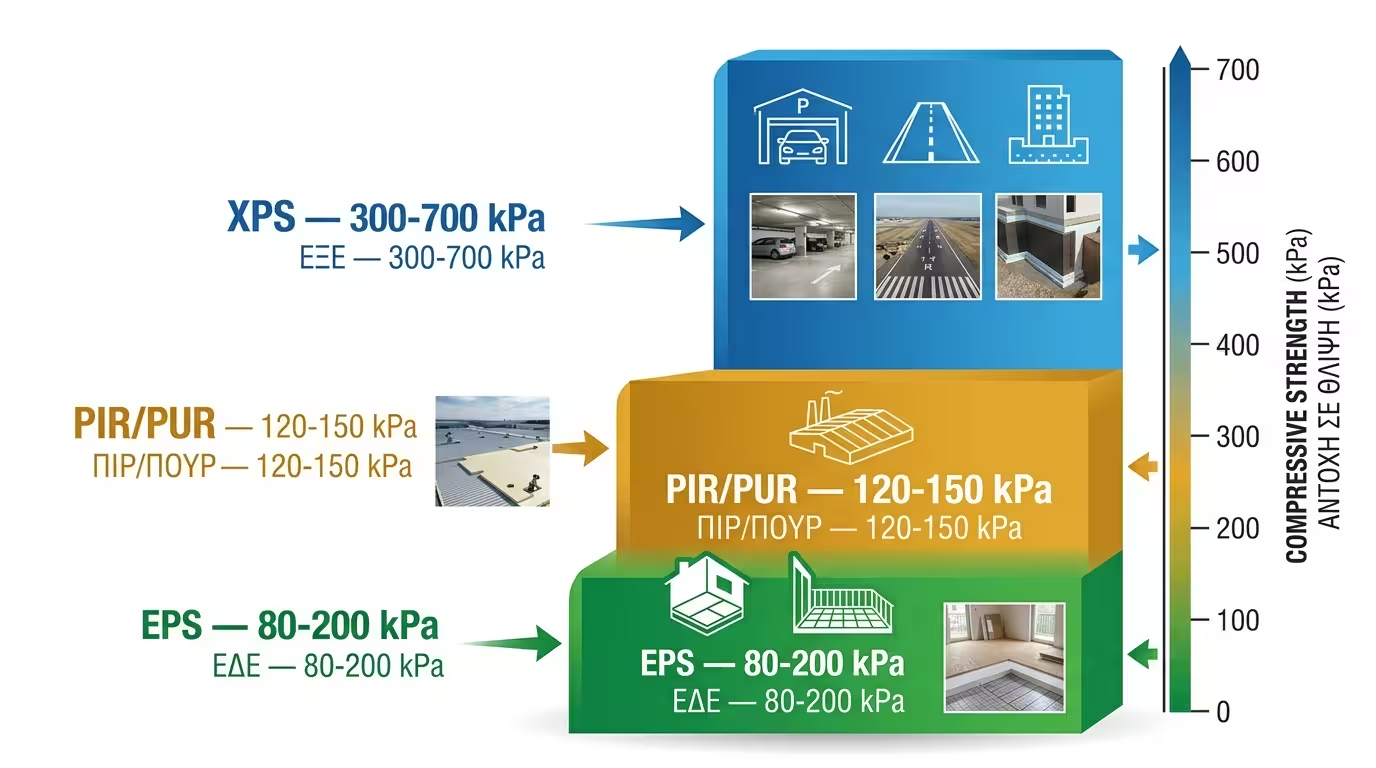
Classic polystyrene comes in various densities: EPS 80, EPS 100, EPS 150 and EPS 200 (the numbers denote kPa). EPS 100 or 150 is more than sufficient for residential floors or roof terraces with moderate foot traffic. However, it is not suitable for heavy industrial use.
Rigid polyurethane panels offer excellent thermal insulation and fairly good mechanical strength (typically around 120 to 150 kPa). Ideal for industrial metal roofs or terraces.
This is where things get serious. XPS, thanks to the extrusion process and its closed-cell structure, has tremendous mechanical strength. Standard boards start at 300 kPa and go up to 500 or even 700 kPa! It is used on roof terraces, under cold-storage floors, beneath underground car parks (where vehicles drive), at airports, or even under building foundations!
Caution: The figures above refer to short-term loading. That is, how much weight the material can bear if a truck stands on it for a few minutes.
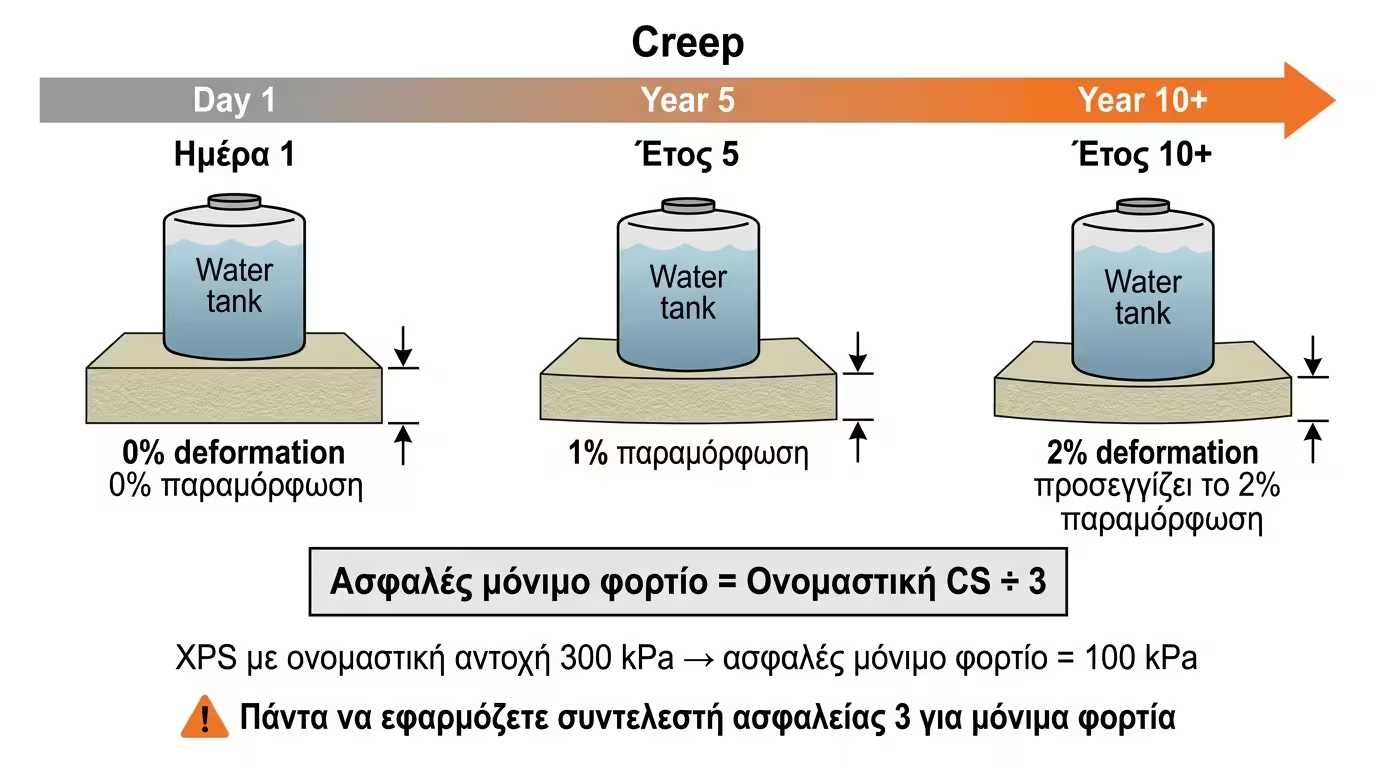
But what happens if you place a heavy water tank on your roof or a heavy safe in your living room for 10 years? Under permanent, sustained loads, materials tend to "fatigue" and compress gradually over time (the Creep phenomenon). That is why your engineer always factors in a large "safety margin." For permanent loads, the real load capacity (without deforming more than 2%) is typically calculated at 1/3 of the nominal value.
We decide to build an enclosed garage for our two cars (approximately 2 tonnes each) and want to insulate its floor.
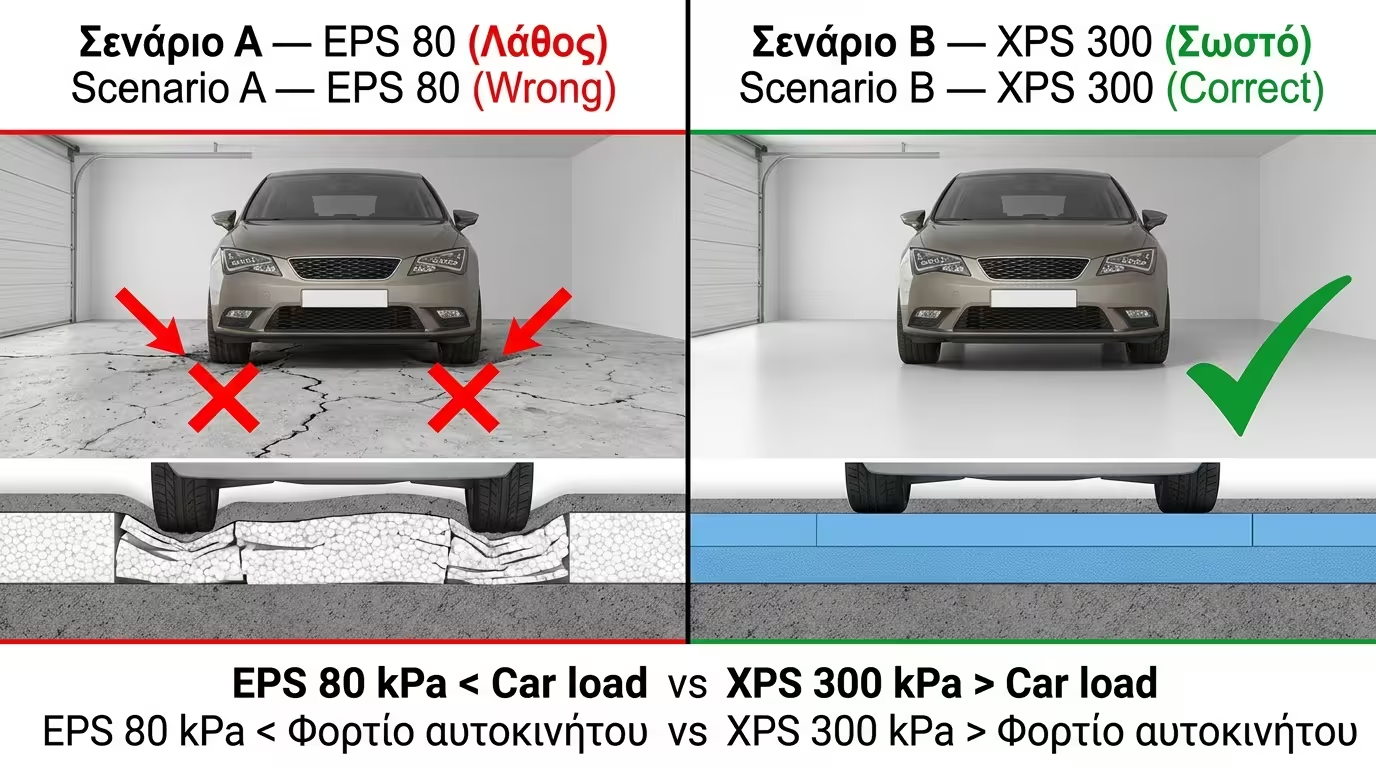
The contractor lays cheap white wall-grade polystyrene (80 kPa). We pour the screed and park the cars. Within a few months, at the points where the tyres press, the pressure crushes the material. The floor develops "potholes" and the concrete cracks.
We lay extruded polystyrene (300 kPa). The material does not notice the car weight at all, even if they remain parked in the same spot for a decade. The floor stays perfectly level and intact.
💡 Conclusion: When insulation goes under the floor, the question is not just "how warm do I want the room," but primarily "what do I plan to put on top of this floor?". The answer will guide you to the correct material.
Return to category.
Go to categoryReturn to the central guide.
Go to guide