Space Loss in Internal Insulation: How Many Square Metres Do We Actually Lose?

One of the first things you'll hear from friends and family: "Don't do it, the house will shrink, you'll lose loads of square metres!" It's true that every material added to the interior side of the wall "steals" a little space from the room.

However, the perception of how much space we lose is usually far more exaggerated than reality. To decide whether the energy upgrade is worth the "sacrifice", you first need to understand the real numbers. Let's do the maths.

1. The Big Myth: "Every Wall Will Shrink"

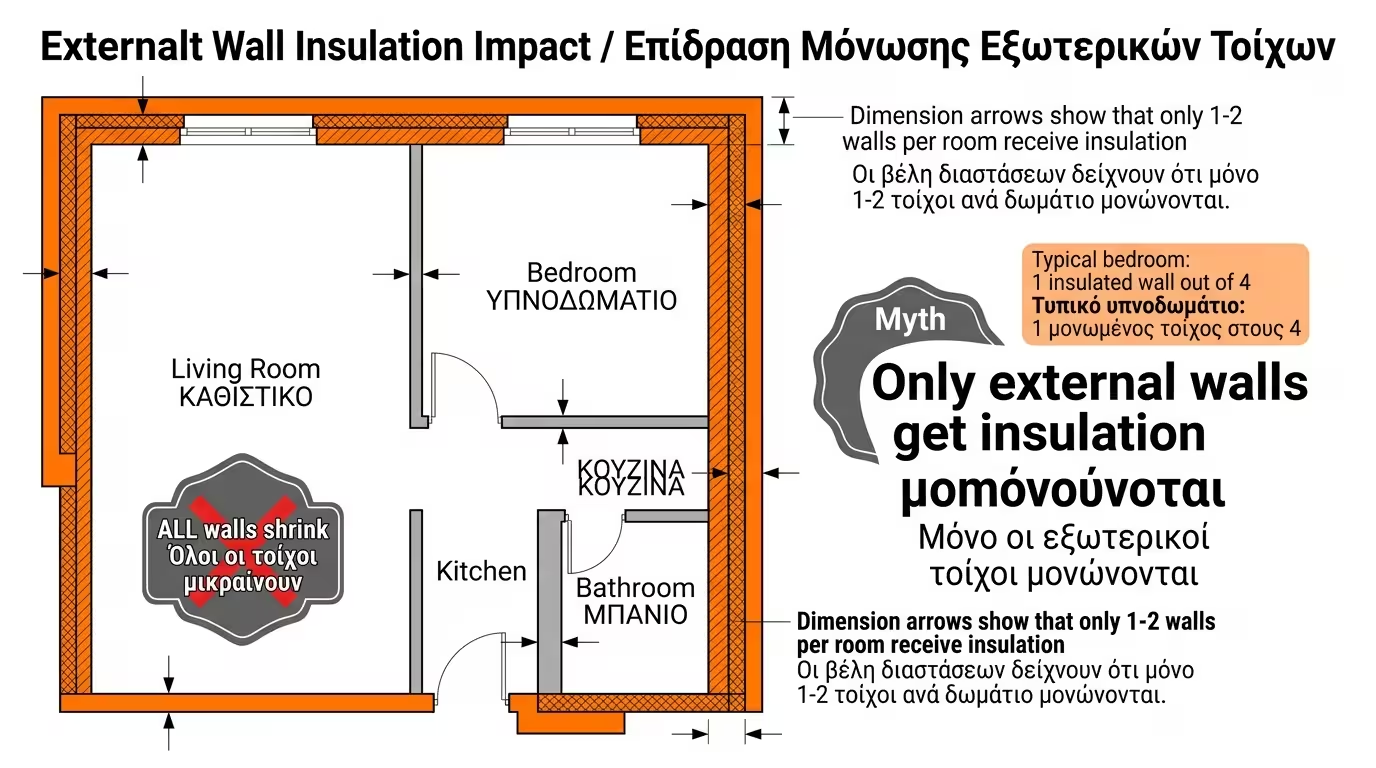
The most common misconception is that the room will shrink from all sides. This is simply not the case, and understanding why helps put the numbers in perspective.

Floor plan - only external walls are insulated

🏠 Only External Walls

Insulation is applied exclusively to walls in contact with outdoor air (or unheated spaces such as stairwells or pilotis). Interior partition walls that separate one heated room from another remain exactly as they were - they don't need insulation. In a typical bedroom, usually only one or two walls "thicken", not all four.
2. How Much Thickness Does Each System Add?

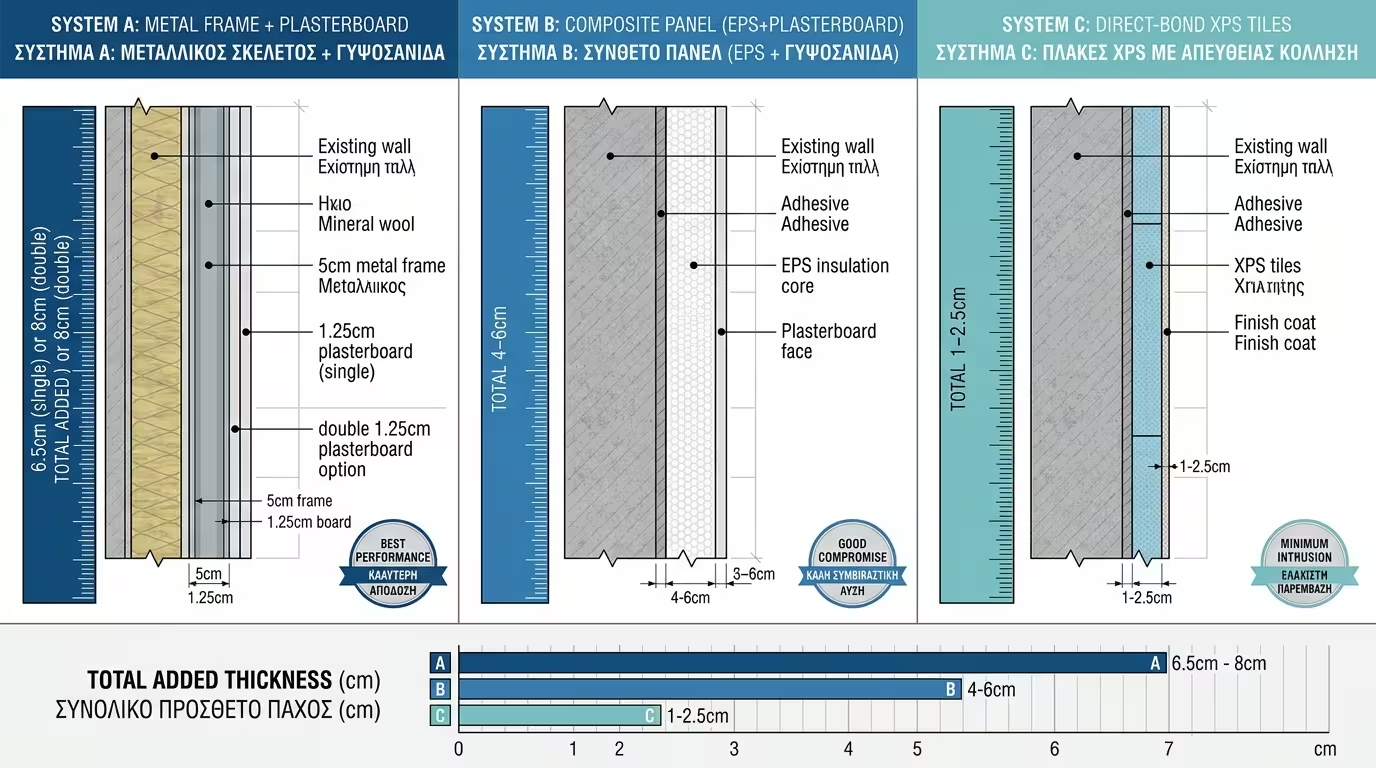
The centimetres lost depend directly on the method and the materials you choose. Here are the three main options:

Thickness comparison of three internal insulation systems

🧱 Frame + Plasterboard

The most complete and professional solution. A 5cm metal frame filled with rock wool, plus a single layer of plasterboard 1.25cm = 6.5–7cm total. If you opt for double plasterboard (for extra soundproofing or load-bearing capacity): ~8cm.

🪵 Composite Panels (EPS + Plasterboard)

Ready-made sandwich panels with an EPS core bonded directly to the wall. No metal frame needed, so the total thickness is only 4–6cm. A good middle-ground option.

🎯 Direct-Bond Tiles

The ultimate DIY solution. Thin XPS tiles bonded directly and painted - no plasterboard at all. Total thickness: just 1–2.5cm. Minimal space loss but also the lowest thermal performance.

3. The Maths in the 10x10 Model

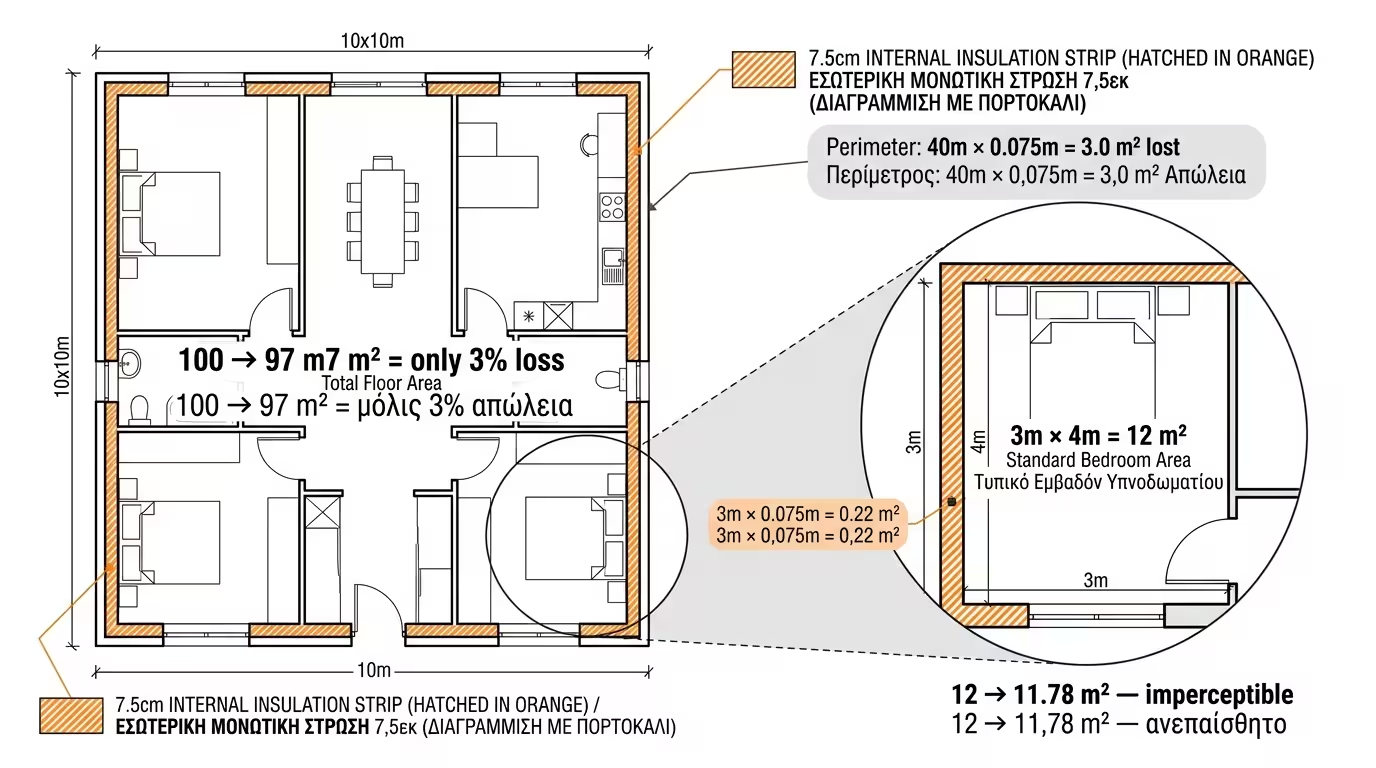
Our standard reference house: 10×10m = 40 running metres of external walls, total floor area 100 sq.m. Let's calculate the actual loss.

Space loss calculation in the 10x10 Model

📐 Whole House

If we apply the "thickest" insulation (7.5cm frame + insulation) on all external walls: 40m × 0.075m = 3 sq.m. From 100 down to 97 sq.m. That's a loss of just 3% of the total floor area.

🛏️ One Bedroom (3×4m, 12 sq.m.)

A typical bedroom with one external wall 3m long: 3m × 0.075m = 0.22 sq.m. The room goes from 12.00 to 11.78 sq.m. Practically, this is an imperceptible difference - you couldn't tell without measuring.

4. Is the "Sacrifice" Actually Worth It?

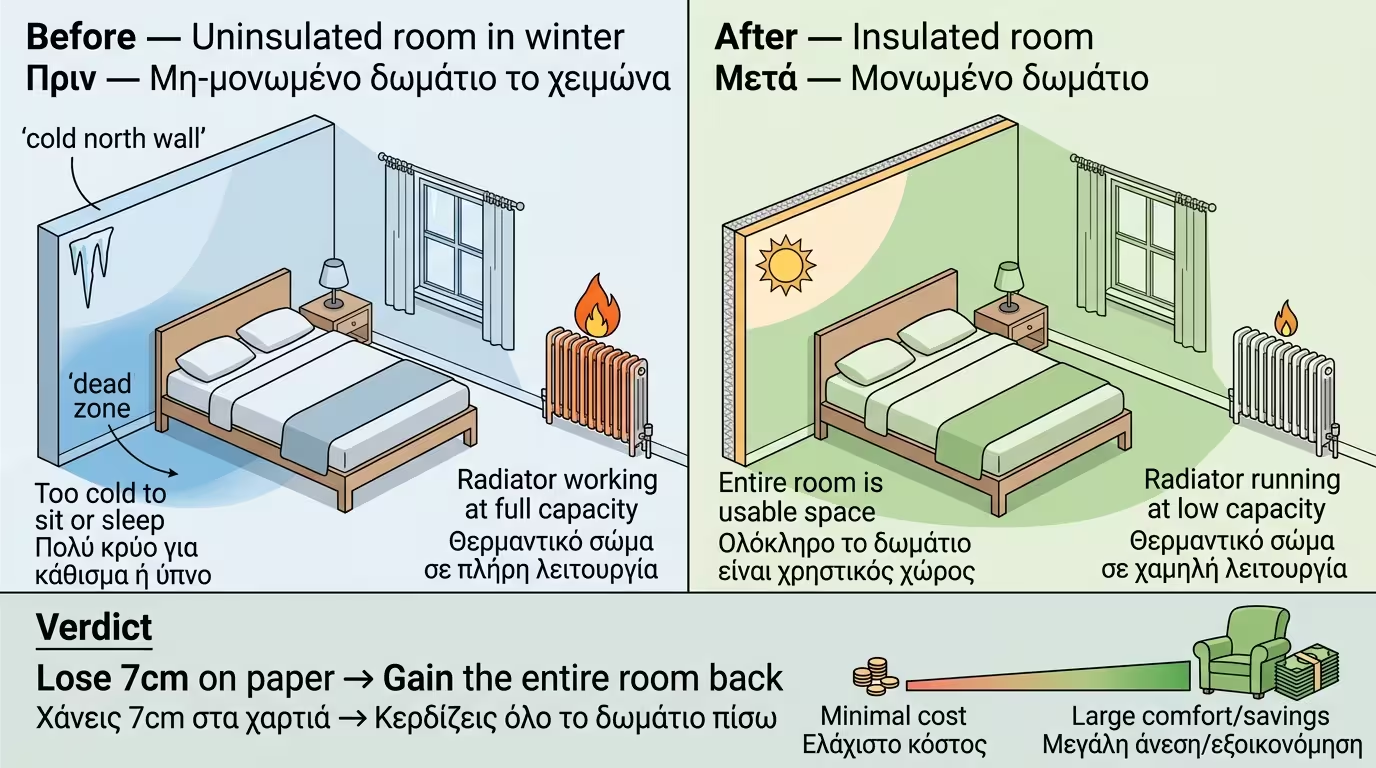
In a freezing, uninsulated bedroom, the space next to the external wall is essentially "dead" in winter. Nobody wants to place furniture or sleep against a wall that feels like a refrigerator door.

Before/after - the 'dead' space becomes usable

✅ The Best Investment

You lose 7cm on paper, but you gain back the full use of the entire room. The wall becomes "warm" to the touch, the bed next to it is no longer a freezing spot, thermal comfort soars, and the energy savings you enjoy year after year make those 3 sq.m. feel like the best investment you've ever made in your home.

Related Articles

Insulation Systems: Complete Solutions for Every Building

Return to category.

Go to category

Preview