Bituminous Coatings and Emulsions: The Basic (and Economical) Protection
for External Basement Walls
Concrete is not waterproof. It is riddled with capillary pores. If you
backfill soil directly against the bare external wall of your basement,
the concrete will soak up ground moisture like a sponge.
The most classic, proven and value-for-money solution for
sealing those pores is bituminous coatings. These are thick liquids based
on bitumen, brushed on with a large masonry brush or roller, creating a seamless,
black, waterproof film.
1. The 2 Categories (Water-Based vs Solvent-Based)
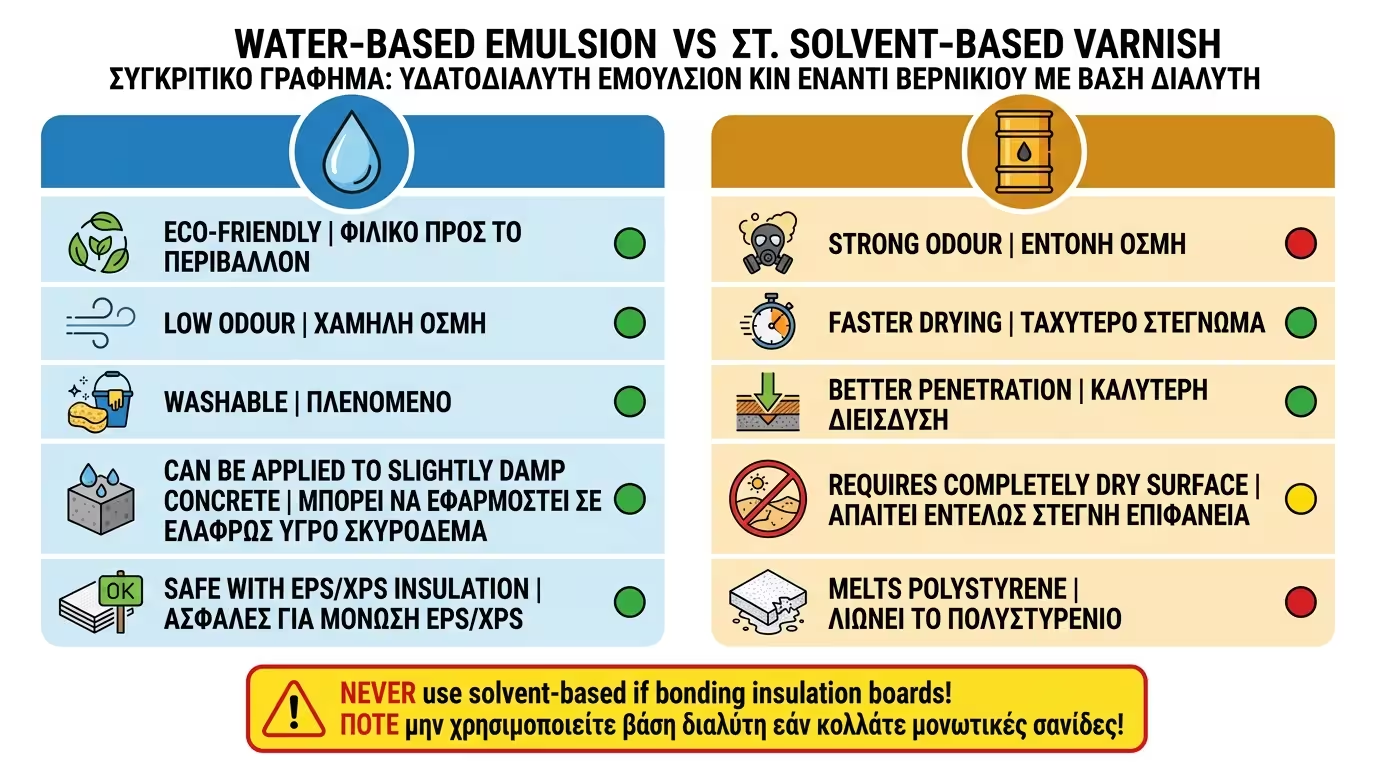
In the store you will find the black tins divided into two large
families. The choice depends on the wall condition:
💧 Bituminous Emulsions (Water-Based)
Environmentally friendly, low odour and washable with water (while
wet). Their huge advantage is that they can be applied to slightly damp concrete. If the contractor has just stripped the formwork and the wall
still retains moisture, emulsion is the only solution.
🛢️ Bituminous Varnishes (Solvent-Based)
These have a much stronger smell (like diesel/white spirit) and dry
faster. They offer slightly better adhesion and penetration, but require the wall to be completely dry. If applied to a damp wall, they will bubble and peel.
Note: If you plan to bond insulation boards (EPS/XPS) onto the
bitumen, use STRICTLY water-based emulsion. The solvent "melts"
polystyrene!
2. Correct Application (The 3-Coat Rule)
Application is easy and fast, but must not be rushed:
🧹 Preparation
The wall must be clean of dirt, form oil and loose material. Any
tie-wire holes (from the formwork) must be plugged with repair
mortar.
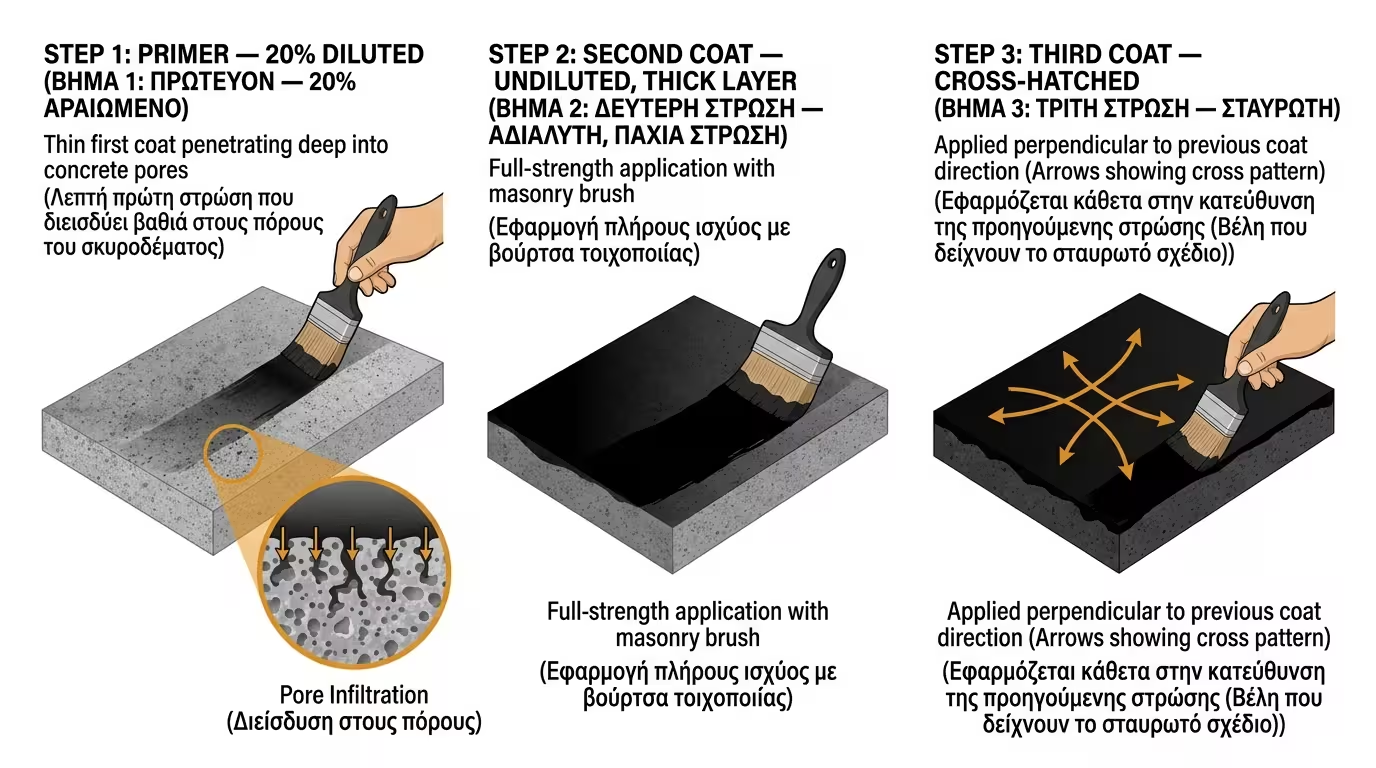
1️⃣ The Primer (First Coat)
The first coat acts as a primer. We dilute the bituminous material
with water (or solvent, depending on type) by 20%.
This makes it more fluid, allowing deeper penetration into the
concrete pores to "anchor" properly.
2️⃣ The Main Coats
We apply the second coat undiluted in a thick layer. Once dry (the
next day), we apply the third coat cross-hatched relative
to the previous one.
3. The Deadly Risk of Backfilling
You have applied 3 perfect coats. The wall is jet-black and
waterproof. Then the excavator (JCB) arrives and starts dumping soil
and stones into the trench to bury the basement (backfilling).
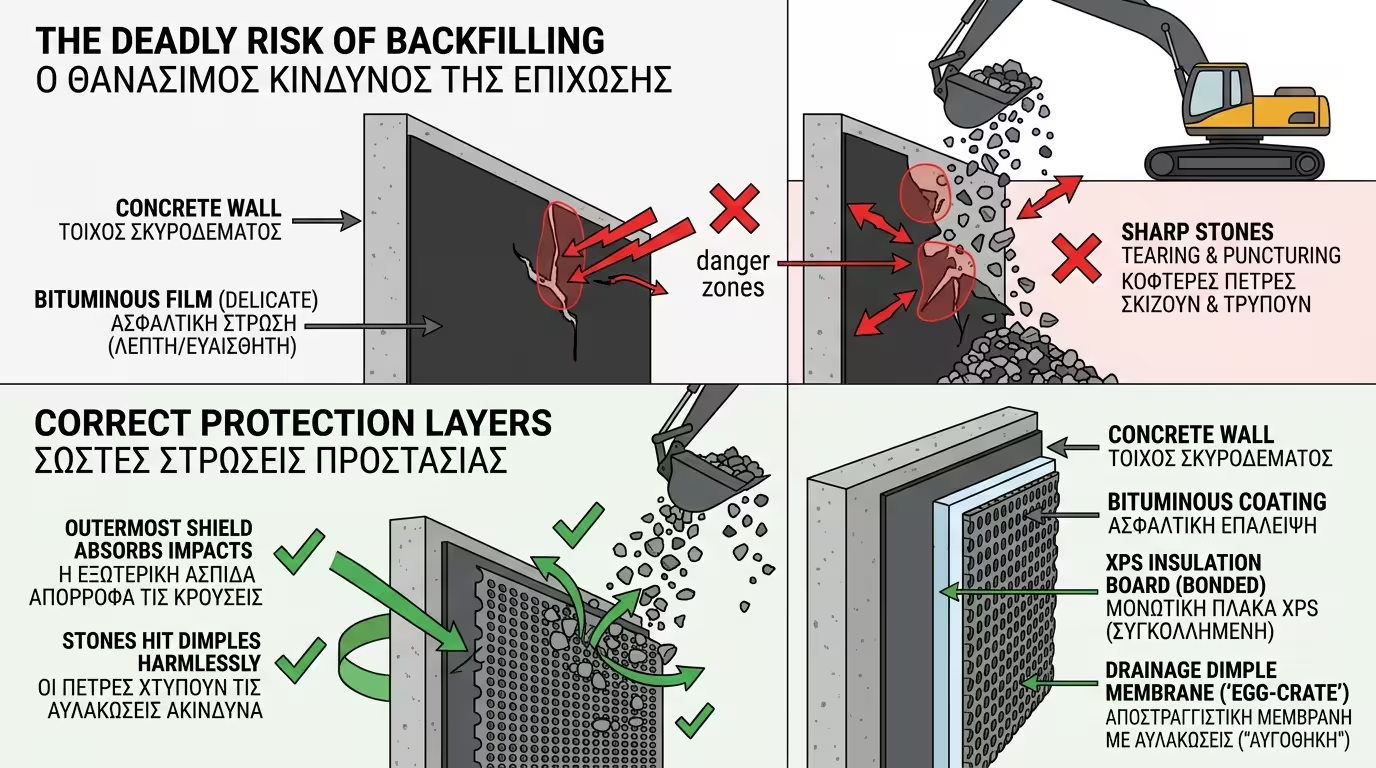
💥 The Destruction
If soil falls directly onto the bituminous coating, the waterproofing is destroyed in 5 seconds! The sharp stones dropping with force will scrape, tear and puncture
the black film.
🛡️ Mechanical Protection
Before backfilling, the bituminous waterproofing MUST be
mechanically protected. Typically, extruded polystyrene boards (XPS)
are bonded on top for thermal insulation, and over those the drainage membrane ("egg-crate") is installed to absorb stone impacts.
4. The Model Experiment (Basement Exterior)
Our 10×10 house has a 3-metre-deep basement. The concrete has dried
and we are about to bury it in soil.
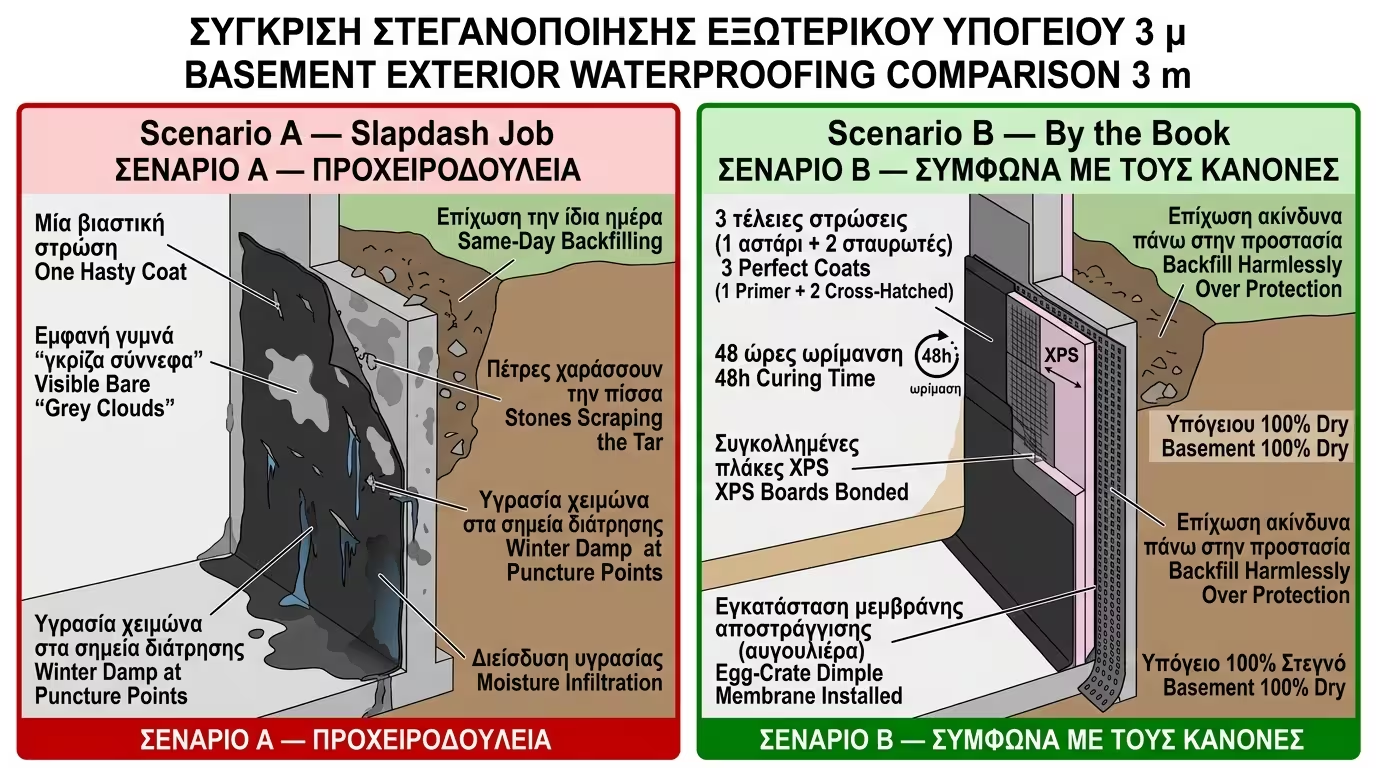
🔴 Scenario A (The Slapdash Job)
The labourer grabs a brush, hastily slaps on one coat of diluted
tar, leaving gaps ("clouds") where grey concrete shows through. The
same day, the bulldozer dumps soil and stones. The stones scrape the
tar. Come winter, the basement wall shows damp at exactly the points
where the stones tore the material.
🟢 Scenario B (By the Book)
We clean the wall. We apply one diluted primer coat of bituminous
emulsion plus 2 thick cross-hatched coats. We wait 2 days for it to
cure into a tough rubber-like film. We bond pink insulation boards
(XPS) and install the "egg-crate" membrane on top. The JCB drops the
soil. The stones hit the plastic membrane, leaving our bituminous
coating 100% intact. The basement is perfectly dry!
Final Verdict: Bituminous coatings are the most reliable,
economical and fast solution for most basements with normal soil moisture.
They are excellent at stopping damp, provided they are applied at the right
thickness (3 coats) and are fanatically protected before backfilling.