Bitumen Membranes (Asphalt Sheets): The Classic, Proven Solution and How
to Apply with a Blowtorch
In the construction world, mass and thickness always inspire confidence.
While a liquid waterproofing coating applied with a roller leaves a
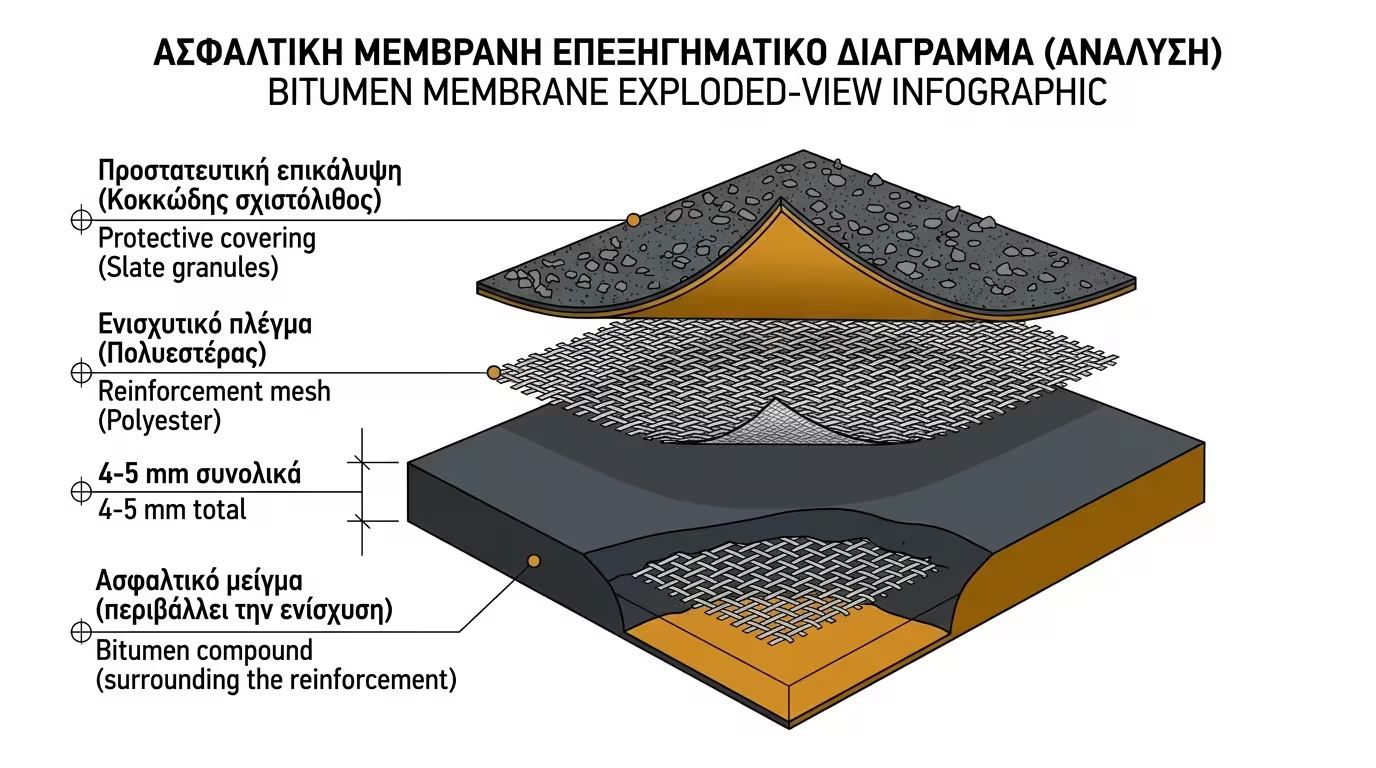
crust barely one millimetre thick, a quality bitumen membrane reaches 4 to 5 millimetres thick!
This enormous layer of material is why bitumen membranes remain the No.1
choice for heavy-duty waterproofing, especially on rooftops where water
ponds.
1. What's Inside a Bitumen Membrane? (The Anatomy)
A modern bitumen membrane is not just tar. It's a high-tech
"sandwich":
🧲 The Reinforcement (The "Skeleton")
At the centre there is a mesh (usually polyester or fibreglass)
giving the membrane enormous tear resistance. Fibreglass doesn't
stretch (stability), while
polyester is extremely elastic (follows the building's
thermal movements).
🪨 The Bitumen Compound
The black material surrounding the reinforcement. It's enriched with
polymers (plastics or elastomers) so it doesn't melt in summer or
crack in winter.
🛡️ The Covering
The top surface is covered with a protective layer, usually
slate granules in various colours or aluminium foil,
which shields the bitumen from destructive UV radiation.
2. The Great Dilemma: SBS or APP?
When you go to buy bitumen membrane, you'll see these two acronyms.
The difference between them is enormous:
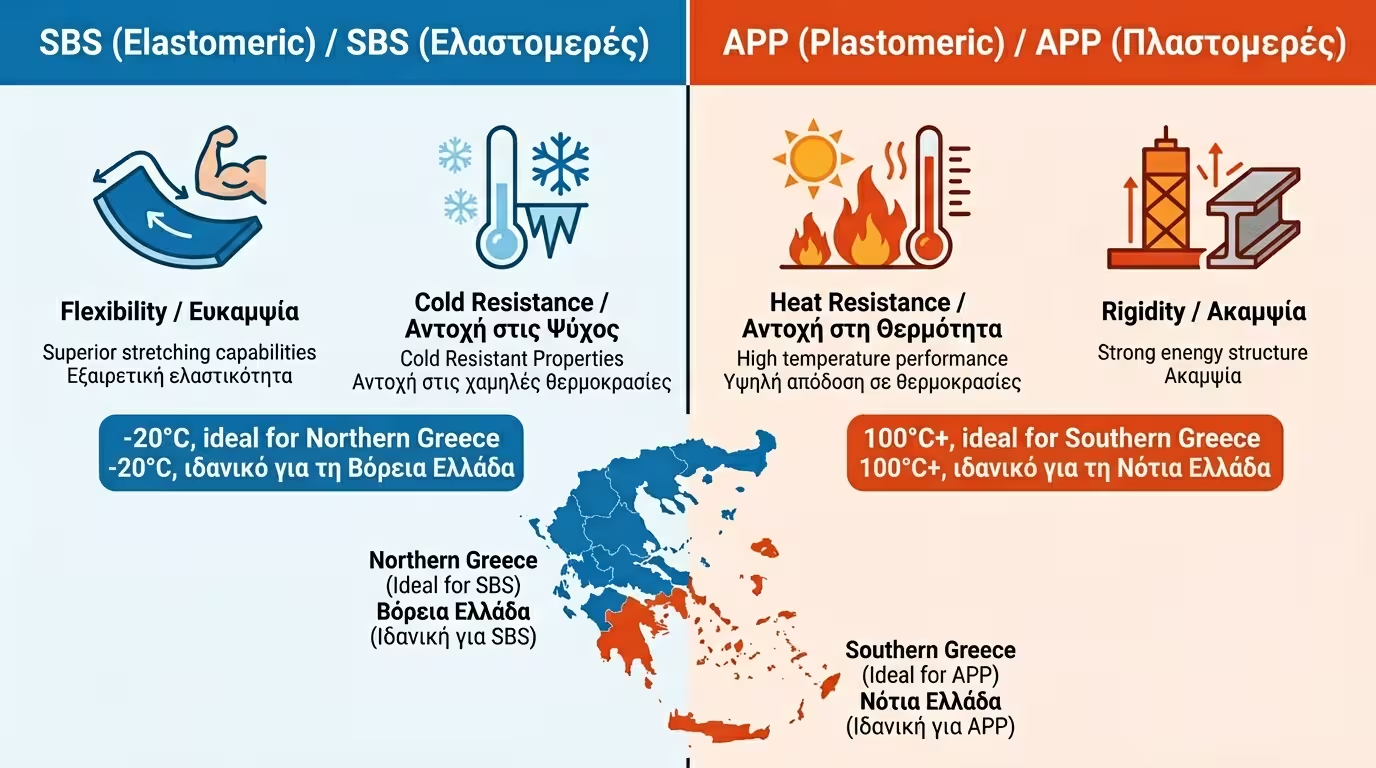
🧪 SBS (Elastomeric)
Bitumen blended with elastic polymers (rubber).
Incredibly elastic - can be stretched without tearing.
Withstands polar cold (down to -20°C) without cracking. Ideal for regions
with harsh winters (e.g. Northern Greece) or for metal roofs that vibrate.
🧪 APP (Plastomeric)
Bitumen blended with plastic polymers. More rigid, but with
extraordinary heat resistance (won't melt even at 100°C).
The ideal, durable choice for the scorching rooftops of Southern Greece
(Athens, Crete, Islands).
3. The Golden Application Rule (How the Blowtorch Works)
Bitumen membrane should never be applied directly on bare, dusty
concrete. If the contractor simply unrolls the membrane and starts
torching, send them away!
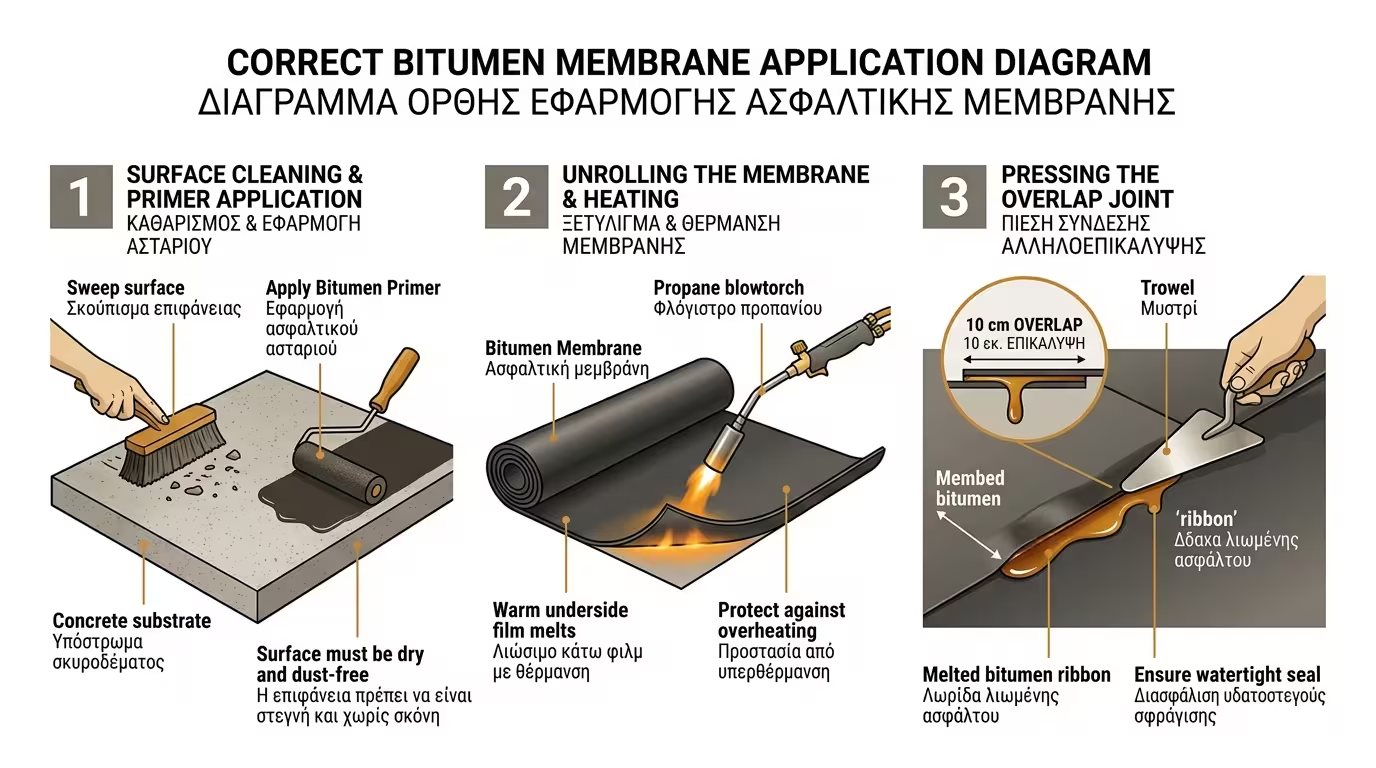
1️⃣ The Primer (Bitumen Emulsion/Varnish)
The roof is thoroughly cleaned and entirely coated with a black,
liquid primer. This penetrates the concrete pores and creates the
"bridge" onto which the roll will bond.
2️⃣ The Melting (The Blowtorch)
The roll features a thin film on its underside. The technician heats
the bottom with a propane blowtorch until the film melts and the
bitumen becomes like liquid honey, then immediately presses it onto
the primed surface.
3️⃣ The Overlaps (The Most Critical Point)
Rolls are not placed side by side. Each roll must "straddle" the
previous one by 10 centimetres . This joint must be
torched and pressed with a trowel so well that a small "ribbon" of
melted bitumen seeps out at the edge. If water finds even a tiny
hole in this joint, it will creep underneath and the waterproofing
will be destroyed!
4. The 100 m² Model Experiment
It's October and we want to beat the rains. We buy bitumen membranes
to waterproof our flat roof.
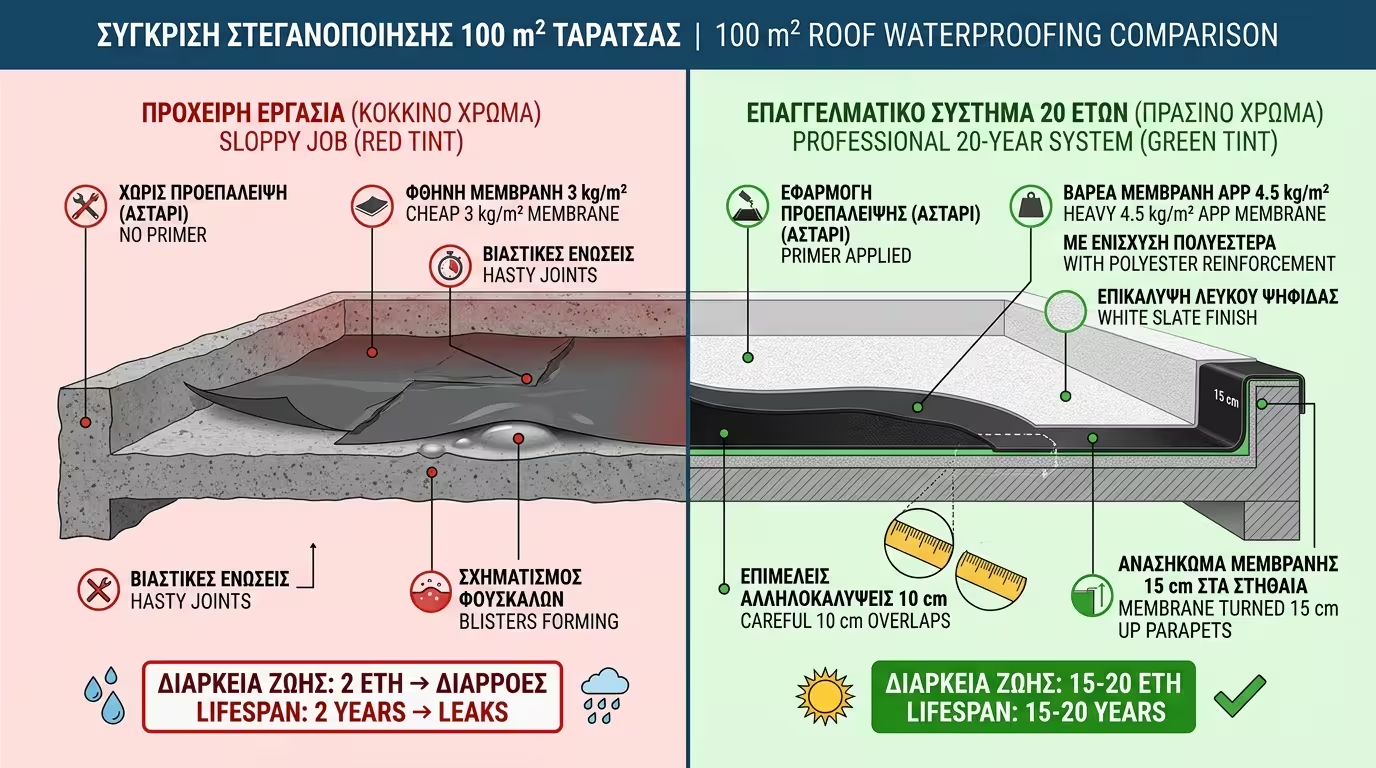
🔴 Scenario A (The Sloppy Job)
The contractor is in a rush. No primer "because the concrete is
clean". He buys cheap membranes weighing 3 kg per m². He torches the
joints hastily. By the second winter the joints open. Water gets
under the sheets, ponds, and seeps through to the living-room
ceiling. The roof is full of "blisters".
🟢 Scenario B (The 20-Year System)
We pressure-wash, apply a solvent-based primer and wait 24 hours to
dry. We buy heavy-duty membrane
4.5 kg/m² (APP) with polyester reinforcement and white
slate. The installer torches the 10 cm overlaps slowly and carefully.
Around the parapets he turns the membrane 15 cm up the wall. The result
is a seamless, impenetrable "basin". The home is safe for the next 15-20 years.
The Final Conclusion: Bitumen membranes remain the toughest
and most reliable waterproofing solution,
provided you choose the right weight/reinforcement and the joints
are flawlessly executed. Don't skimp on material: below 4 kg/m² and polyester
reinforcement, you're throwing your money away!