
Bass Traps & Acoustic Panels: Why Sound Insulation Without Acoustic Treatment Is Not Enough (Home Cinema & Studio)

Imagine you spent €10,000 perfectly soundproofing the walls and ceiling of a room. No noise gets in, no noise gets out. You play a movie at full volume on your Home Cinema. The picture is stunning, but the speakers sound like you are shouting inside a metal barrel! Voices echo, bass "booms" relentlessly, and the dialogue becomes impossible to follow.

The sound insulation is perfect. The problem now is not noise entering or leaving, but sound bouncing around inside the room. The cure is something entirely different: Acoustic Panels and Bass Traps.

1. The Big Difference (Again): Insulation vs. Acoustic Treatment

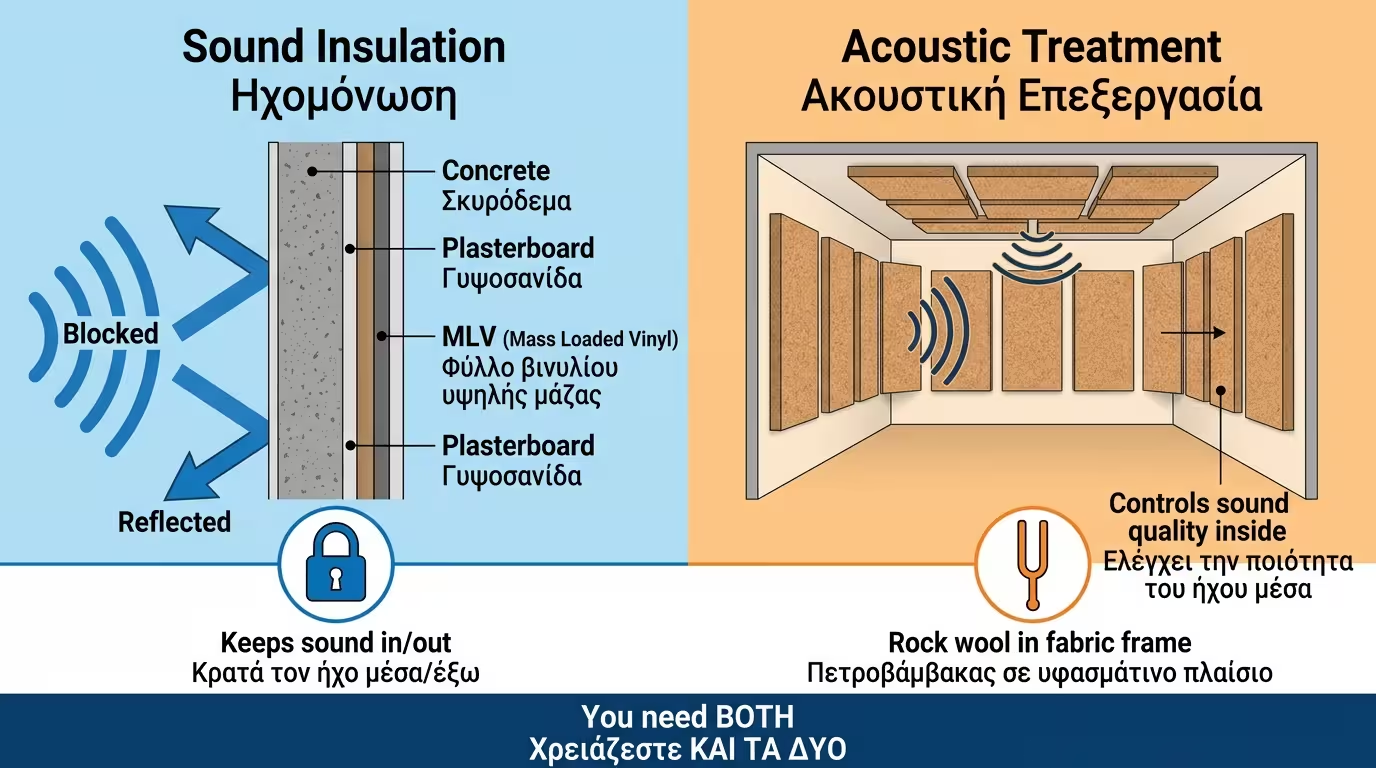
Although we mentioned this in Article 3 (Insulation vs. Absorption), here we apply it in practice. Sound insulation uses heavy, dense materials (concrete, plasterboard, MLV) to stop sound entering or leaving the space. Acoustic Treatment uses light, porous materials (rock wool in a frame, foam panels, special shapes) placed inside the room, on surfaces, to control how sound behaves within the room - reducing reverb and standing waves.

No acoustic panel will soundproof you, but no soundproof wall will make a room sound good! You need both.

Sound insulation (blocks sound in/out) vs Acoustic Treatment (controls how it sounds inside)

2. Bass Traps: The Corners Are the Enemy

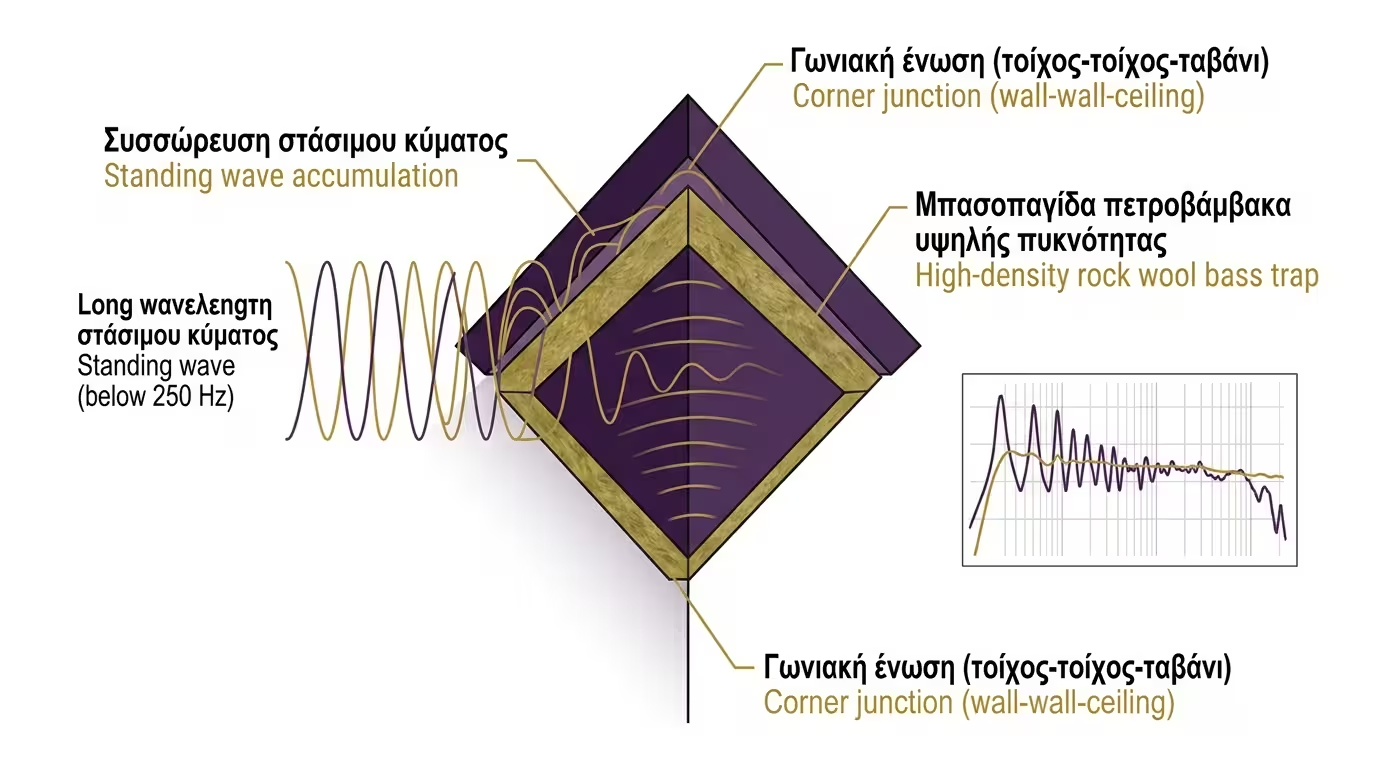
Low frequencies (bass, below 250 Hz) are especially tricky. Due to their long wavelengths, they tend to "gather" and store energy in the room's corners. This creates "standing waves": at some points in the room the bass sounds enormous (antinodes), at others it almost disappears (nodes).

The cure is Bass Traps: thick panels of high-density rock wool (or specialist foam), placed in the triangular corners between walls, wall-ceiling, and wall-floor junctions. They absorb a large portion of that stored energy and smooth out the bass response.

Bass trap in the wall-ceiling corner: thick high-density rock-wool panel

3. Absorption Panels & Diffusers: Quantity & Balance

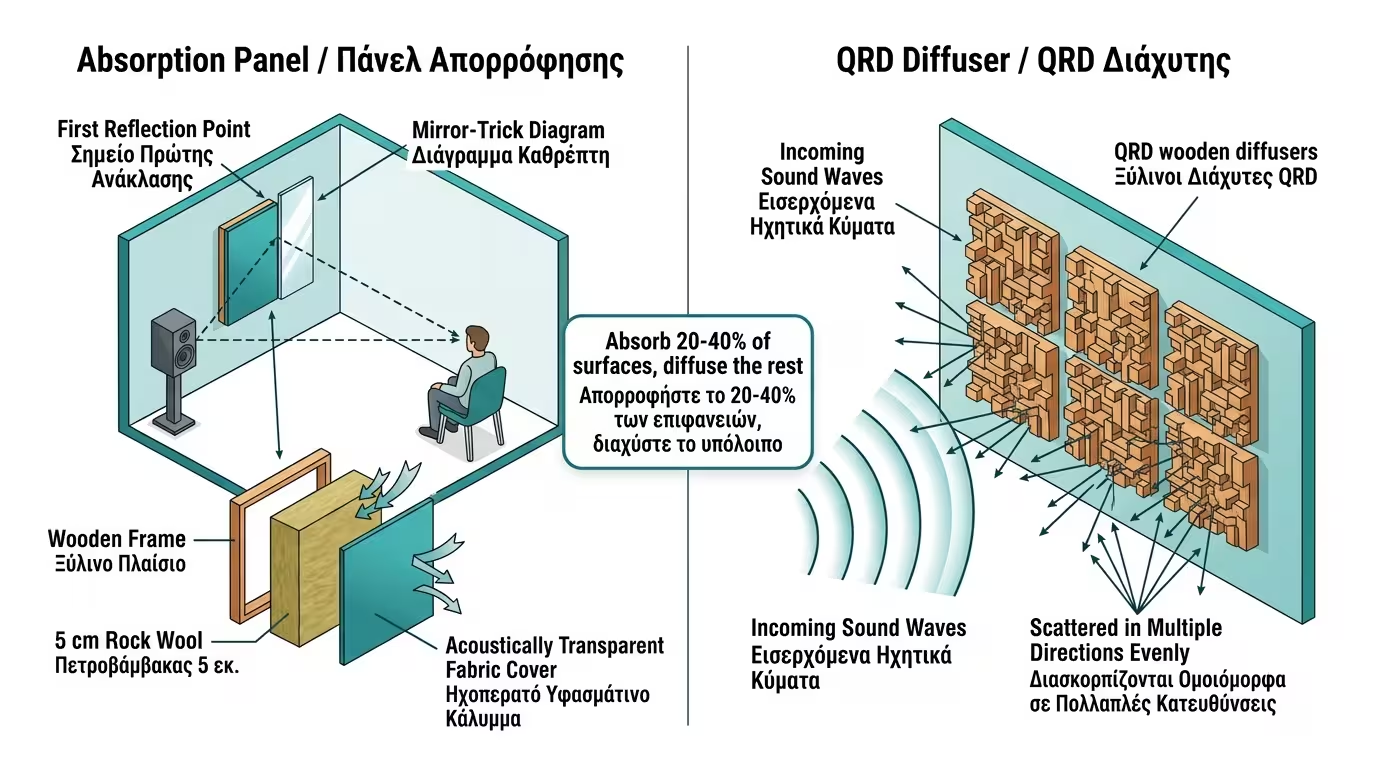
For mid and high frequencies (above 250 Hz), the treatment is simpler. We install Acoustic Absorption Panels: frames (timber or aluminium) filled with 5 cm of rock wool and covered with acoustically transparent fabric. We place them at the first reflection point - the spot where a mirror would show the reflection of the speaker.

Warning: Do not cover the entire room with panels! A 100% "dead" (anechoic) room sounds unnatural, oppressive, even stressful. The rule is: only 20-40% of surfaces need absorption. The rest needs Diffusers - specially built wooden (or polystyrene) elements with an irregular surface (e.g. QRD pattern) that "scatter" sound evenly instead of killing it.

5 cm acoustic panel at the first reflection point + wooden QRD diffuser on the rear wall

4. The Experiment in Our Model: Movie Night in the 4×4 Home Cinema

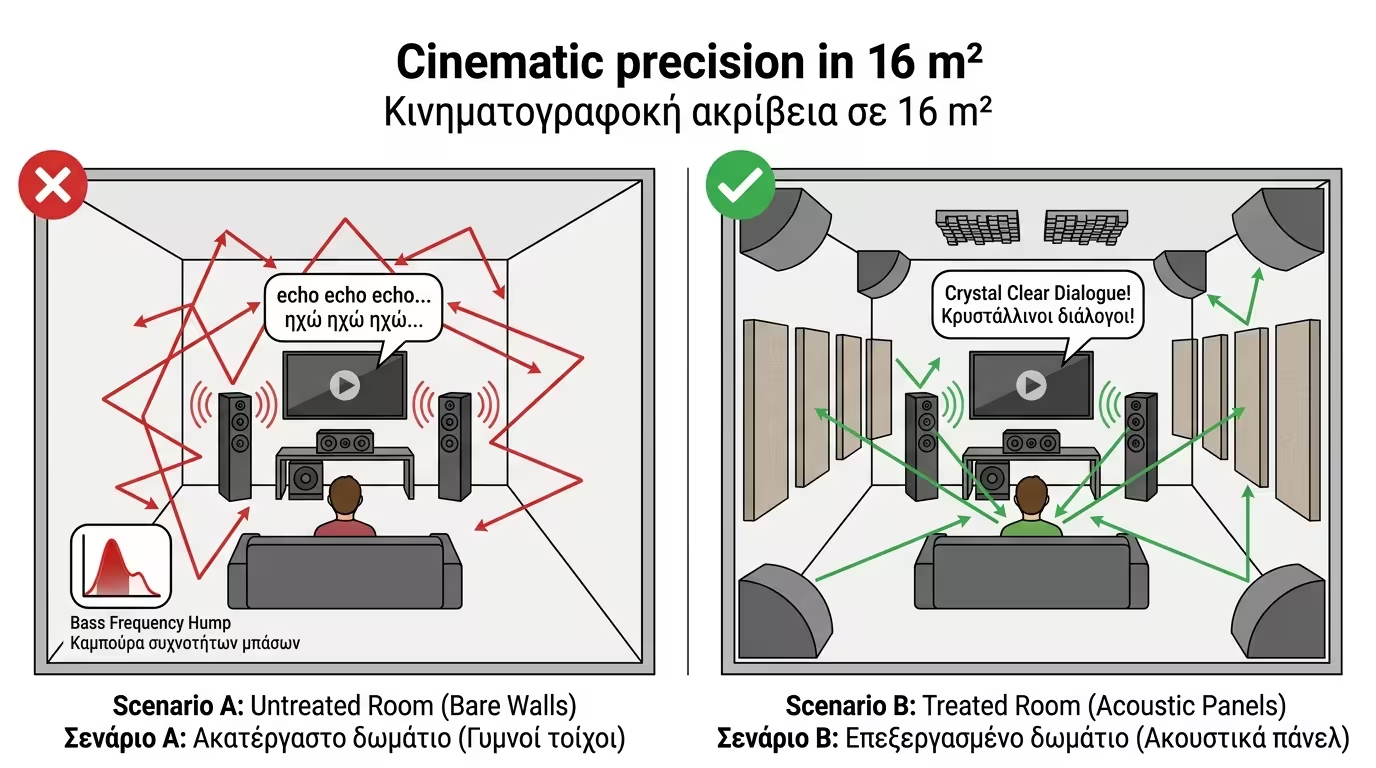
Experiment: Scenario A (bare soundproofed walls, echo) vs Scenario B (bass traps + panels, cinematic precision)

Our 4×4 room is soundproofed. We set up 5.1 speakers for Home Cinema. Time for The Lord of the Rings!

❌ Scenario A (Bare Soundproofed Walls)

Our triple-plasterboard, MLV and resilient-mount walls are rock hard. Sound hits them, bounces like a ball, and creates a bath of reverb. Gandalf speaks and we hear "cough-cough-cough"! The bass during the Battle of Helm's Deep rumbles and the corner behind us "hums" as if a subwoofer were hidden on the shelf. A failed experience.

✅ Scenario B (T.R.A.P. - Total Room Acoustic Package)

We strategically place 4 Bass Traps in the vertical corners, absorption panels at the first reflection points on left and right, and QRD diffusers on the rear wall. We replay the same scene. Gandalf now speaks clearly as if we were in the Shire. The bass hits hard but controlled. Cinematic precision inside our 16 square metres!

The Bottom Line: Sound insulation keeps the sound in and noise out. Acoustic panels and bass traps make that sound actually sound right. Together they deliver the perfect Home Cinema or Studio experience. One without the other is like a car without wheels or wheels without a car!

Related Articles

Sound Insulation: Silence and Noise Protection

Return to category.

Go to category

Preview