1️⃣ The Frame
The engineer opens the front door of the home. In the doorway, a temporary metal frame is fitted to the frame opening.
If you buy a submarine, you want to be 100% certain it doesn't leak water before you dive. Likewise, if you build a modern, energy-efficient home, you want to be 100% certain it doesn't let in (or lose) air. Since we can't submerge our house in water to see if it blows bubbles, engineers invented the Blower Door Test.
It is a scientific method for measuring the airtightness of a building. Abroad (and especially in Passive Houses) it is required by law before the home can receive an occupancy permit.
The procedure is impressive and feels like a physics experiment. The engineer opens the front door and in its place fits a temporary metal frame.
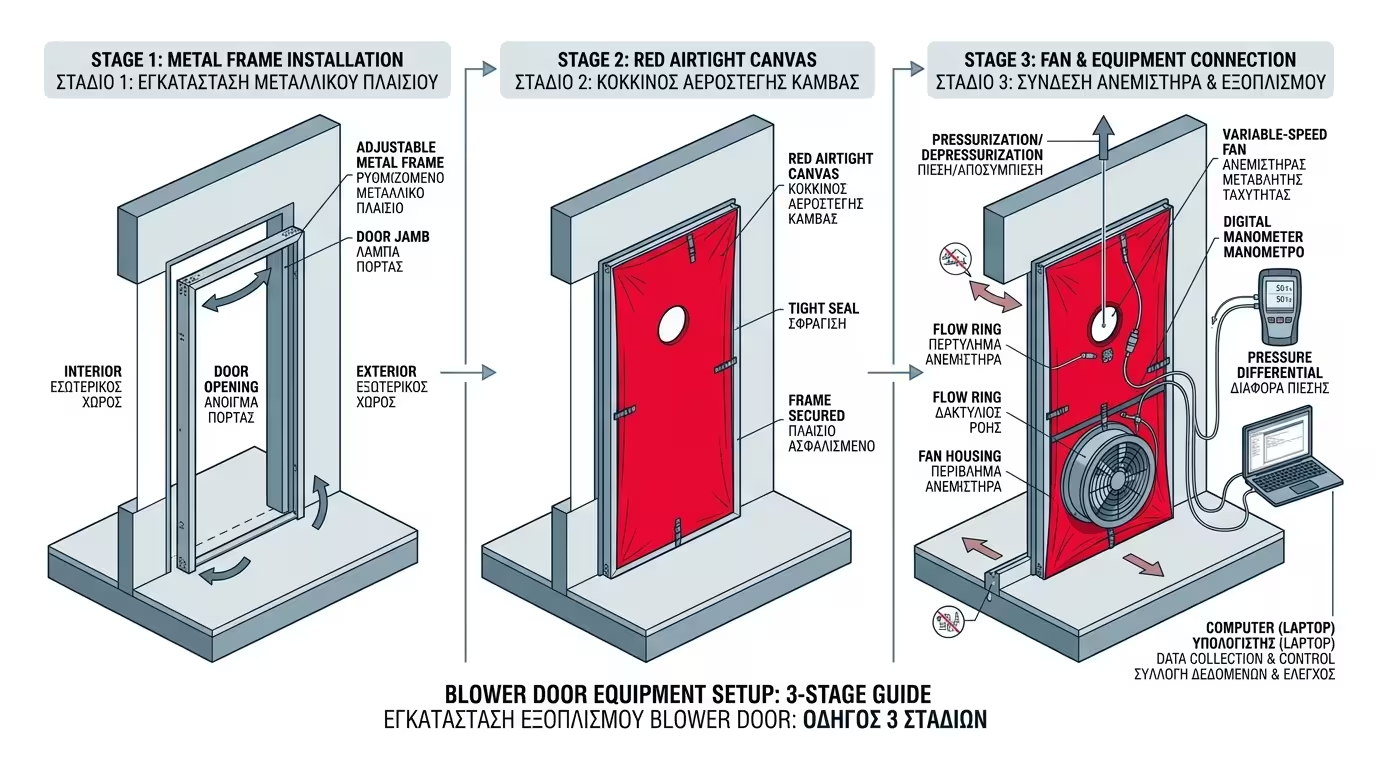
The engineer opens the front door of the home. In the doorway, a temporary metal frame is fitted to the frame opening.
A thick, airtight canvas (usually red) is stretched over the frame, completely sealing the door opening.
At the centre of the canvas sits a powerful variable-speed fan, connected to digital manometers (pressure gauges) and a computer.
After sealing all external windows tightly and opening all internal doors, the fan is switched on.
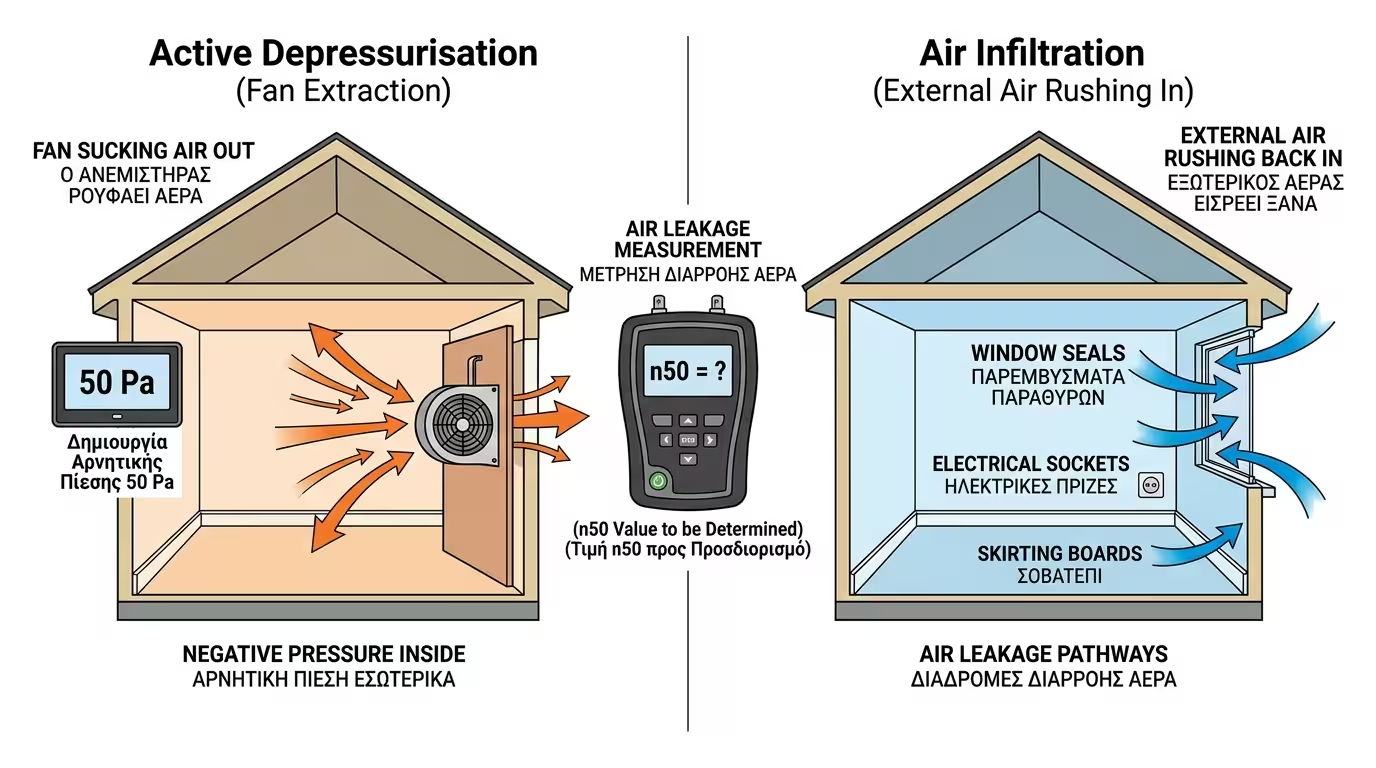
The fan begins to suck air from inside to outside. This creates negative pressure inside the home (typically 50 Pascals). Because the home now has lower pressure than the outside, the outdoor air frantically tries to rush back in to equalise the pressure.
Where will the air enter? Through the slightest hole, gap, poorly applied silicone or defective window seal!
The digital manometer measures exactly how much air the fan must extract to maintain the pressure at 50 Pascals. This number gives us the famous n50 (air changes per hour under 50 Pa pressure).
The machine tells us how much air we lose. But it doesn't tell us where we lose it. This is where the most entertaining (and revealing) part begins.
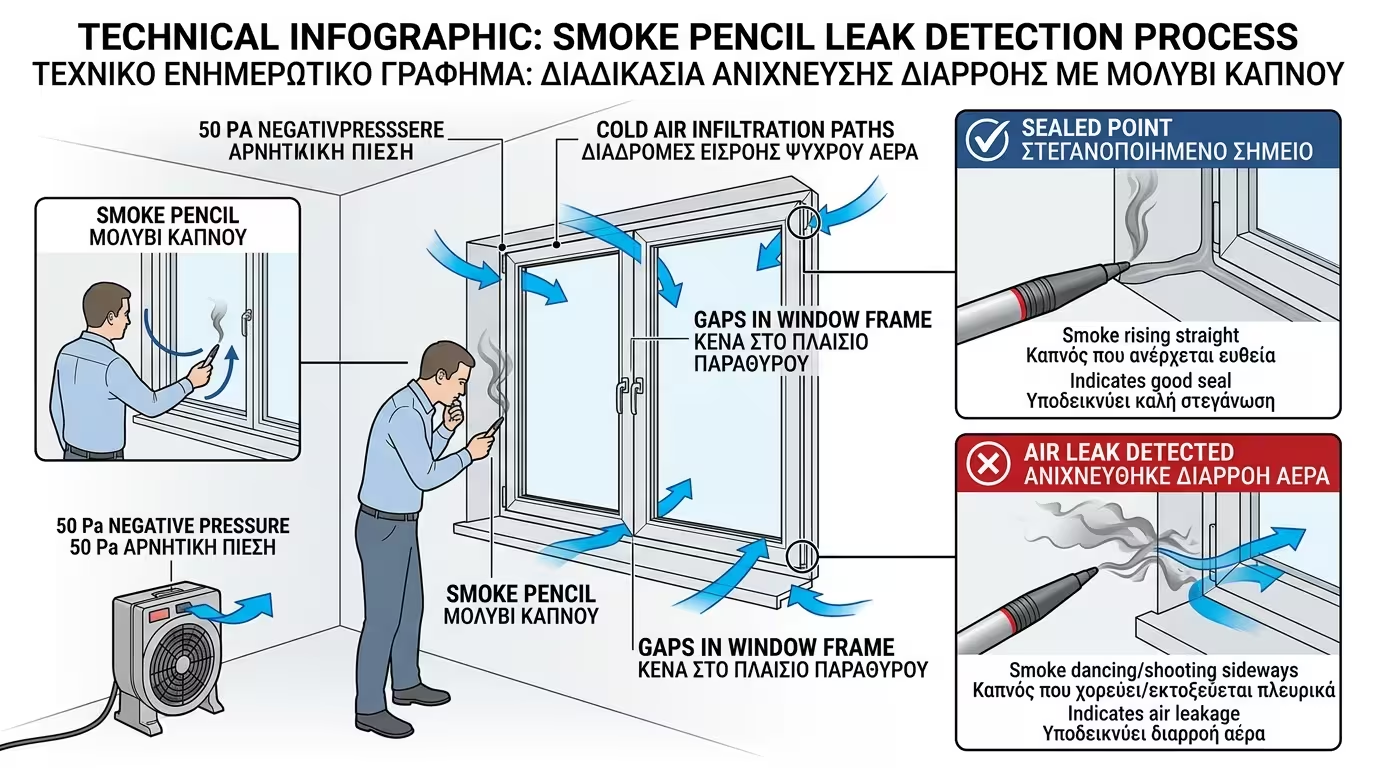
While the fan runs and the home is under negative pressure, the engineer walks through the rooms holding a "smoke pencil". It is a device that emits a thin, white, harmless stream of smoke.
The smoke is held near sockets, skirting boards, window joints and ceiling corners.
If the smoke rises straight up, the point is perfectly sealed. If the smoke suddenly starts dancing or shoots violently towards the centre of the room, we've found an invisible hole through which cold air is entering at wind speed!
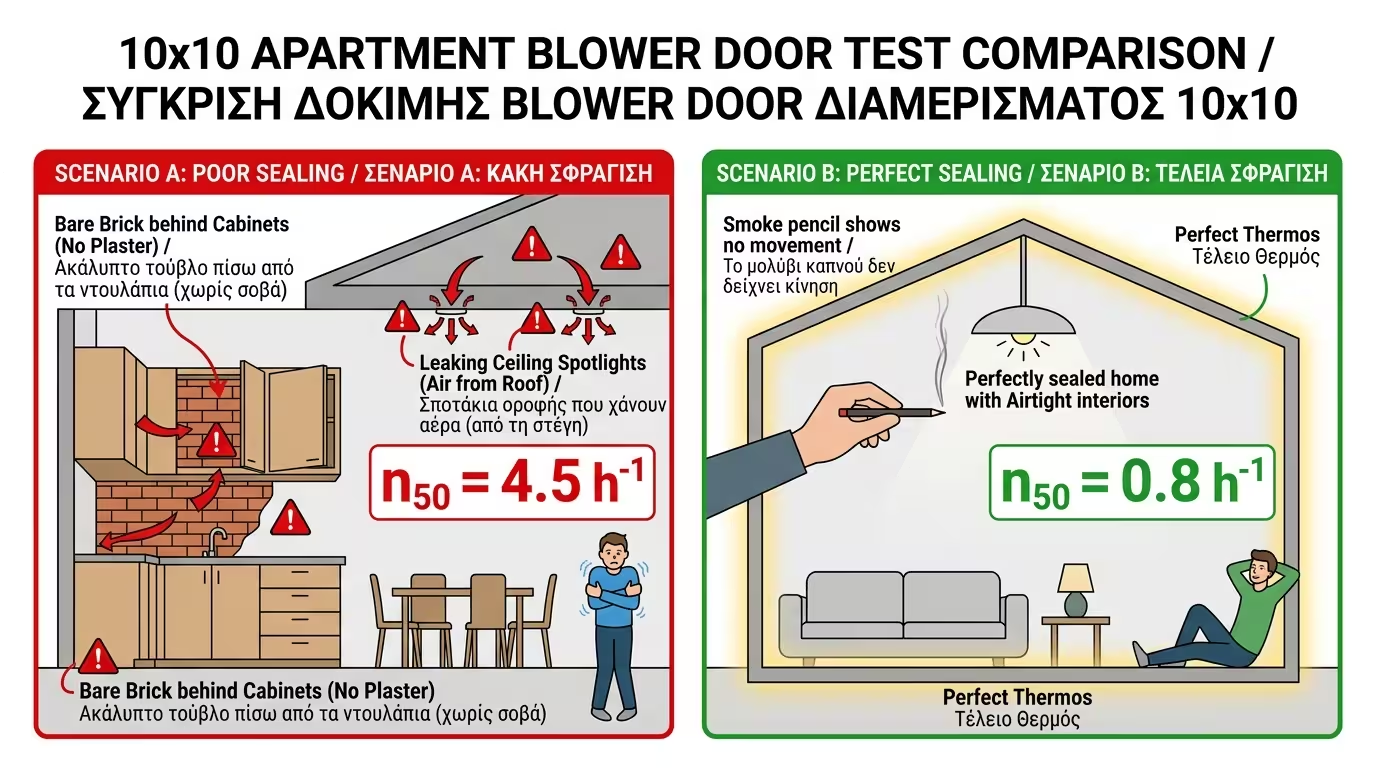
The contractor has just handed over our new "energy-efficient" home. He says he has done a perfect job. We bring in the inspector with the Blower Door.
The machine starts. The n50 reads 4.5. This means the home leaks everywhere. We take the smoke pencil. We discover that behind the kitchen cabinets there is no plaster at all (the bare bricks are visible) and air enters freely. Also, the ceiling spotlights let air in from the roof. We force the contractor to fix the defects before paying the remaining balance.
The machine starts and struggles to extract air (because the home is sealed). The number locks at an impressive 0.8. We run the smoke pencil past every window and not a wisp moves. The home is a perfect thermos. We pay the contractor with a smile, knowing that heating bills will be negligible.
The Final Conclusion: A Blower Door Test costs a few hundred euros, but it is perhaps the best "insurance" you can buy when building or renovating extensively. It removes guesswork, reveals the true quality of the construction and saves you from paying a lifetime for the heat that would escape through invisible holes!
Return to category.
Go to categoryReturn to the central guide.
Go to guide