⚠️ The Frequency Trap
STC was designed decades ago to mainly measure speech noise (mid and high frequencies). It doesn't properly account for low frequencies.
When the industry manufactures a product (a plasterboard, a double-glazed unit or a door), it sends it to an acoustic laboratory. There, the product is bombarded with sounds at various frequencies to measure how many decibels it cuts. To avoid dealing with complex graphs, scientists created a "general grade" for every product - a single number.
The two best-known grades worldwide are STC (American standard) and Rw (European ISO standard).
This is the most widespread index. It shows how well a material stops airborne noise. The Rule: The higher the number, the better the insulation.
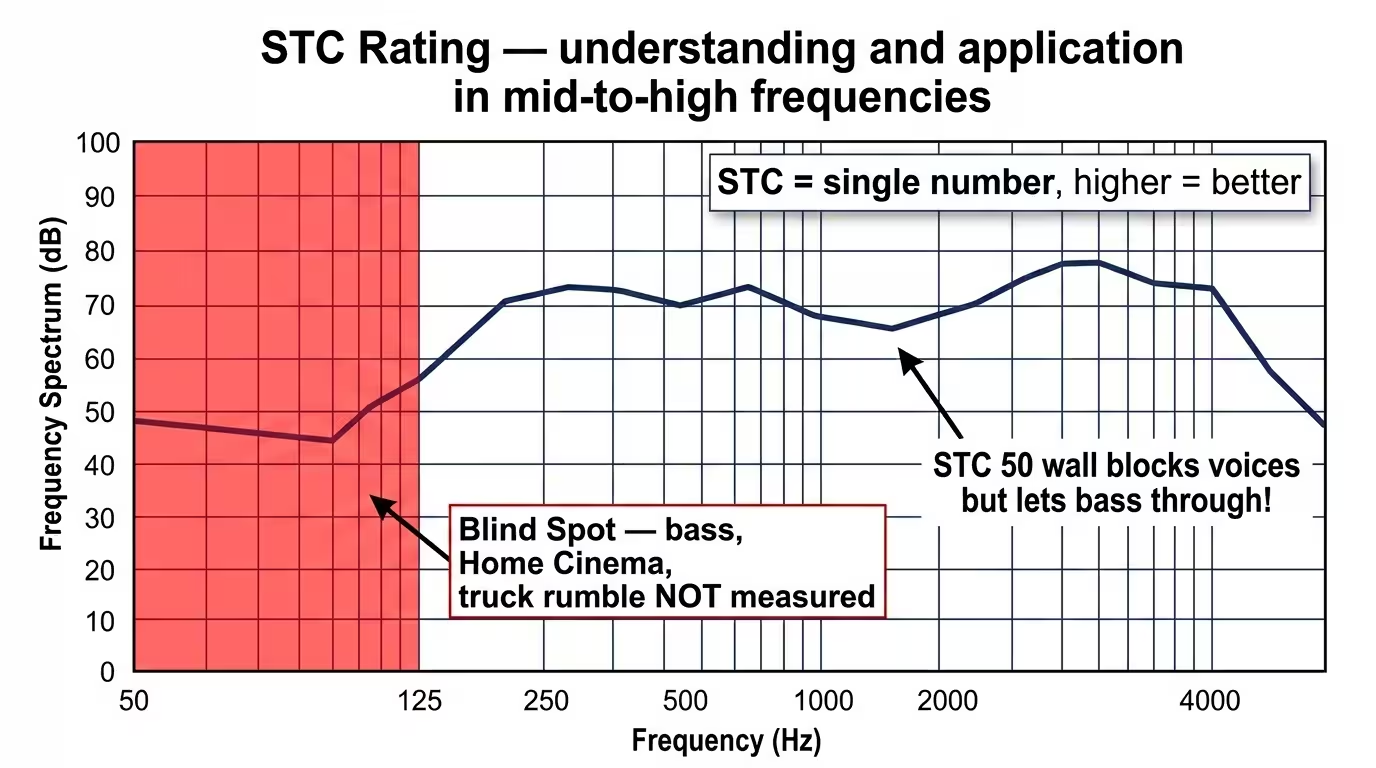
STC was designed decades ago to mainly measure speech noise (mid and high frequencies). It doesn't properly account for low frequencies.
STC is "blind" to very low frequencies (the bass of Home Cinema or the rumble of truck exhausts). You can buy a wall with an impressive "STC 50" that perfectly blocks voices, yet lets the bass pass through as if there's no wall!
This is the European sibling of STC. It works in almost the same way (measures sound reduction in dB) and its numbers are usually very close to STC values (e.g. a glass with STC 35 will typically have Rw around 34-36).
The European system adds two small (yet miraculous) numbers in brackets next to the Rw, which tell the whole truth! These are the (C; Ctr) correction factors.
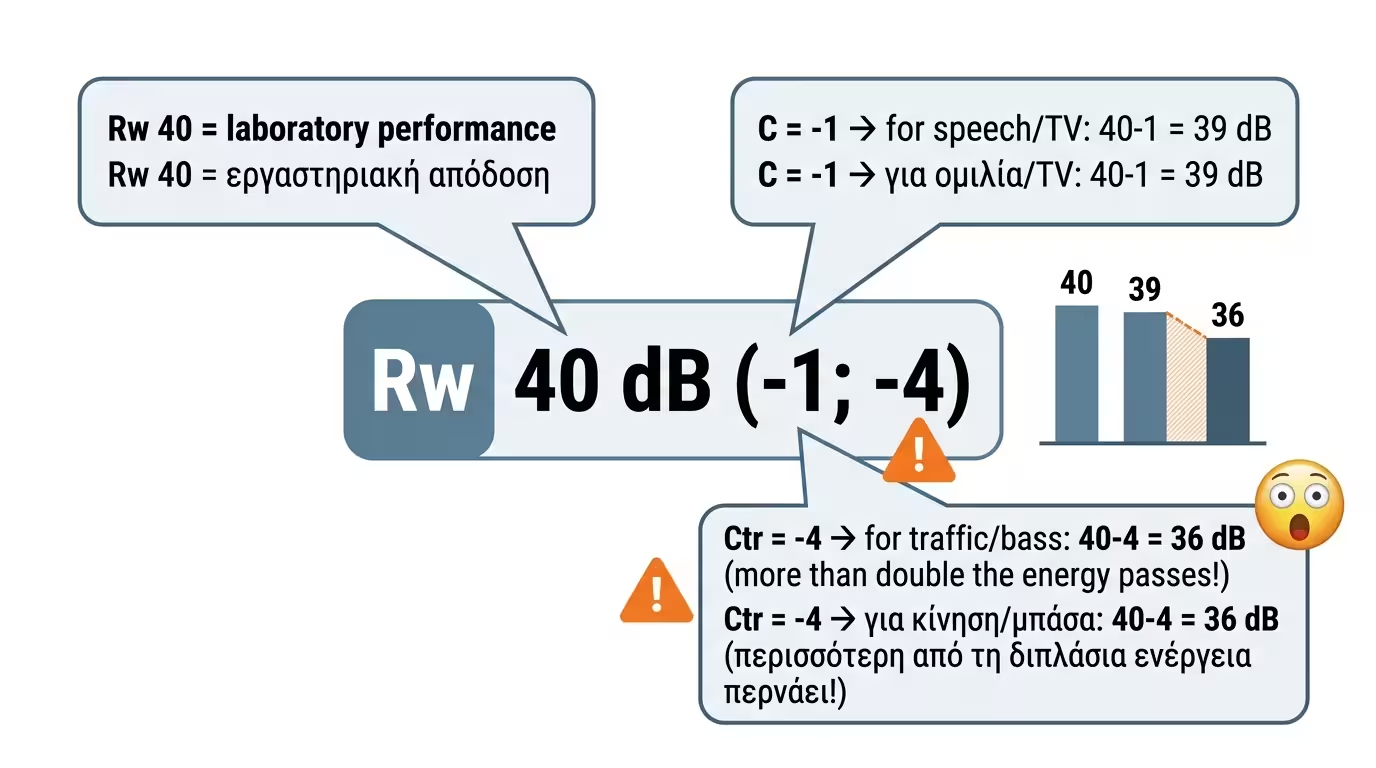
If you see a window label reading Rw 40 dB (-1; -4), what do those numbers in brackets mean? They are "penalties" (correction factors) telling you how much performance drops for specific noise types:
The penalty for mid/high-frequency noise (e.g. TV, screaming children, high-speed trains). In our example it's -1. So for speech, your window performs at: 40 - 1 = 39 dB.
The penalty for the city's "nightmare": urban noise and low frequencies (traffic, bass, aircraft, nightclubs). In our example it's -4. So for road noise, your window performs at: 40 - 4 = 36 dB.
See how easily you can be misled? You thought you bought 40 dB of insulation against traffic, but in reality you got 36 dB (meaning more than double the acoustic energy passes through)!
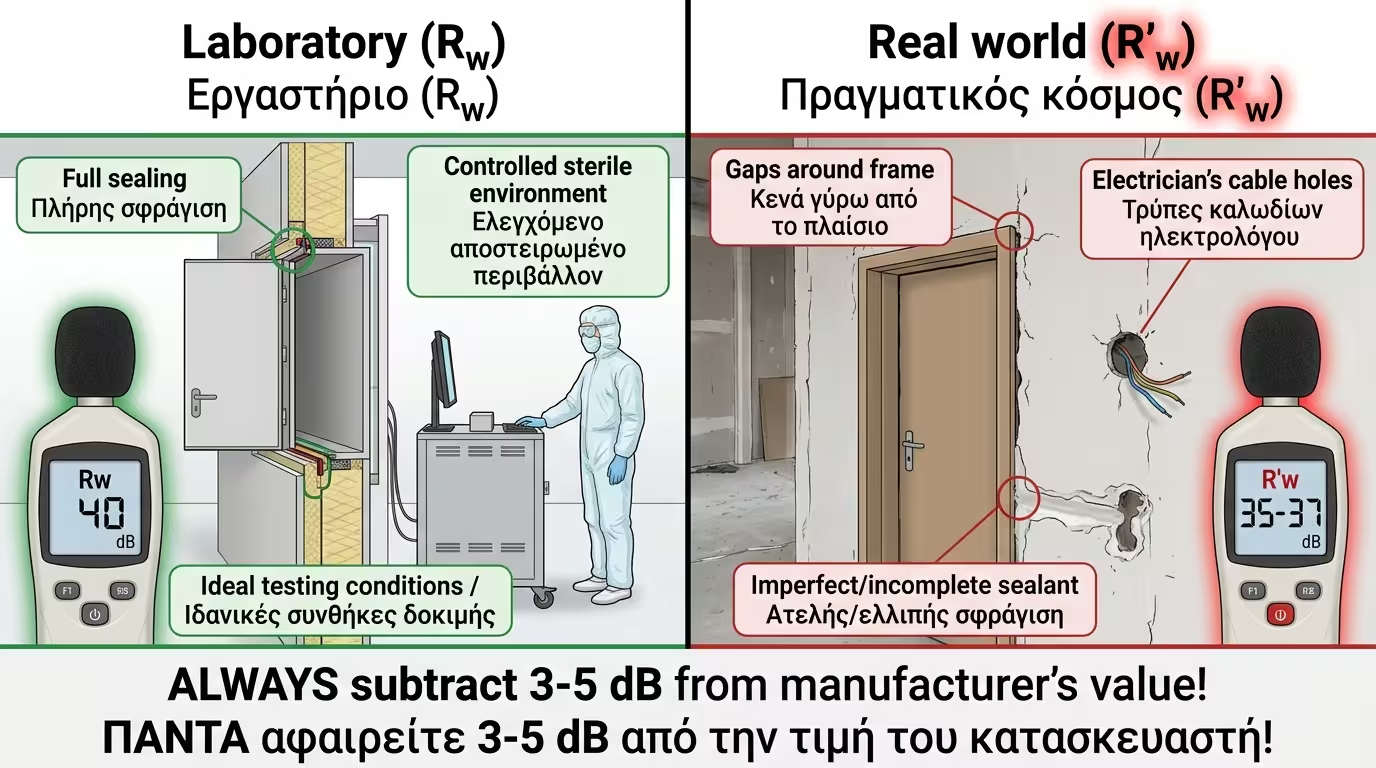
STC and Rw values are measured in sterile labs where the wall or window is built perfectly, sealed with state-of-the-art sealants and has no holes whatsoever.
In your home, the installer will leave a 1 mm gap around the door frame. The electrician will drill a hole for a socket. Always subtract 3 to 5 dB from the manufacturer's nominal value to calculate real-world insulation (this is called R'w - the prime symbol means in-situ measurement).
Our house faces a main boulevard. Buses pass and shake everything. We're going to replace the windows.
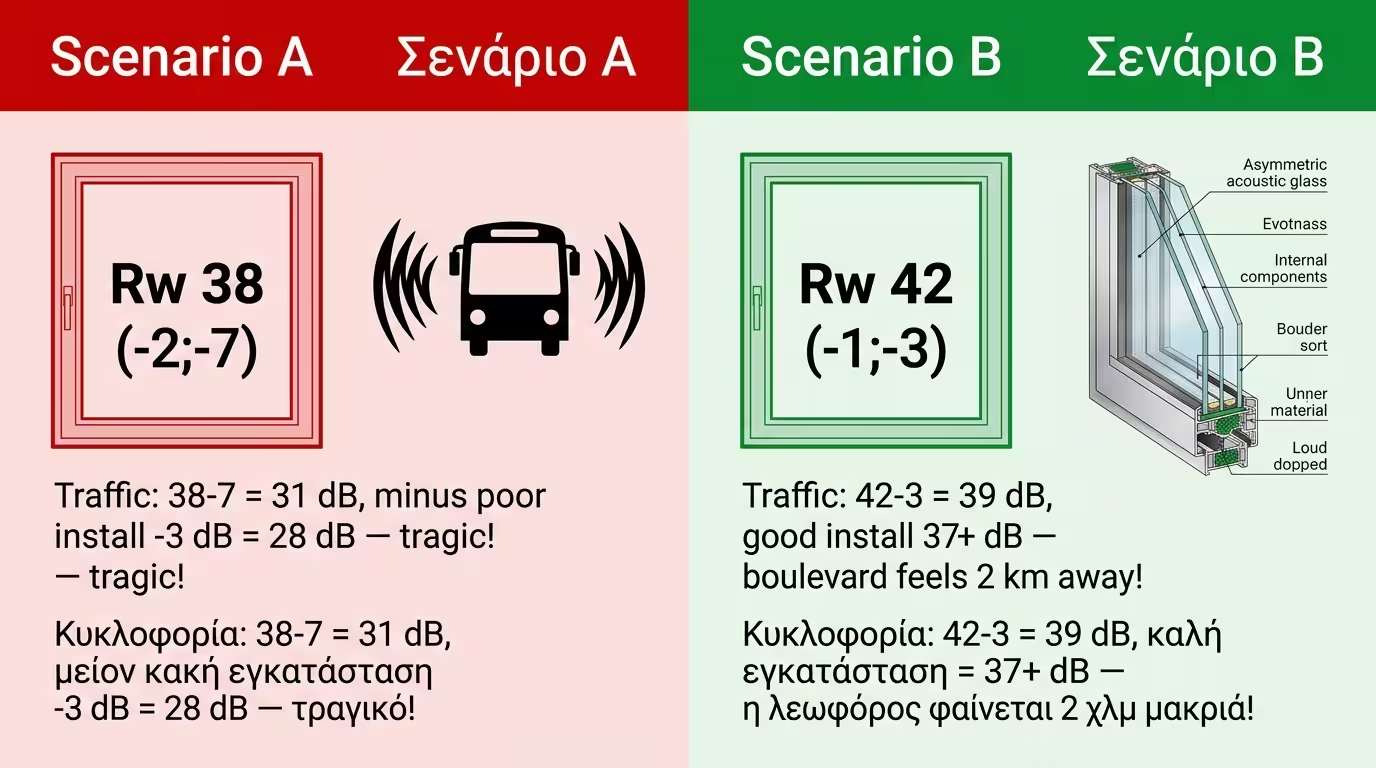
We see an offer: "Sound-insulating Windows Rw 38 dB!". We buy them with eyes closed. We install them. The buses are still terribly annoying! We read the fine print in the technical sheet. It said: Rw 38 (-2; -7). For boulevard traffic (Ctr), their performance was just 31 dB. Combined with poor installation by the fitter (-3 dB), we ended up with 28 dB. Tragic.
We ask for certificates. We reject the first option. We look for windows with special, asymmetric acoustic glass. We find one rated: Rw 42 (-1; -3). Its Ctr is excellent. We know that for buses it'll give us 39 dB (42-3). We supervise the fitter to apply acoustic polyurethane foam and sealant around the perimeter. The result? We close the window and feel like the boulevard has moved 2 kilometres away!
The Bottom Line: STC and Rw numbers are an excellent compass, but they don't always tell the whole truth. If your problem is road noise, bass or motorbikes, don't look at the big number. Look at the small correction factor (Ctr).
Return to category.
Go to categoryReturn to the central guide.
Go to guide