🎯 The Golden Rule
For λ, the smaller number wins! The lower the λ, the better the insulator.
You walk into a building materials store, pick up a polystyrene pack and turn it over to read the label. Instead of simple instructions, you find yourself facing Greek letters, Latin symbols and peculiar fractions: λ, R, U, W/(mK).
Manufacturers do not print these symbols to confuse you. They are the "identity card" of the material. If you learn to distinguish these three magic indices (λ, R, U), no salesman or contractor will ever be able to sell you snake oil. Let us decode the label in plain language.
The symbol λ (or Thermal Conductivity Coefficient) is the king of insulation. It shows how easily the material lets heat pass through, regardless of how thick it is. It is an intrinsic property of the material itself (like colour or weight).
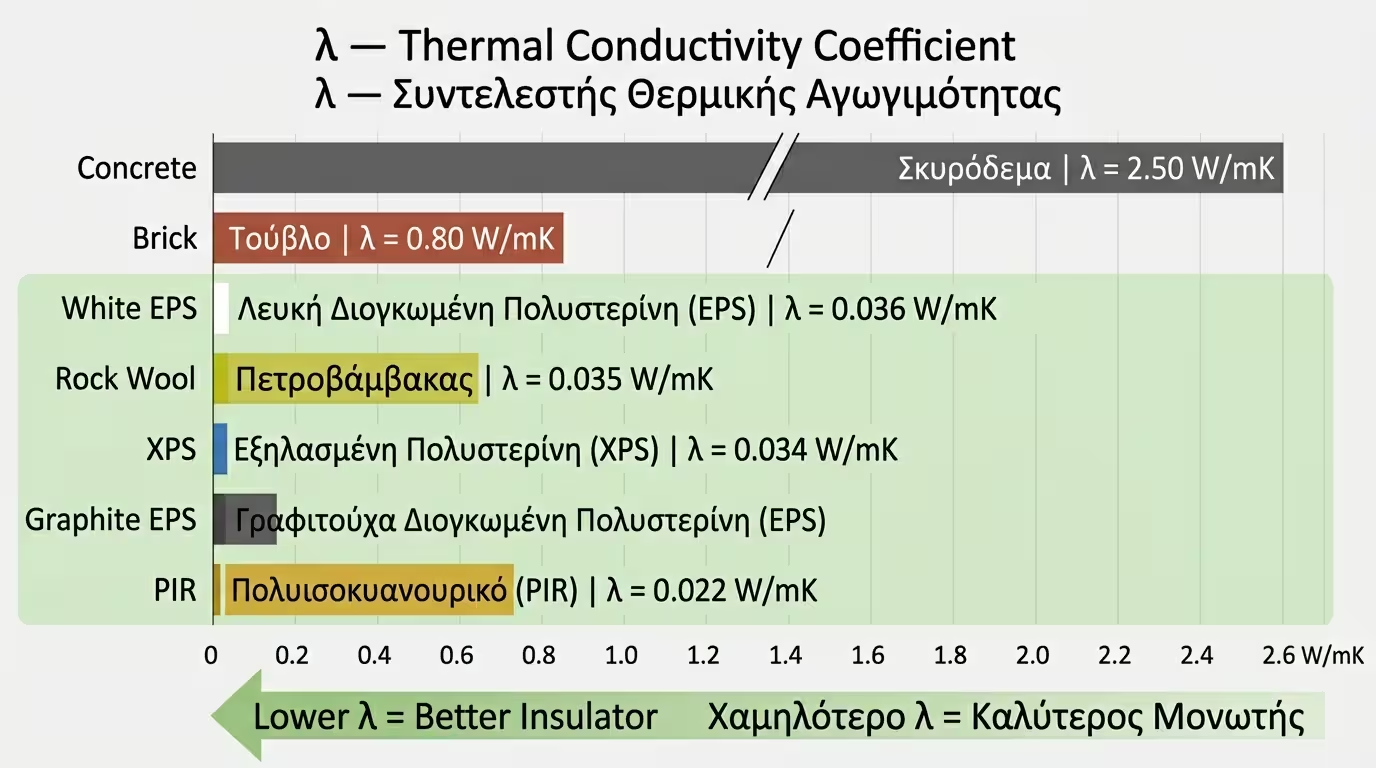
For λ, the smaller number wins! The lower the λ, the better the insulator.
λ ≈ 2.50 W/(mK) - lets heat through very easily.
λ ≈ 0.036 W/(mK) - very good insulator.
λ ≈ 0.031 W/(mK) - even better thanks to graphite.
λ ≈ 0.022 W/(mK) - top performer among conventional materials.
While λ tells us how good the material is "under the microscope," what we really care about is what happens when it becomes a 5 or 10 cm board. That is where Thermal Resistance (R) comes in.
R combines the material quality (λ) with its thickness (d). The formula is simple: R = d / λ (where d is thickness in metres). The Golden Rule: For R, the bigger number wins! The higher the R, the greater the resistance against heat loss.
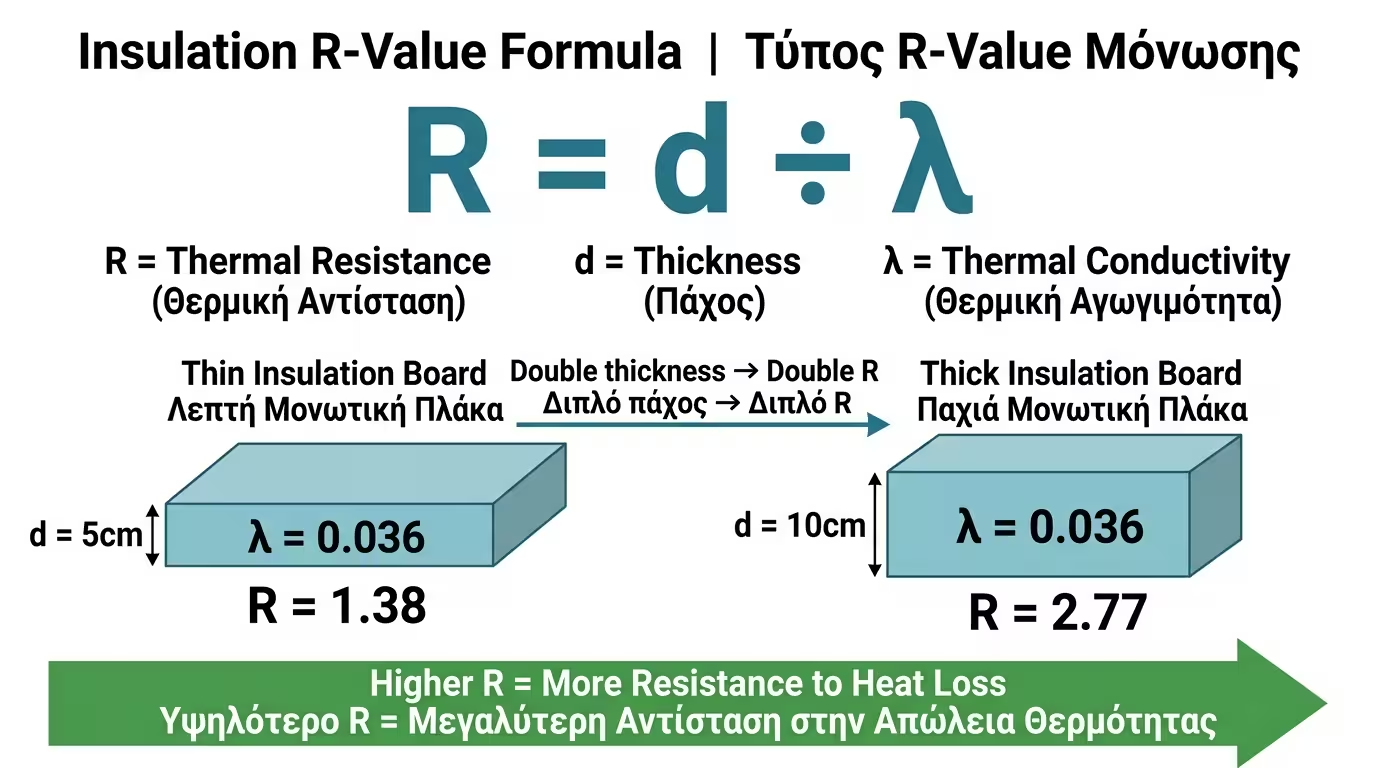
💡 Buying tip: If you are choosing between two materials (e.g. rock wool and XPS), do not just look at the thickness. Check the R value on the label. The one with the higher R will keep you warmer!
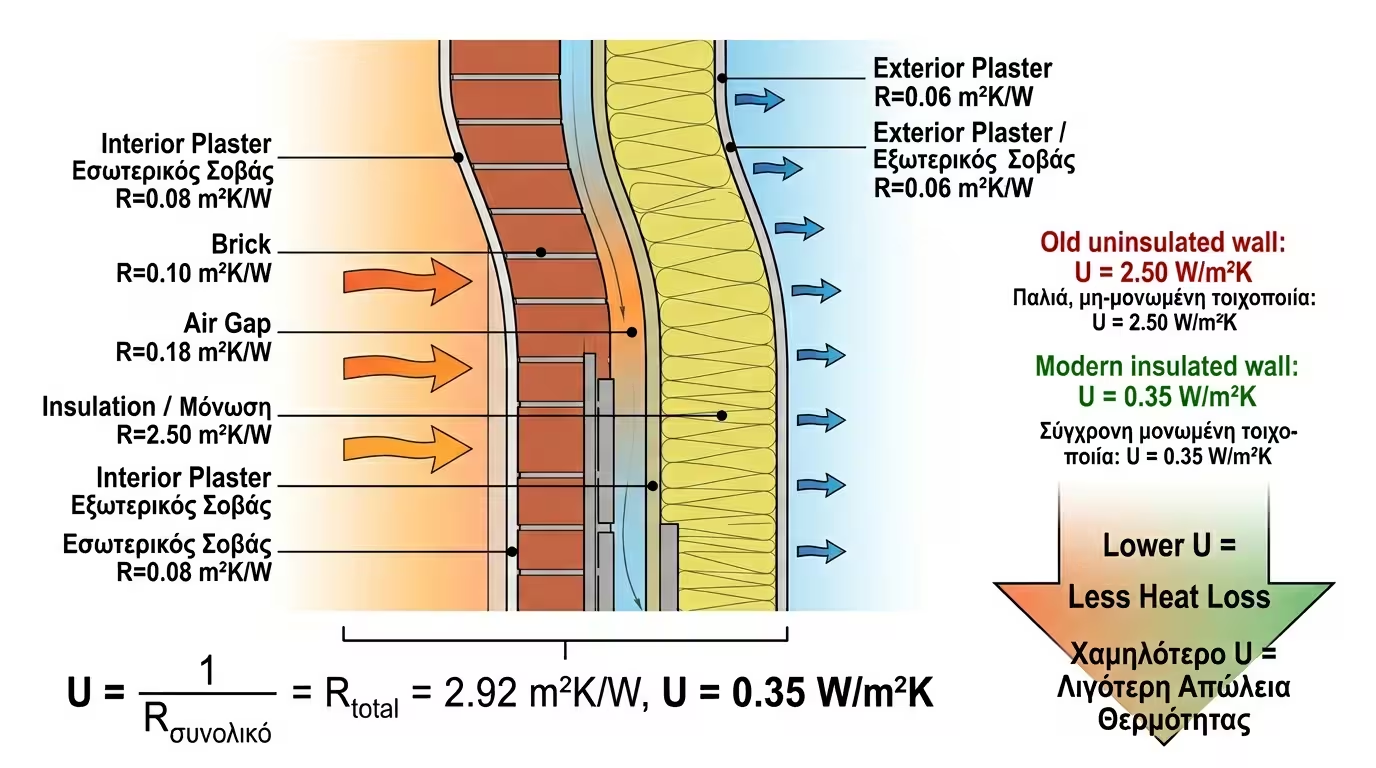
The U-Value (or Thermal Transmittance Coefficient) is the number that truly interests engineers when issuing the Energy Performance Certificate. While λ and R concern only the insulation material on the shelf, U measures the entire wall assembly (bricks, renders, insulation, air gaps, plasterboard). It essentially tells us "how much heat we lose through this specific wall."
For U, the smaller number wins! (It is the inverse of R).
U ≈ 2.50 W/(m²K) - enormous heat losses.
U ≈ 0.35 W/(m²K) or lower - minimal losses.
We are in our digital laboratory and want to buy white EPS for the wall. The salesman shows us two packs, one 5cm thick and the other 10cm. The material is the same, so λ is constant at 0.036.
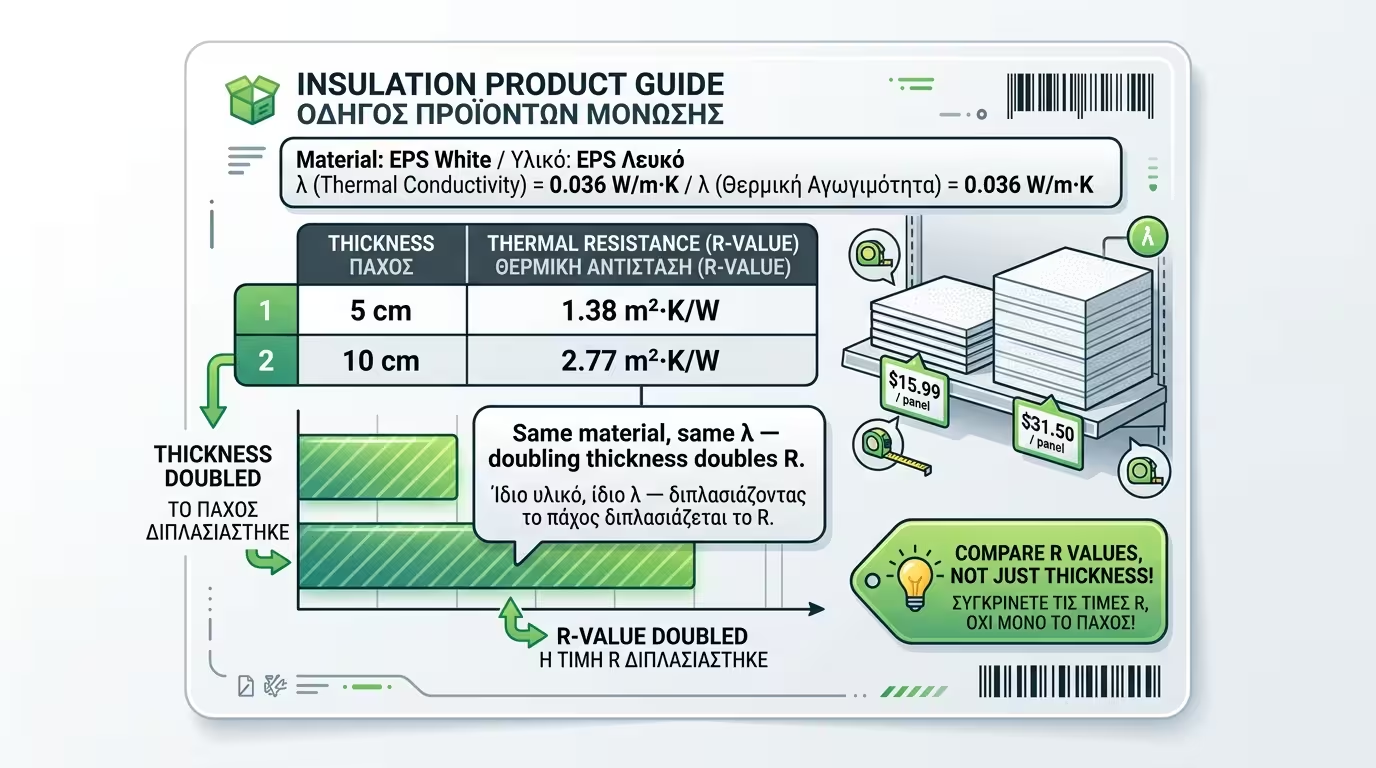
| Thickness | d (metres) | λ | R = d / λ |
|---|---|---|---|
| 5 cm | 0.05 | 0.036 | 1.38 |
| 10 cm | 0.10 | 0.036 | 2.77 |
💡 Result: By doubling the thickness (d), we exactly doubled the material's resistance (R). The 10cm board lets half the heat through compared with the 5cm board. Next time you compare prices: look for the lowest λ if you have a space problem, and the highest R for the best overall insulation.
Return to category.
Go to categoryReturn to the central guide.
Go to guide