🟢 A+ / A / B+
Modern, superbly insulated homes (Nearly Zero Energy Buildings - nZEB). Minimal consumption.
If you have rented, sold or bought a house in recent years, you have surely come across the Energy Performance Certificate (EPC). It is that document with the colourful bars that resembles the labels we see on new refrigerators and washing machines.
For many, the EPC is just another bureaucratic "tax". In reality, however, it is the official state seal of your property's value. It is the proof the buyer or tenant asks for to be convinced that your house will not drain their bank account in winter.
The building is rated on a scale from A+ (absolute perfection) to H (the ultimate energy "sieve").
Modern, superbly insulated homes (Nearly Zero Energy Buildings - nZEB). Minimal consumption.
Moderately insulated homes or old houses that have undergone partial renovation. Medium to high consumption.
Old, completely uninsulated homes with single-pane windows ("energy drains"). Enormous consumption.
The goal of "Exoikonomo" programmes is to raise you at least three energy categories from your starting point.
How does the Ministry's software (TEE-KENAK) decide whether your house deserves an "A" or an "H"?
It does not simply measure how much electricity you burn. The programme creates a perfect digital clone of your house (same square metres and orientation), but with perfect insulation, perfect windows and a perfect heat pump. This is called the "Reference Building" (Category B).
It then compares the losses of your real house with the clone: if your house burns double what the clone does, you fall to categories E, F, H. If it burns half, you soar to A or A+!
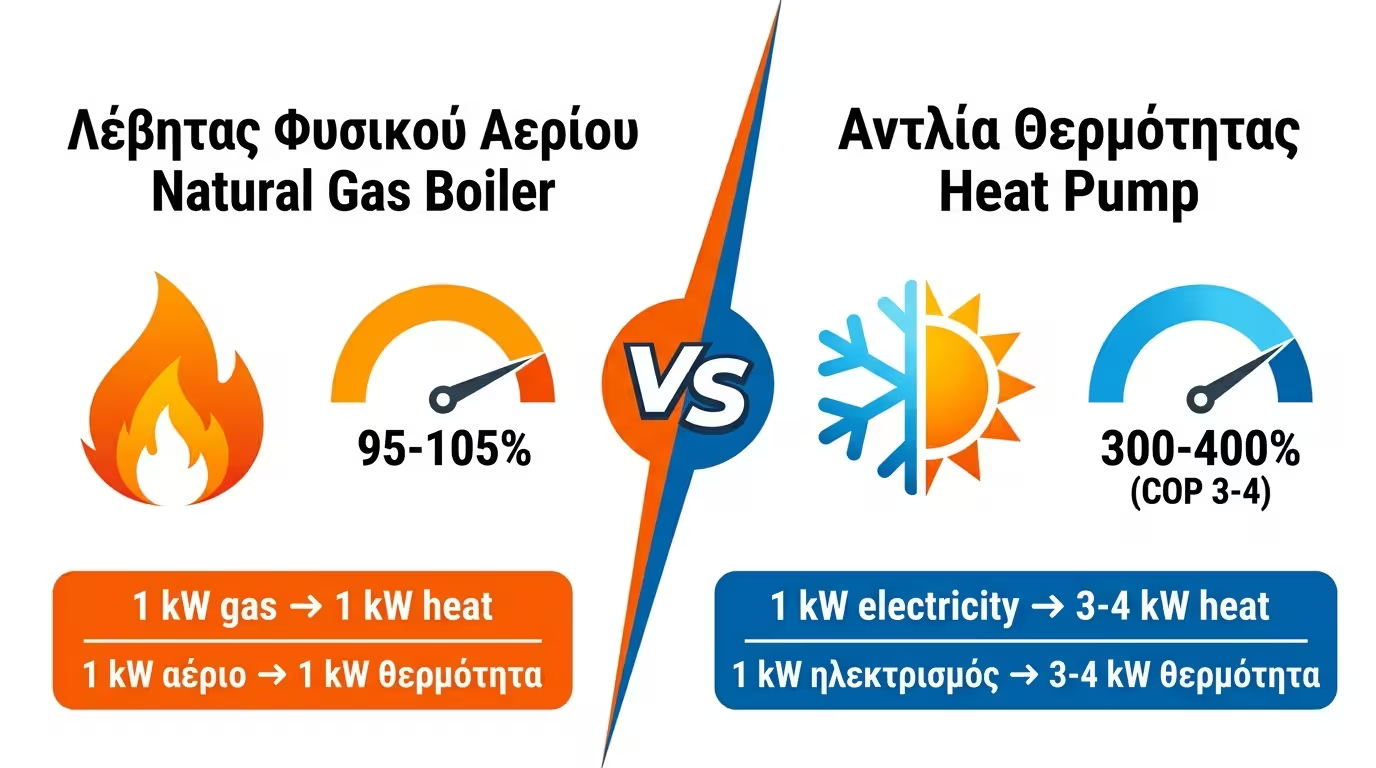
Many homeowners make a huge mistake: they believe that if they install a solar water heater and buy two state-of-the-art air conditioners, they will achieve a B+ certificate. The truth is they will be bitterly disappointed.
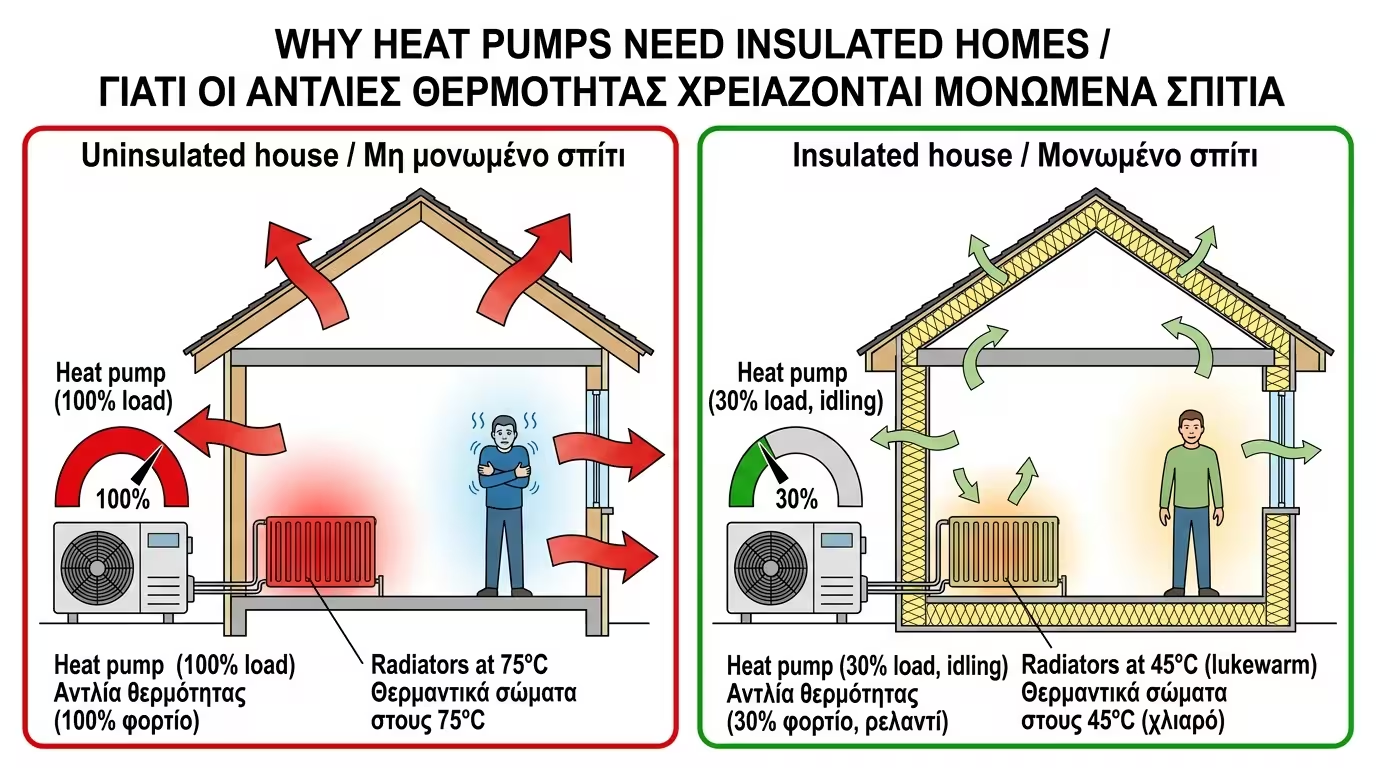
Mechanical systems help, but the Envelope (insulation) carries the greatest weight in the algorithm. Because the walls and roof occupy hundreds of square metres, if they are uninsulated (high U-Value), the house's thermal losses are so enormous that no "smart" air conditioner can offset them. Insulation is the foundation of the rating.
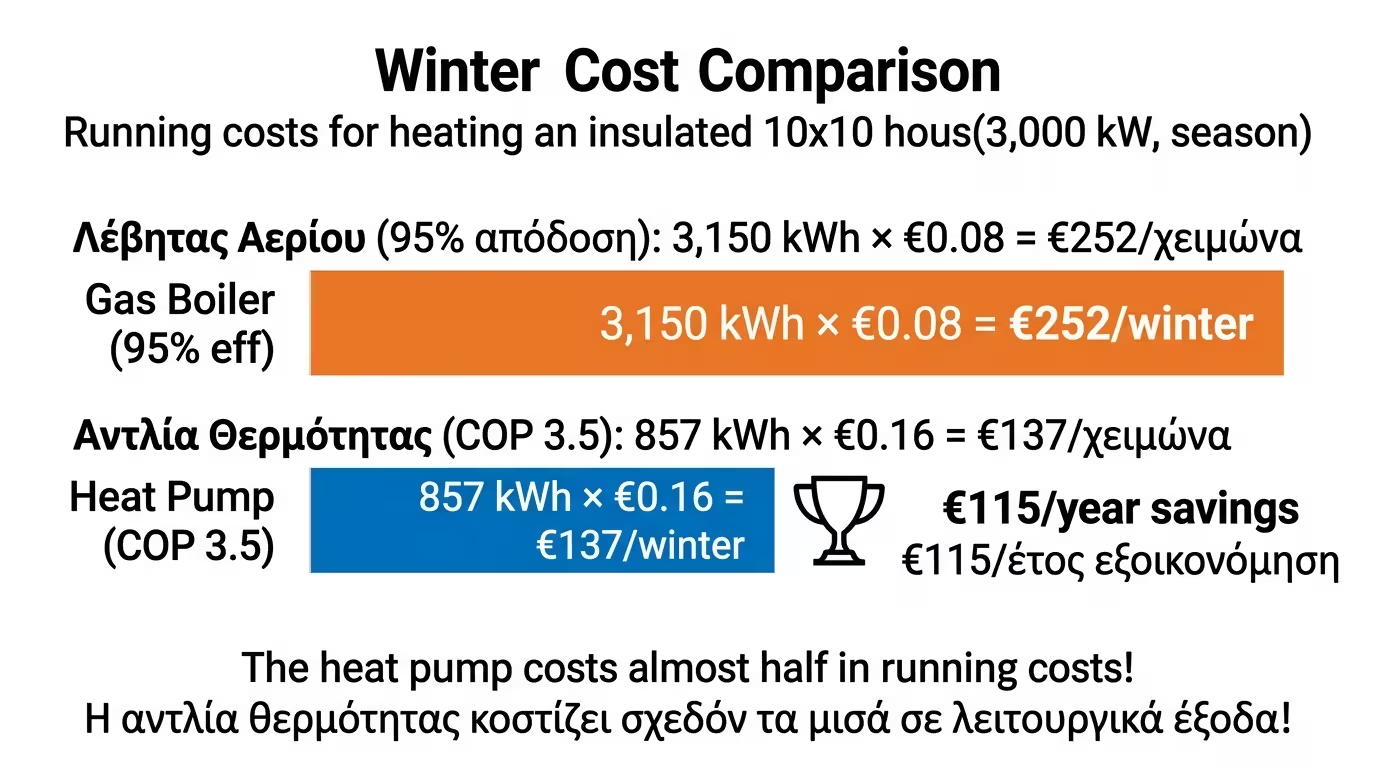
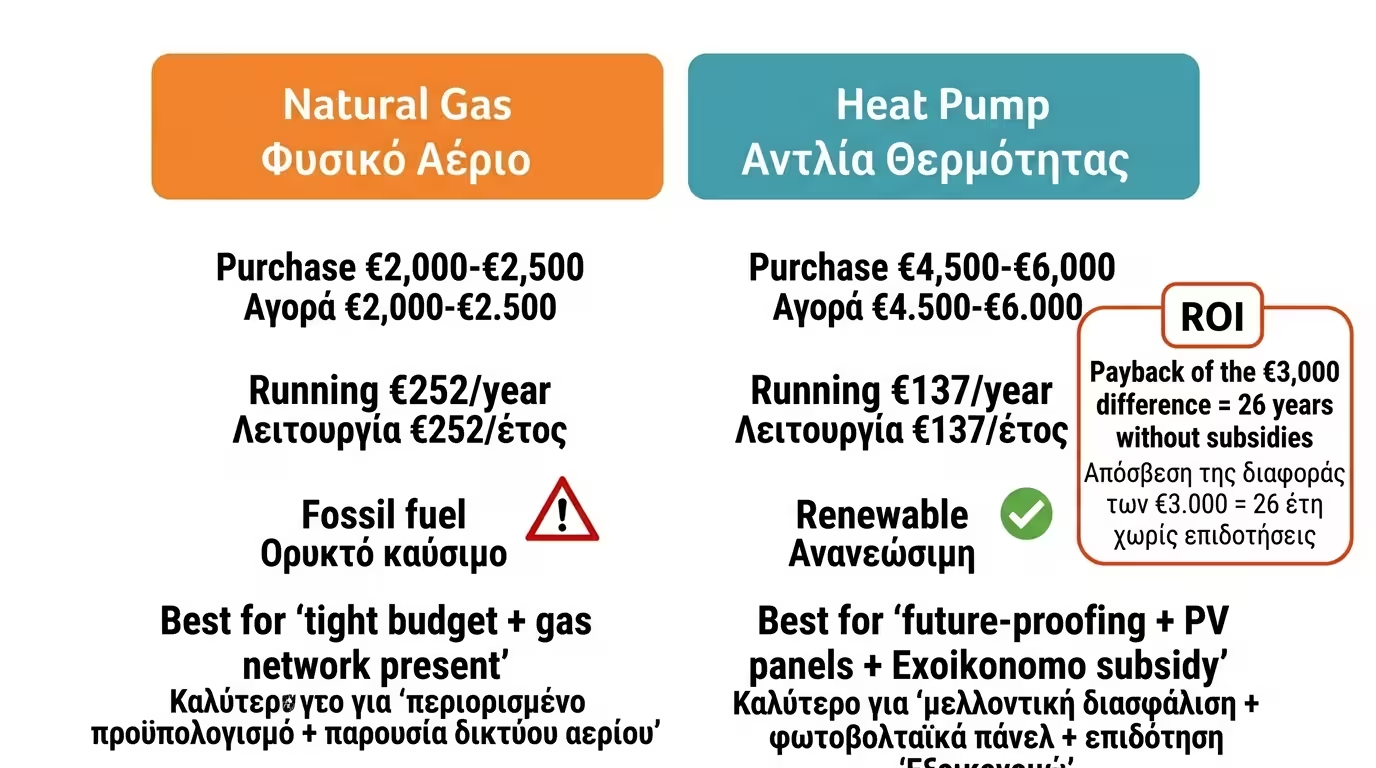
Let us call the Energy Inspector to our 100 m² virtual house to issue an EPC at three different phases of its life.
The house has no insulation, single-pane windows and an old oil boiler.
Result: Category H. The house is red, an energy black hole.
We decide not to insulate because "it costs", but we buy an expensive Heat Pump and a Solar heater.
Result: The house rises only slightly, to Category E. The inspector explains that although the pump is top-notch, it runs flat out to heat the freezing air leaking through the uninsulated walls.
We install an 8cm thermal facade, 8cm roof insulation and energy-efficient windows. We even keep the old oil boiler!
Result: The house rockets to Category C or B! Having sealed the gaps, we minimised the needs. If we now add the Heat Pump, the house reaches Category A, locking in its highest market value!
The Final Conclusion: The EPC is the ultimate mirror of your choices. Always start from "armour" (Insulation, Windows) and leave "production" (Boilers, Pumps) for last. That is how a real Category A house is built!
Return to category.
Go to categoryReturn to the central guide.
Go to guide