Expanded (EPS) vs. Extruded (XPS) Polystyrene: The Ultimate Showdown - Complete Selection Guide

You walk into a building materials store to buy insulation. In front of you, you see massive stacks of white or grey boards, and next to them stacks of blue, green, pink or yellow rigid boards. The salesman tells you both are "polystyrene."

And here the confusion begins: Which one should I pick? Is one better than the other? The answer is that both are top-tier materials, but they were engineered for entirely different jobs. The wrong choice (e.g. using the roof material on the wall or vice versa) can cause anything from mould to total system failure.

1. Meet the Contenders: EPS and XPS

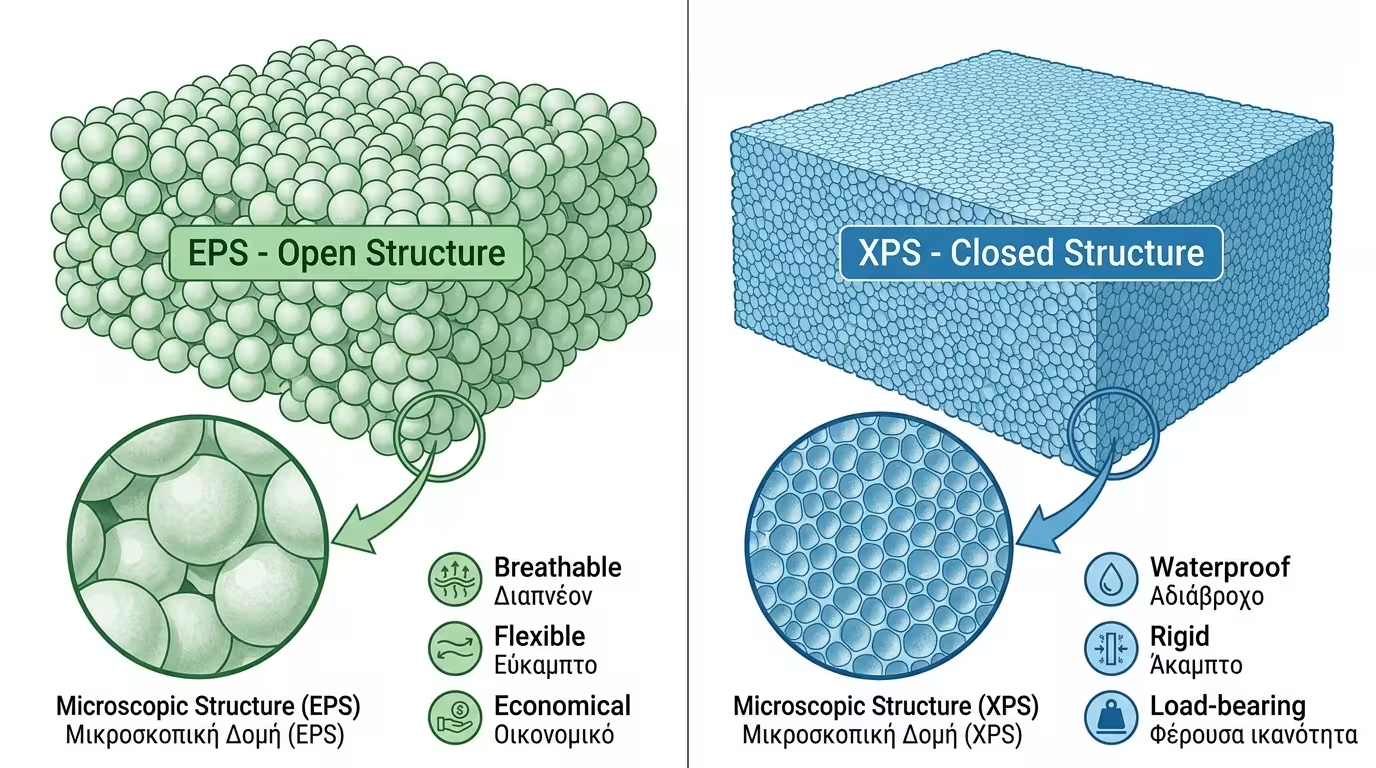
Even though both materials are produced from the same raw material (polystyrene), the way they are manufactured in the factory fundamentally changes their DNA.

EPS vs XPS polystyrene differences - material structure

🟢 Expanded Polystyrene (EPS)

This is the familiar "styrofoam." It is produced from small beads that expand with steam and fuse together, forming the white (or grey graphite) panel. Its superpower: Because trapped air exists between the expanded beads, the material breathes. It has an open structure, allowing the water vapour from your home to pass through and escape to the environment. It is also more flexible and very economical.
🔵 Extruded Polystyrene (XPS)

These are the well-known coloured, rigid panels (Dow, Fibran etc.). They are produced through a continuous extrusion process (like pushing a hot mass through a mould). This creates a closed-cell structure. Its superpower: It is practically waterproof. Even if you submerge it in a swimming pool, it will not absorb water. It is also extremely rigid and can bear enormous loads without compressing.

2. The Comparison: Where Does Each One Win?

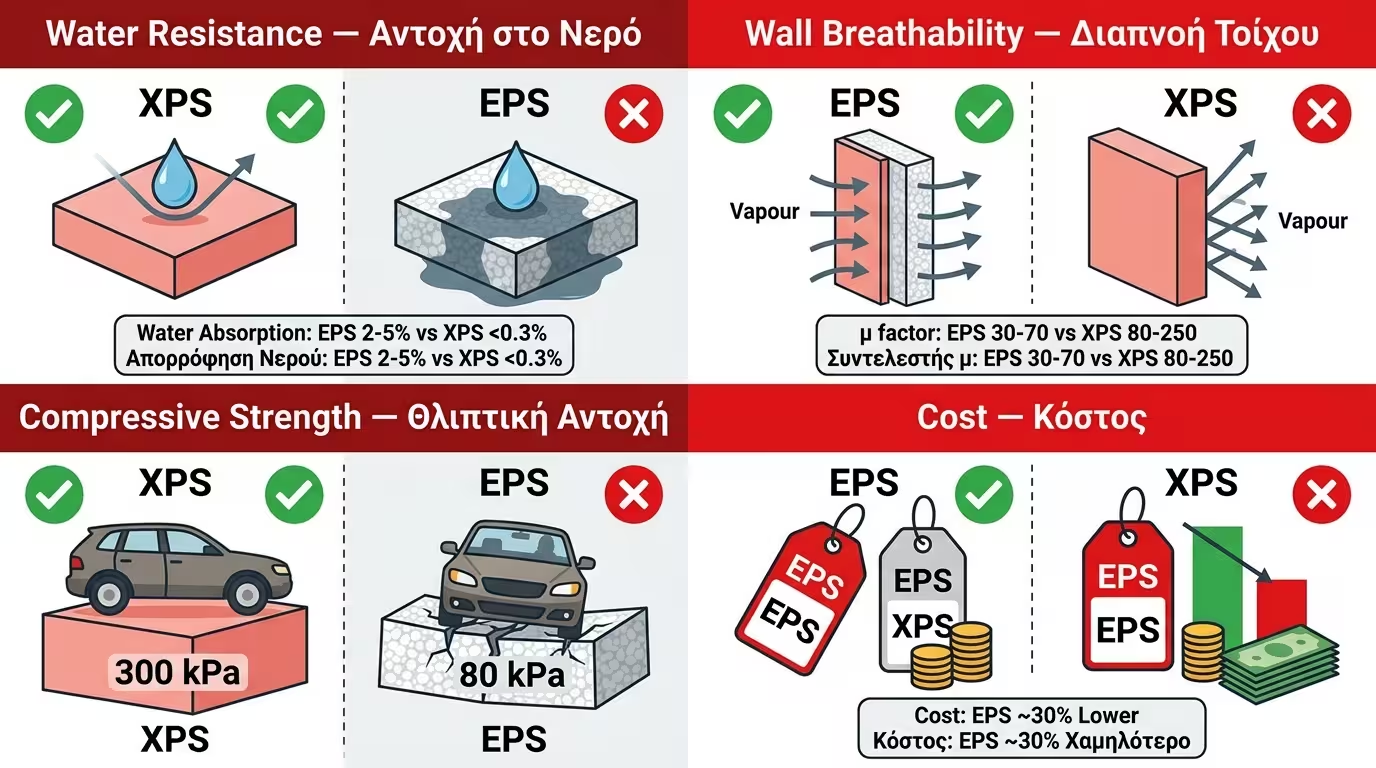
Let us put them side by side in the most critical construction tests. Each material excels in different scenarios - the goal is to choose the right material for the right application.

EPS vs XPS comparison - water, breathability, load and cost

💧 Water Resistance (Winner: XPS)

If an EPS board is permanently submerged in water (e.g. on a flat roof that pools), over the years it will absorb moisture and lose its insulating ability. XPS, on the other hand, "laughs" in the face of water. It is the undisputed champion of moisture resistance.

🌡️ Wall Breathability & Mould (Winner: EPS)

Our homes produce water vapour. If you wrap your entire house externally in XPS, you essentially seal it inside a waterproof bag. Moisture cannot escape, condenses on the walls and creates mould. EPS, because it "breathes", allows the house to dry naturally.

🏗️ Load Bearing / Compression (Winner: XPS)

If you place EPS on a garage floor and drive a car over it, the material will "sink" (collapse). XPS has such high compressive strength that it is used under industrial floors, roads and car parks!

💰 Cost (Winner: EPS)

EPS is significantly easier and cheaper to produce. On large surfaces such as building walls, choosing EPS drastically reduces the budget for the insulation project.

3. The Golden Rule of Application: What Goes Where

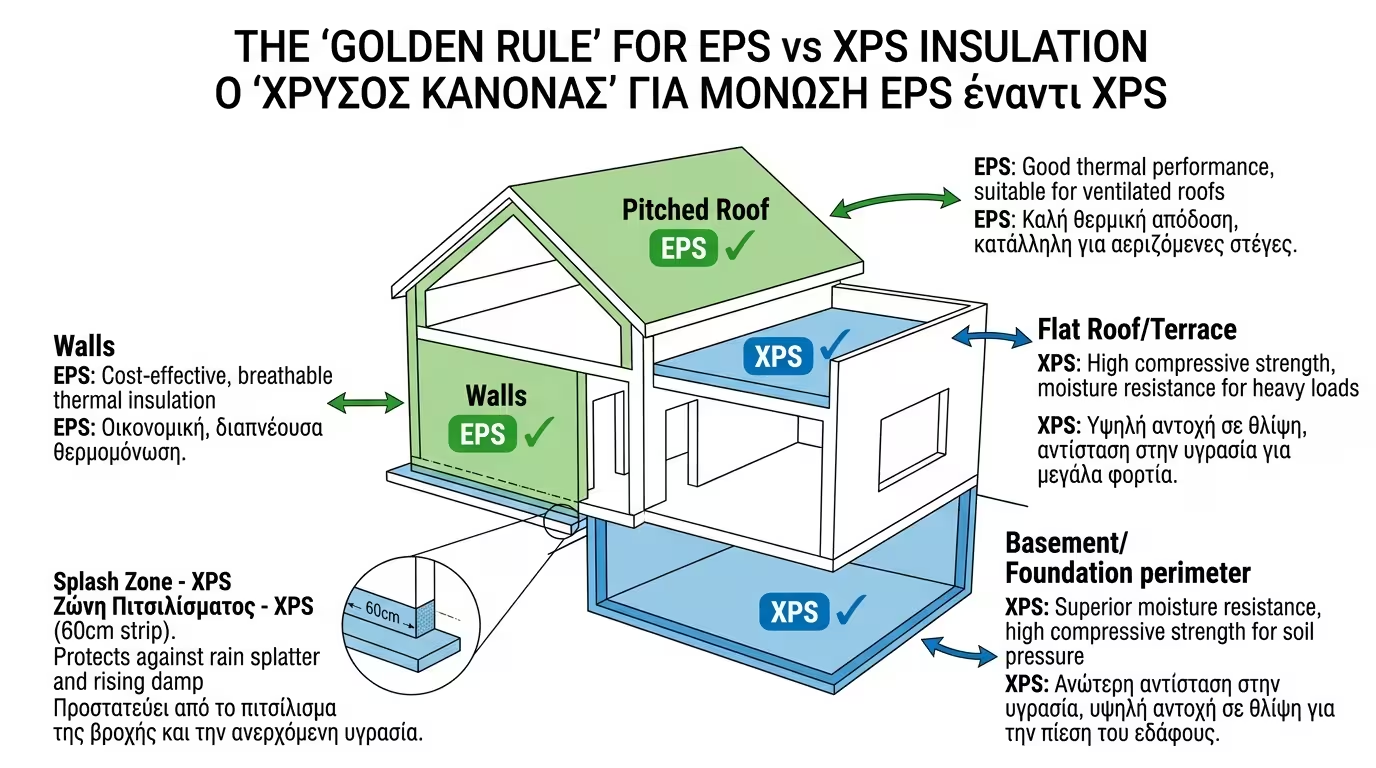
Golden rule of EPS vs XPS application - walls vs rooftops

Based on the above, construction science has arrived at a very simple, inviolable rule for where we use each material.

✅ ALWAYS Use EPS (Expanded)

On external walls (ETICS thermal insulation systems) and pitched tile roofs. We want the building to breathe, to have flexibility for thermal expansion-contraction and to keep costs low. The only exception: the bottom of the wall, the "high protection zone" that touches the ground and gets rain splash, where we use a strip of XPS.

✅ ALWAYS Use XPS (Extruded)

Where there is water and pressure. On flat roofs (especially inverted roofs where insulation is exposed to rain), in basements (perimetrically buried in soil) and on floors / pilotis.

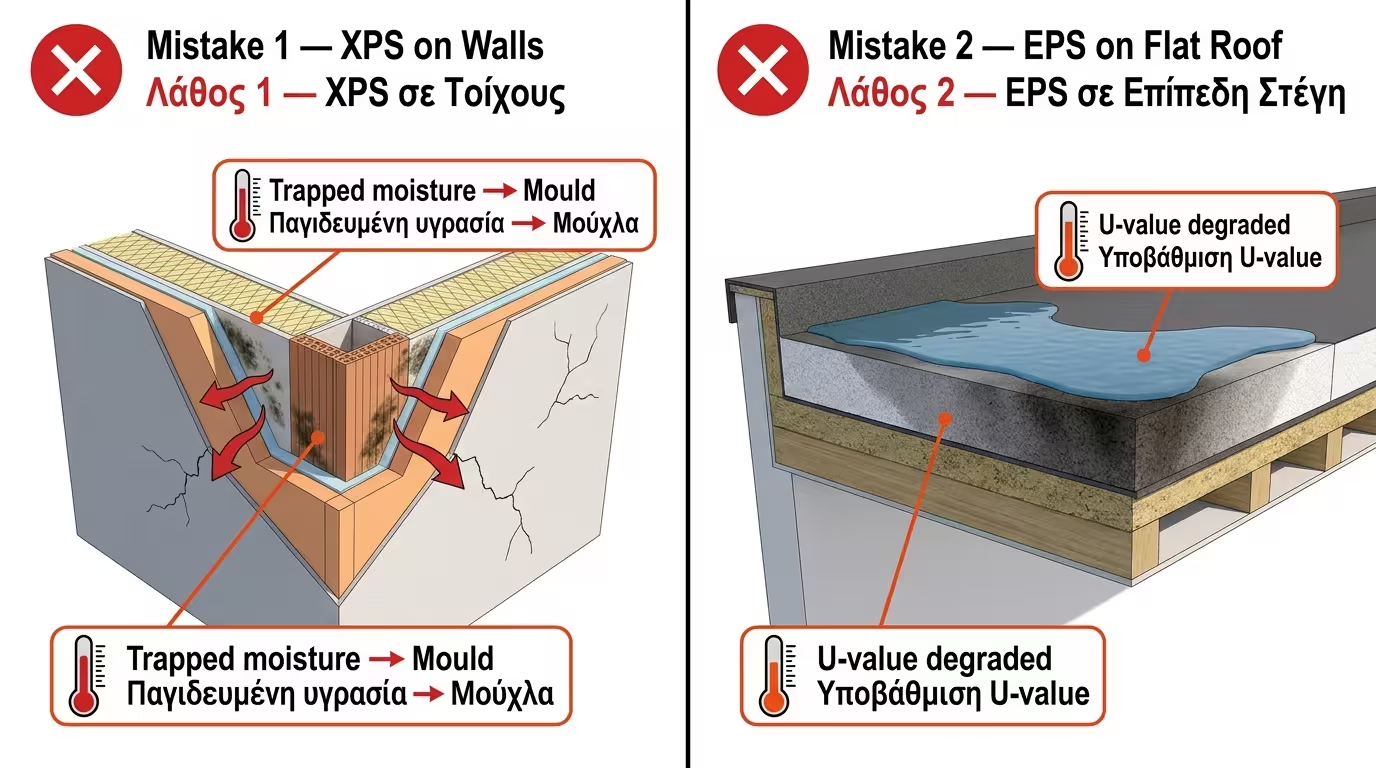
4. The 10x10 Model Experiment: What Happens with the Wrong Choice

Let us take our digital laboratory and deliberately make the wrong choices - applying the wrong materials intentionally to see the consequences.

10x10 Model - results of wrong EPS vs XPS choice

❌ Mistake 1: XPS on External Walls

We dress the walls externally with blue XPS because we believe "the more expensive, the better." The house seals up. In the first winter, moisture from cooking and bathing cannot escape, condenses, and the corners of the house fill up with black mould. Furthermore, due to XPS's rigidity, the external render quickly develops cracks in the sun.

❌ Mistake 2: EPS on the Flat Roof

We put cheap white EPS on our flat roof without perfect waterproofing. In winter, water pools up. The EPS "soaks up water like a sponge". Water is an excellent heat conductor. The roof insulation is completely nullified and the top floor freezes.

💡 Conclusion: There is no "better" material overall - there is only the right material for the right place. Do not let any contractor put XPS on your walls (except for cavity wall core insulation) and do not accept plain EPS in areas with standing water.

Related Articles

Insulation Materials: The Complete Selection & Characteristics Guide

Return to category.

Go to category

Preview