❄️ The Snow
The material shatters, filling the site with thousands of white beads.
The thermal facade is like an enormous jigsaw puzzle. Because houses have windows, doors, pipes and corners, the insulation boards (EPS/XPS) rarely fit whole. They must be cut to the wall's dimensions.
The way these boards are cut is one of the biggest secrets to a completely airtight and efficient insulation system.
The traditional, fast (and entirely wrong) method many crews use is the blade or hand saw. When you cut EPS (expanded polystyrene) with a saw, two disastrous things happen:
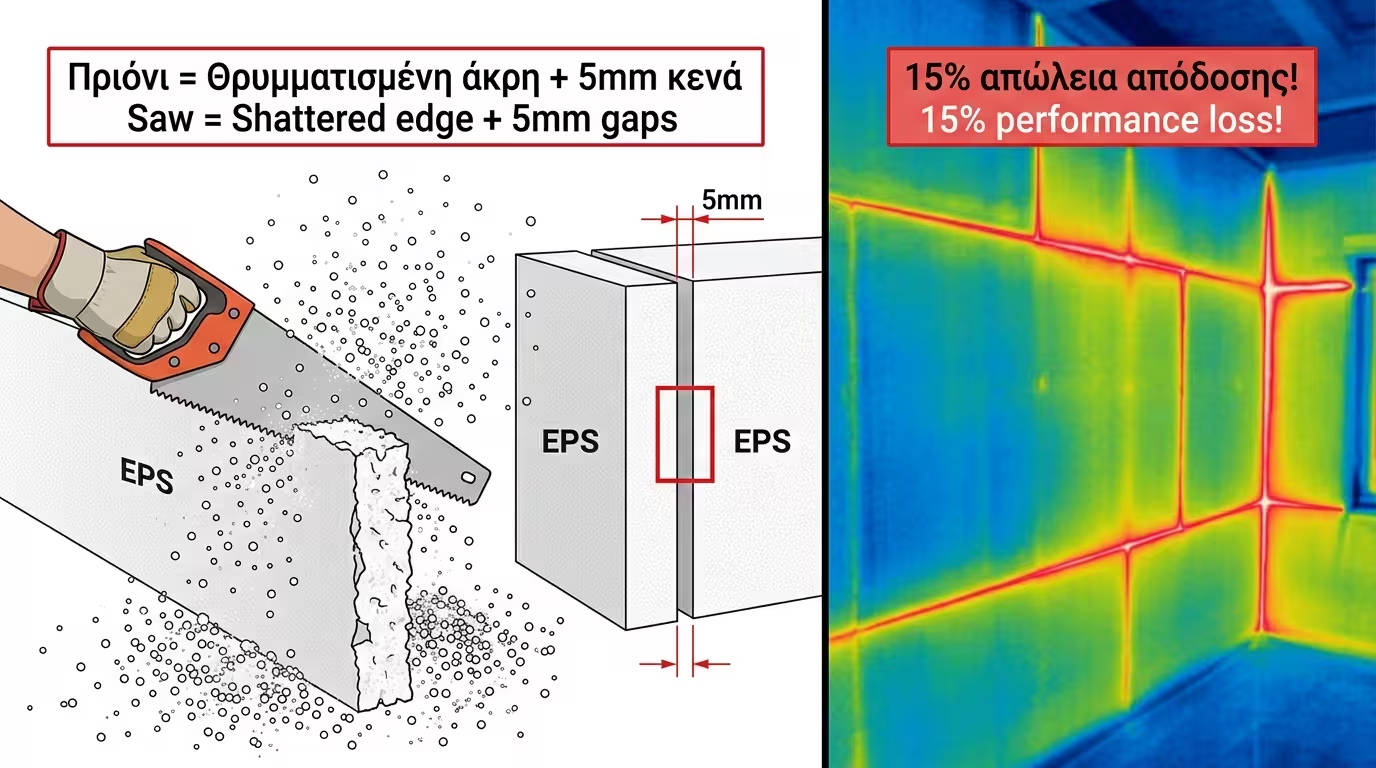
The material shatters, filling the site with thousands of white beads.
It is impossible to make a perfect, straight 90° cut by hand with a saw. The edge comes out "chewed" and crooked. When you try to join this board with the next, they do not interlock perfectly. They leave a gap of 2, 3 or even 5 millimetres between them!
What does the bad worker do with this gap? He fills it with mortar (adhesive)! But adhesive is not insulation material. He just created a linear thermal bridge (the notorious Ψ-Value) that pierces the full thickness of your insulation!
The correct, certified ETICS installer never shows up on site with saws. He brings a hot-wire cutting machine. This tool looks like a cutting bench, but instead of a blade it has a taut, incandescent wire.
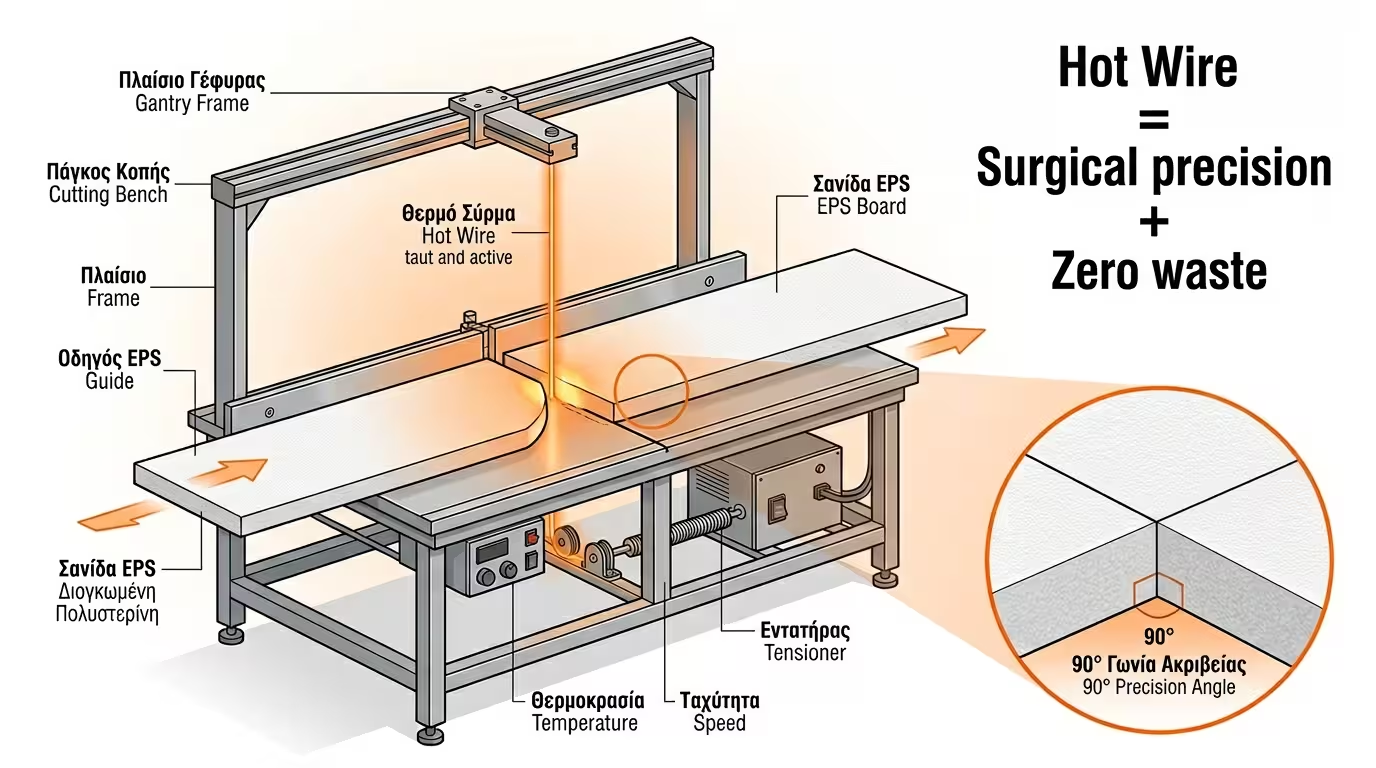
The hot wire does not "cut" the polystyrene, it melts it. It passes through the board like a hot knife through butter.
Not a single polystyrene bead falls on the floor. The site stays spotless.
The machine cuts with millimetre surgical precision at perfect angles. When the boards join on the wall, they fit so tightly that not even a banknote can pass between them. The thermal envelope is 100% impenetrable.
Even with the best tools, a crooked wall may force the boards to leave a 2-3 mm gap between them.
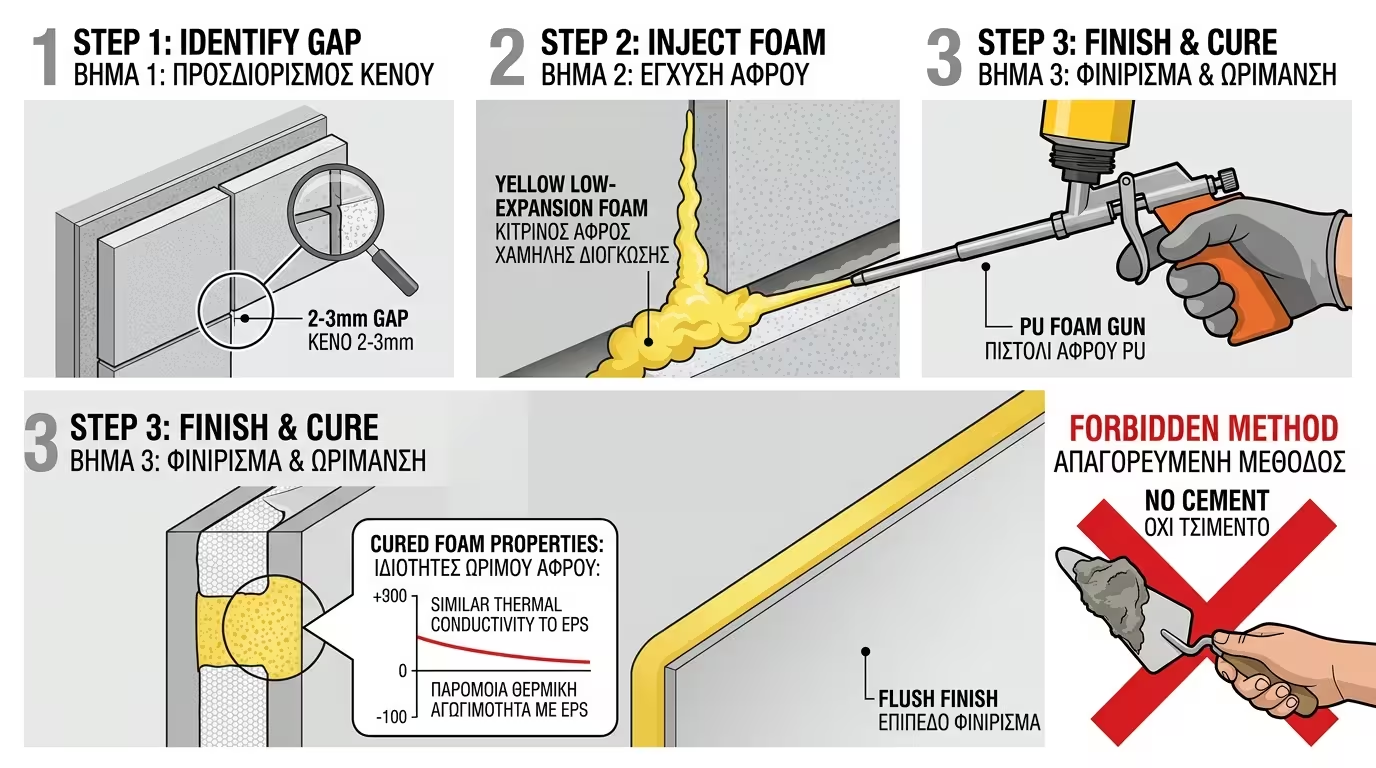
It is FORBIDDEN to fill this gap with cement-based adhesive or render! The solution is one: low-expansion polyurethane foam. The worker inserts the gun deep into the joint and fills it with foam. When cured, the foam has excellent thermal properties (U-Value) similar to polystyrene. The gap is thus filled with insulation, not conductive cement!
We reach the point where we need to clad around the windows of the house (where many cuts are required).
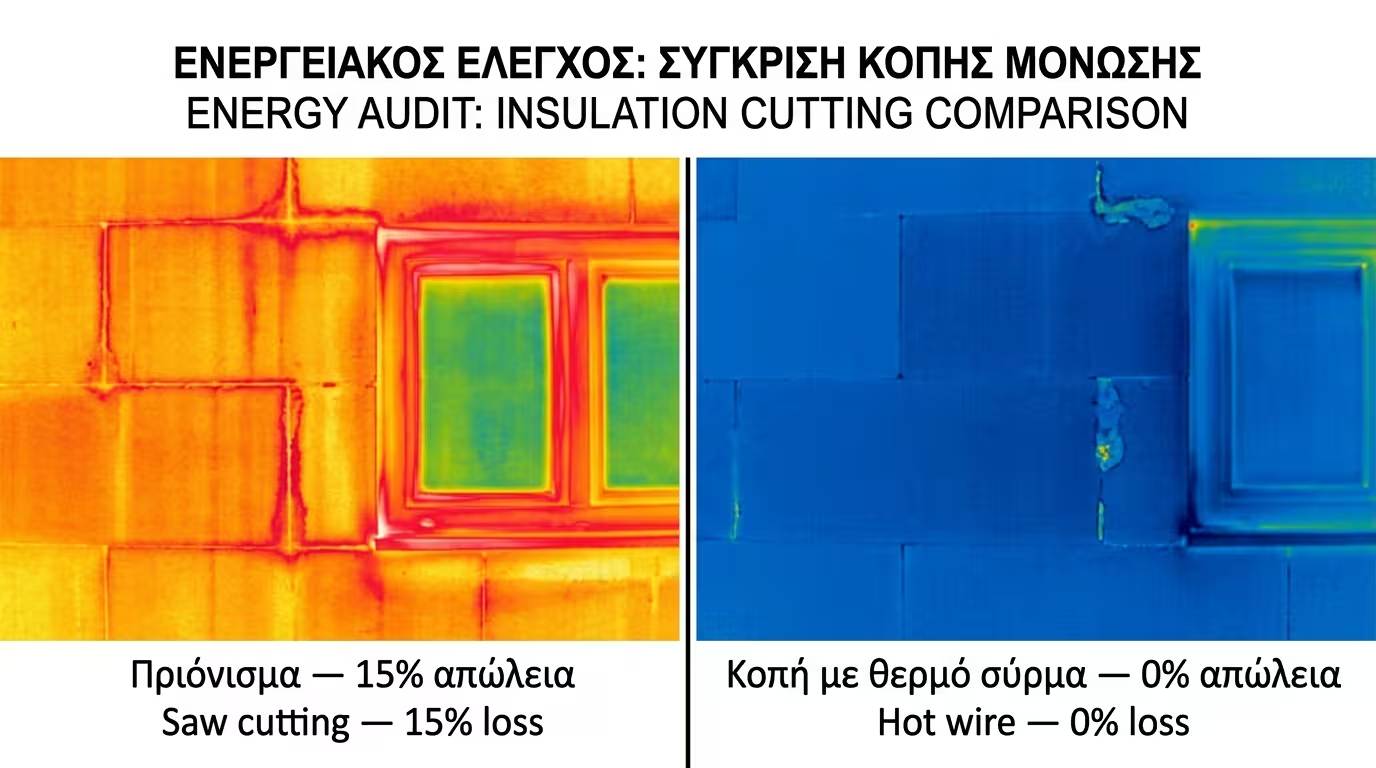
The worker cuts the pieces with a saw. The yard fills with "snow". The pieces go in crooked, leaving 5 mm joints. He fills them with adhesive. In winter, the thermal camera shows that every board outline "glows" red! We have created an enormous web of thermal bridges, losing 15% of the system's total performance.
The professional sets up the Hot Wire bench. He cuts the boards perfectly level. He fits them to the wall. The result is so precise that the wall looks like it was clad with a single, giant piece of polystyrene with no joints. The 1-2 tiny gaps remaining are sealed with PU foam. The thermal camera in winter shows the entire wall in a deep blue. Absolute success!
The Final Conclusion: The right tool does not simply make the worker's life easier. It determines the final energy performance of your home. When requesting quotes, ask this simple question: "What do you cut the boards with?". If the answer is not "a hot-wire cutter", look for another crew!
Return to category.
Go to categoryReturn to the central guide.
Go to guide