📺 TV and Computer
A large desktop computer and a big LED TV can easily add another 150 to 300 Watts of heat to the room while operating.
According to the First Law of Thermodynamics, energy is never lost, it simply changes form. Almost all energy (whether electricity from the socket or calories from the food we eat) ultimately converts into heat.
When this heat is trapped inside the four walls of our home, it reduces the work the main heating system must produce. But what are these "hidden" heating devices?
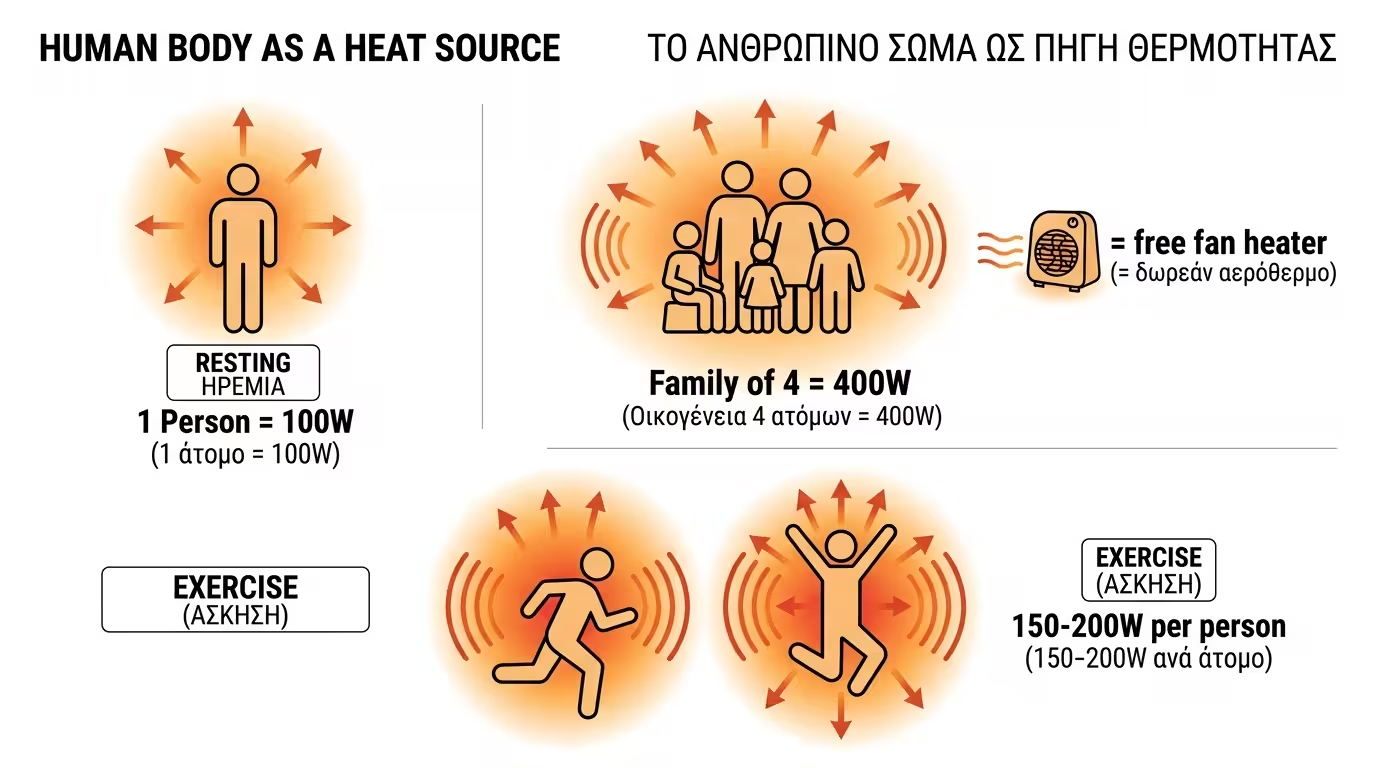
An average adult at rest (e.g. sitting on the sofa watching TV) emits approximately 100 Watts of thermal energy into the environment. If you are a family of four sitting together in the living room in the evening, you collectively produce 400 Watts of heat. It is literally like having a small electric fan heater on its lowest setting, completely free! (If you exercise or do housework, the output increases to 150-200 Watts per person).
Every appliance plugged in consumes electricity and emits heat.
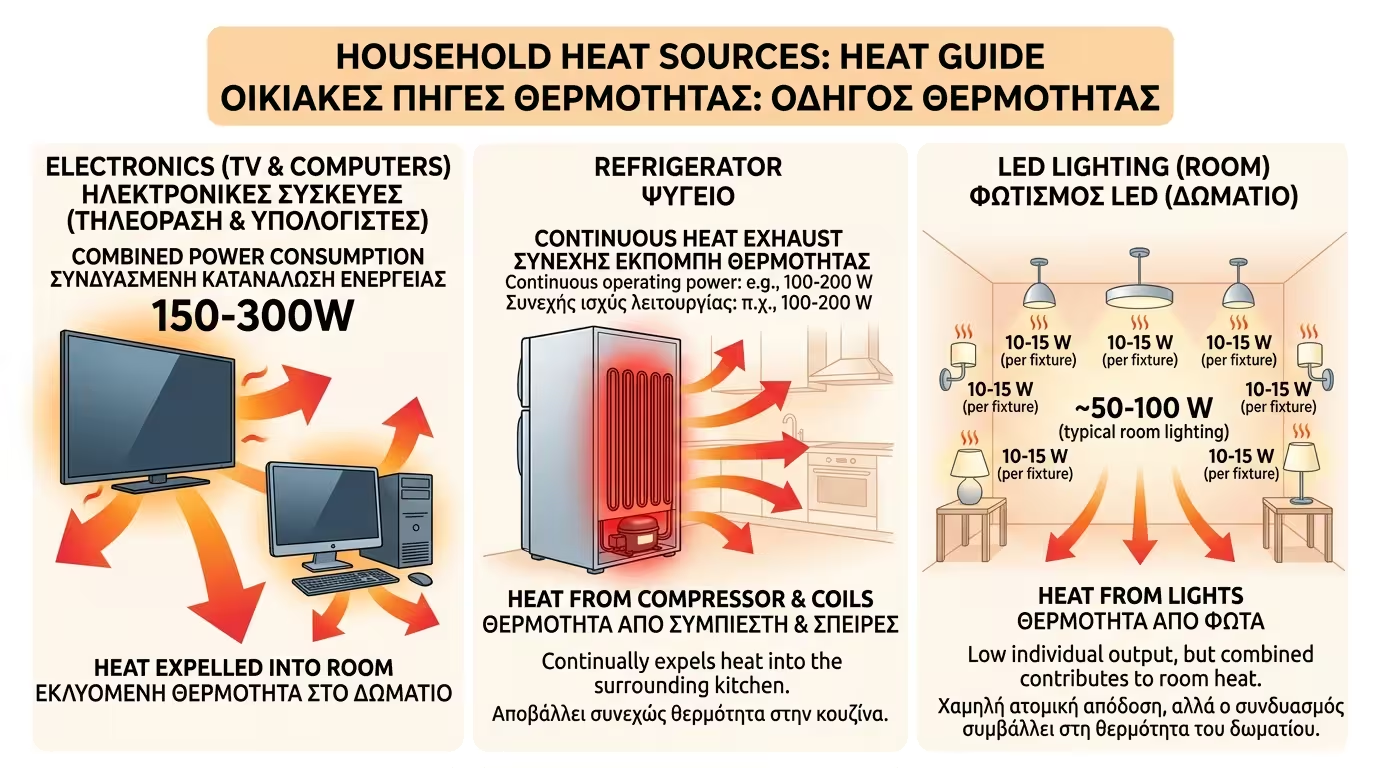
A large desktop computer and a big LED TV can easily add another 150 to 300 Watts of heat to the room while operating.
It may freeze food inside, but to do so it continuously expels heat from its rear (the compressor) into your kitchen!
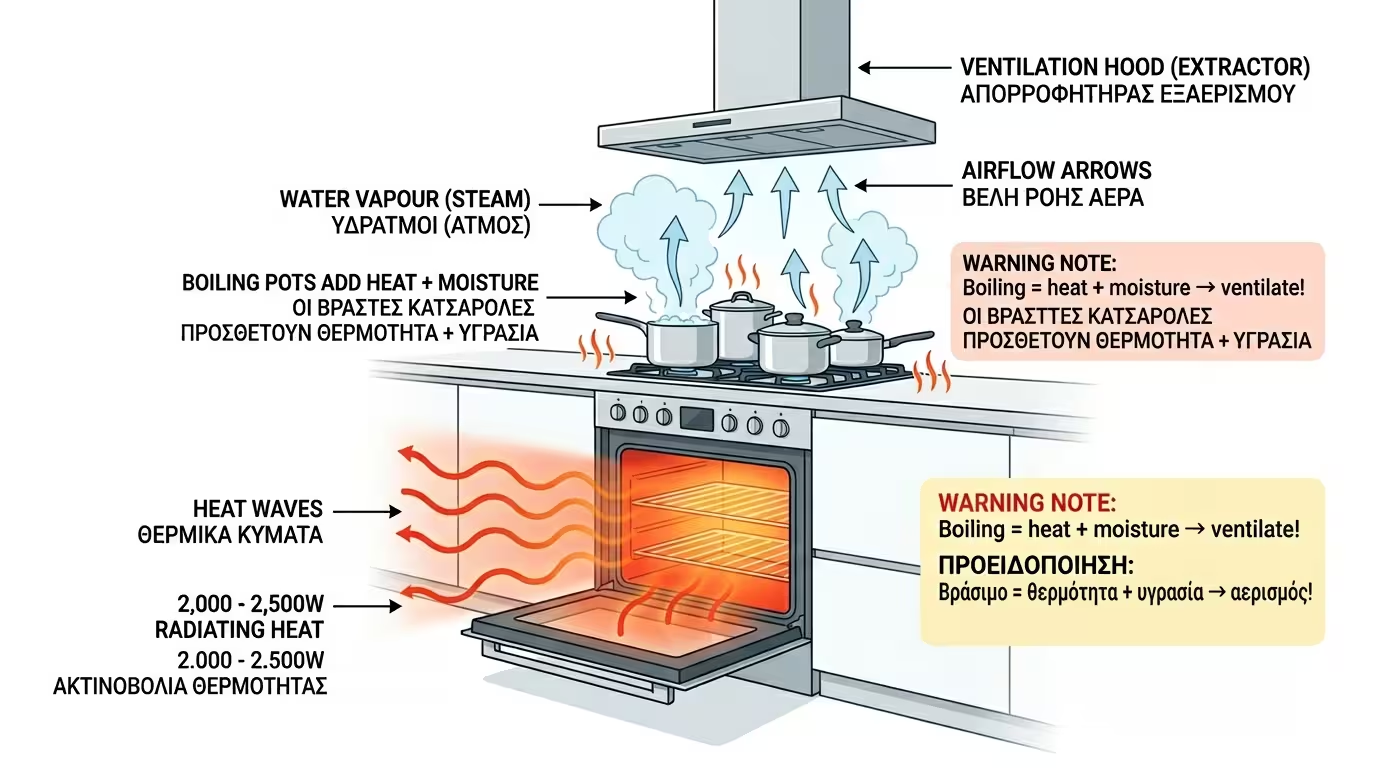
Cooking is the largest source of internal gains. If you turn on your oven (approximately 2,000 to 2,500 Watts) to cook a meal for an hour and a half, the oven will radiate a massive wave of heat into the room. Meanwhile, boiling in pots adds heat (but also water vapour, so ventilation is needed).
In old, uninsulated homes (the "sieves"), those 400 or 800 Watts from family and appliances escaped directly through gaps and frozen walls. They never had time to raise room temperature, so we thought they didn't exist.
In a modern, perfectly insulated home (or Passive House), heat leakage is zero. This free heat gets trapped inside. That's why, when you throw a party with 10 guests in winter, you end up… opening the windows, because the home bursts with heat (10 people × 100W = 1,000W of free heating)!
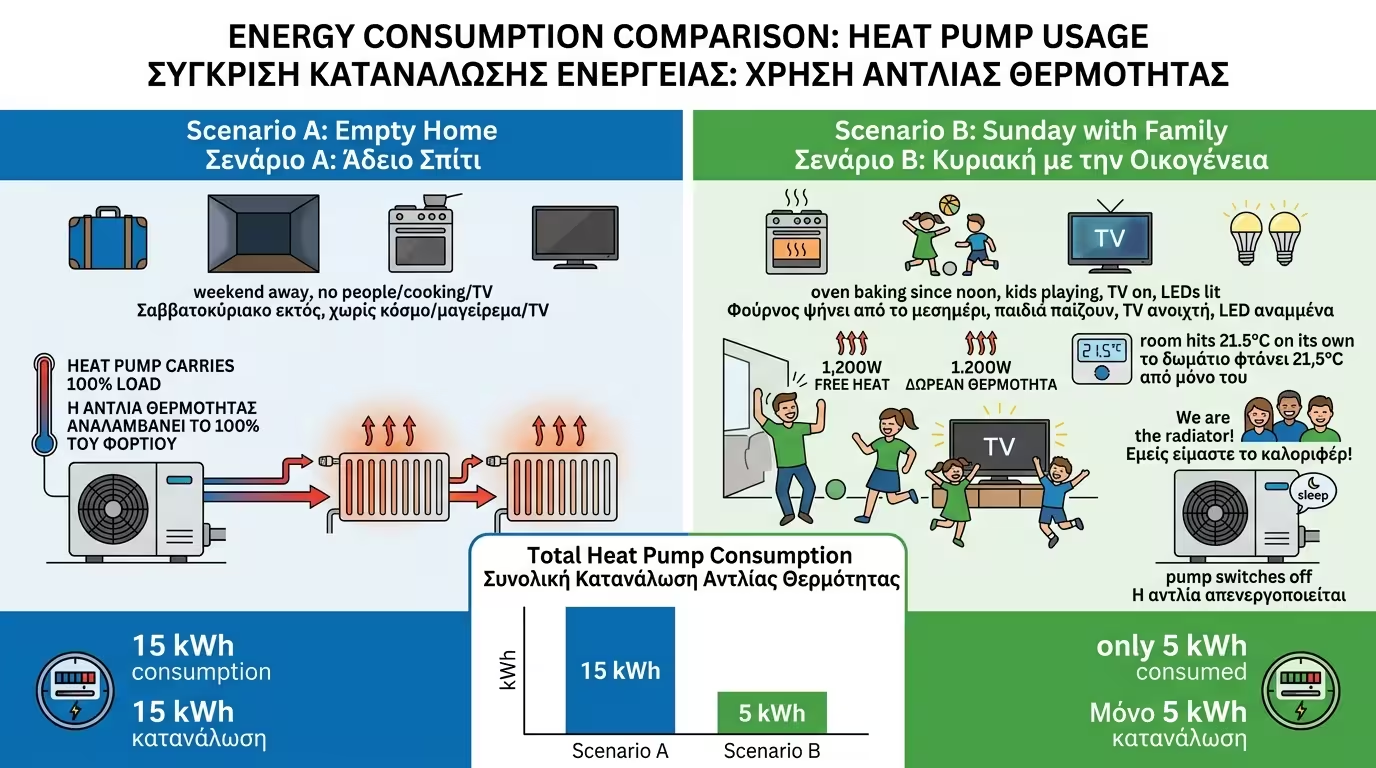
Our perfectly insulated apartment has the thermostat pinned at 21°C. Outside it is 8°C.
We go to the village for the weekend. The home is empty. No one cooks, no people, TVs are off. The heat pump takes on 100% of the load to maintain 21°C. It consumes, let's say, 15 kWh of electricity.
We are all home. The oven has been baking since noon. Two children play in the living room, the TV is on, LED lights are lit. Collectively, we produce about 1,200 Watts of "free" heat. This heat raises the living room temperature to 21.5°C on its own! The heat pump "sees" it's already warm and… switches off! In the afternoon we consumed just 5 kWh for heating. We ourselves were the radiator!
The Final Conclusion: Don't underestimate the power of everyday life. Internal heat gains in a well-insulated building can cover 15% to 30% of total winter heating needs!
Return to category.
Go to categoryReturn to the central guide.
Go to guide