🌡️ The Attack (14:00)
Maximum external heat strikes the building.
In the previous article we saw how heavy materials store heat like batteries. Now, we will set a stopwatch on that process. In building physics, this time delay is called Thermal Time Lag (or Phase Shift) and is perhaps the most critical indicator for designing a house in warm climates like Greece's.
If thermal resistance (the U-Value) is the king of winter, time lag is the undisputed emperor of summer. Let us see how it works.
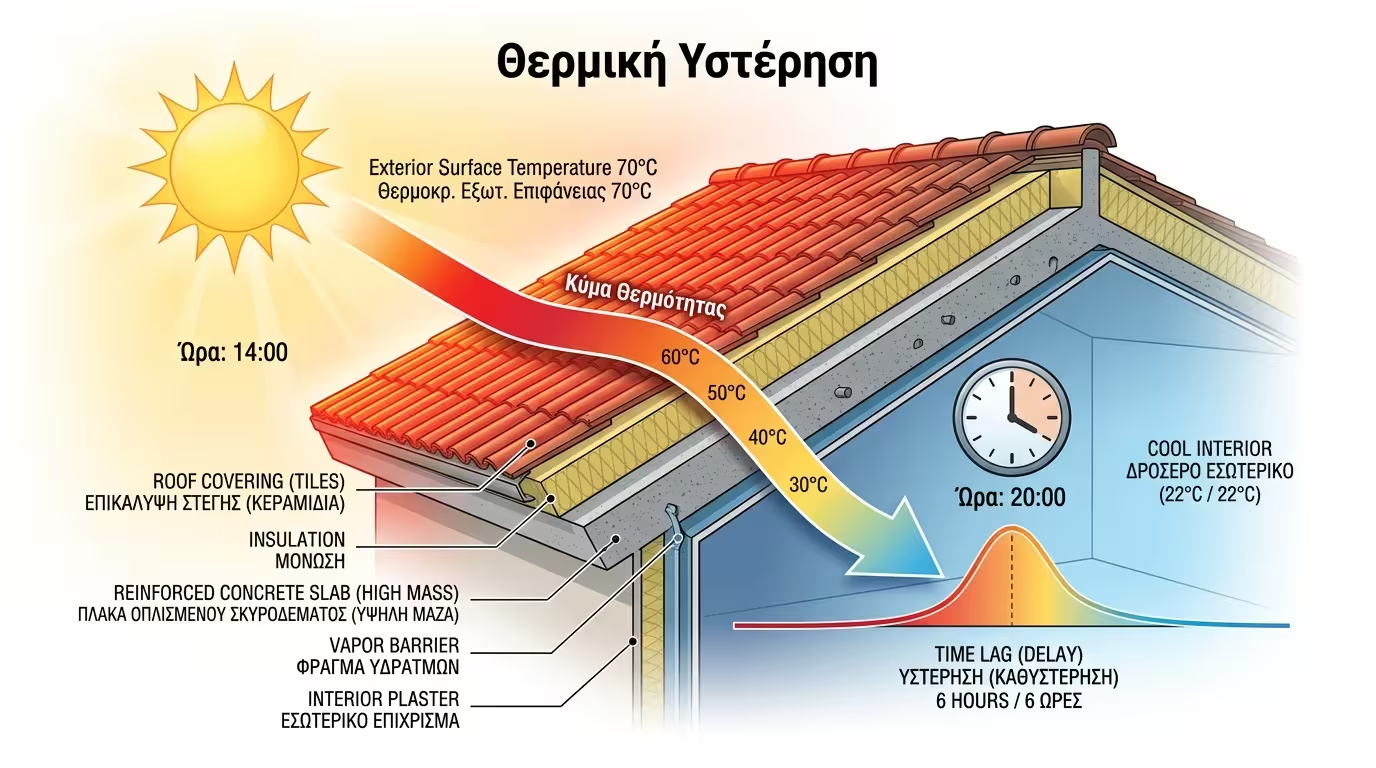
Imagine the scorching August sun hitting your terrace or roof at 14:00. The outer surface "boils" at 70°C. This enormous thermal energy starts a journey to penetrate the roof materials and enter your living room.
The time this "wave" of heat needs to cross the entire thickness of the roof/wall and reach the inside surface of your ceiling is called Thermal Time Lag and is measured in hours.
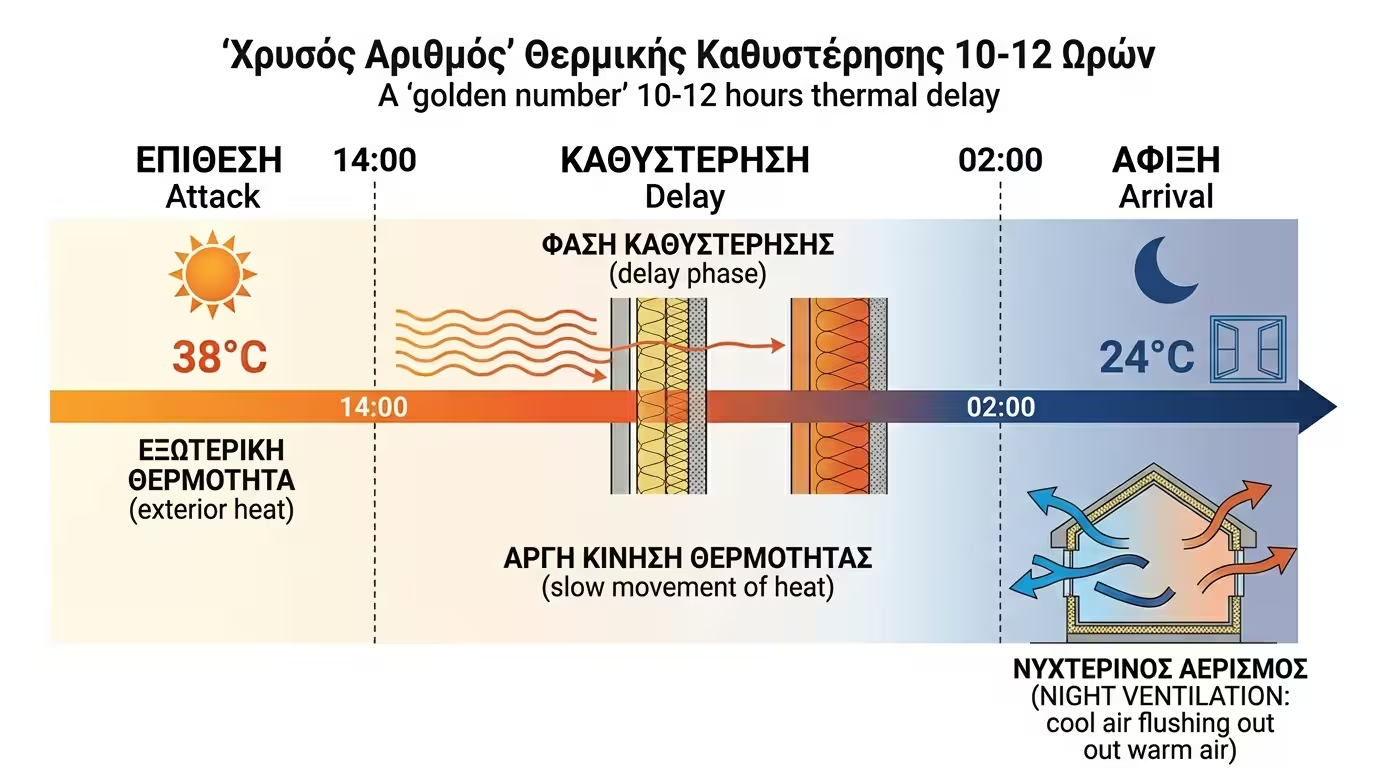
Why do we care so much about this time? Because in summer we do not simply try to stop the heat, we try to outsmart it. The target of every good bioclimatic insulation is to achieve a time lag of 10 to 12 hours.
Maximum external heat strikes the building.
The heat travels desperately slowly through the mass of the insulation and wall. The interior stays cool all afternoon and your air conditioner "rests".
The heat wave finally reaches the inside of the ceiling and is about to warm the room. But now it is night! The outside temperature has dropped (e.g. to 24°C). You simply open the windows. The cool night air enters the house, takes the heat that just arrived from the ceiling, and pushes it out. You just cooled your house completely for free, using time in your favour!
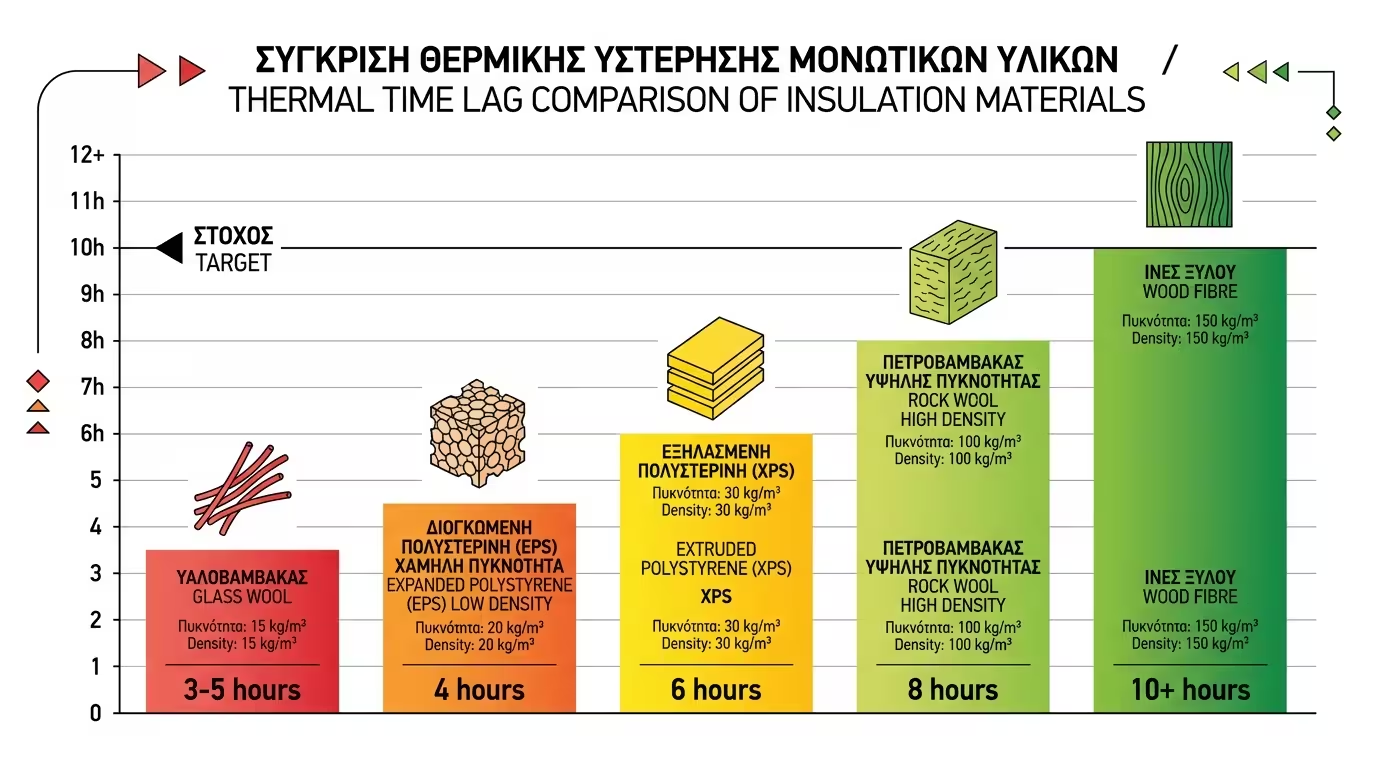
This is where many owners (and even builders) make mistakes. They choose materials with excellent U-Value (very good for winter) but with minimal mass.
Plain glass wool, lightweight polyurethane and white low-density EPS (polystyrene). The midday heat will enter your home around 18:00 in the afternoon, exactly when the house is still closed and it is still hot outside. The agony begins.
Wood fibre boards, cellulose, high-density rock wool, as well as heavy extruded polystyrene (XPS) combined with the concrete slab, act as a brake. The heat "sticks" in their dense mass.
Let us go to the wooden loft of our digital house on a 38°C day. The roof is wooden (lightweight construction without concrete).
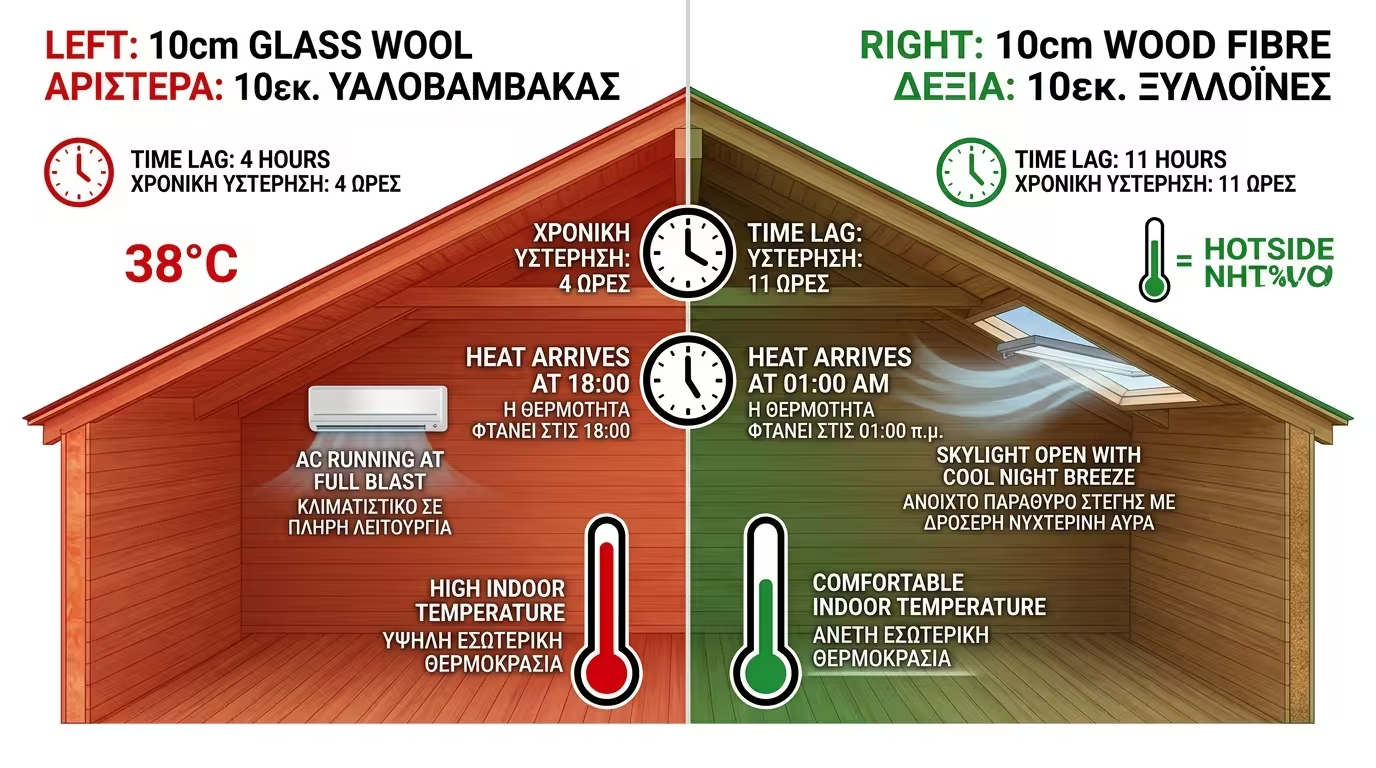
The time lag is just 4 hours. The 14:00 heat reaches the interior at 18:00. The room "boils" and the air conditioner runs at full blast until midnight fighting the roof radiation.
Because wood fibre has 4 times the density of glass wool, the time lag shoots up to 11 hours. The heat arrives inside at 01:00 a.m. We open the skylight, the cool night air enters and the room stays comfortable, without spending a single euro on electricity.
💡 Final Conclusion: When insulating a terrace or wooden roof (which receive the most solar radiation), do not only look at the "Lambda" (λ) of the material. Ask your engineer: "What time lag will we achieve with this system?" If the answer is less than 8-10 hours, ask to increase the insulation density or change material. Summer will thank you!
Return to category.
Go to categoryReturn to the central guide.
Go to guide