
1️⃣ Adhesive (Bonding Compound)
The special adhesive applied to the surface of the existing wall (brick, old render or concrete) to hold the insulation board in place.
When we talk about energy upgrading a building, the word you hear most on Greek construction sites is "thermoprosopsi" (literally: thermal facing). The technical - and scientifically correct - term for this method is the acronym ETICS (External Thermal Insulation Composite System).
To understand it practically, imagine the ETICS system as "dressing" your entire house in an impenetrable, high-tech insulation jacket.
In this article, we will see exactly what this "jacket" is made of and why it is considered the top choice for both renovations and new constructions.
One of the most common mistakes homeowners (and even DIYers) make is believing that external insulation is simply "polystyrene glued to the wall". ETICS is a strictly certified system, meaning its materials are designed to work together perfectly.
Its application follows a specific layering sequence:
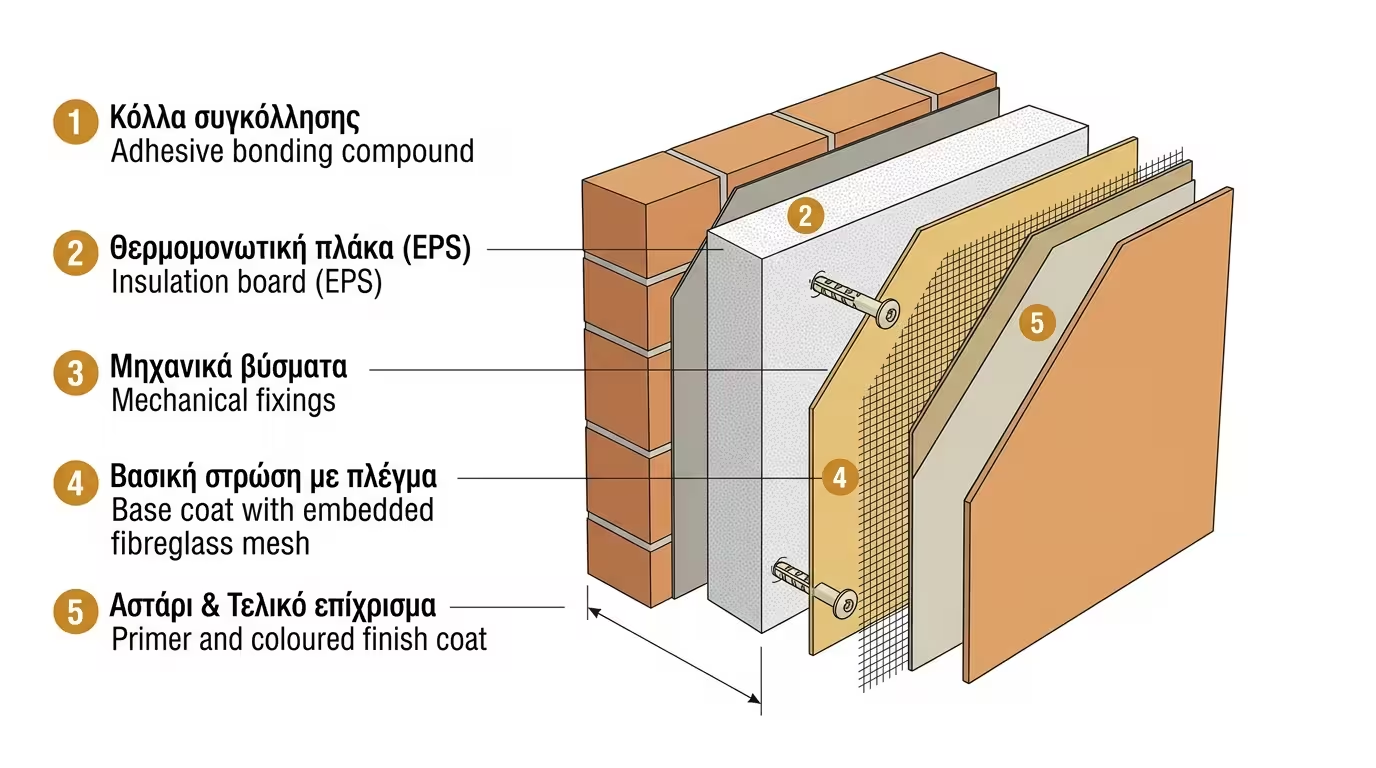
The special adhesive applied to the surface of the existing wall (brick, old render or concrete) to hold the insulation board in place.
The core of the system. Typically Expanded Polystyrene (EPS), Extruded Polystyrene (XPS) or Rock Wool is used, depending on the building's requirements.
Plastic or metal dowels that penetrate the insulation and anchor into the wall, ensuring the insulation can never detach due to wind or weight.
A layer of special render (base coat) is applied over the insulation, into which a durable fibreglass mesh is embedded. This gives the system enormous impact resistance and prevents cracking.
The final surface. The primer prepares the substrate and the coloured finish coat seals the system, providing complete waterproofing and the building's final aesthetic appearance.
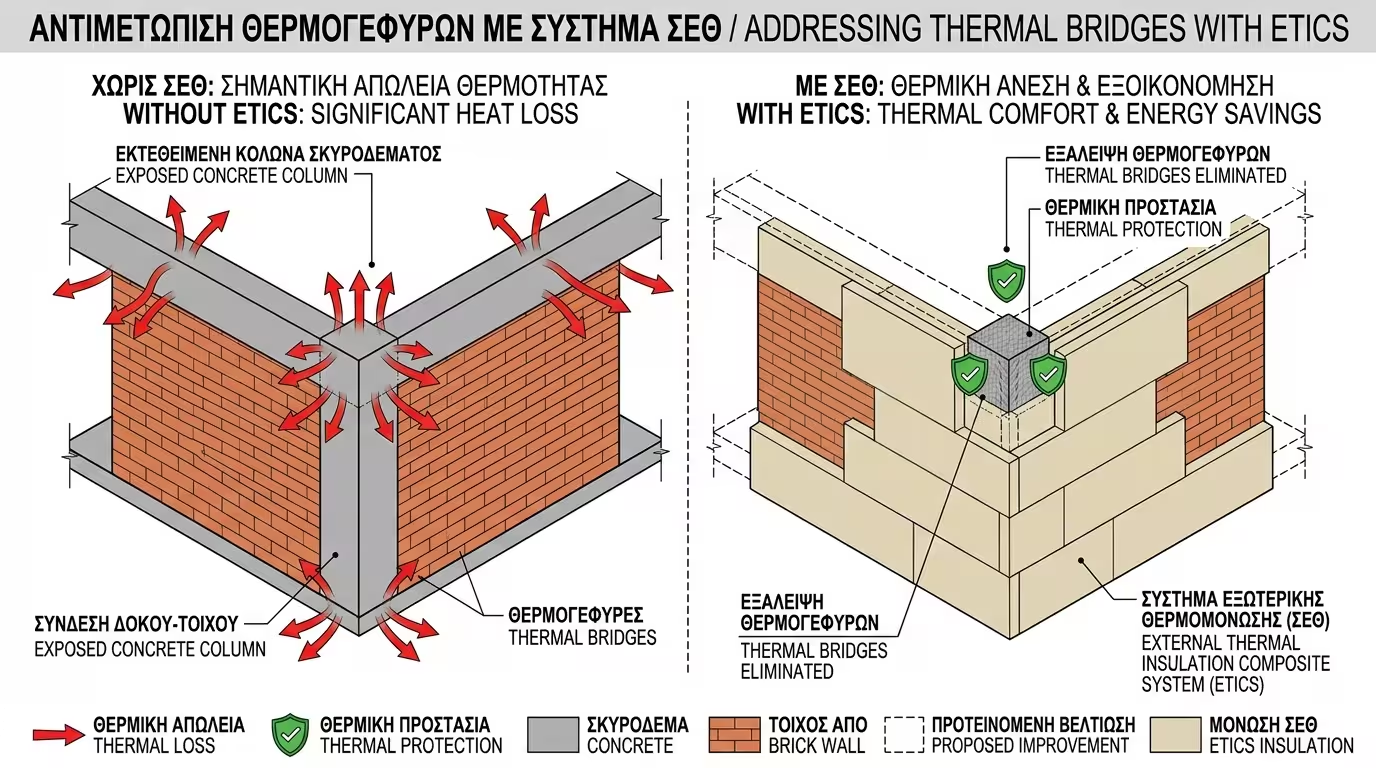
In a building without external insulation, the reinforced concrete columns and beams (which are never insulated with internal or cavity insulation) act as "bridges" through which heat escapes. These points show up clearly on a thermal camera: they glow red amid the blue, insulated walls.
The ETICS system "dresses" the entire external surface - walls, beams, columns, slabs - creating an unbroken, continuous insulation envelope that leaves no weak point.
So why has external insulation come to dominate the market? Let us look at the five key advantages that make it the top choice for every building.
When we build a wall, the beams and columns of reinforced concrete often remain uninsulated, creating "thermal bridges" - points through which heat escapes. The ETICS system is applied externally and wraps the entire building, eliminating these thermal bridges permanently.
The concrete and steel of your home are stressed daily by contraction (in cold) and expansion (in heat). ETICS keeps the temperature of the masonry and frame stable, dramatically extending the lifespan of the entire structure.
Unlike internal insulation (where you must build plasterboard walls inside your home), external application does not steal a single square centimetre from your living room or bedroom. Moreover, all work is done outside, so your home does not turn into a building site.
The finish coat of the system is essentially a brand-new coloured render. Your home is not only energy-shielded but also fully renovated externally. Combined with the improved Energy Performance Certificate (EPC), the resale value of your property skyrockets.
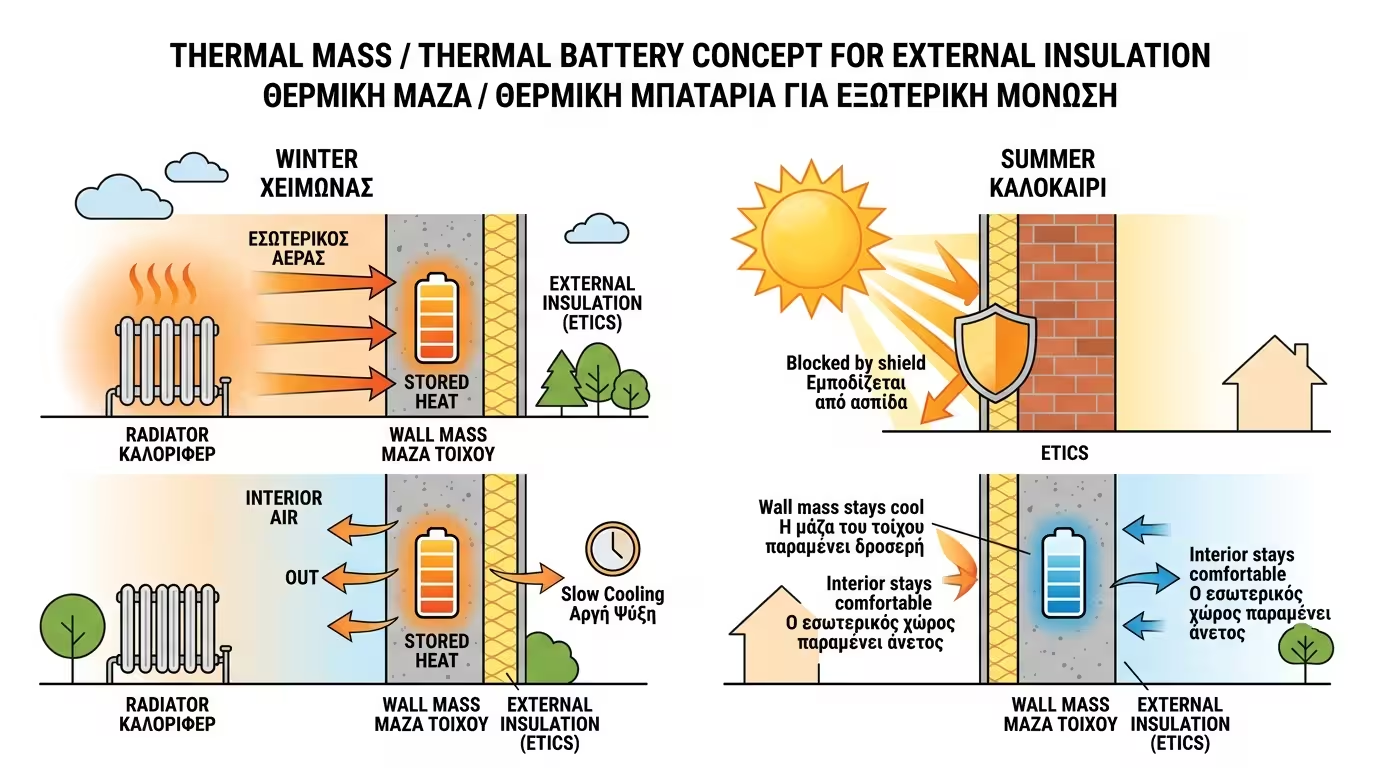
Because the insulation is on the outside, your walls are now protected and function as a "thermal battery". In winter they absorb warmth from the radiators and release it slowly, while in summer they remain cool.
One of the most overlooked advantages of external insulation is exploiting the thermal mass of the walls. With insulation placed externally, the entire masonry and frame sit on the warm side, functioning as a massive thermal battery.
In winter, the radiators "charge" this battery. When you turn them off, the walls slowly release warmth back into the room, keeping the home warm for hours. In summer, the battery works in reverse - the walls stay cool and smooth out temperature peaks.
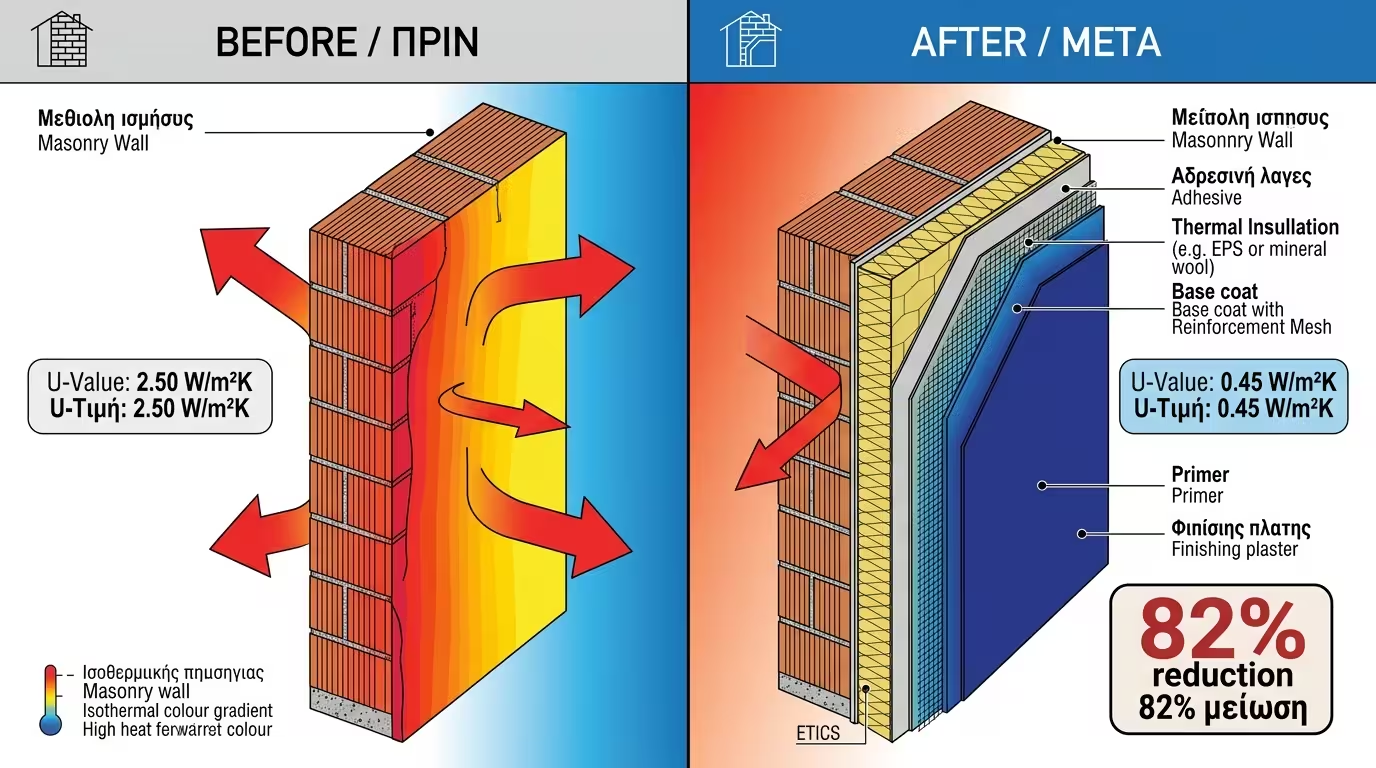
💡 In Our Model (10x10 House): If we apply an ETICS system with graphite polystyrene (EPS) 7cm thick to the uninsulated walls of our digital laboratory, the thermal transmittance (U-Value) plummets from 2.50 W/(m²K) to 0.45 W/(m²K). In practice, wall heat losses are reduced by 82%, translating the investment into hundreds of euros of savings every year.
Return to category.
Go to categoryReturn to the central guide.
Go to guide