🟢 A1 & A2 (Non-Combustible)
These are materials that don't burn, contribute nothing to a fire and won't ignite even at extreme temperatures. They are the "Holy Grail" of fire safety. Examples: Concrete, bricks, glass, metals, rock wool, glass wool.
In the world of building materials there is enormous confusion between two concepts: Fire Resistance and Reaction to Fire.
Fire Resistance (the REI ratings we've learned) concerns entire systems (e.g. a built wall) and how long they can contain fire from passing to the next room. Reaction to Fire, by contrast, concerns the material itself (e.g. a piece of plasterboard, a piece of polystyrene, the timber in a floor). It examines whether the material will "feed" the fire, help flames spread faster and produce deadly smoke.
To create a common language across Europe, the Euroclass rating system was established.
Every building material sold legally must carry a CE mark and state which category (class) it belongs to. The scale runs from A (the safest) to F (the most dangerous).
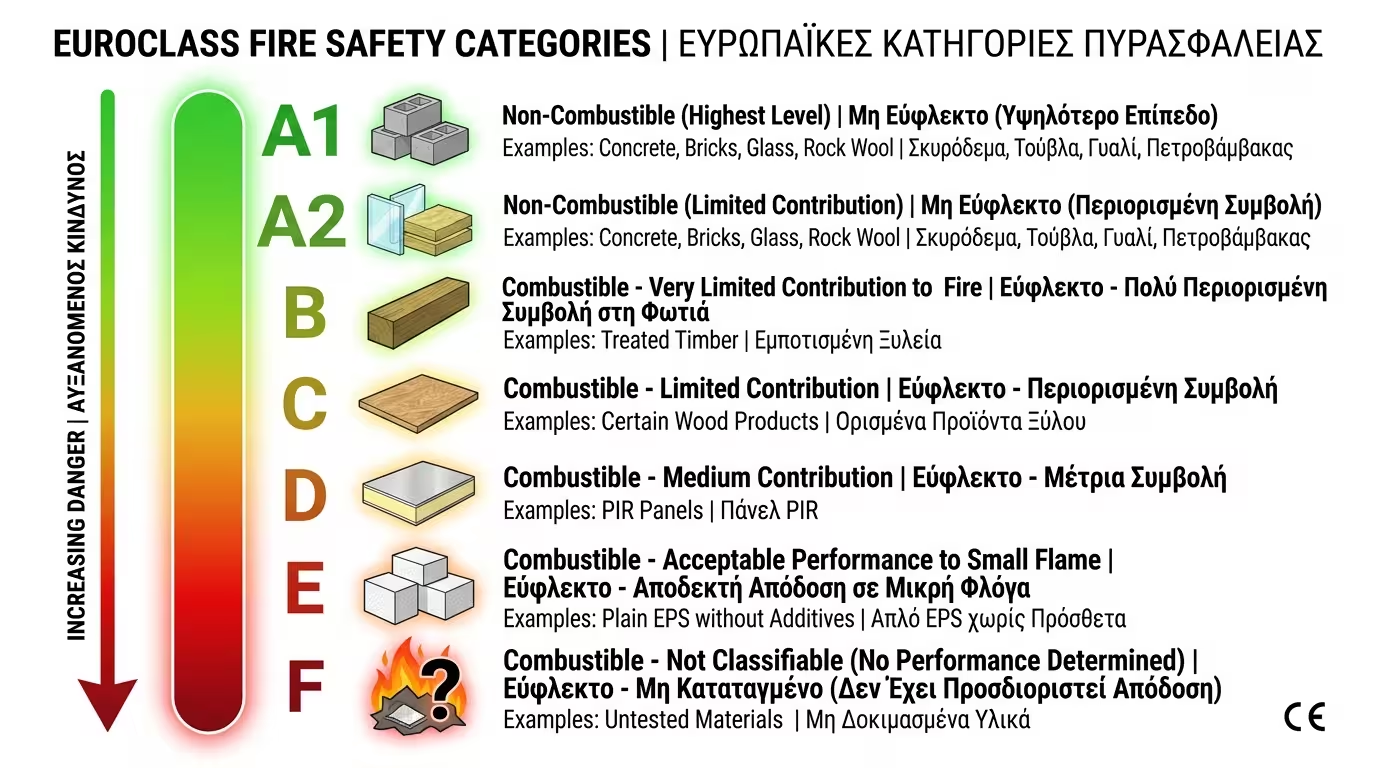
These are materials that don't burn, contribute nothing to a fire and won't ignite even at extreme temperatures. They are the "Holy Grail" of fire safety. Examples: Concrete, bricks, glass, metals, rock wool, glass wool.
These materials can burn, but do so with relative difficulty or at a slow spread rate. They contribute from very little (B) to moderately (D) to a fire. Examples: Specially treated timber, PIR fire-rated polyurethane panels.
Materials that ignite easily from a small flame (e.g. a match) and fire spreads rapidly across them. Examples: Plain expanded polystyrene - EPS without additives.
Materials that either failed the Category E tests or were never tested at all. Their use is prohibited in critical applications without additional protection.
If you look at a material label (e.g. B-s1,d0), you'll notice two lower-case letters alongside the capital: s (smoke) and d (droplets). These are perhaps the most critical characteristics for human survival.
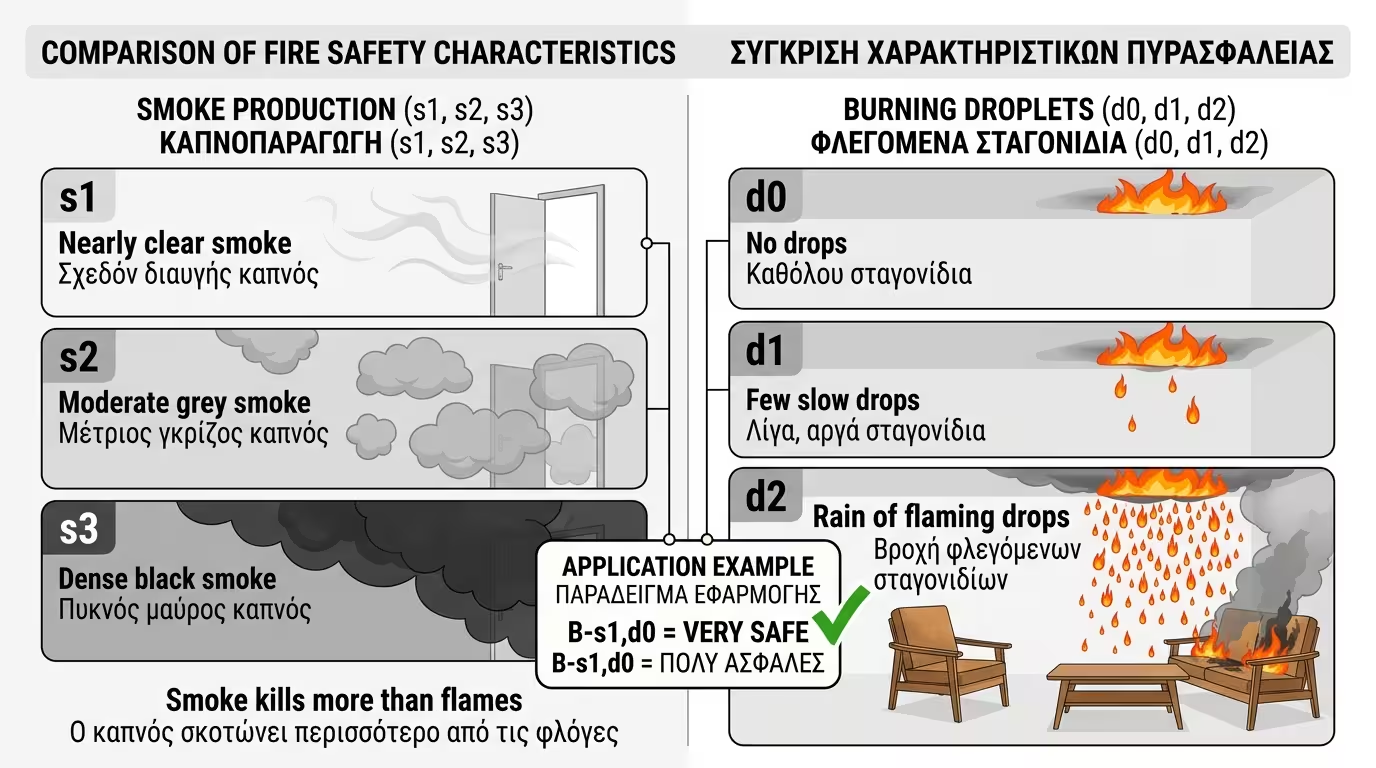
Smoke kills far more people than flames themselves (through asphyxiation and toxic gases). It also reduces visibility to zero, preventing escape.
Imagine the ceiling is on fire and, as you run underneath, molten, flaming balls of plastic start raining on your head. These droplets not only burn anyone they hit, but also set fire to carpets or furniture on the floor below, spreading the blaze.
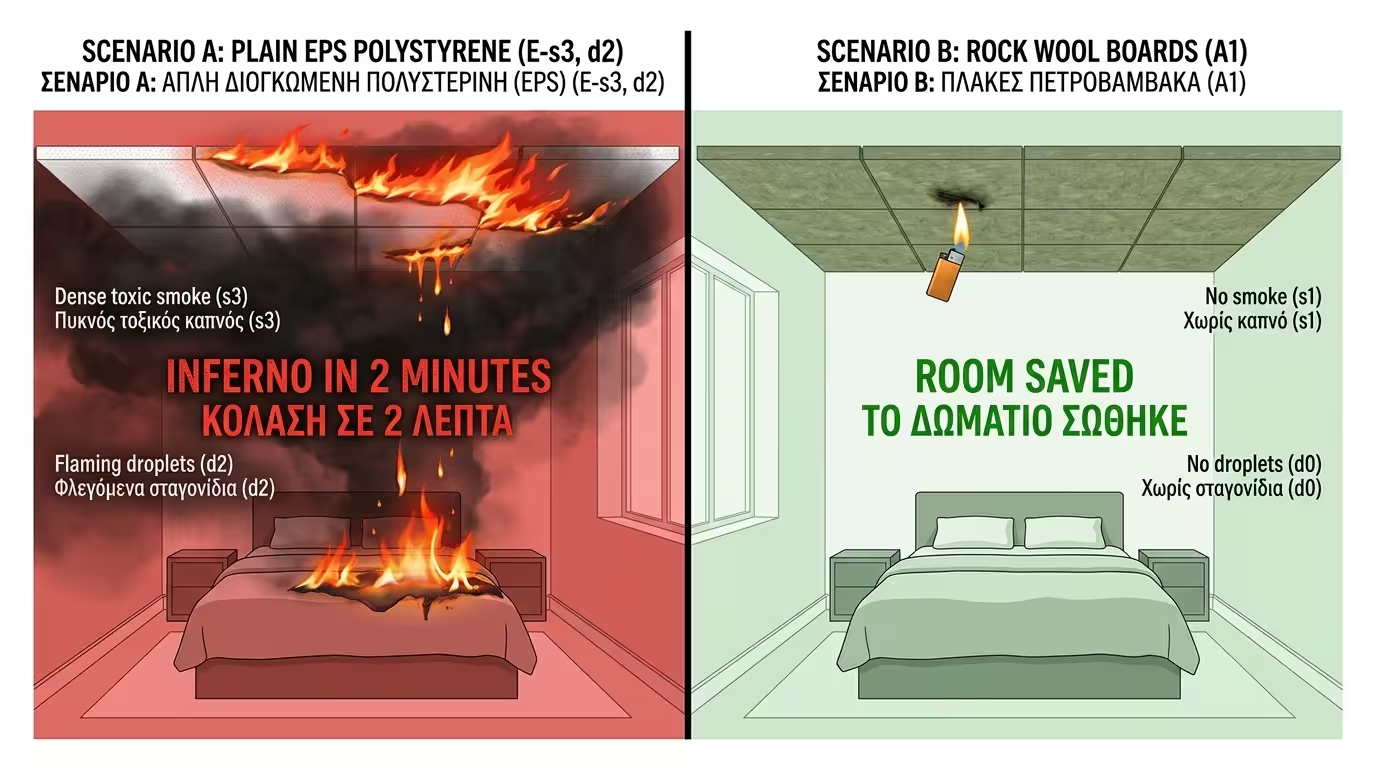
We want to insulate the ceiling of our room. A small fire breaks out from a short-circuited light fitting in the ceiling.
We've glued cheap polystyrene (EPS) for economy. Within seconds, the polystyrene ignites. Fire races across the entire ceiling. Dense, toxic black smoke (s3) is produced, blinding us. Simultaneously, the material melts and drips flaming plastic balls (d2) onto our bed, setting it alight. The room turns into an inferno in 2 minutes.
We've installed rock wool boards (Euroclass A1). The fitting throws sparks, a small cable burns. But the rock wool refuses to ignite. It produces no smoke (s1), no droplets (d0). The flame, finding no "fuel", simply dies on its own. The room is saved.
The Bottom Line: Euroclass is the X-ray of a material. Next time you choose insulation, paint or flooring, don't just look at the price. Search for the magic A1 or s1, d0. They are the numbers that prevent a small spark from becoming a fiery nightmare.
Return to category.
Go to categoryReturn to the central guide.
Go to guide