How ETICS Protects the Concrete and the Building's Structural Frame

When we talk about ETICS systems, the discussion usually revolves around kilowatt-hours, heating costs and payback periods. But there is a reason structural engineers love external insulation that has nothing to do with electricity: The protection of the building's skeleton itself.

The structural frame (columns, beams and slabs of reinforced concrete) receives a daily invisible but relentless attack from the environment. Let us see how the ETICS "jacket" functions as the ultimate survival shield for your home's concrete.

1. The 3 Invisible Enemies of Concrete

An uninsulated building, or one with cavity insulation (between the bricks), leaves its concrete exposed to the elements. This causes three destructive phenomena:

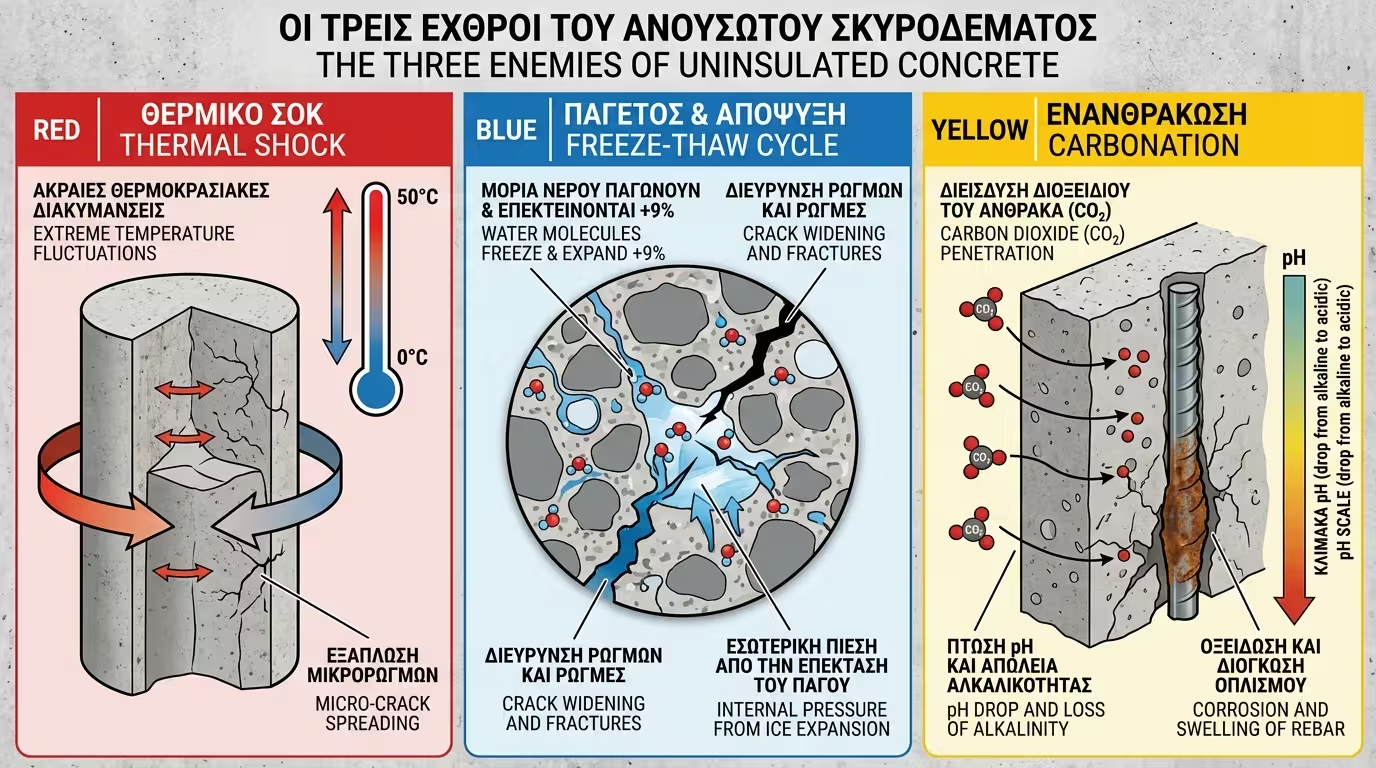
The 3 invisible enemies of uninsulated concrete - thermal shock, frost, carbonation

🌡️ Thermal Shock & Expansion-Contraction

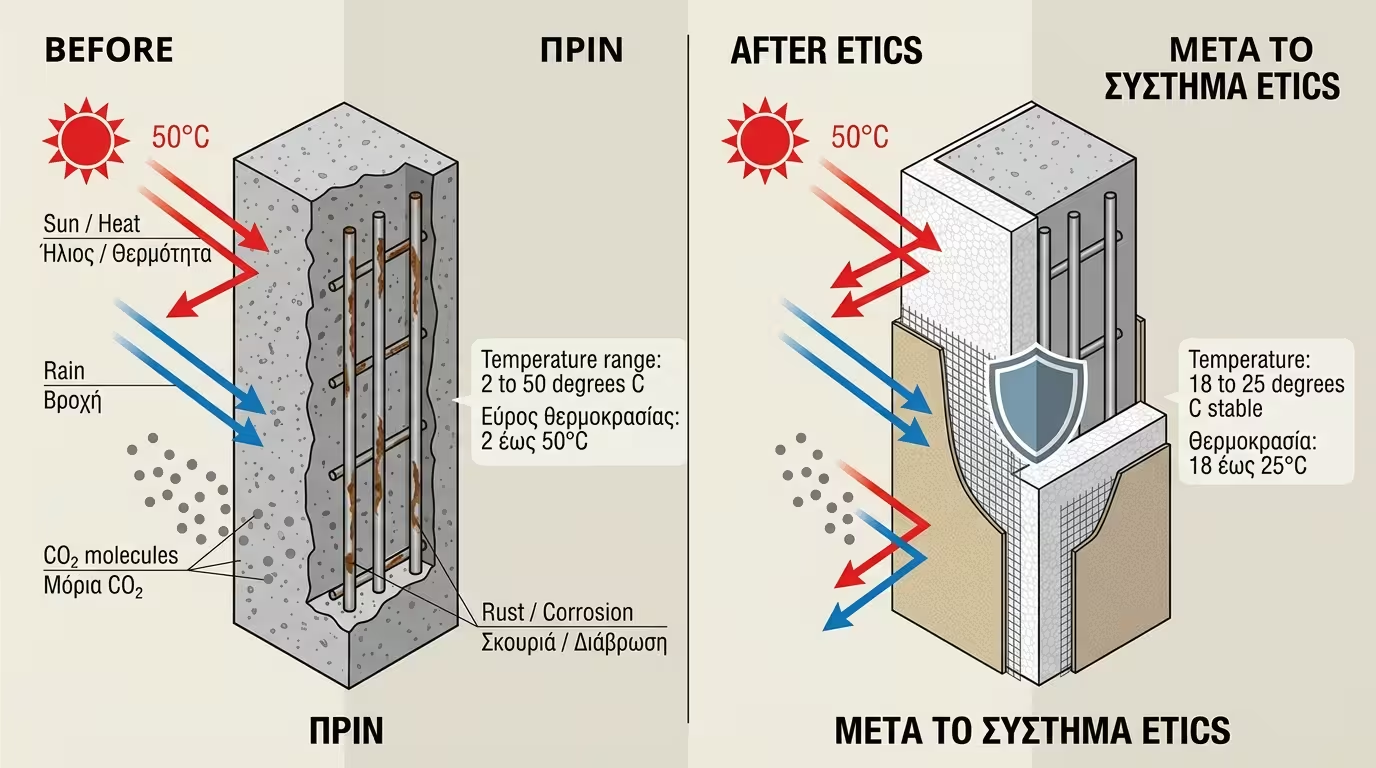
In summer, an uninsulated column hit by the sun can reach 50°C and expand. In winter, the same column can drop below 0°C and contract. This constant "movement" creates micro-cracks in the concrete, fatiguing the material year after year.
❄️ The Freeze-Thaw Cycle (Frost)

When micro-cracks form, rainwater finds its way inside. If the temperature drops below zero, the water freezes and expands by about 9%. This expansion acts like microscopic dynamite inside the column, breaking the concrete from within.

🧪 Carbonation & Reinforcement Corrosion

The greatest nightmare of old apartment blocks. Atmospheric CO₂ penetrates the uninsulated concrete and lowers its pH (making it more acidic). The steel reinforcement loses its anti-corrosion protection, rusts, swells, and pushes the concrete outwards - the familiar sight of rusty rebars on balconies and columns.

2. The Freeze-Thaw Cycle: The Hidden Killer

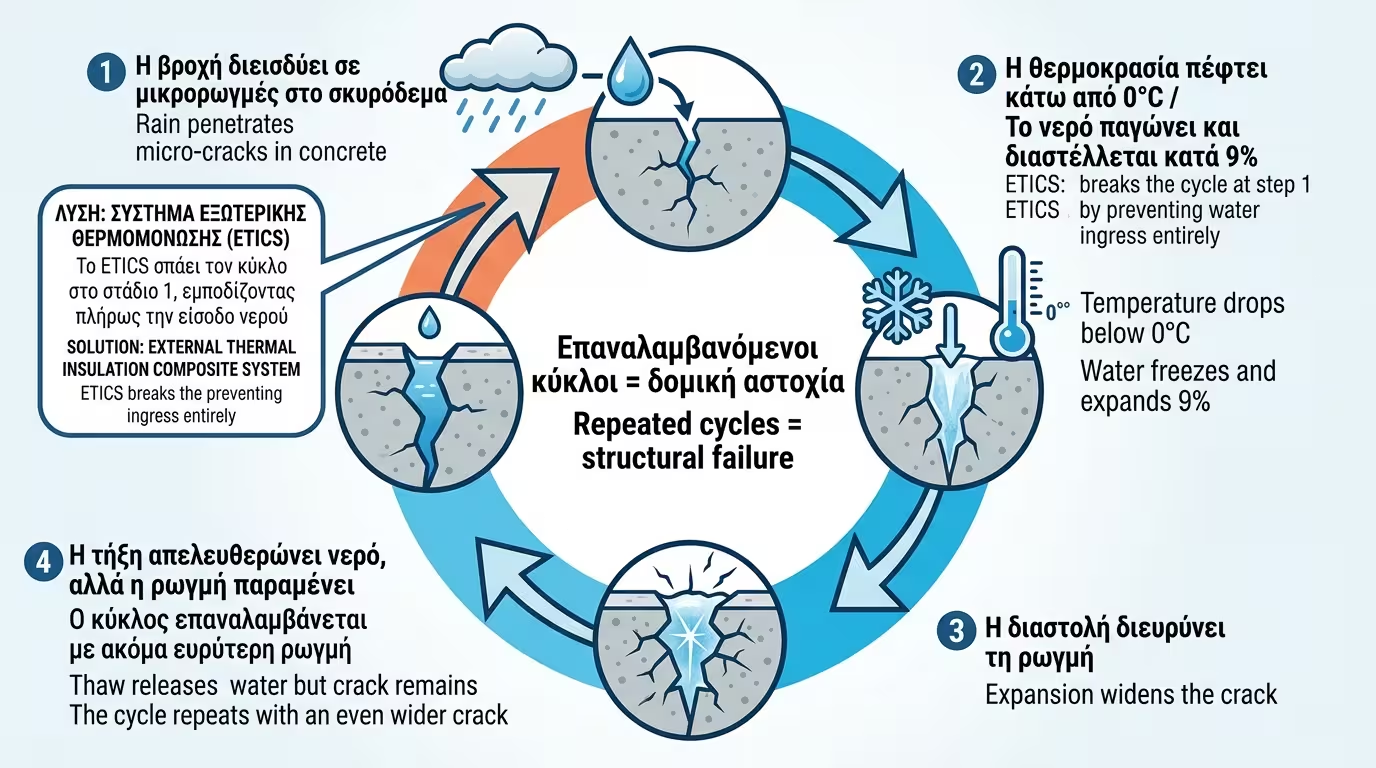
The freeze-thaw cycle is a self-reinforcing mechanism: water penetrates micro-cracks, freezes and expands by 9%, widening the cracks. Upon thawing, the cracks remain wider and the next cycle is worse. ETICS breaks this cycle by preventing water ingress in the first place.

Circular process diagram of freeze-thaw cycle in concrete

3. Carbonation: The Slow Death of Reinforcement

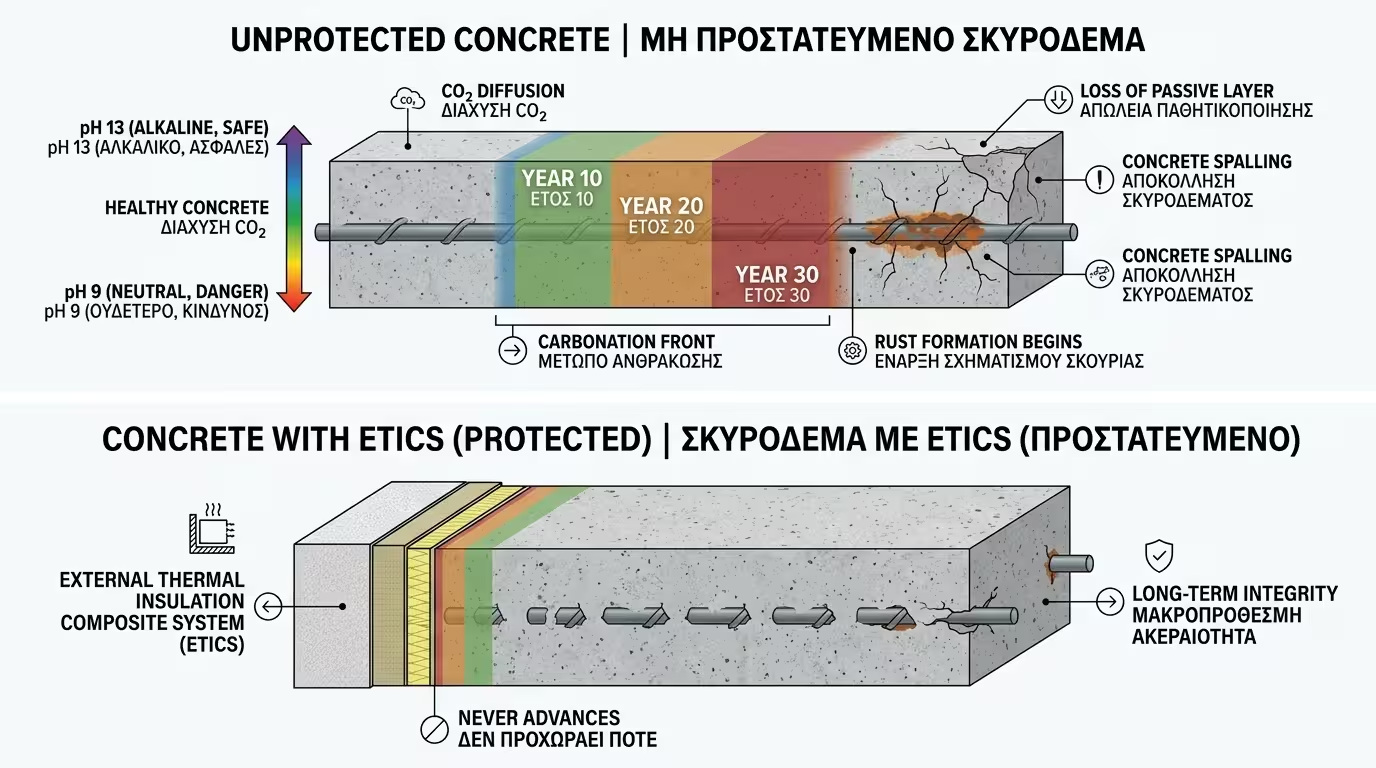
Atmospheric CO₂ slowly penetrates the concrete and drops its pH from 13 (alkaline, safe) to 9 (neutral, dangerous). When the "carbonation front" reaches the reinforcement, corrosion begins. ETICS completely blocks CO₂ penetration into the concrete.

Carbonation process - CO₂ front advancing through concrete

4. How ETICS Saves the Structural Frame

The External Thermal Insulation Composite System literally stands in front of the building's skeleton and takes all the blows itself.

How ETICS protects the building's structural skeleton

🛡️ Stable Temperature

Because the insulation is external, the concrete is now on the internal (warm) side of the insulation. The building's skeleton practically has the temperature of your living room! No more expansion-contraction, no more cracks.

💧 Waterproofing

Modern ETICS finish coats (renders), especially silicone-based ones, are absolutely water-repellent. Water never touches the concrete, so there is no risk of frost damage.

🧲 CO₂ Barrier

The ETICS materials block CO₂ penetration. The concrete pH remains alkaline and your home's reinforcement stays as good as new for decades.

💡 In Our Model (10x10 House): A corner column before ETICS: August 45°C, January 2°C - ΔT >40°C daily. After ETICS (8cm EPS/XPS): The column stays steady between 18°C-25°C, matching indoor temperature. The structural frame "rests" completely.
⚠️ Conclusion: External insulation doesn't just energy-upgrade the building. It dramatically extends its lifespan, preventing expensive and dangerous structural repairs in the future.

Related Articles

Insulation Systems: Complete Solutions for Every Building

Return to category.

Go to category

Preview