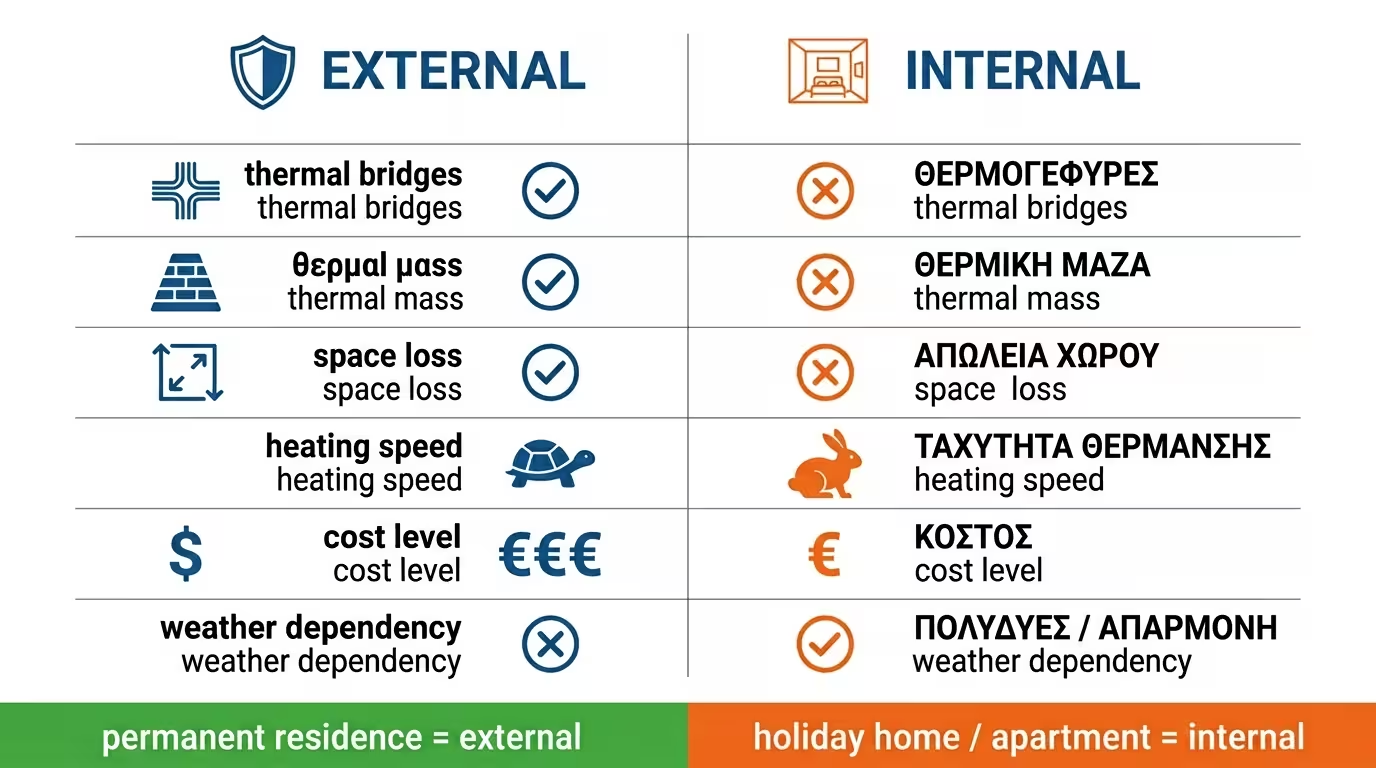
✅ No More Thermal Bridges
It wraps beams and columns, cutting every "bridge" of cold communication with the interior.
The decision to energy-proof your building is the most important step. The next one is choosing the right method. While the goal is the same - keeping heat inside in winter and outside in summer - applying insulation externally or internally completely changes the building's behaviour.
Although external insulation (ETICS) is now considered the "golden rule", there are many cases where internal insulation is the only option. Let us examine the pros, cons, and when to choose each.
As we saw in the previous article, the thermal facade "dresses" the building from its external side.
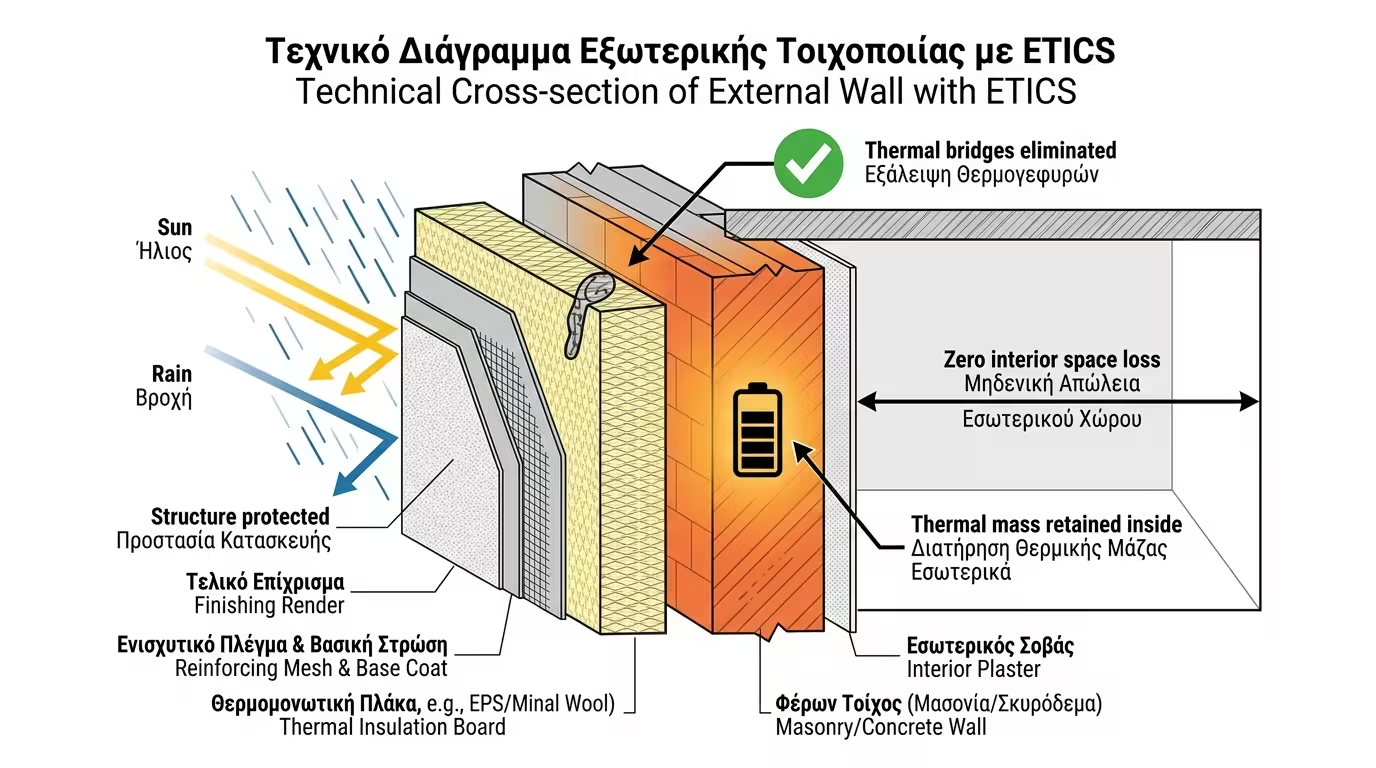
It wraps beams and columns, cutting every "bridge" of cold communication with the interior.
It saves the structural frame (concrete/brick) from cracking due to contraction and expansion.
The walls stay warm. When you turn off the radiator, the home takes a very long time to cool down.
You don't lose a single centimetre of your floor area and the crew works outside.
Requires scaffolding, specialised renders and more labour.
It changes the building's external look. Not permitted on listed buildings or traditional settlements.
Work cannot proceed during rain, heat waves or frost.
Here the insulation material (e.g. rock wool, EPS or XPS) is placed on the internal side of the external walls and usually covered with plasterboard.
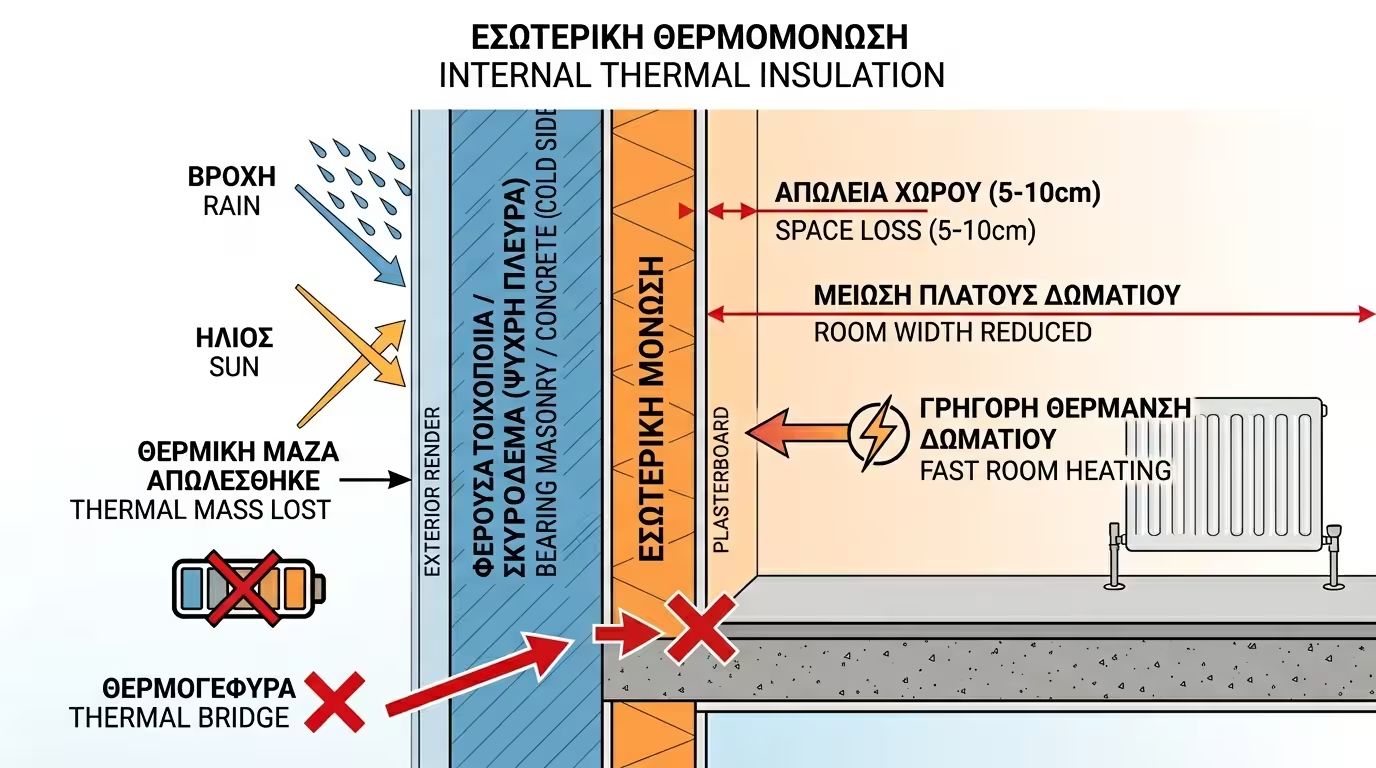
Because you no longer heat the cold bricks of the wall, the room air heats up in half the time. Ideal for holiday homes or rooms used a few hours a day.
No scaffolding needed. It can be applied room by room, any season of the year.
If you live in a block and the other owners won't agree to ETICS, you can insulate just your own apartment internally.
Depending on system thickness, you may lose 5-10cm from each external wall of the room.
If not installed correctly (e.g. no vapour barrier), moisture can be trapped between the insulation and the cold external wall, causing mould.
At points where internal walls and floors meet the external wall, cold continues to pass through.
The final decision depends entirely on your needs, constraints and budget.
…you are renovating the entire house, building new, or want the ultimate and longest-lasting energy shield without compromise.
…you live in a listed building (or stone house where you want the stone visible), have a limited budget, want to renovate gradually just one room (e.g. a cold north bedroom), or have a holiday home that needs to heat up fast on weekends.
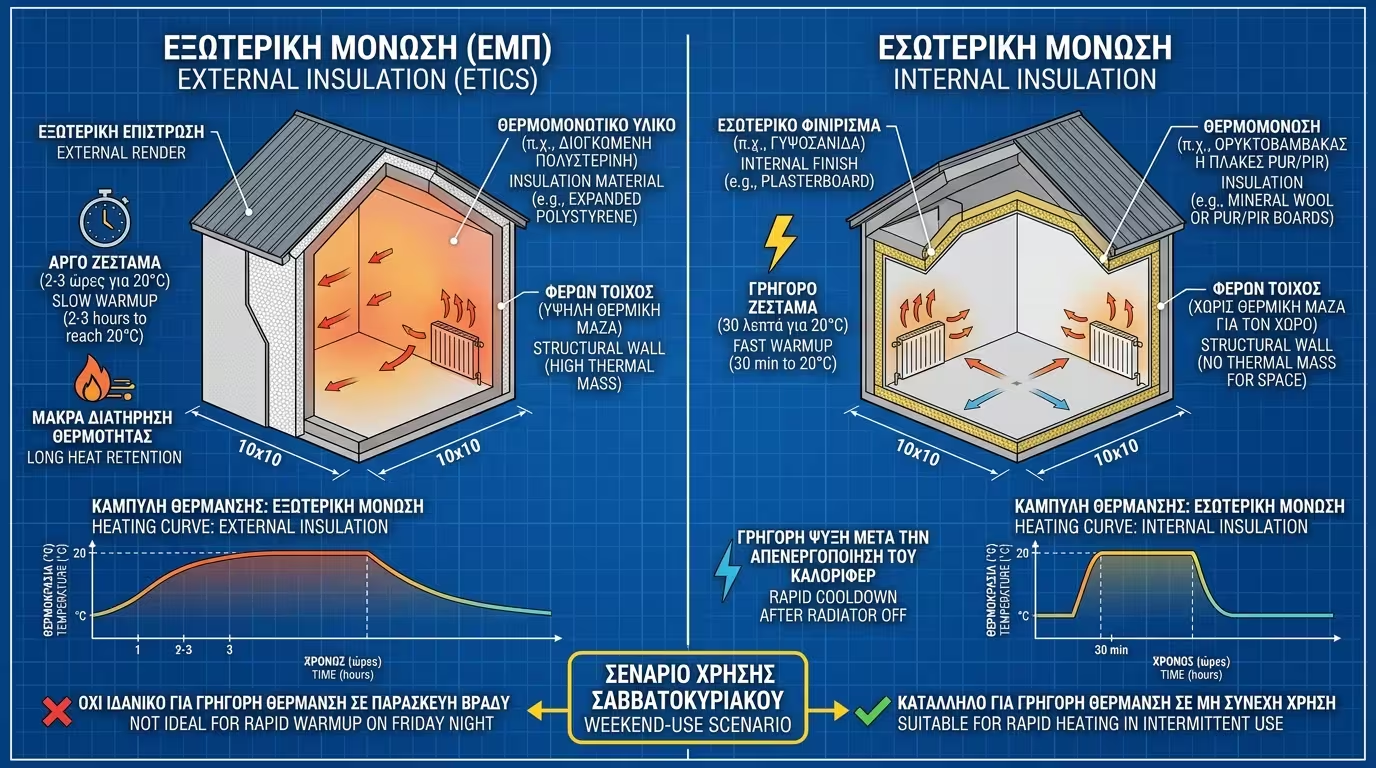
💡 The Experiment in Our Model (100sq.m. House): Let's take the "10x10 Model" and assume we only use it on weekends. With External Insulation, the radiator would run for hours until it "charges" the frozen walls before you feel warm. With Internal Insulation, heat is trapped immediately in the room air. The space would reach 20°C much faster, consuming fewer kWh for that weekend. Conversely, for a permanent residence, external clearly wins in total annual consumption.
In the 10x10 Model with external insulation, the radiator runs non-stop for 2-3 hours to "charge" the frozen walls, but afterwards retains warmth for a very long time after switching off.
With internal insulation, the room reaches 20°C in just 30 minutes, but cools equally fast after switching off. For a weekend holiday home, that's an advantage. For a permanent residence, external insulation clearly wins on total annual energy consumption.
Return to category.
Go to categoryReturn to the central guide.
Go to guide