🧱 Installation
Where the builder glues the square EPS boards to the wall, he leaves a gap usually 20–30 cm wide, and glues a long, narrow rock wool slab in its place.
In tall buildings (above 2 or 3 storeys, depending on local regulations) or in public-use buildings (hospitals, schools), the use of entirely combustible materials (like EPS/XPS) on the façade poses enormous risks.
If fire enters the thermal cladding, it races vertically upwards seeking oxygen. To cut off its path, we no longer rely only on render. We intervene in the very core of the insulation, creating Fire Barriers.
The logic is astonishingly simple yet life-saving: we break the continuity of the flammable material (EPS) by inserting horizontal (and sometimes vertical) "strips" of an absolutely non-combustible material (Euroclass A1). And the undisputed king for this job is high-density rock wool.
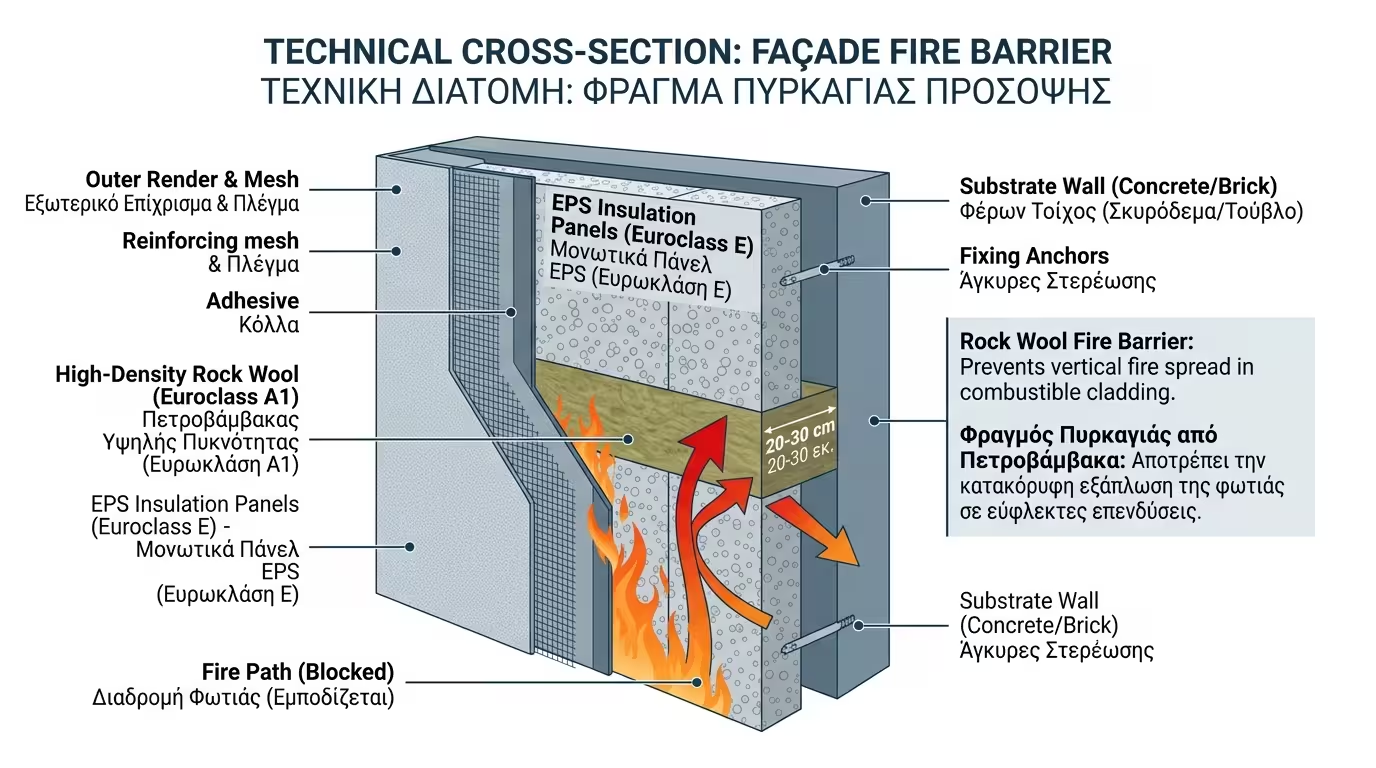
Where the builder glues the square EPS boards to the wall, he leaves a gap usually 20–30 cm wide, and glues a long, narrow rock wool slab in its place.
The building is then rendered normally and visually there is absolutely no difference.
To "imprison" fire and prevent it from engulfing the façade, fire barriers are placed at three strategic points.
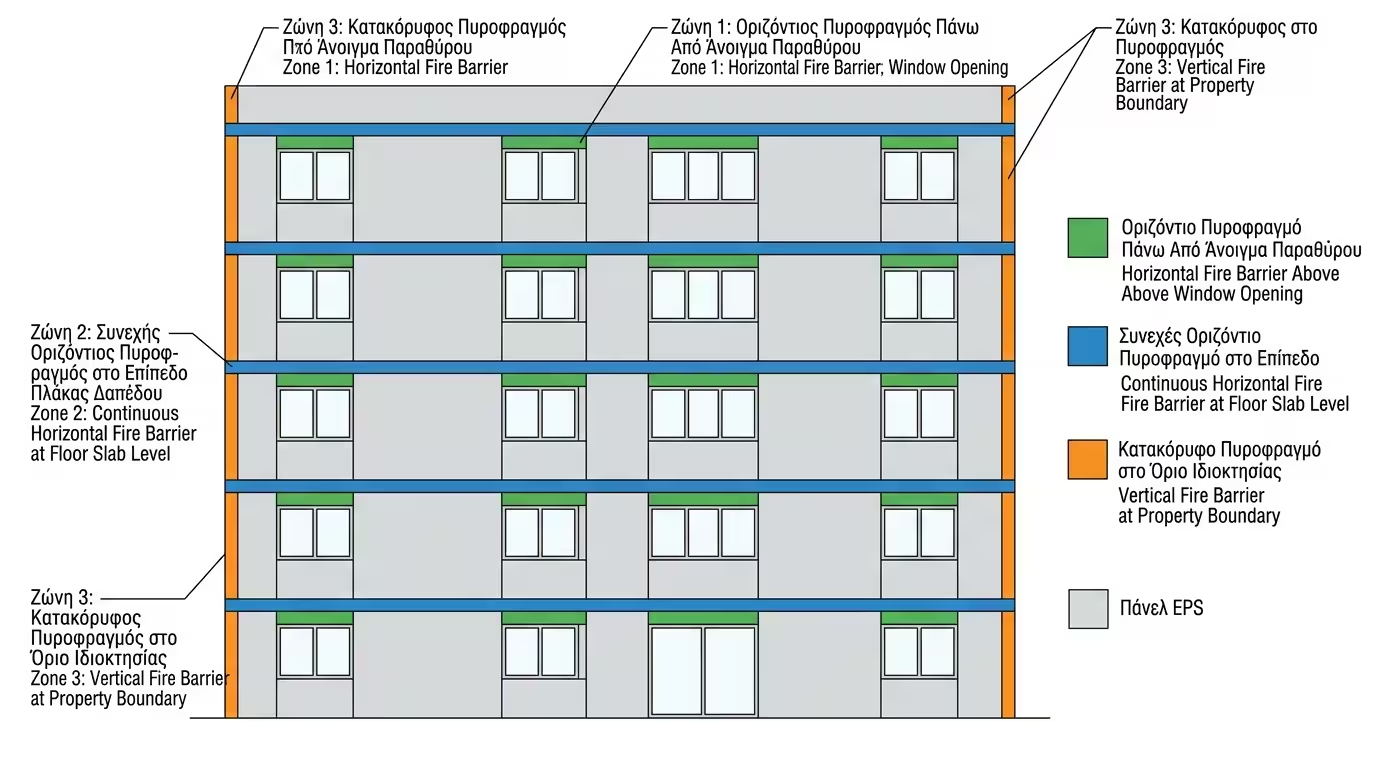
This is the most critical point (the "lintel"). When fire exits through the broken window of the burning room, it will immediately lick the wall just above. If rock wool is there, the fire hits a "wall" and cannot ignite the EPS further up.
In multi-storey buildings a continuous horizontal ring of rock wool is created at the height of each floor slab (or every two floors). So if fire manages to escape, it is forced to stop when it meets the horizontal block.
If you install thermal cladding on a party wall, a vertical rock wool strip is placed at the boundary, so if your building catches fire, you don't spread it to your neighbour via the insulation (or vice versa).
The obvious question is: "Since rock wool is non-combustible, why don't we use it EVERYWHERE and be done with it?"
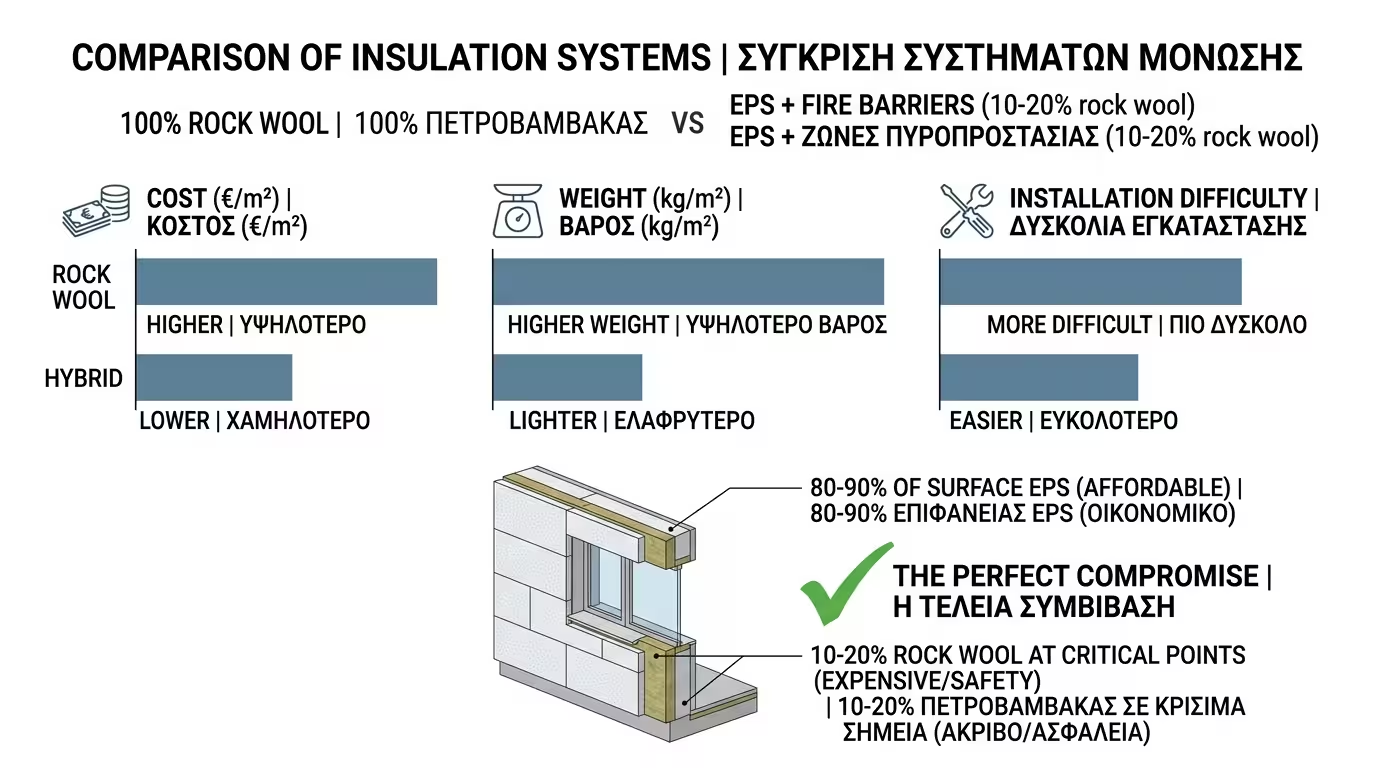
Rock wool for external insulation is much more expensive than EPS.
It is extremely heavy (requires many fixings) and harder to install.
Fire barriers offer the perfect compromise: you keep the low cost and ease of EPS for 80–90% of the building surface, and use expensive rock wool only for the 10–20% that is absolutely critical for stopping fire spread!
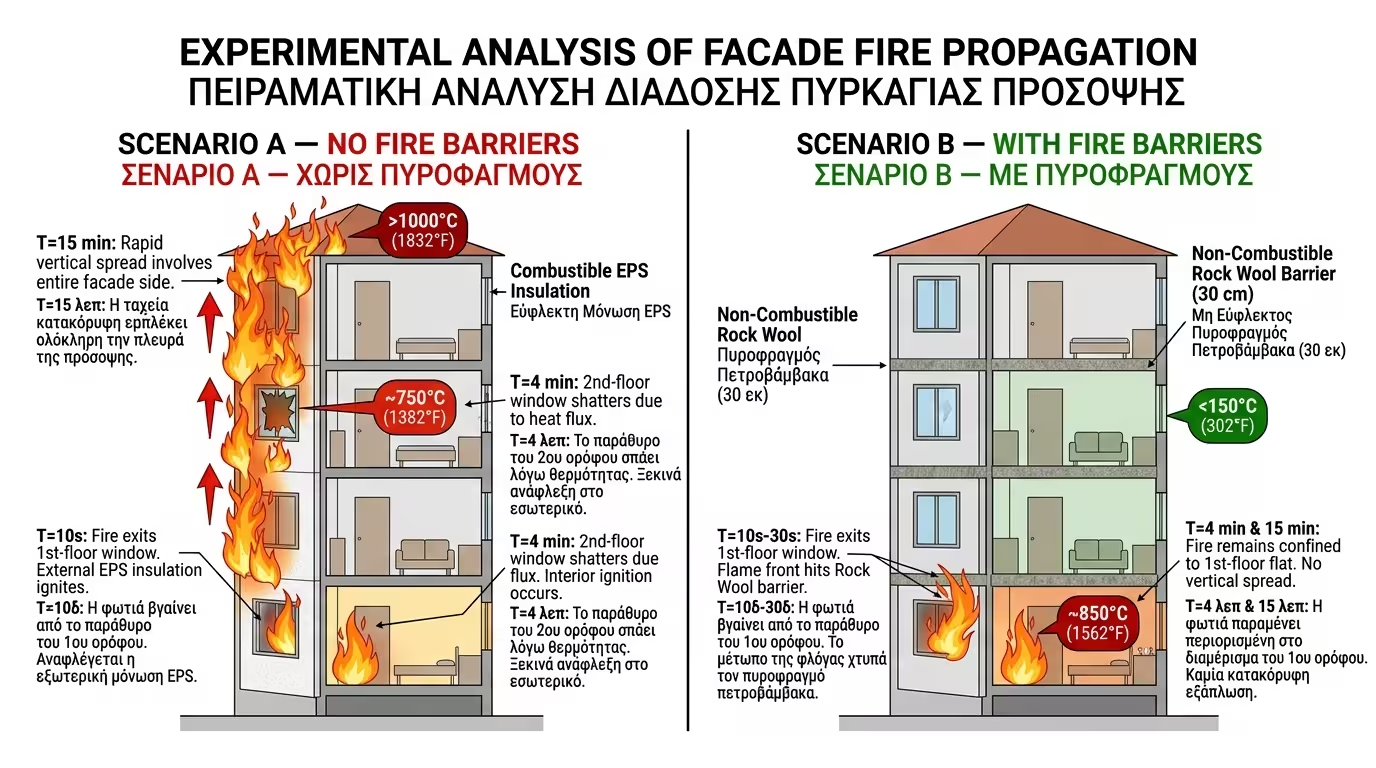
Our room is on the 1st floor of a 5-storey apartment block that has been entirely clad in EPS. An uncontrolled fire breaks out in our flat. The windows shatter.
Fire leaps from our window outwards. It melts the render and finds the EPS. In 10 seconds the façade ignites. Fire climbs at lightning speed. In 4 minutes the 2nd-floor window cracks from the external heat. The fire has entered the upstairs neighbour's flat. In 15 minutes, the entire side of the block is ablaze.
Fire exits our window. It "licks" the exterior wall, but directly above our window, the contractor had installed a 30 cm rock wool strip. The fire hits the non-combustible material. It finds no fuel (EPS) to continue its journey upwards. It remains trapped in our flat. The Fire Brigade arrives and extinguishes it. Our flat burned, but the block and the upstairs neighbour were saved!
Final Takeaway: Polystyrene thermal cladding is excellent, but on large buildings it resembles a fuse waiting to be lit. Rock wool fire barriers are the "scissors" that cut that fuse. Never accept a façade renovation without them, especially above window openings!
Return to category.
Go to categoryReturn to the central guide.
Go to guide