We have talked extensively about how insulation keeps heat inside your
home. But there is something else that constantly tries to escape
through your walls and ceiling: water vapour.
Every time you take a hot shower, boil pasta, or simply... breathe, you
add moisture to the indoor air. This warm, humid air tends to move
outward, seeking the cold. If it manages to penetrate the building
materials and cools suddenly, it turns to liquid water (condensation).
And water inside a wall means one thing:
mould, rot and destruction of the insulation.
To prevent this, we use the Vapour Barrier.
1. What Is a Vapour Barrier?
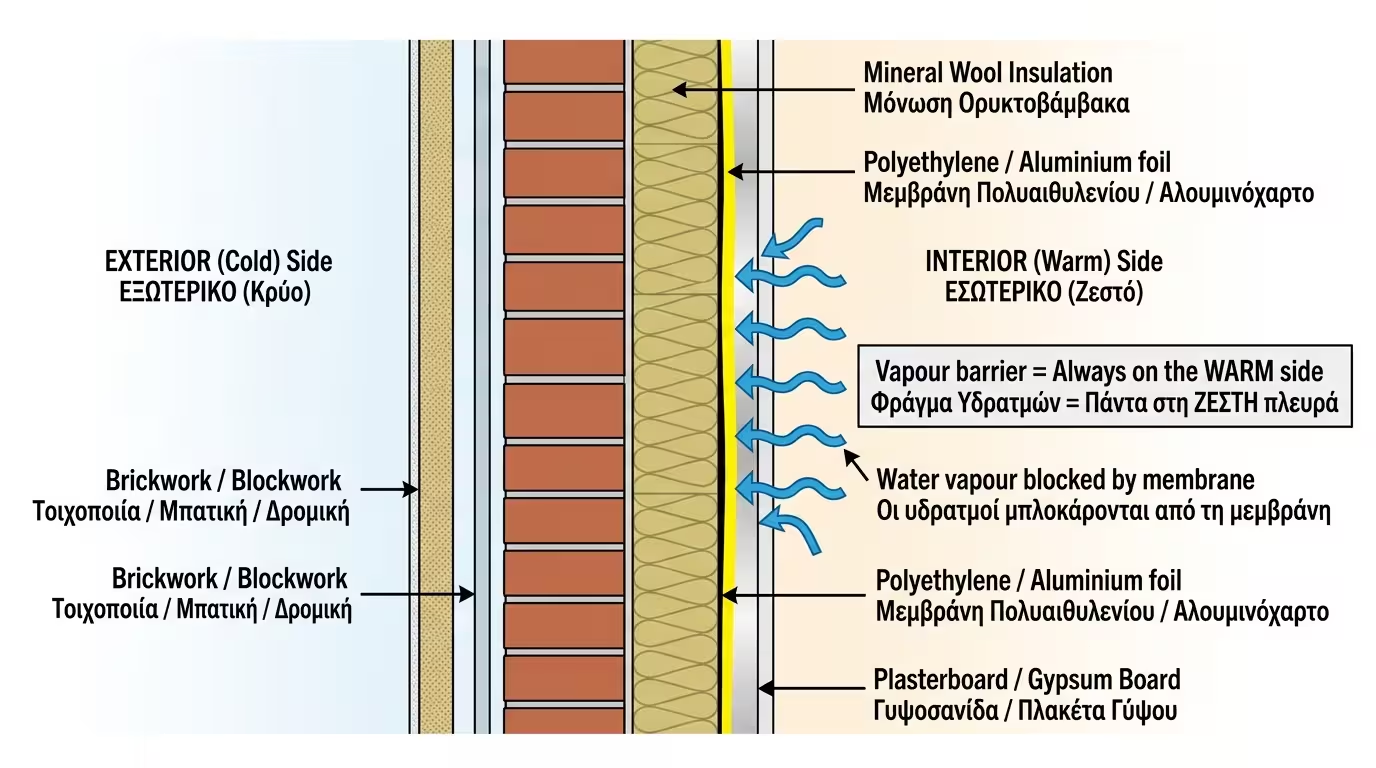
Very simply, it is a completely impermeable membrane (usually made of
special nylon, polyethylene or aluminium foil). Its job is not to keep
heat in. Its job is to forbid the humid air of the house from passing into the insulation.
It is always (always!) placed on the warm side of the insulation – that is, on the interior room side.
2. When Is It ABSOLUTELY Essential?
In an external thermal facade (ETICS) with EPS, we usually do not need a
separate vapour barrier, because the brick wall and render slow vapour
sufficiently, and the EPS "breathes" in a controlled way.
However, there are 3 cases where failing to install a vapour
barrier will cause your house to rot:
🏠 Internal Insulation (Plasterboard with Mineral Wool)
This is the most dangerous case. If you insulate from the inside,
the external wall (the brick) becomes freezing in winter. If the
living-room moisture passes through the plasterboard and mineral
wool, it will hit the frozen brick, turn to water, and within a year
the wool will become a soaked sponge full of black mould. The vapour
barrier goes right behind the plasterboard to stop it!
🏗️ Timber Roofs and Lofts
Wood is an organic material. If the warm, humid air from the house
rises to the roof, passes through the insulation and condenses on
the timber beams, the rot fungus will destroy the roof's structural
integrity.
🏊 Spaces with Extreme Humidity
Bathrooms, swimming pools, restaurant kitchens. Here the vapour
production is so enormous that a strong vapour barrier under the
cladding is mandatory.
3. The 10x10 Model Experiment
We decide to internally insulate a bedroom because we could not erect
scaffolding outside. We build a frame, install mineral wool and close
with plasterboard. Outside it is 0°C, inside we have 22°C and 60%
humidity.
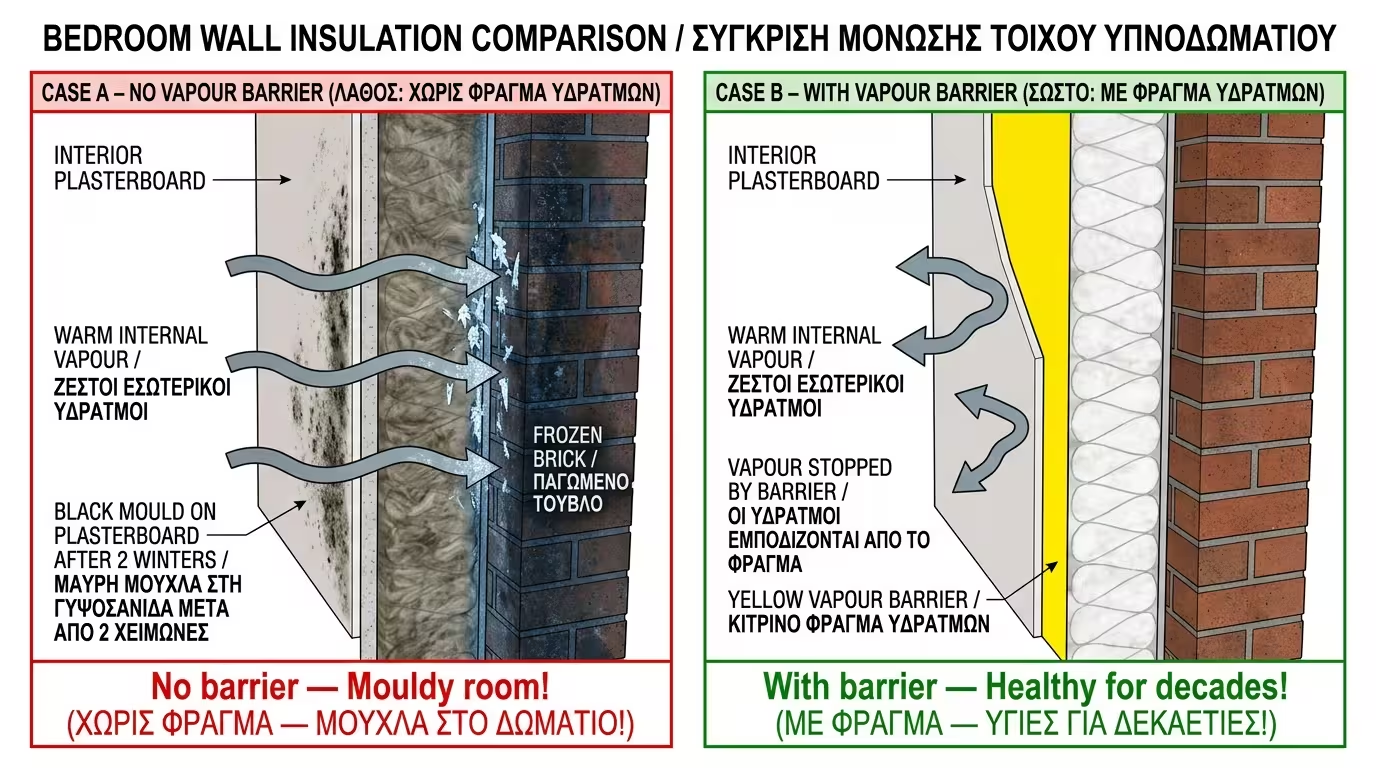
❌ Scenario A (Without Vapour Barrier)
The worker screws the plasterboard directly onto the frame. The
water vapour passes easily through the plasterboard. It reaches the
external wall, which is freezing (at 5°C). There it condenses. The
mineral wool soaks up the water. After 2 winters, the room smells
strongly of mould and the plasterboard shows black stains at the
bottom.
✅ Scenario B (With Vapour Barrier)
Before screwing the plasterboard, the worker spreads a nylon
membrane (vapour barrier) over the entire wall, carefully sealing
the joints with special tape. The humid air hits the nylon and stops
there. It never passes into the insulation. The mineral wool stays
dry, warm and efficient for decades. The room is healthy and safe.
The Final Conclusion: Insulation keeps you warm, but the
vapour barrier keeps the insulation alive. When doing interior renovations,
ceiling linings or building lofts, the words "vapour barrier" should be the
first thing you write in the contract with your contractor. It is an ultra-cheap
membrane that prevents ultra-expensive damage!