
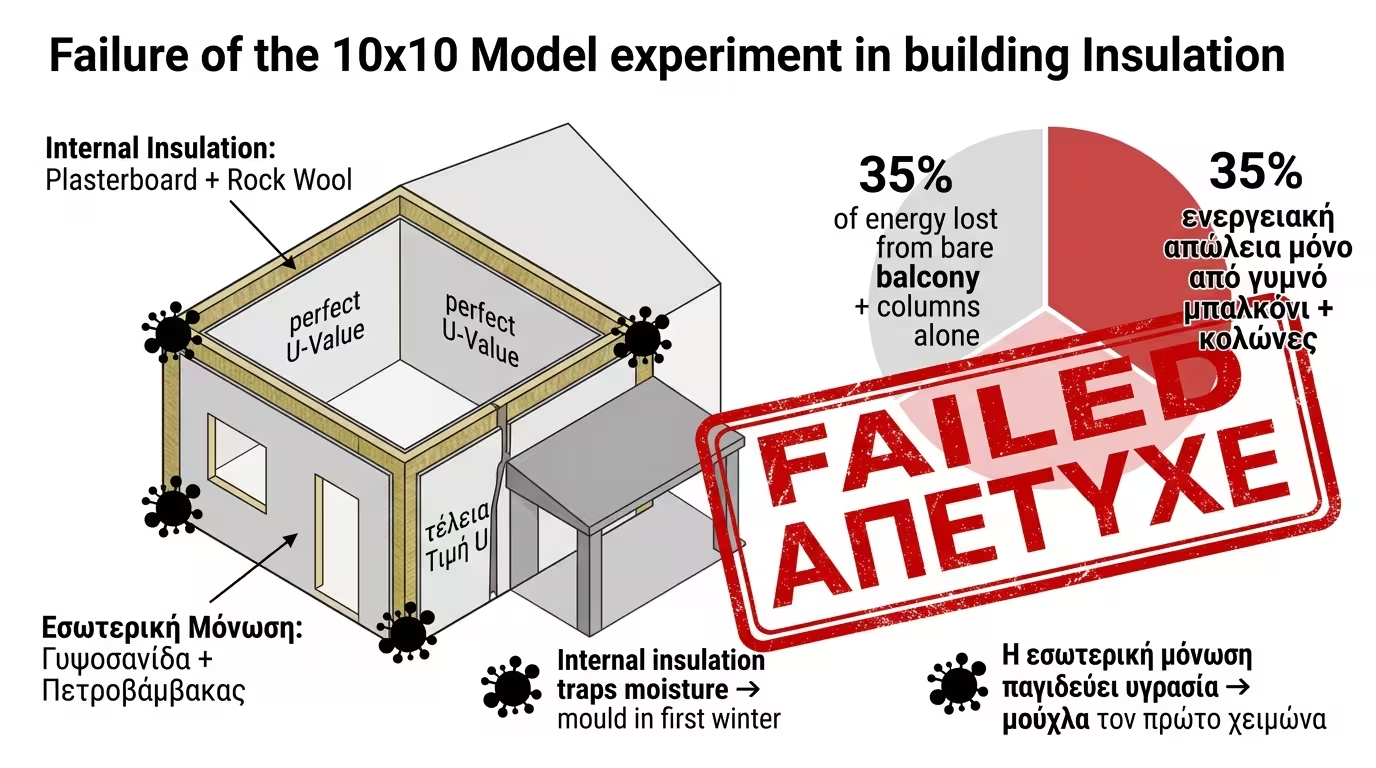
❌ The Scenario
We turn on the heating. The air warms up. But because the balcony and external beams remained bare (thermal bridges), energy finds an escape route.
If we could put "X-ray glasses" on a house (or more correctly, a thermal camera) on a cold winter night, we would see that heat does not escape uniformly from everywhere. There are specific points of the building that literally "light up" from enormous energy losses.
These are the structural and geometric thermal bridges. Let us map the 3 biggest "criminals" of construction and see why they cost us so dearly.
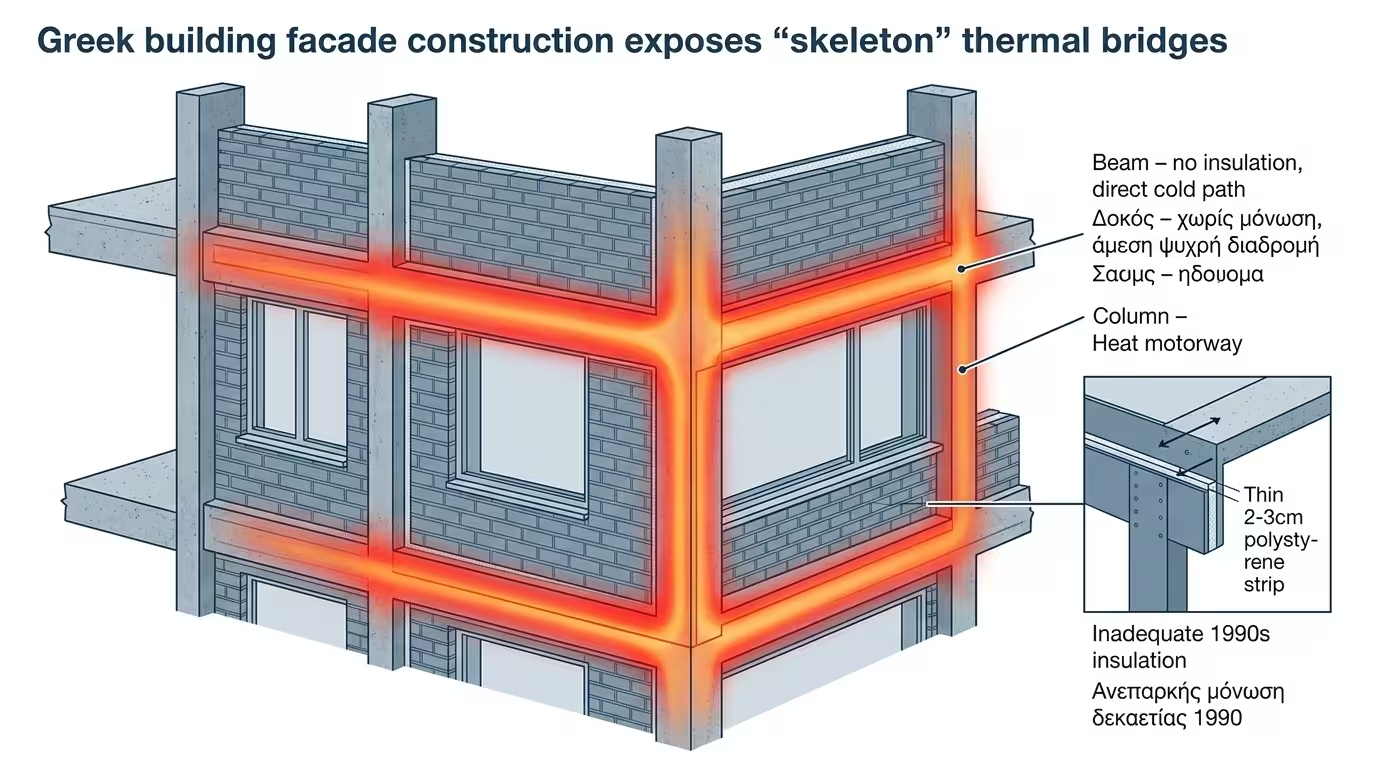
In Greece, houses are traditionally built with a reinforced concrete (béton) frame and "filled" with bricks. As we saw, concrete is an excellent heat conductor.
In old constructions (before 1980), the beams (the horizontal bands above the windows) and columns had absolutely no insulation. In slightly newer ones, the builder often placed a thin 2-3cm "polystyrene strip" inside the concrete formwork, which was entirely inadequate.
The result: Your radiator's heat finds these routes, bypasses the brick and exits outside. Internally, these strips remain freezing and fill with black mould high on the ceiling or around the windows.
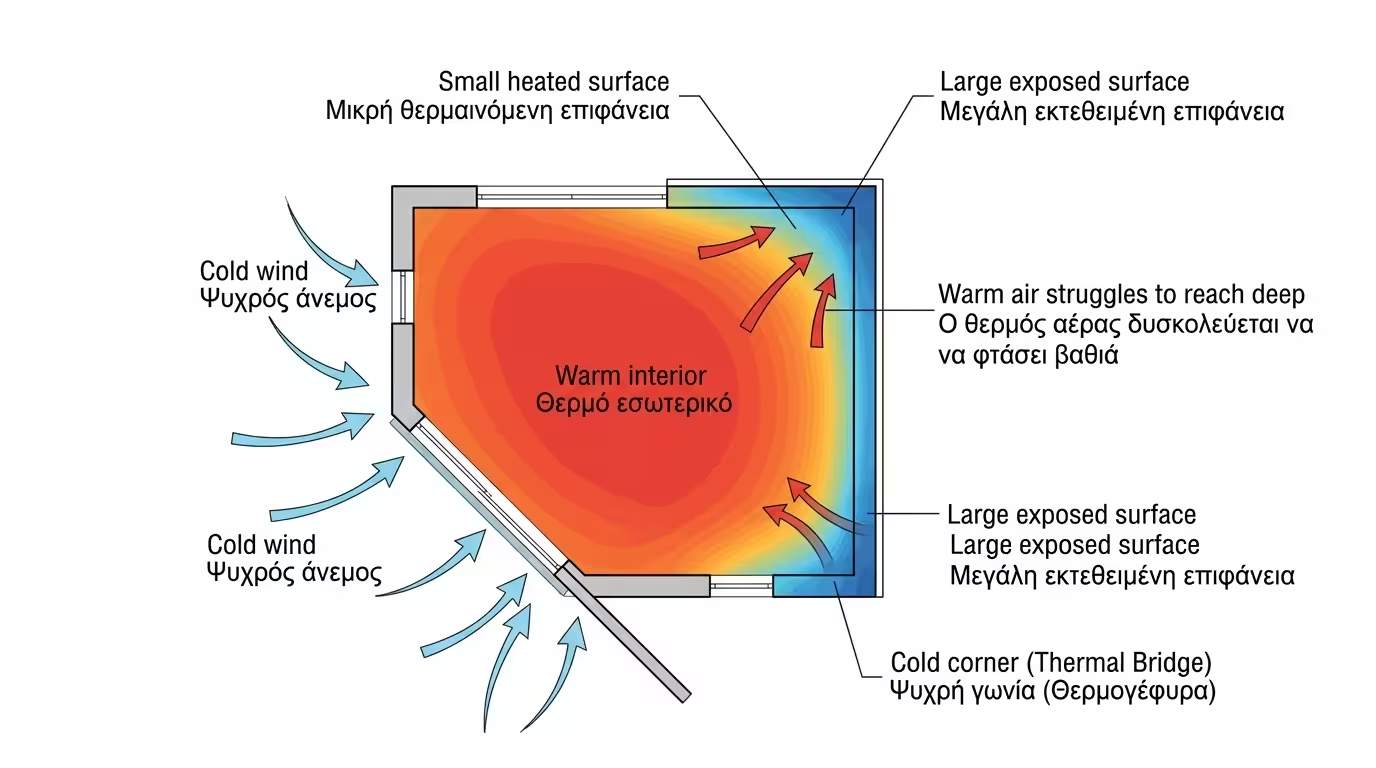
Even if you have perfectly insulated your wall, the exterior corners of the house (where two walls meet) suffer from a problem of pure geometry.
Consider this: at a corner, the room's interior surface (which absorbs heat) is very small, but the exterior surface (exposed to cold and wind) is much larger. In addition, the warm room air struggles to circulate deep into the corner.
The result: Room corners are always the coldest point of a house, and that is exactly why mould always starts from there!
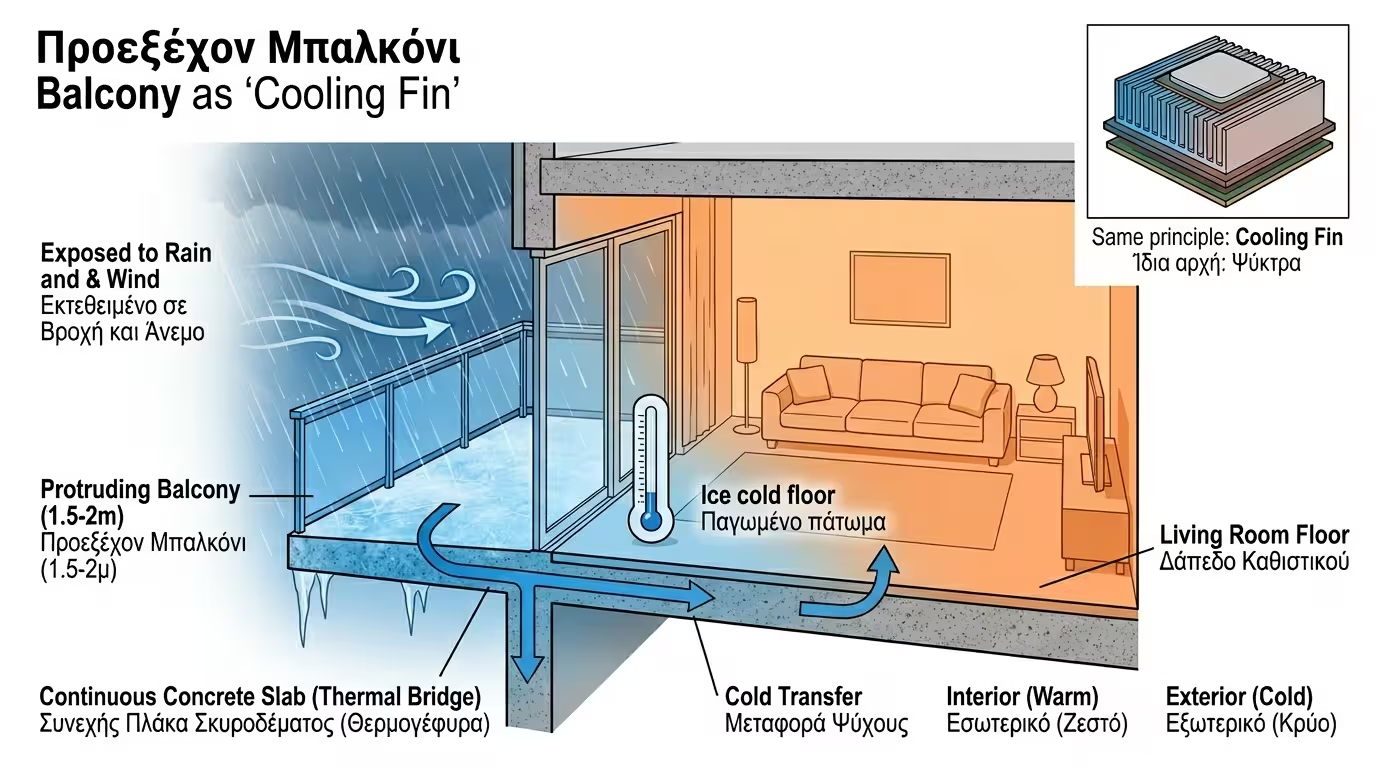
Here we have the "King" of losses. In almost every Greek apartment building, the balcony is not a separate piece. It is the exact same concrete slab as your living room, which simply continues and protrudes from the house by 1.5 or 2 metres!
In physics, this is called a "Cooling Fin" – exactly like the metal fins on computer heatsinks or refrigerators that dissipate heat!
In winter, the freezing balcony slab (which gets wet and battered by the wind) absorbs the cold and transfers it "underground" directly into your living room floor.
The result: You feel the floor near the balcony door is... an ice cube. No matter how much you turn up the radiator, the enormous mass of the balcony acts like a giant, invisible air conditioner permanently set to cooling, throwing your heat to the neighbourhood.
Let us go to our virtual house. We have installed internal insulation (plasterboard with rock wool) on all walls. The wall U-Value is perfect. However, we could not insulate the beams (as they protrude externally) nor, of course, the balcony slab.
We turn on the heating. The air warms up. But because the balcony and external beams remained bare (thermal bridges), energy finds an escape route.
Despite spending thousands of euros on internal insulation, calculations show we lose 35% of our energy just from the bare balcony and columns! Furthermore, because we insulated internally, we trapped moisture and the first winter the exterior corners filled with black mould. The experiment... failed.
💡 Final Conclusion: Thermal bridges do not forgive "half" jobs. A house is never insulated like Swiss cheese, leaving difficult corners bare. The goal is to "wrap" the whole house, as if putting it inside a warm sleeping bag.
Return to category.
Go to categoryReturn to the central guide.
Go to guide