📐 Surface Loss
Wall Area (m²) × U-Value
Until now, we have learned to check the quality of our insulation with the famous U-Value. We know it shows how much heat an entire square metre of our wall loses. But what happens when the wall... ends? What happens at the corner of the house, around the window frame, or at the exact root where the balcony begins?
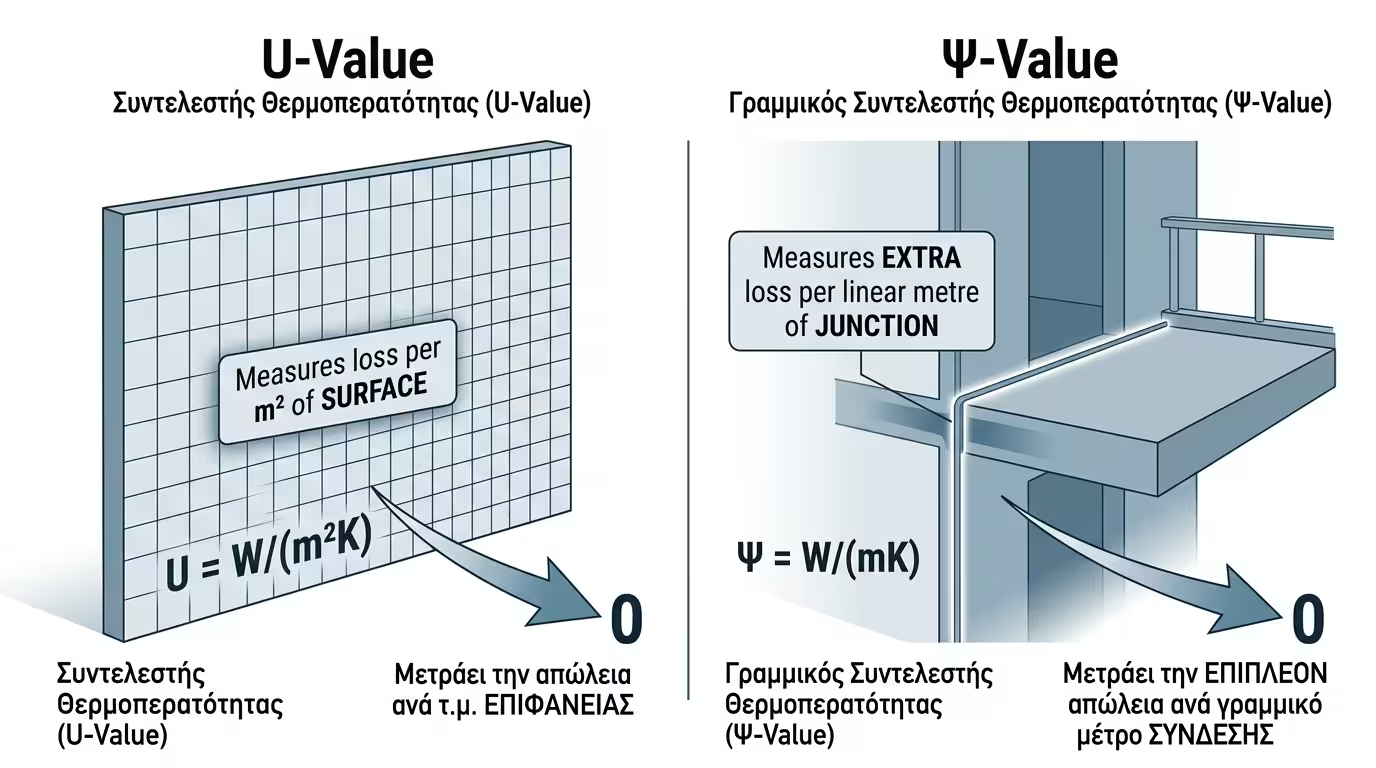
At these "difficult" points, heat does not travel in a simple, straight line (1D). It gets confused, turns and finds leaks in two dimensions (2D). There the U-Value raises its hands in defeat. The solution comes from its "sibling", the Ψ-Value (Linear Thermal Transmittance).
In very simple terms: While the U-Value measures loss on Surfaces (Square Metres), the Ψ-Value measures the extra loss that occurs along Lines (Linear Metres) because of a thermal bridge.
Let us see it practically. Imagine your living room wall meeting the uninsulated balcony slab. If you ask someone who does not know, they will say: "The wall has 10 square metres and a U-Value of 0.40. So it loses this much energy". But that is a huge mistake! The line where wall meets balcony is a thermal bridge.
The Ψ-Value comes to calculate how much additional heat is lost exclusively from the line of that junction (e.g. from the 5 metres length of your balcony).
The Ψ-Value is measured in W/(mK) (Watts per metre of length per degree Kelvin). Just as with U-Value, the goal is for this number to be as close to zero as possible!
When a house is inspected by an engineer for an Energy Performance Certificate, the calculation of real losses of a wall with a balcony is done by mandatorily adding two things:
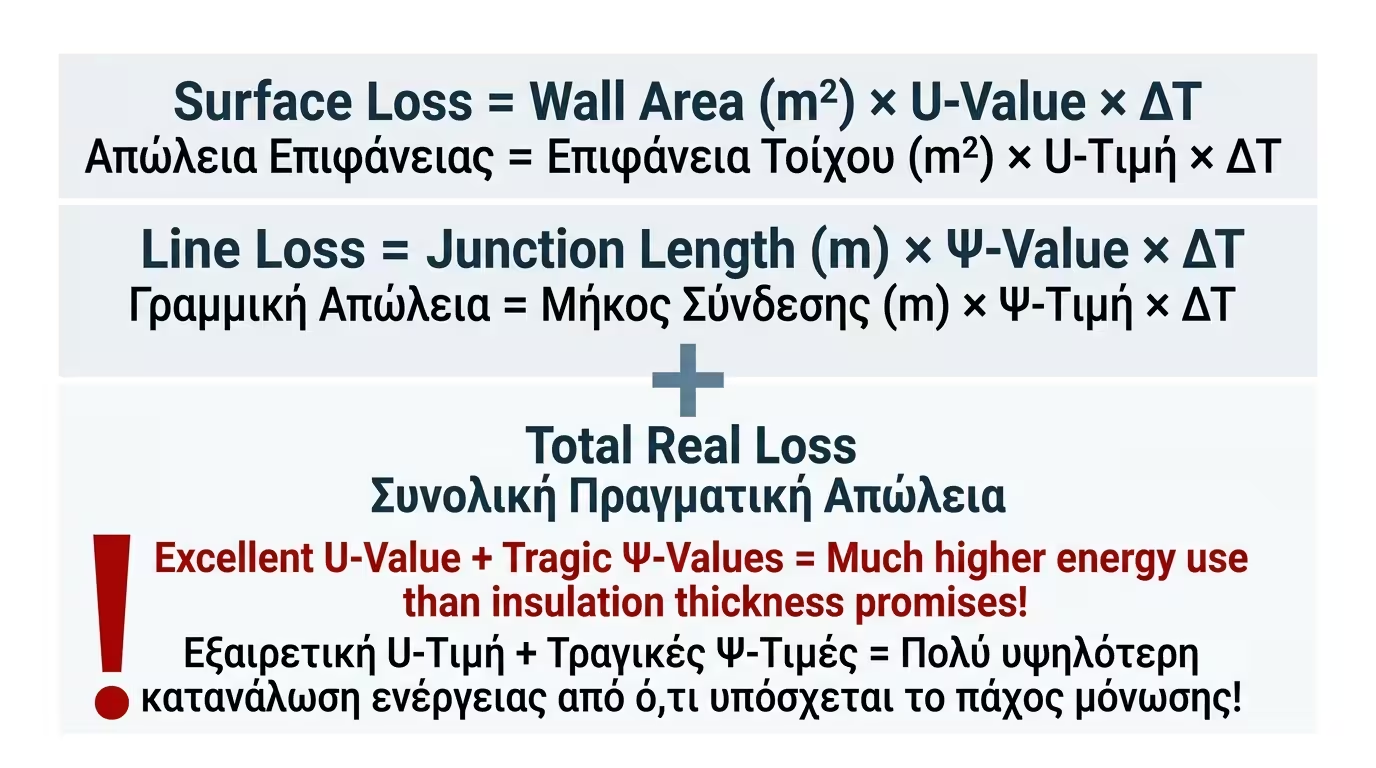
Wall Area (m²) × U-Value
Balcony Length (m) × Ψ-Value
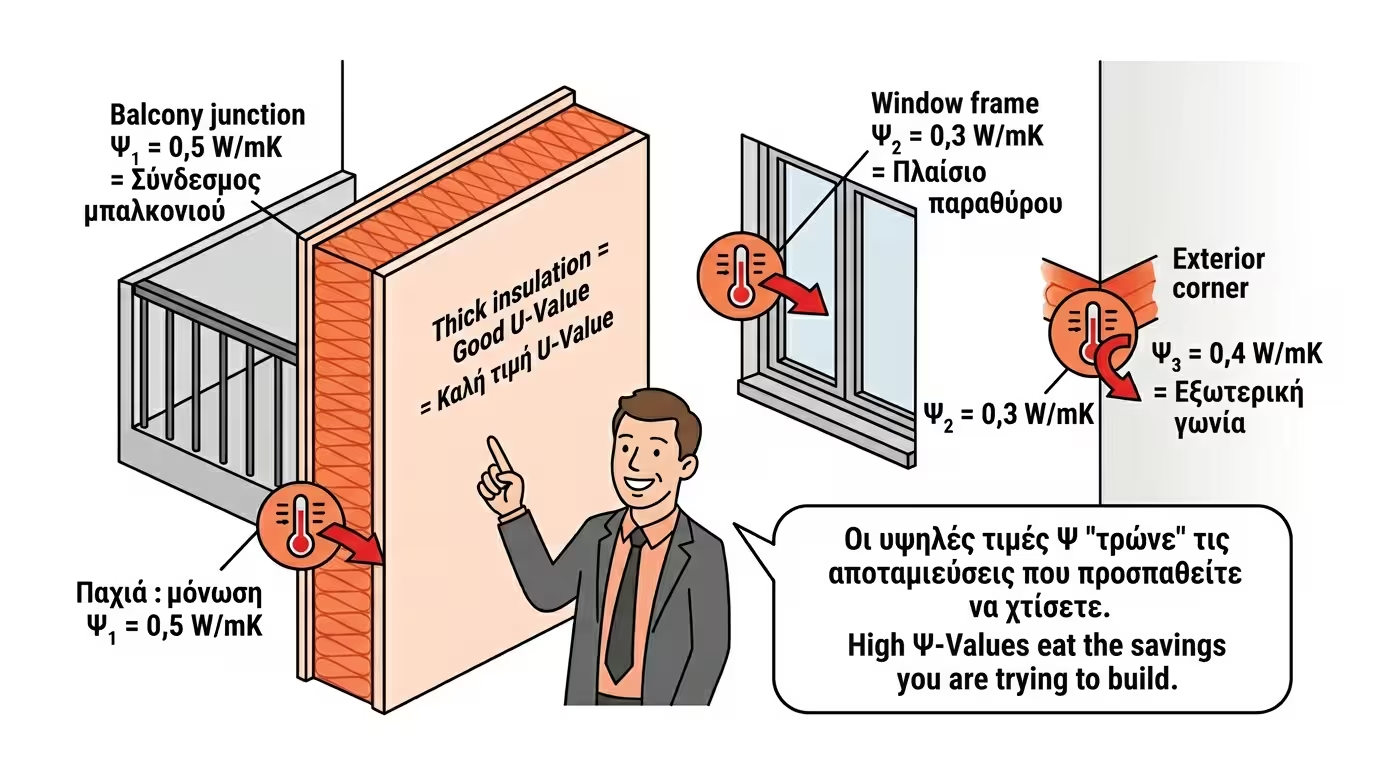
If the house has an excellent U-Value (very thick insulation) but tragic Ψ-Values (bare corners, large uninsulated balconies, windows without thermal break), the electricity it consumes will ultimately be far more than what the polystyrene thickness "promises"!
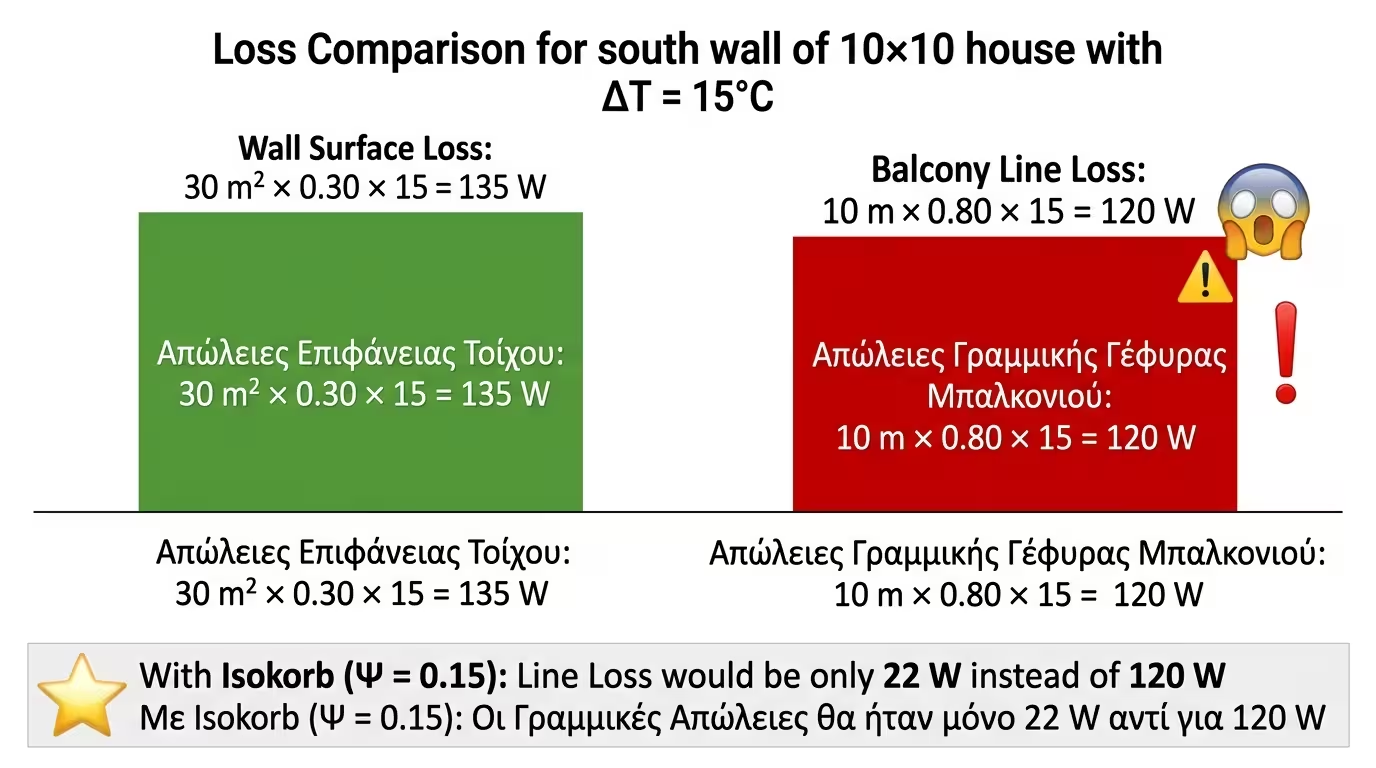
Let us take the south side of our house. The wall is 10 metres long and below it there is a continuous, uninsulated balcony (thermal bridge) also 10 metres long. Outside is 5°C, inside 20°C (Difference = 15°C). Our wall is perfectly insulated with U-Value = 0.30 W/(m²K).
The wall (30 m²) loses: 30 × 0.30 × 15 = 135 Watts.
The engineer finds the uninsulated balcony has Ψ-Value 0.80. We calculate: 10 m × 0.80 × 15 = 120 Watts!
📊 The Reckoning: The thick wall insulation did excellent work, but the balcony "line" alone almost cancelled all the benefit, nearly doubling the losses of that side! If we had used a thermal break element (Isokorb), the Ψ-Value would drop to 0.15, and balcony loss would be just 22 Watts!
Do not let salesmen impress you by talking only about the enormous insulation thickness (U-Value). If the thermal bridges at balconies, corners and windows are not properly sealed with the right techniques, your house's Ψ-Values will remain high. And high Ψ-Values "eat" the savings you are trying to build.
Return to category.
Go to categoryReturn to the central guide.
Go to guide