When Is the Ideal Season (and Time) for Building Thermography

A thermal camera is not a photographic camera. It does not record light, it records heat. For the camera to "see" heat escaping through a crack or cold entering through a thermal bridge, this flow of energy must be intense. If you try to detect a heat leak when inside and outside are at exactly the same temperature, it is like trying to see the light of a torch… at high noon!

To obtain a valid and clean thermogram, 3 non-negotiable rules must be followed.

Rule 1: The Season (The ΔT Rule)

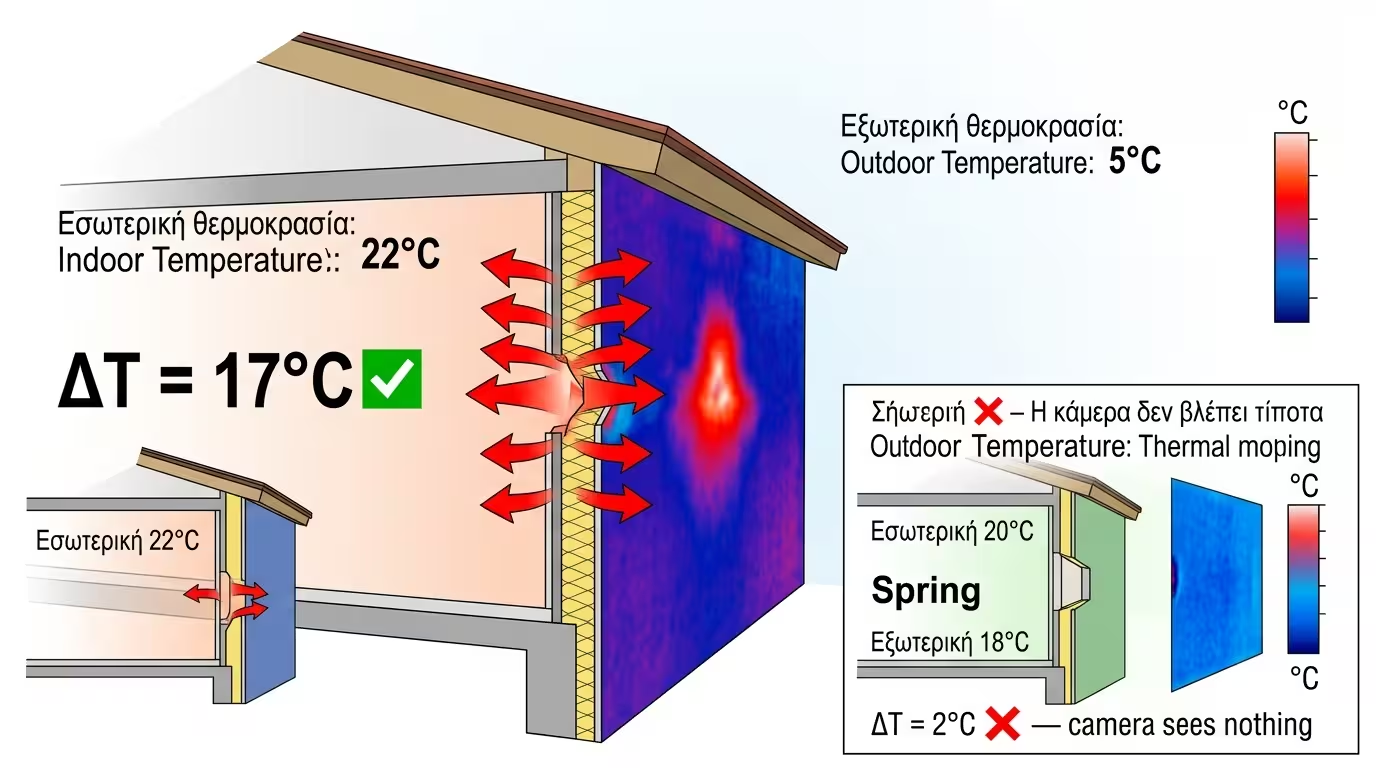
The absolute, non-negotiable rule of building thermography is the ΔT (Delta T - The temperature difference). For the camera to clearly show thermal bridges and missing insulation, the indoor temperature must differ by at least 10°C to 15°C from the outdoor temperature.

ΔT ≥ 10-15°C - winter, indoors 22°C, outdoors 5°C = clear image

✅ The Ideal Season

Winter. You turn on the heating and bring the home to 22°C. Outside it is 5°C. The difference is 17 degrees! The heat pushes with enormous force to escape. If there is even a small hole in the insulation, the camera will see a bright red "volcano" of heat erupting from the external wall.
❌ The Unsuitable Season

Spring and autumn. If indoors you have 20°C and outside it is 18°C, the camera will see almost nothing.

Rule 2: The Time of Day (The Sun Is the Enemy)

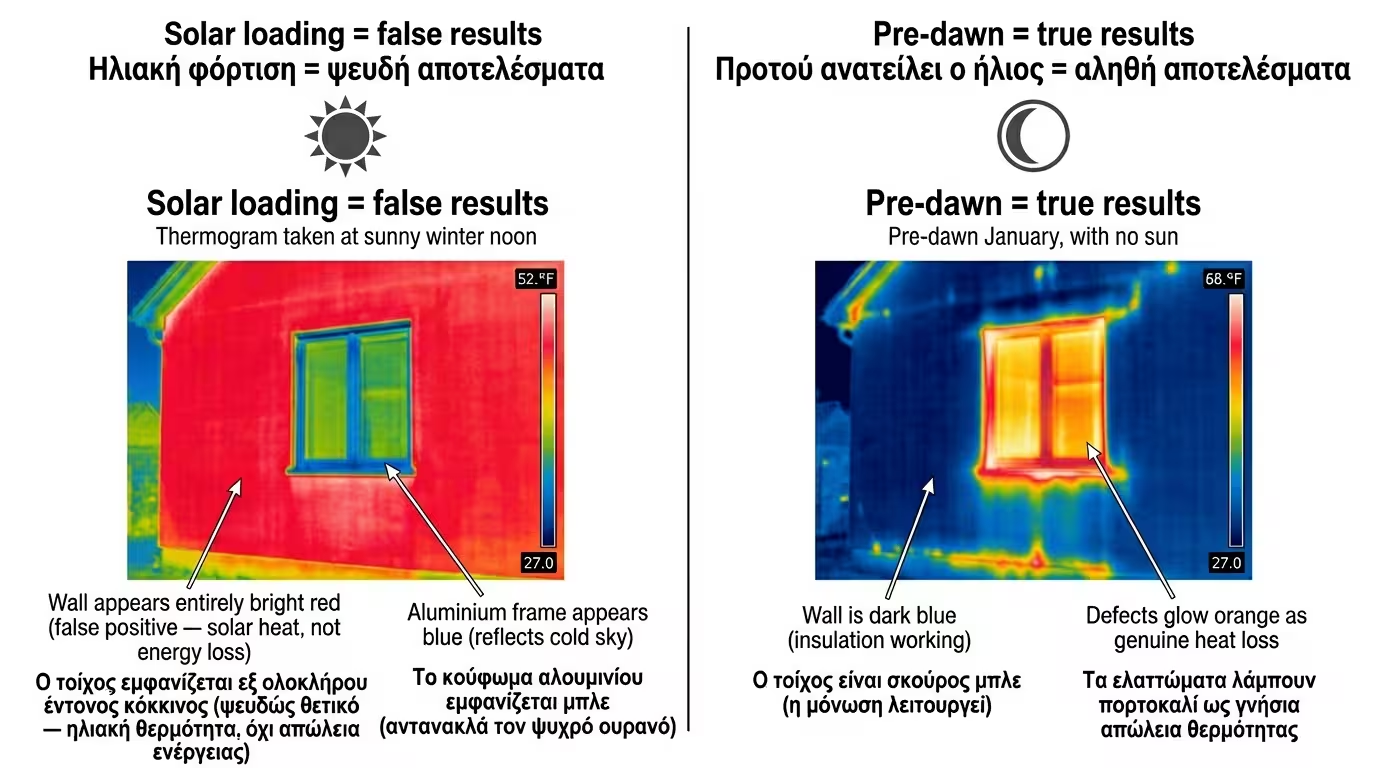
Many people go out to do thermography on a sunny winter afternoon. Huge mistake! The sun heats the external walls (solar loading). If you look at the wall with the camera, you will see it bright red - not because it is losing heat from your radiator, but because the sun has "roasted" it! This external heat "blinds" the camera and hides the real problems.

Solar loading - the sun roasts the walls and blinds the camera

🌅 The Ideal Time

Late at night or, even better, early morning (before sunrise). At that time, the walls have shed all the previous day's heat. Anything warm (red/yellow) the camera records on the external face is guaranteed to be energy escaping from your living room!

Rule 3: Weather Conditions

Thermography requires "quiet" weather.

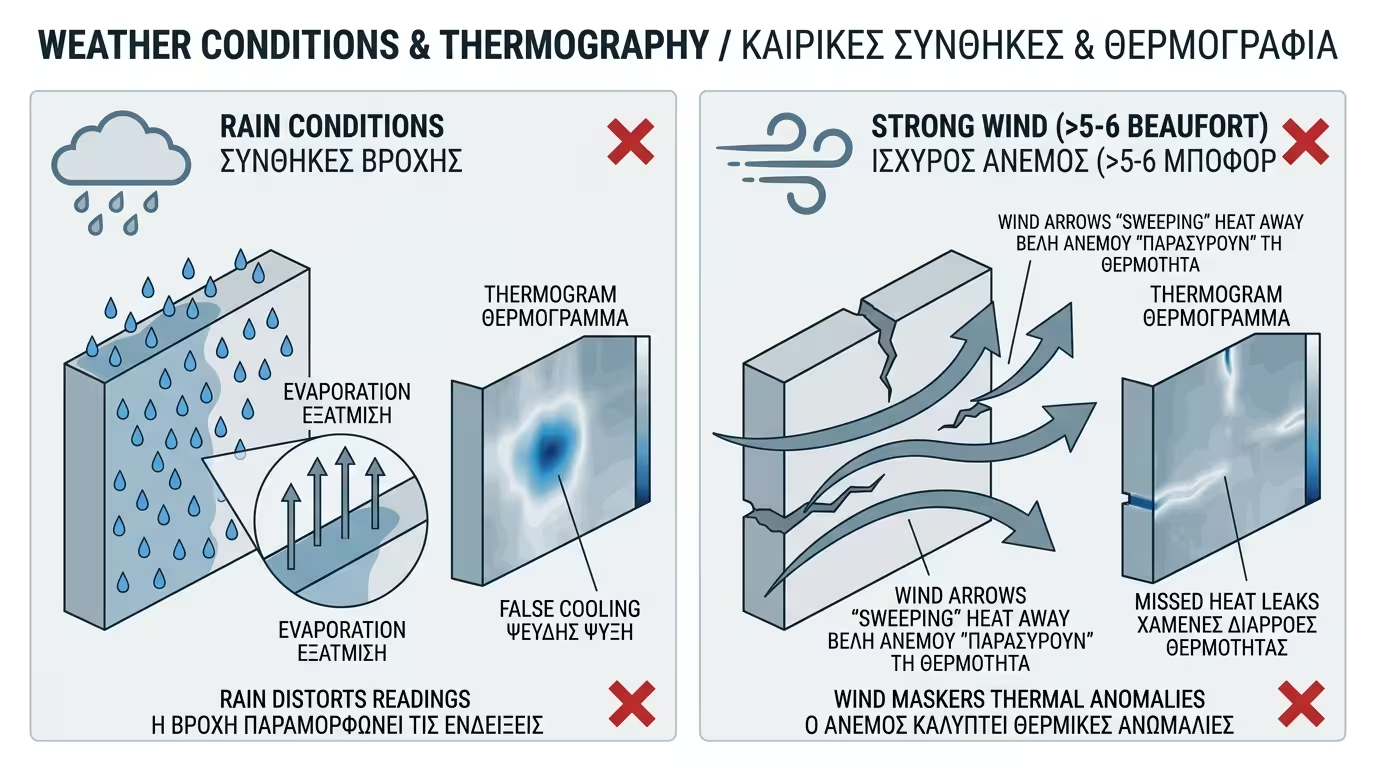
No rain, no strong wind - 'quiet' weather

🌧️ No Rain

Rain wets the walls. As the water evaporates (or falls ice-cold), it completely changes the thermal "signature" of the building.

💨 No Strong Wind

If strong wind is blowing (above force 5-6), the wind acts like a broom. It "sweeps away" the heat escaping from gaps before the camera can record it.

The 10x10 Model Experiment (Home Inspection)

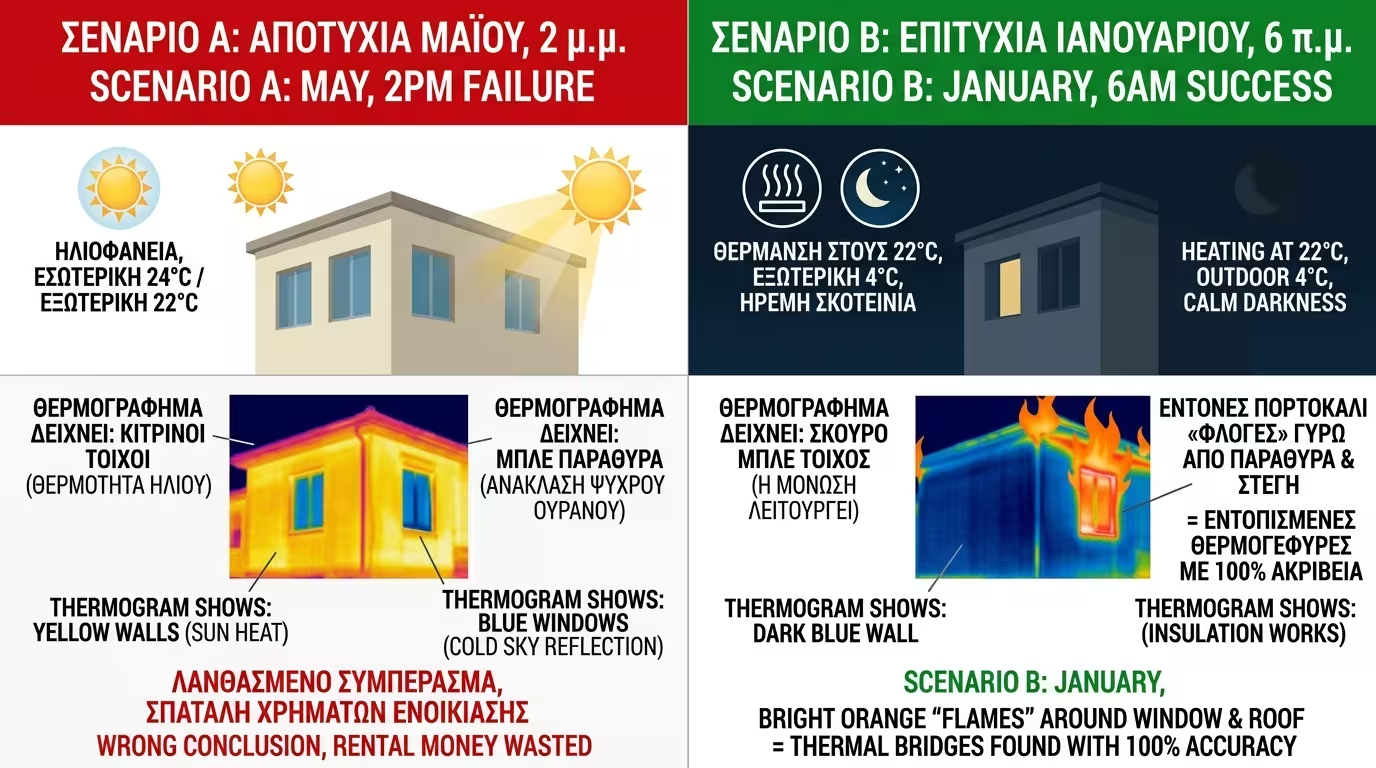
10x10 experiment - May midday (failure) vs January 6:00 a.m. (success)

We have rented a good thermal camera to find out why our living room is cold.

❌ Scenario A (Failure - May, 2:00 p.m.)

It is sunny. Indoors we have 24°C and outside 22°C. We step onto the balcony with the camera. The screen shows the walls bright yellow, but the aluminium frames blue. We draw the wrong conclusion that the wall loses heat and the windows are perfect. In reality, the sun simply heated the render, while the aluminium reflects the cold sky! We wasted our rental money.

✅ Scenario B (Success - January, 6:00 a.m.)

We have had the radiator running at 22°C since the previous evening. Outside it is 4°C, absolute calm and darkness. We raise the camera. The wall is dark blue (so the insulation works perfectly), but around the window and under the roof we see glowing orange "flames"! We found the thermal bridges and air leaks with 100% accuracy.

The Final Conclusion: Thermography is a strict science. It requires a large temperature difference (ΔT), absence of sunlight, dry walls and calm air. If someone approaches you as a "professional" to inspect your insulation quality with a thermal camera on a sunny afternoon, simply refuse!

Related Articles

Ventilation, Airtightness & Real Consumption: Climate Control

Return to category.

Go to category

Preview