Sound Meters & Standards: How We Measure Noise Before Starting (and What the Legal Quiet-Hour Limits Are)

In medicine, you don't enter the operating room without blood tests first. In acoustics, you don't build walls without a noise measurement first.

Measuring noise gives us the starting point (the "Before") so we know exactly how many decibels we need to "cut" to reach the desired level of peace (the "After").

1. How Do We Measure? The Sound Level Meter and the "A" Filter

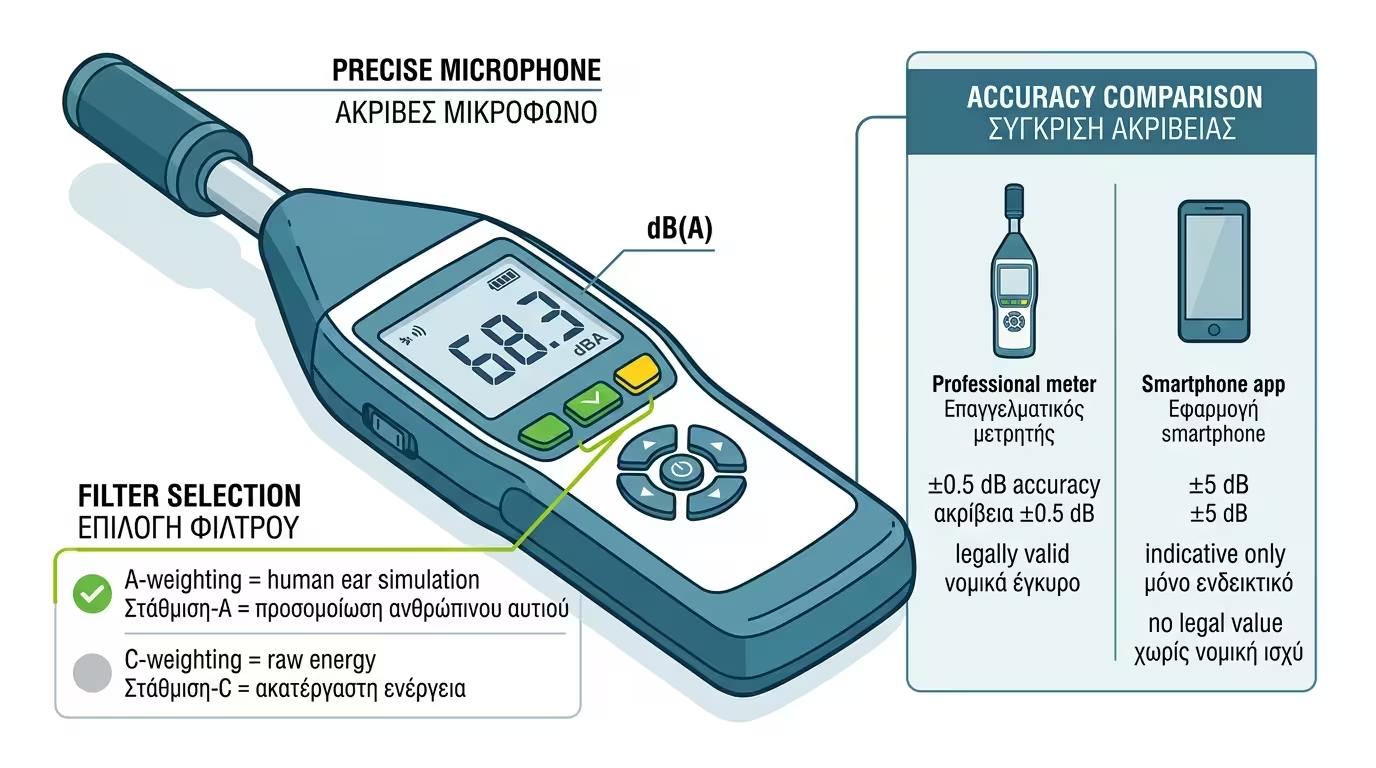
The tool we use is called a Sound Level Meter. It has a microphone at the tip that captures changes in air pressure and converts them into numbers on the display.

Sound level meter - dBA measurement device with precision microphone

🎯 Always dBA (A-Weighting)

If you buy a sound level meter, you'll notice it gives you the option to measure in dBA or dBC. The human ear doesn't hear all frequencies equally well (we struggle with very low bass and very high treble). The "A" filter makes the instrument "hear" exactly the way a human does! If you don't set this, the meter will read enormous numbers from bass noise that you can barely perceive, ruining your measurement.
📱 Smartphone Apps

There are dozens of free apps that measure decibels. They're excellent for getting a general, indicative picture, but your phone's microphone isn't calibrated. It can be off by ±5 dB. They have no legal validity in court.

2. What Are the Legal Limits? The Law in Greece

Often, the problem isn't solved with plasterboard, but with the law. You need to know your rights. In Greece, noise limits and quiet hours are strictly defined (and violations are criminally prosecuted):

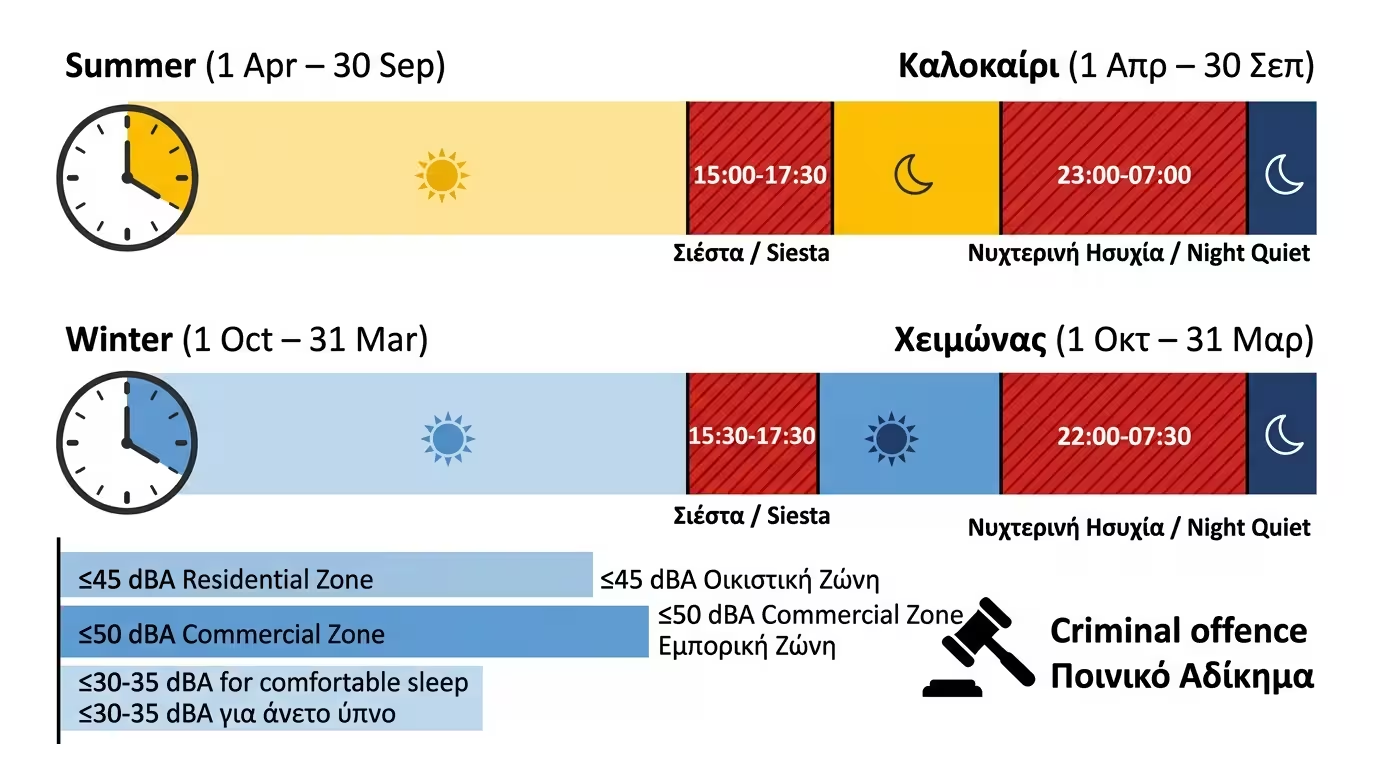
Quiet hours - summer and winter periods in Greece

☀️ Summer Period (1 Apr – 30 Sep)

15:00 – 17:30 and 23:00 – 07:00. During these hours, any noise disturbing residents is prohibited (music, shouting, DIY, pets).

❄️ Winter Period (1 Oct – 31 Mar)

15:30 – 17:30 and 22:00 – 07:30. Violation of quiet hours is a criminal offence.

📊 Decibel Limits (Inside an Apartment)

Even outside quiet hours, nobody has the right to deafen you. According to the health regulation, the maximum permissible noise reaching inside your room (with open windows) from a permanent source (e.g. a neighbour's air conditioner, a restaurant vent or a bar) must not exceed 45 dBA (or 50 dBA in commercially dominant areas).

🛏️ The Sleep Rule

If for you to sleep at night the sound meter at your pillow reads over 30-35 dBA because of the neighbour, you have a problem.

3. Why Does Measurement Determine Your Materials?

If you don't measure, you'll be buying materials blind. The measurement gives you the precise target.

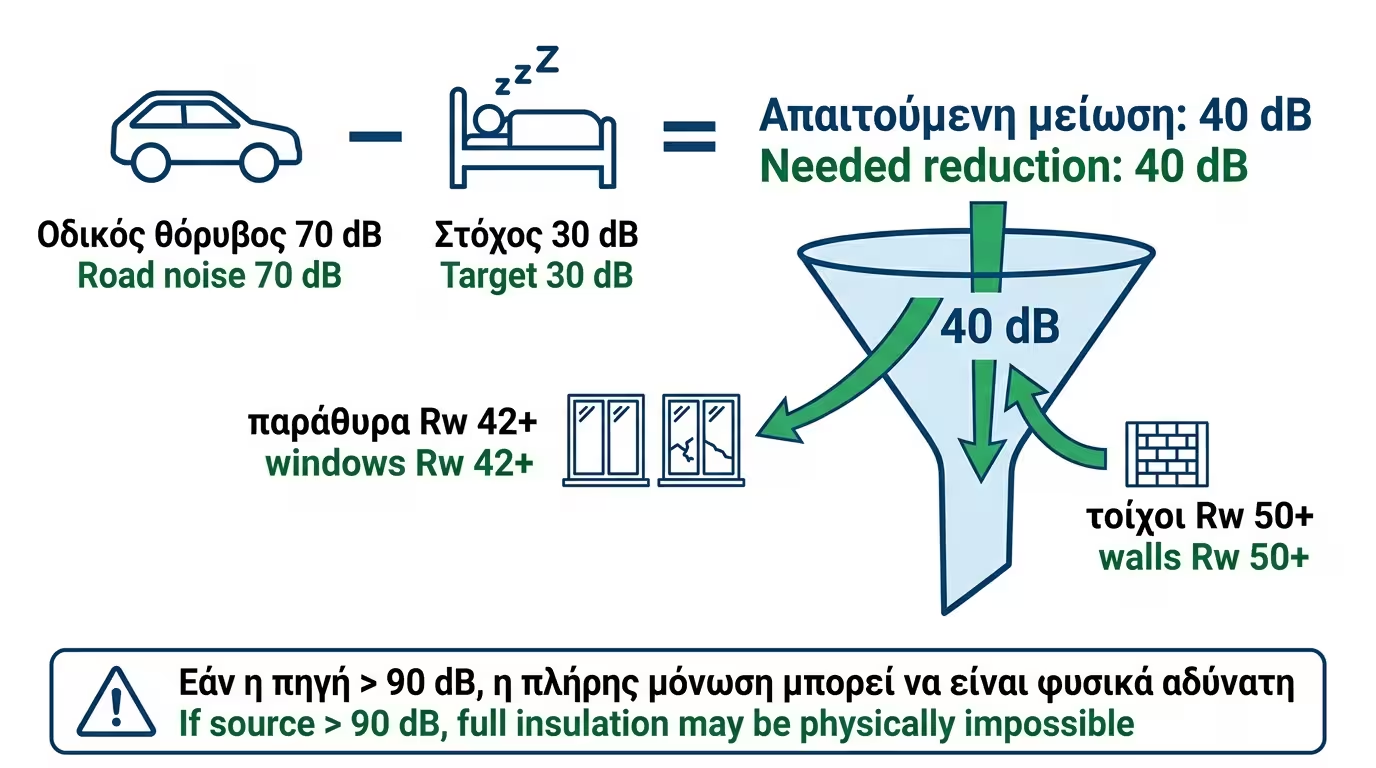
Noise measurement determines materials - 70 dB minus 30 dB = 40 dB reduction

🎯 The Practical Example

If the sound meter shows that road noise is 70 dB and you want 30 dB in the bedroom (absolute silence), you now know that you need a 40 dB reduction. So you must buy windows and walls that deliver (in practice) that reduction.

❌ The Limits

If the noise is 90 dB, full sound insulation may be practically impossible without sacrificing all the room's living space.

4. The Model Experiment: Measuring the 10×10 (The Café)

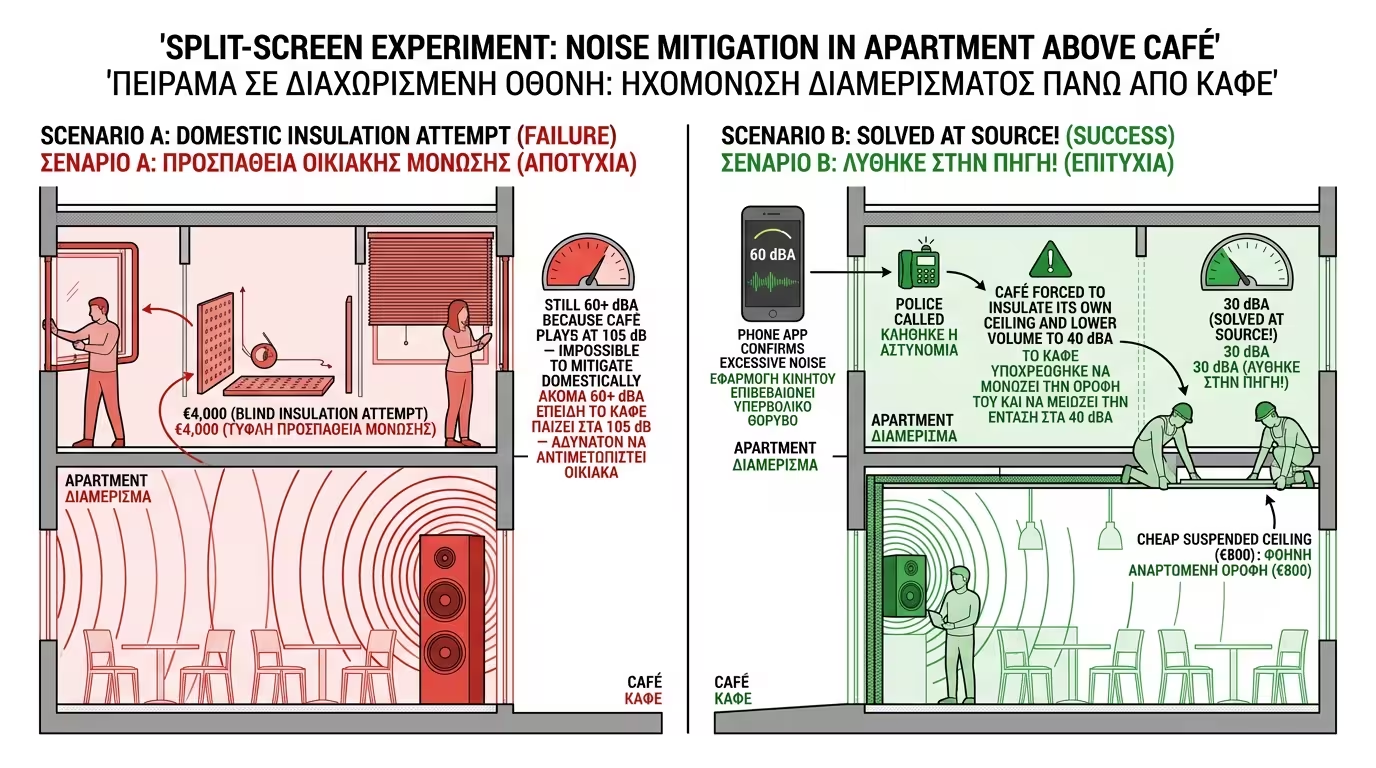
Experiment - blind soundproofing vs measurement and law

We buy an apartment. A café operates on the ground floor. At night we hear the music blasting.

🔴 Scenario A - The Blind Expense

Without measuring, we call a crew. We build a sound-insulating floor and stud walls, spending €4,000. At night, the music is still audible, just more muffled. What went wrong? The café was playing music at 105 dB! No domestic soundproofing can cut 70 dB on its own.

🟢 Scenario B - The Law & Science

We download an app and measure 60 dBA in our living room at 11 pm. We call the police or a certified acoustic laboratory. The café is clearly breaking the law; it's forced to soundproof its own ceiling and lower the volume, bringing the noise in our home to 40 dBA. Now, with a very cheap, simple suspended ceiling (costing €800), we drop the sound to 30 dBA and sleep perfectly. The problem was solved at its source!

The Bottom Line: Never try to soundproof someone else's illegal behaviour. Measure the noise, make sure it falls within reasonable limits (everyday life of an apartment block or a street) and then design your defences based on the numbers.

Related Articles

Sound Insulation: Silence and Noise Protection

Return to category.

Go to category

Preview