🔊 The Enemy (The Noise Source)
The neighbour watches action films. His TV produces 70 to 75 dB of airborne noise (quite loud, with clear voices and moderate low frequencies).
Welcome to our digital building site. Imagine you have just bought (or rented) a home and this is your new bedroom. It is a typical square room, measuring 4×4 metres (16 square metres).
The problem? One side of your room (the partition wall) shares a boundary with the next-door apartment's living room. And the neighbour happens to be a night-owl cinephile.
Before we buy a single material, we need to analyse our data. What are we up against?
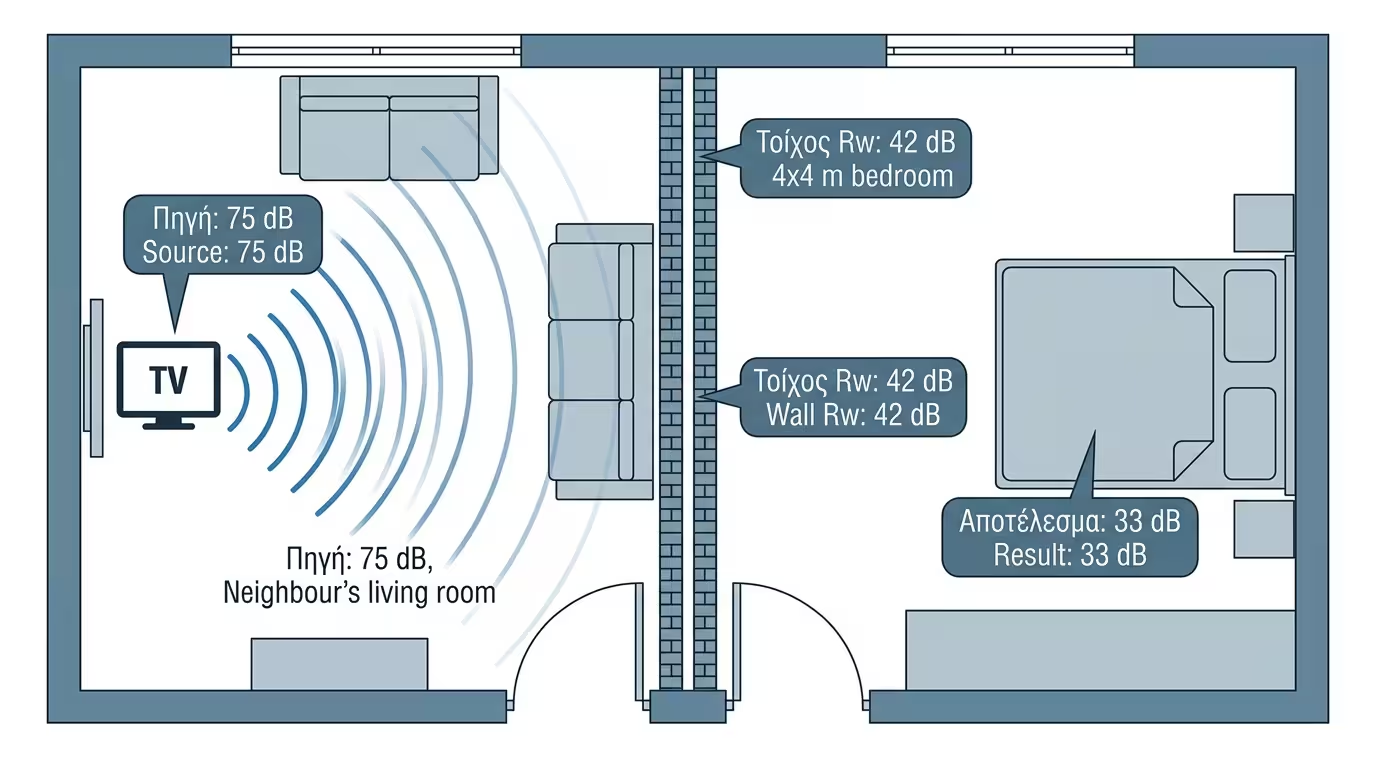
The neighbour watches action films. His TV produces 70 to 75 dB of airborne noise (quite loud, with clear voices and moderate low frequencies).
The wall separating you is a typical Greek construction from the 1990s. It is a double-leaf brick wall (two rows of bricks, with a small cavity between them that often contains simple EPS for thermal insulation) with a total thickness of 20 centimetres, plastered on both sides.
Such a wall (if free of cracks and socket holes) offers a laboratory sound reduction of about 42 dB (the Rw index we learned in the previous article).
Let us do the subtraction to see what reaches your ears as you are trying to sleep:
75 dB (TV) − 42 dB (Wall) = 33 dB.
If you measured 33 dB inside an office while working, you would think the place is completely silent. But at midnight, when street traffic has stopped and your bedroom should be at 20 dB, 33 dB is torture.
At this level, you don't just hear the TV playing - you can make out exactly what the actors are saying, which prevents your brain from relaxing at all.
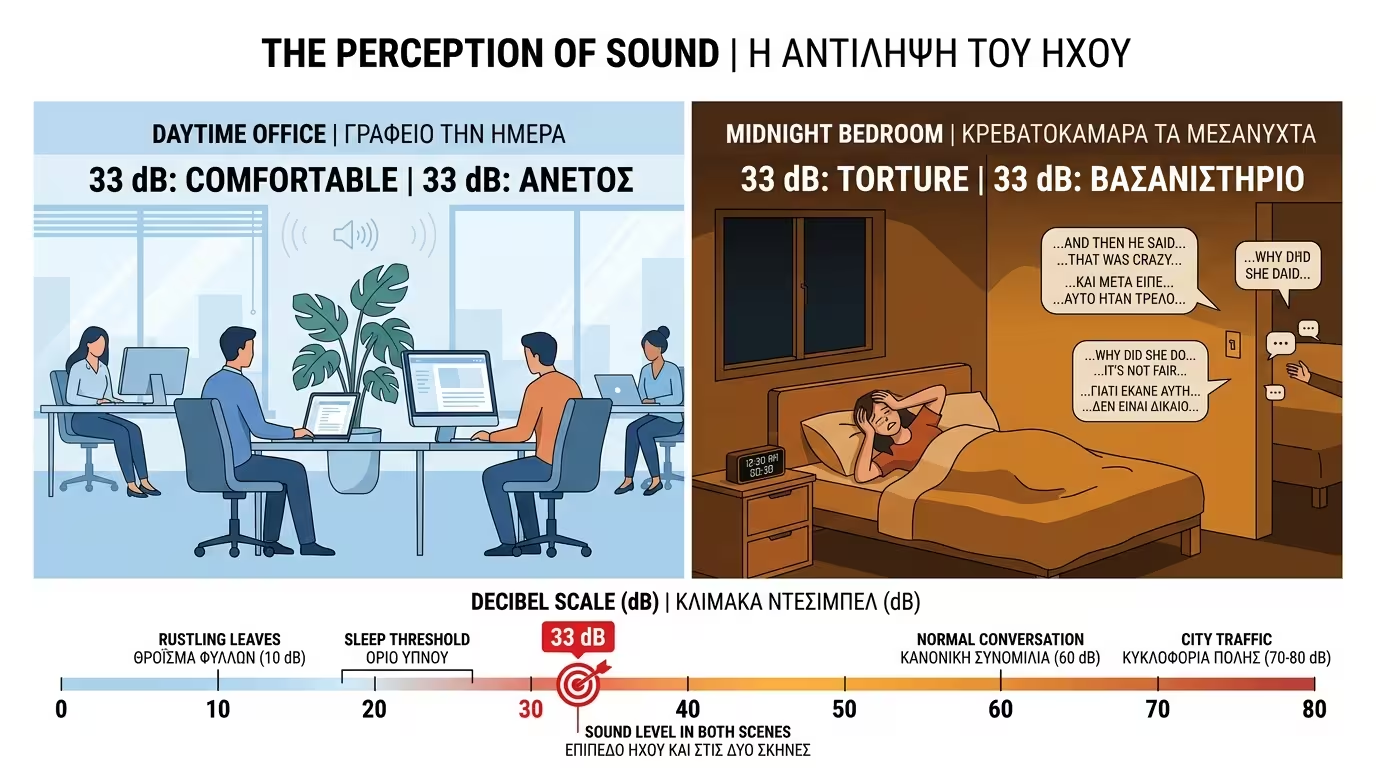
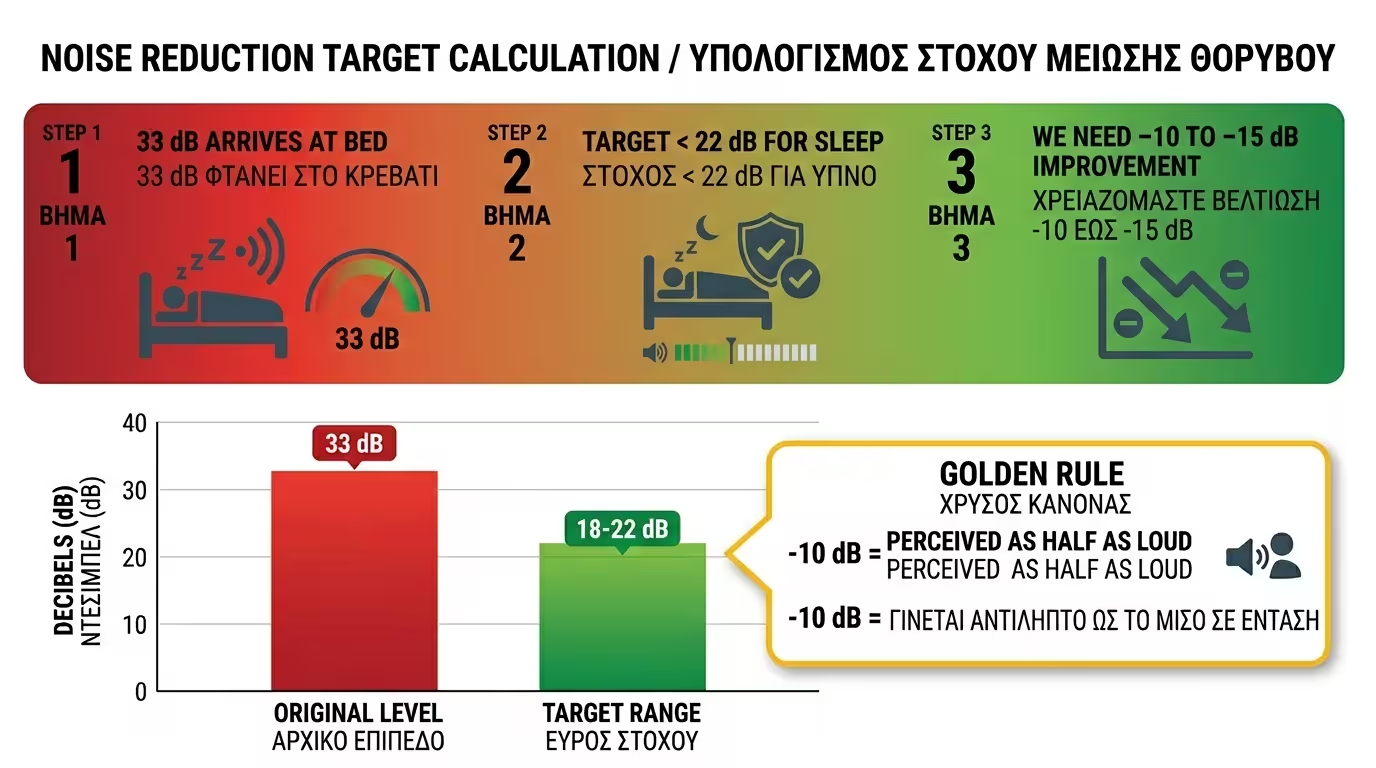
To be able to sleep like a human being, the noise at your pillow must fall below the "perception threshold" of sleep, i.e. close to 20 to 22 dB.
This means we need to improve our wall by at least 10 to 15 dB.
Remember the golden rule of acoustics? A 10 dB reduction makes our brain perceive noise as half as loud! If we manage to cut 15 dB, the neighbour's TV will turn into a negligible, unintelligible "murmur" that will disappear into the room's natural background noise.
As we learned from the Mass Law, to gain 15 dB by brute force we would need to build another half-metre wall of concrete. We would lose the entire bedroom.
We learned that foam panels (sound absorption) do not stop airborne noise from passing through the wall.
We will "steal" just 8 to 10 centimetres from our room to build a high-tech stud wall, definitively silencing the neighbour's voices!
It is our first evening in our new home.
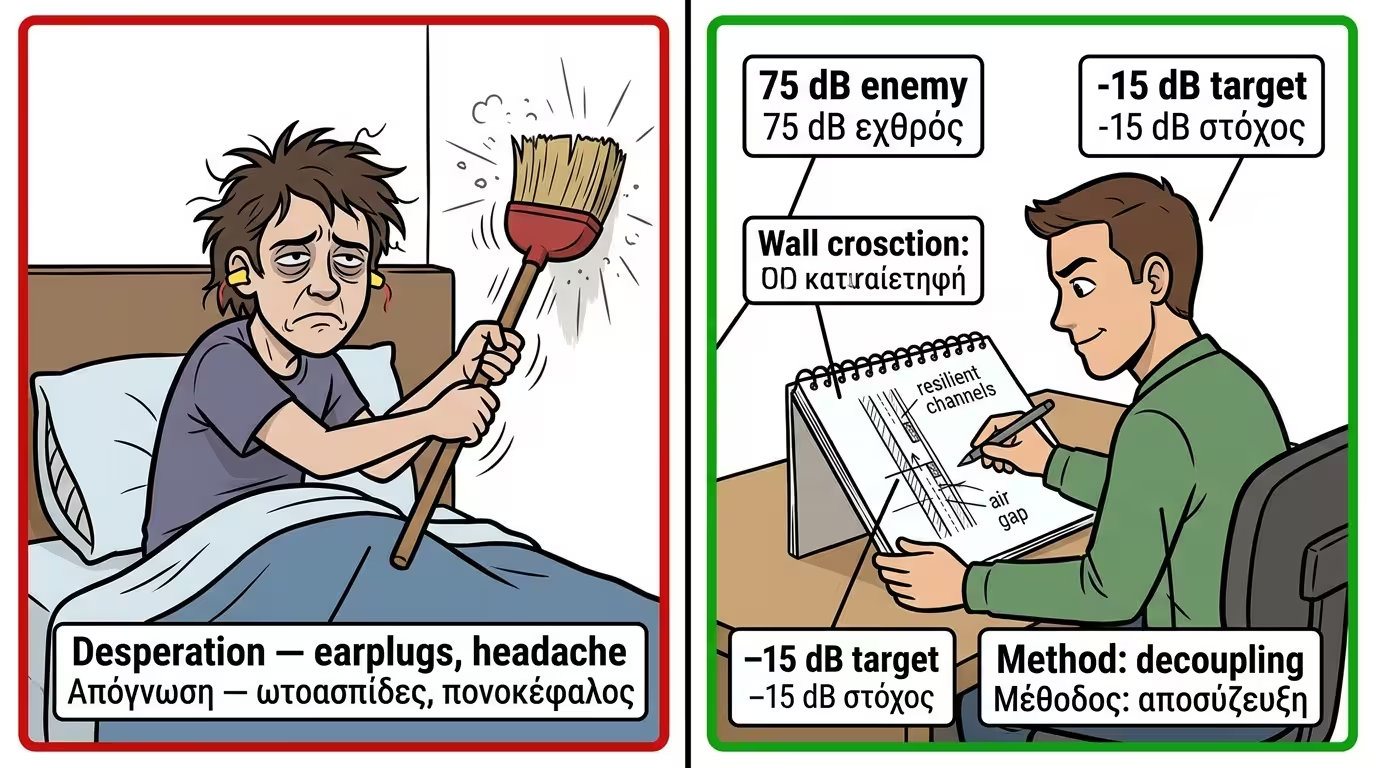
We hear the TV. We bang the wall with the broom. The neighbour turns it down for 5 minutes and then turns it up again. We put in earplugs. In the morning we wake up with a headache and frayed nerves. Our own home feels hostile.
We accept that the partition wall is inadequate. We pick up our digital notepad and plan the construction of an independent soundproofing lining. We know the enemy (75 dB), we know our target (−15 dB) and we know the method (decoupling). We are ready for action.
The Final Conclusion: The first step in soundproofing is composure and realistic target-setting. We are not looking for "absolute zero" (which is impossible without building a million-euro studio), but for those critical 10-15 dB that will push noise below our annoyance radar.
Return to category.
Go to categoryReturn to the central guide.
Go to guide