Security Doors & Interior Doors: How to Seal the Gaps (Drop Seals and Thresholds)

A typical interior bedroom door offers a laughable sound reduction of the order of 15-20 dB. It lets voices, the living-room TV and kitchen noises pass through unhindered.

Why do doors fail so miserably? For two reasons: They lack mass (weight) and they leak air.

1. The Mass Problem (The "Cardboard" Door)

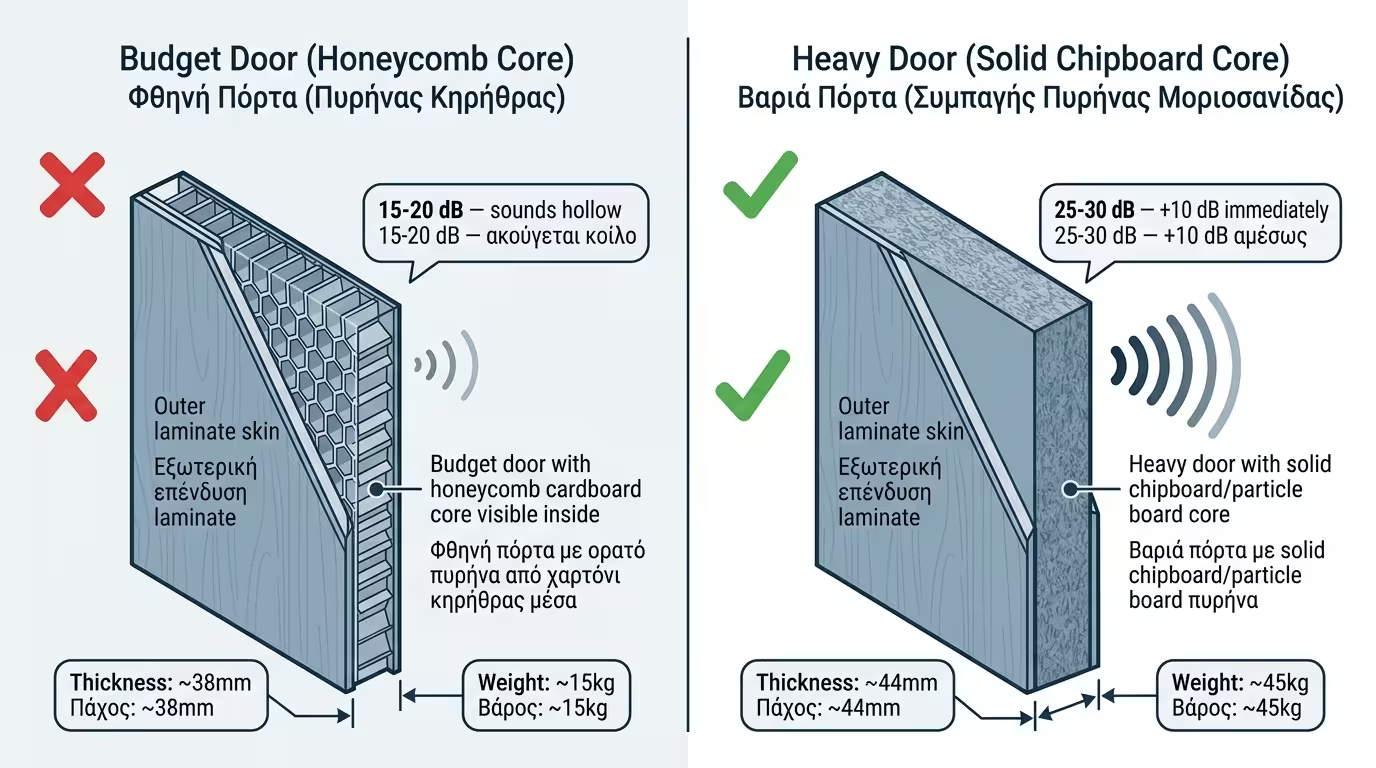
If you knock lightly with your hand on a modern, budget interior door (laminate), it will sound hollow. This happens because its core is not solid wood, but "honeycomb" (cardboard folded into a beehive pattern). It weighs very little.

As we learned from the Mass Law, a lack of weight means zero resistance to sound.

The Solution: When ordering doors, ask for the core to be chipboard (particle board) or solid timber. They will be much heavier, sturdier and will immediately cut +10 dB compared to hollow ones, without costing a fortune.

Inside a hollow door (honeycomb core) vs a door with solid chipboard core

2. The Perimeter Problem (The Frame Gaskets)

A heavy door is useless if it does not close airtight.

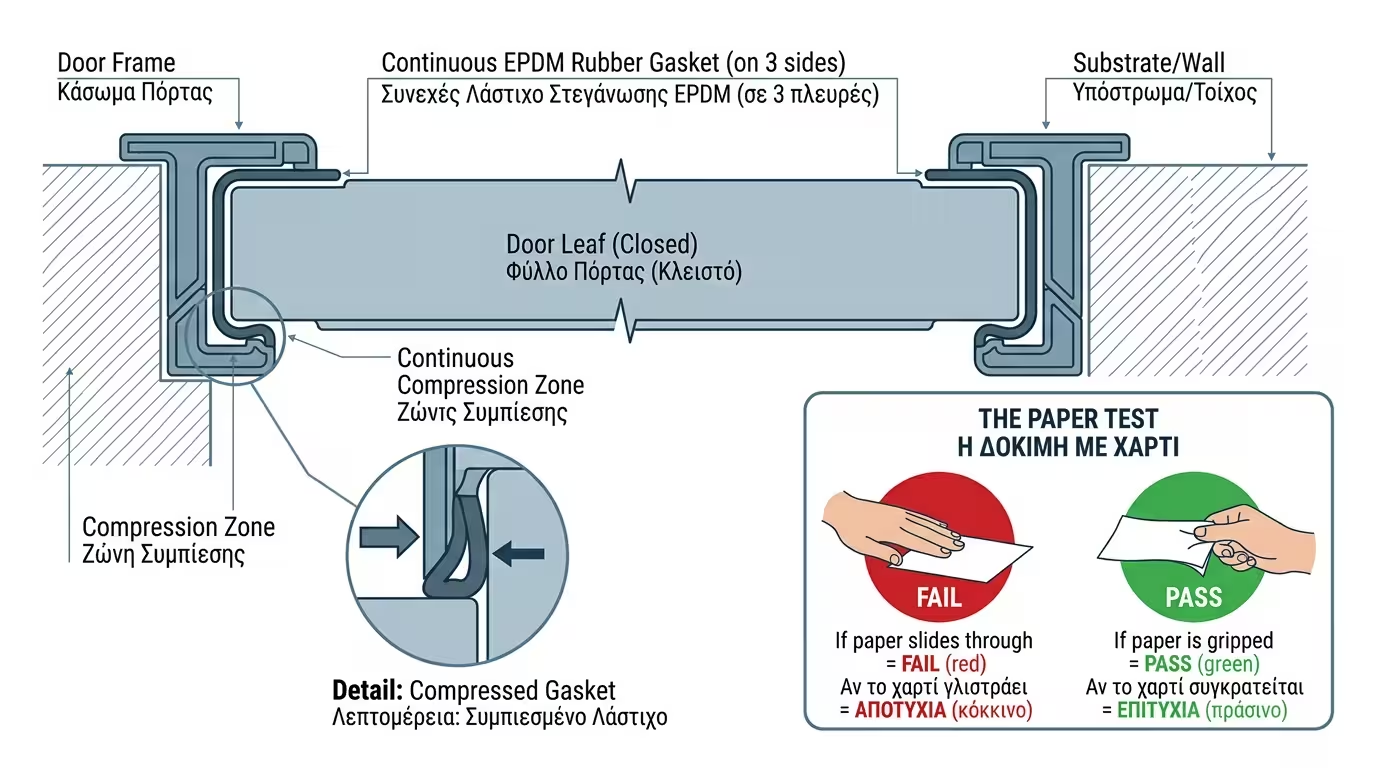
The door frame (the surround in the wall) must have a quality, elastic rubber gasket (EPDM) all the way round.

When the door closes and the latch engages, the door leaf must press against this gasket and compress it slightly on all sides (left, right and top). If you can slide a sheet of paper between the closed door and the frame, sound will pass through as well.

EPDM rubber gasket on the door frame - perimeter seal on 3 sides

3. The Achilles Heel: The Gap at the Floor

Here lies the greatest construction drama. To allow a door to open and close without scratching the tiles or parquet, the carpenter always leaves a gap of 1 to 1.5 centimetres at the bottom. Through this "hole", the living-room TV enters straight into your pillow!

The Automatic Drop Seal

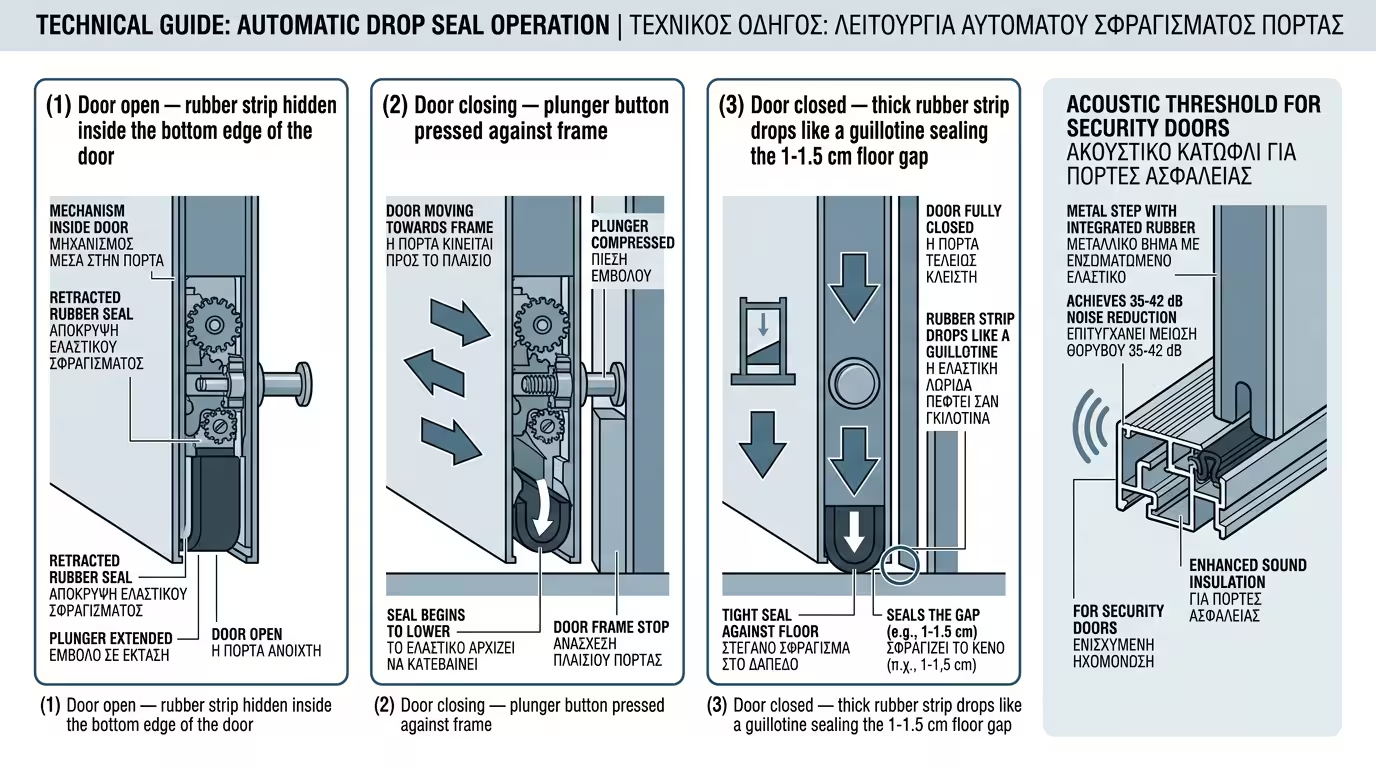
This is the cleverest mechanical invention for interior doors. It is a hidden mechanism recessed into the bottom (edge) of the door leaf.

How it works: While the door is open, the rubber strip is hidden up inside. The moment the door closes, a small "button" (plunger) on the hinge side presses against the frame. This triggers the mechanism to drop a thick rubber strip like a guillotine, sealing the gap to the floor with enormous force! As soon as you turn the handle to open, the strip lifts instantaneously so it doesn't scratch the floor.

The Acoustic Threshold (For Security Doors)

On front doors (which separate us from the noisy stairwell or lift), the drop seal is often combined with a fixed "threshold". It is a small "step" on the floor (usually metal with rubber), against which the door presses when closed, creating a 100% airtight and soundproof seal (typically achieving 35-42 dB).

Automatic drop seal (drop-down seal) - rubber strip drops like a guillotine when the door closes

The Experiment in Our Model (The 4×4 Door)

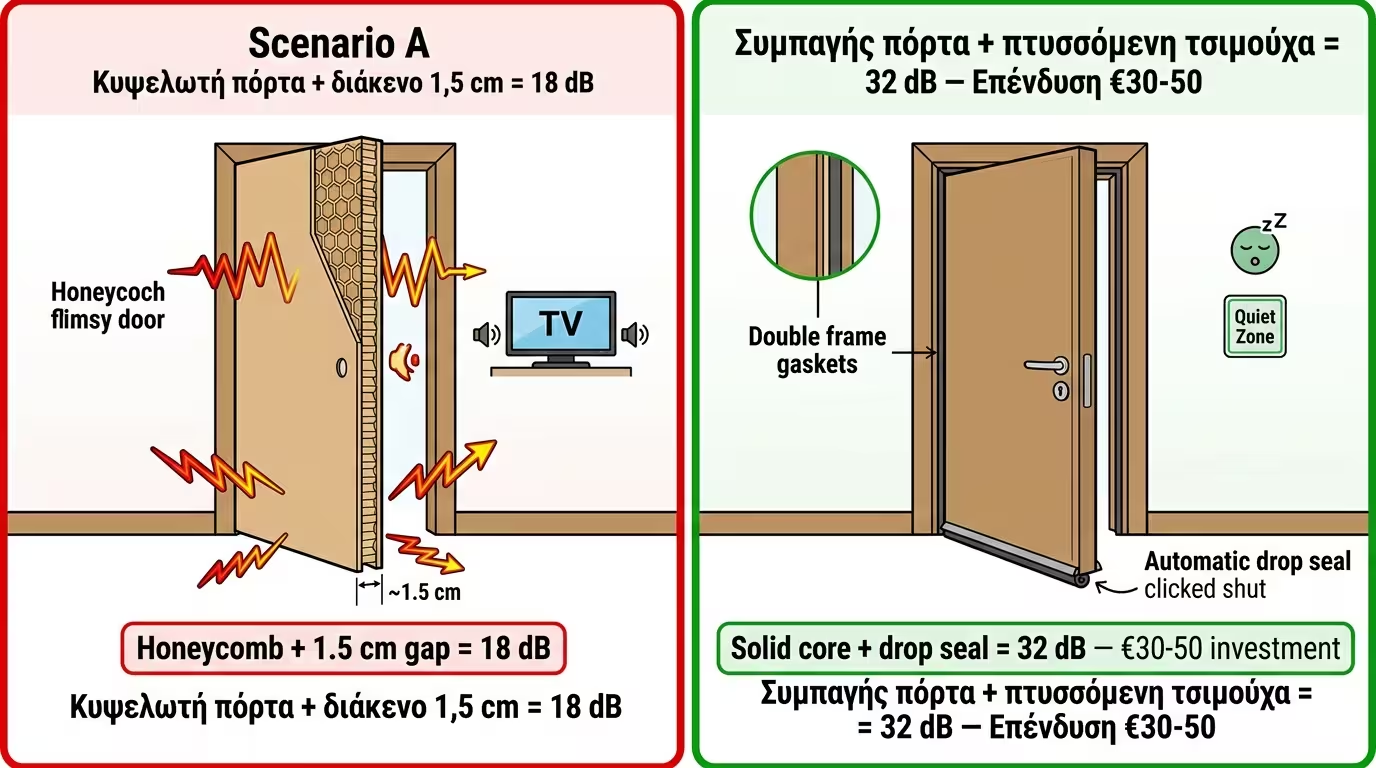
Experiment: Scenario A (honeycomb + gap, 18 dB) vs Scenario B (solid core + drop seal, 32 dB)

Our room connects to the hallway. Our flatmate watches TV in the living room at midnight.

❌ Scenario A (The Sieve Door)

We have a typical door with a honeycomb core and a 1.5 cm gap at the bottom. We close the door. We can hear exactly what the newsreader is saying. Sound passes through the lightweight wood and "flows" under the gap. Sound reduction: just 18 dB.

✅ Scenario B (The Seal)

We order a heavy door with a solid core. The carpenter fits a double gasket on the frame and an automatic drop seal at the bottom. We close the door. The "click" of the drop seal is heard and the room is sealed. The newsreader's voice vanishes instantly. Sound reduction: 32 dB! We sleep without caring what time our flatmate turns off the TV.

The Final Conclusion: If you don't seal the air, don't expect to seal the sound. Upgrading the door core and adding a drop seal (costing €30-50) is perhaps the most cost-effective investment you can make in your home's soundproofing.

Related Articles

Sound Insulation: Silence and Noise Protection

Return to category.

Go to category

Preview